Tata Motors just closed a financial year most carmakers can only dream of — its highest ever annual sales, a commanding electric vehicle market share, and a product cadence that has turned it into the country’s most restless mainstream automaker. But the real story isn’t the record itself. It’s what comes next: Tata Motors future plans 2027. Over the next four quarters, the company isn’t merely launching cars; it is laying down a blueprint for how an Indian manufacturer can straddle mass-market electric mobility, premium aspirations, and an ethanol-ready future — all at once.
Six vehicles are lined up. Each, on its own, fills a white space. Together, they reveal a three-speed strategy that could make the competition deeply uncomfortable.
The electric heartland expands — but it gets a soul
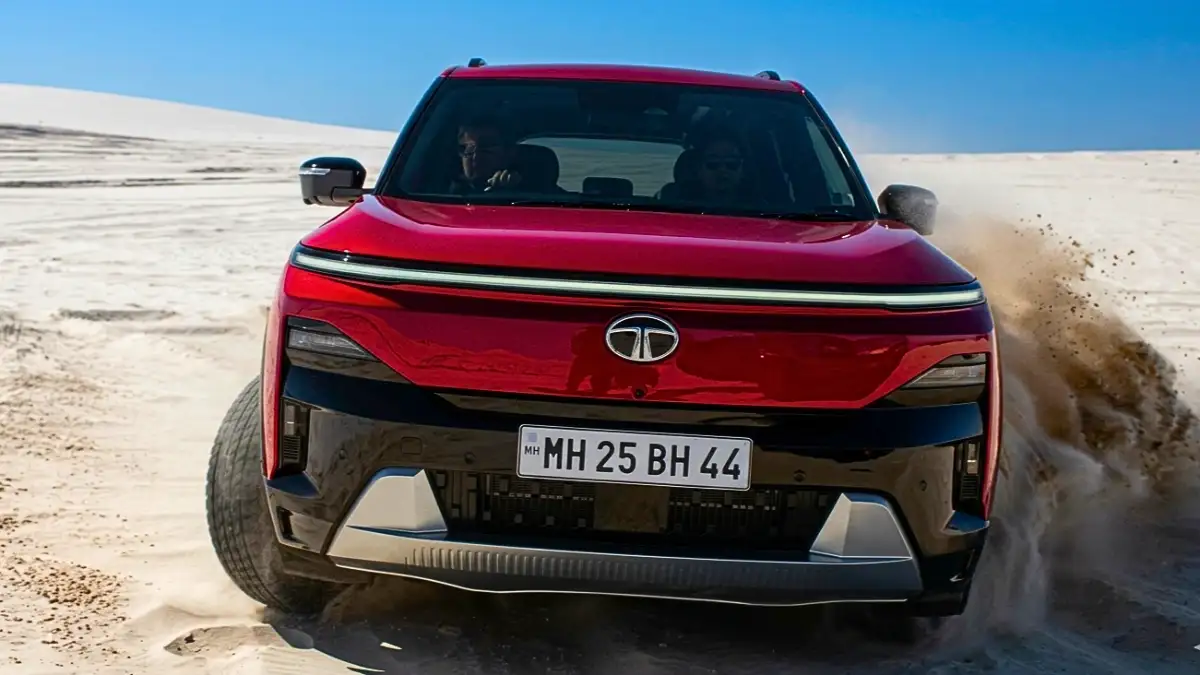
The most immediate arrival is the Sierra EV, confirmed by the company’s MD and CEO for launch this quarter. This isn’t just another born-electric crossover. By reviving the Sierra nameplate — a badge etched into India’s SUV nostalgia — Tata is doing something clever: it’s giving its EV push an emotional anchor. Built on the Acti.ev+ architecture shared with the Harrier EV, the Sierra will sit above the Curvv EV, carving out a mid-size space where buyers want range, presence and the reassurance of a known legend.
Two battery packs are expected — a 55 kWh entry point and a larger 65 kWh unit that could deliver a real-world range north of 500 kilometres. That figure matters enormously because it crosses a psychological threshold where intercity travel stops requiring spreadsheet-level planning. More importantly, the single-motor rear-wheel-drive and dual-motor all-wheel-drive configurations point to something rarely offered below luxury price points: genuine dynamic choice. Add vehicle-to-load, bidirectional charging, a three-screen cabin and Level 2 ADAS, and the Sierra EV becomes a statement that India’s electric future need not be ascetic.
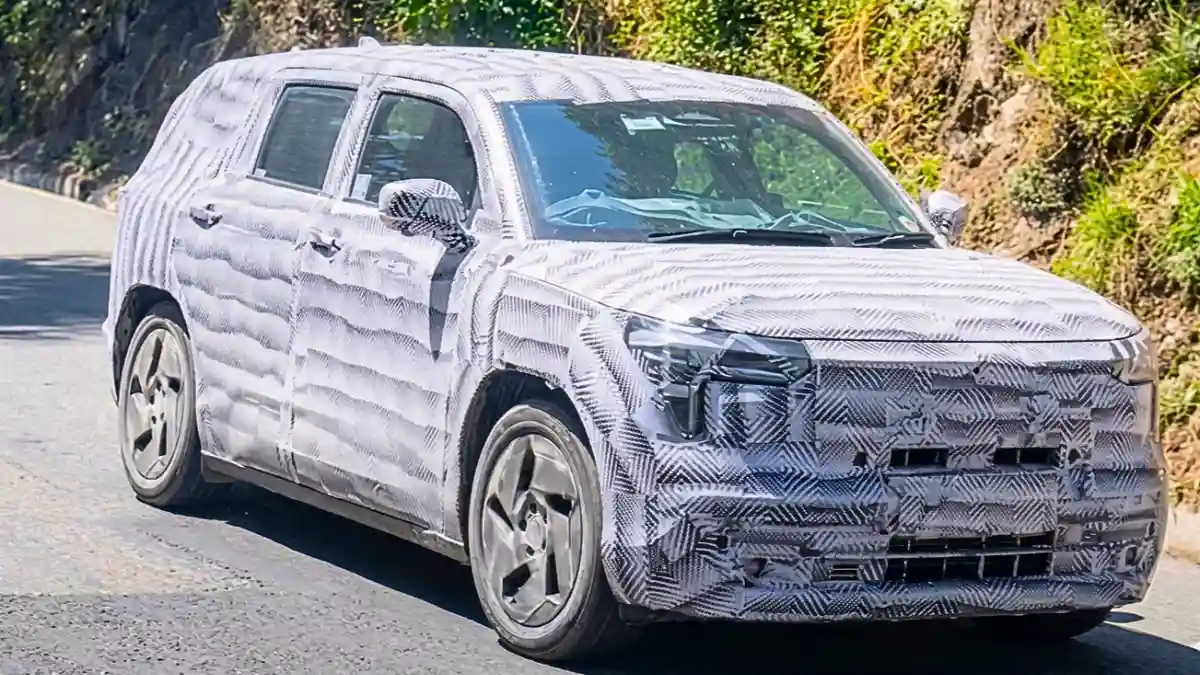
Then there’s the Safari EV, a move that could quietly become a masterstroke. The seven-seater will share the Harrier EV’s platform and powertrain, but by adding a third row, it will stand alone as the only three-row electric SUV from a mainstream Indian manufacturer. For large families currently locked out of the EV conversation because no one builds what they need, the Safari EV changes the arithmetic. It will directly take on the Mahindra XEV 9S, and if Tata prices it with the same aggression it has shown elsewhere, it could pull an entirely new demographic into showrooms.
Also Read – The Big Truck Mirage: Why GM Is Walking Away From Its Heaviest Silverados — and What Comes Next
Keeping the gateways fresh
Further down the ladder, the Tiago and Tigor are due for mid-life facelifts. These are not headline-grabbing ground-up redesigns, but their significance is outsized. The Tiago and Tigor EVs are the entry ramps to electric mobility for buyers migrating from petrol hatchbacks and compact sedans. The expected cosmetic sharpening — new LED signatures, aerodynamic wheels, a larger touchscreen and a fully digital instrument cluster — will help them look current in a segment where perception of modernity can swing purchase decisions.
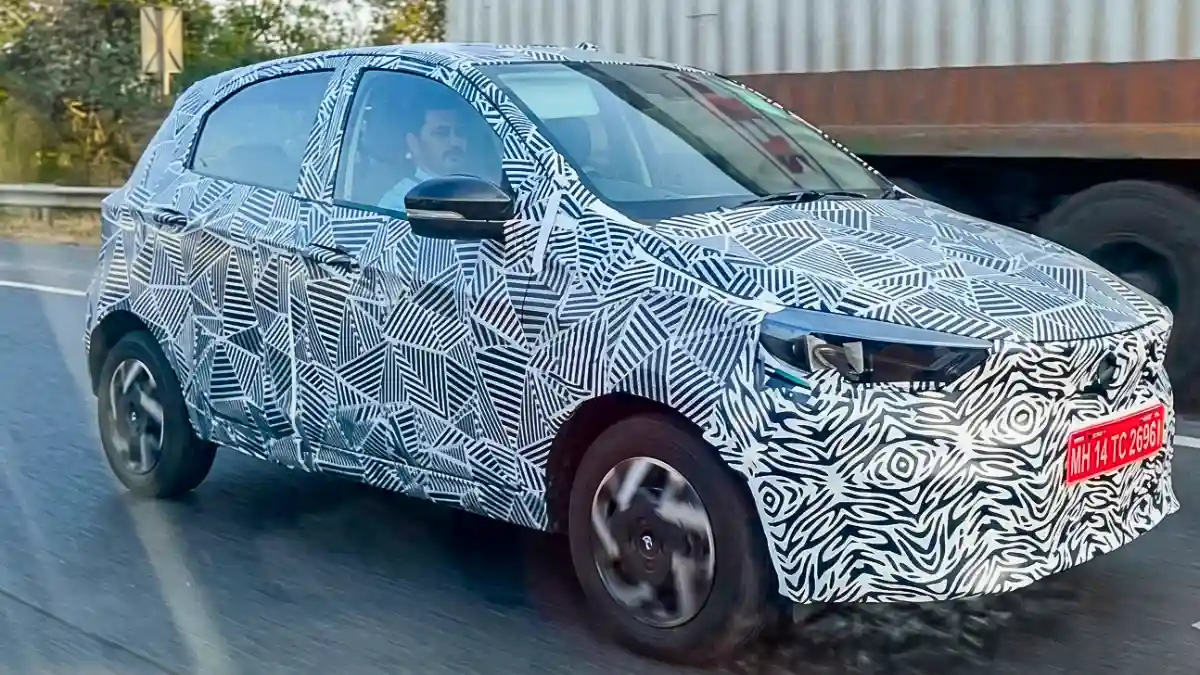
The quieter, more consequential change is under the floor. The updated Tiago EV is expected to adopt the 30 kWh battery pack from the recently revamped Punch EV. This would push real-world range substantially, directly addressing the single biggest hesitation of first-time EV buyers: whether the car can handle a week’s worth of errands and an unplanned detour without constant charging stops. The Tigor facelift is expected to follow a similar trajectory across petrol and electric versions, essentially bringing both nameplates in line with the fresher visual and equipment language Tata has already established with the Punch and Nexon.
The premium leap that’s been a long time coming
At the top end, the first production model under the Avinya sub-brand is slated for early 2027 — a timeline that feels less like a distant promise and more like a countdown. Built on a locally adapted version of Jaguar Land Rover’s EMA architecture, the car is widely expected to debut as a sportback-style premium EV, a silhouette Tata has never touched. The Avinya isn’t just another product; it’s a flag-planting exercise. It signals that Tata intends to compete in a segment where brand aspiration and design desirability matter as much as battery chemistry.
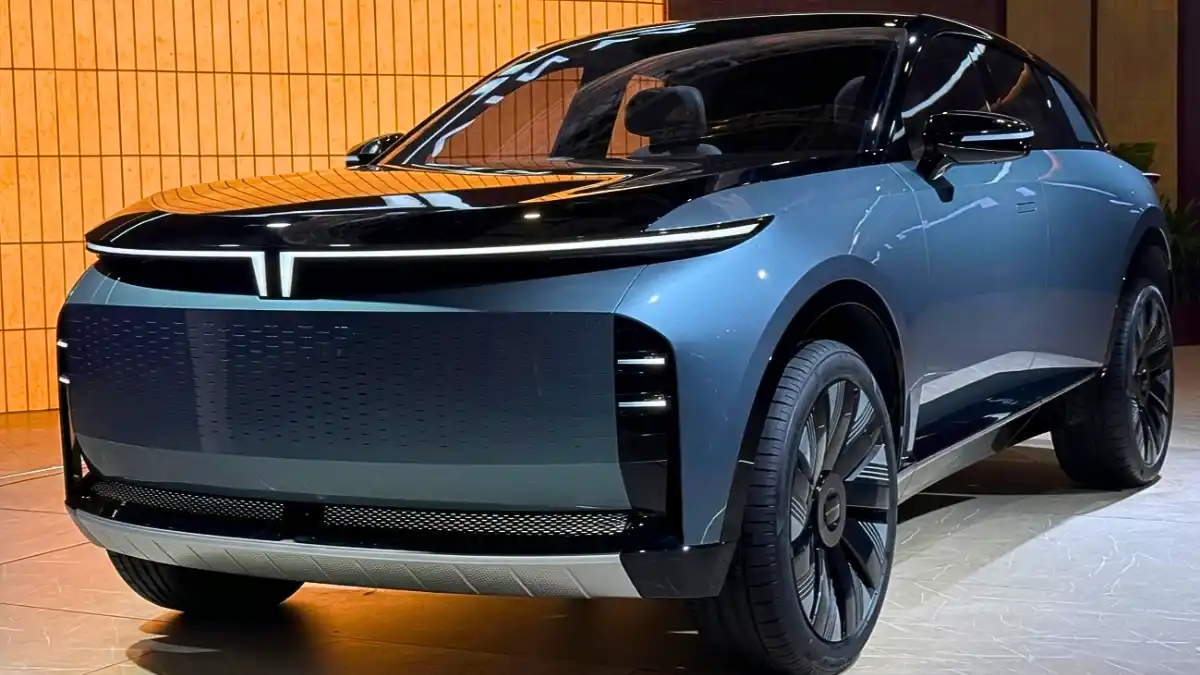
If executed well, the Avinya could do what the Nexon did for affordable EVs: create a category. A sleek roofline, a technology-dense cabin and a visual identity that will reportedly shape future Avinya models suggest that Tata is thinking far beyond the current SUV saturation. It is trying to engineer a desire that today’s Indian premium buyer — often cross-shopping with German entry points or Tesla pre-bookings — might finally respect.
Also Read – GM’s Batch-Build Strategy for the Chevy Bolt Is So Boring It’s Genius — Here’s Why
Ethanol, not electricity, for the wildcard
Amid all the voltage, Tata is also preparing to launch its first flex-fuel car by early 2027, with the Punch widely tipped as the candidate. The micro-SUV already sells in petrol, CNG and electric versions, making it the logical testbed for a fuel-agnostic strategy. India’s ethanol-blending targets are accelerating, and a flex-fuel Punch hedges against the messy reality that not every corner of the country will electrify at the same pace. For buyers in regions with patchy charging infrastructure but growing access to ethanol pumps, this could be the pragmatic bridge that keeps Tata relevant while its EV network deepens.
The bigger picture: platform thinking and pace in Tata Motors future plans 2027
What binds these six vehicles is not just a badge but an industrial logic. The Acti.ev+ architecture spreads development costs across the Sierra, Harrier EV and Safari EV, while the Punch’s ICE platform flexes across petrol, CNG, electric and soon ethanol. The EMA-derived underpinnings for Avinya bring JLR-grade tech into a price band that would have been unthinkable a few years ago. This is how scale happens without bloat.
Over the next 12 months, Tata Motors will stress-test whether India’s EV story can move beyond early adopters and truly become the default choice for a family’s primary car. It will test whether a domestic brand can credibly ask for a premium cheque. And it will test whether flex-fuel can be more than a footnote in a battery-obsessed world.
For an industry watching nervously from the sidelines, the answer won’t just come from sales charts. It will come from what these vehicles make possible — the journeys they enable, the buyers they convert, and the competitive response they provoke. That, more than any record, is the story worth following.
Also Read – Hyundai Kia India Upcoming Cars 2026-2027 Strategy: 4 Game-Changing Models

Raj is the creative mind curating the special content for the website. From exclusive first-drive reviews to buyer’s guides and comparison tests, Raj ensures our features are engaging and helpful. He loves getting behind the wheel of new launches and creating content that helps our readers pick their dream vehicle. His passion for motorcycles and performance cars is evident in his energetic writing style.