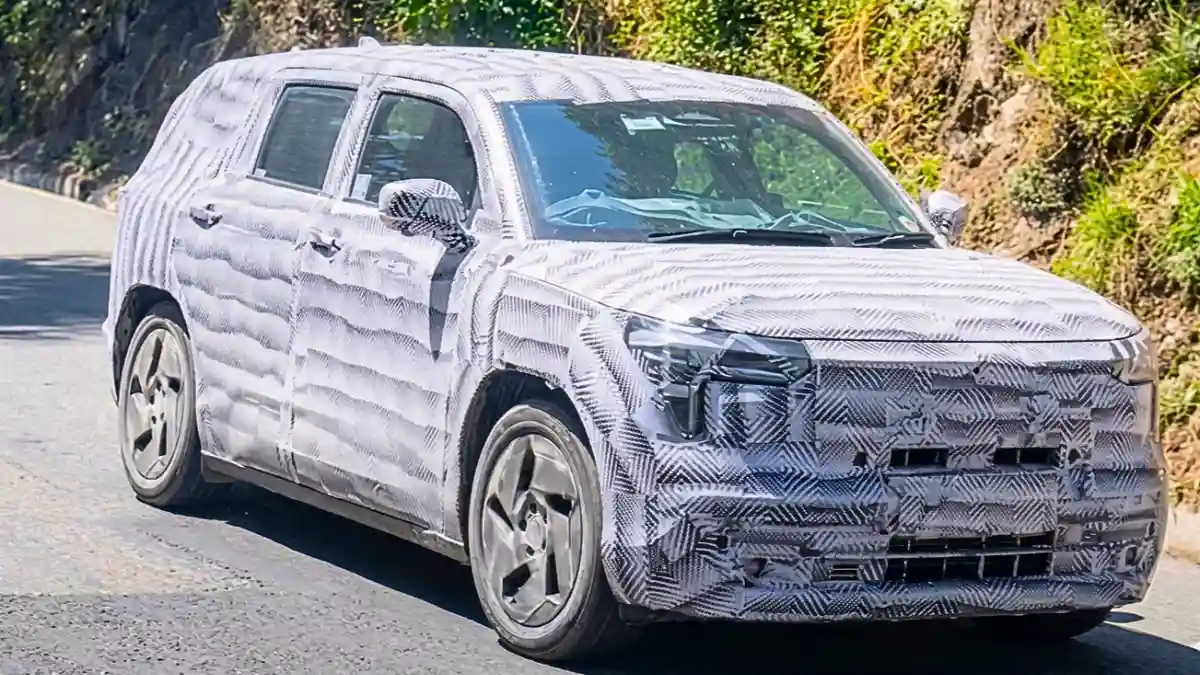
A trio of heavily disguised vehicles rolling in tight formation on an Indian highway in the Maruti Suzuki test convoy 2026 isn’t just a routine test run — it’s a moving manifesto. When those three mules belong to Maruti Suzuki, a company that commands roughly 40% of all passenger vehicle sales in the country, even their camouflaged shadows are enough to redraw the strategic map for the next two years. The latest sighting bundles together a refreshed Brezza, an updated Baleno, and an all-new seven-seat electric MPV codenamed YMC. That convoy isn’t random; it is Maruti telegraphing, in formation, exactly how it plans to defend its empire while building an entirely new one.
For a manufacturer often accused of arriving late to trends, this simultaneous reveal — even under wraps — suggests a carefully choreographed product assault, not a scramble. And it arrives at a moment when the ground beneath the Indian car market is shifting faster than ever.
Reading the Camouflage: Not Just Facelifts, but Fortifications
The Brezza and the Baleno aren’t merely getting cosmetic tweaks. If you look beyond the vinyl swirls, you’ll see Maruti reinforcing the two pillars that have kept its showrooms buzzing while rivals struggled. The Brezza facelift, with its subtle reworked rear light signature and the industry’s current obsession — a connected light bar — isn’t trying to reinvent the compact SUV. It’s methodically removing reasons for a buyer to look elsewhere. A larger touchscreen, a six-speed manual option, and an underfloor CNG tank mean Maruti is stacking practical, running-cost-conscious arguments that speak directly to the heart of the Indian family. The message is clear: before you even think about a Kia Sonet or a Tata Nexon, the Brezza wants to out-equip them on the spreadsheet that matters most — monthly fuel bills and feature lists.
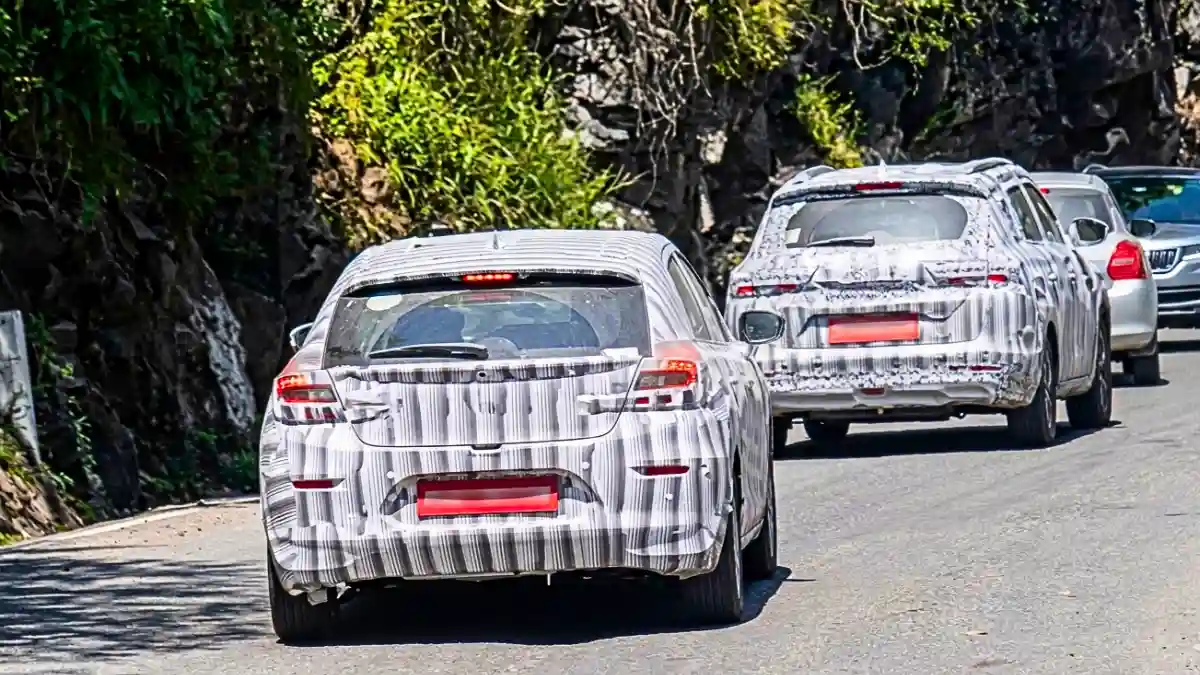
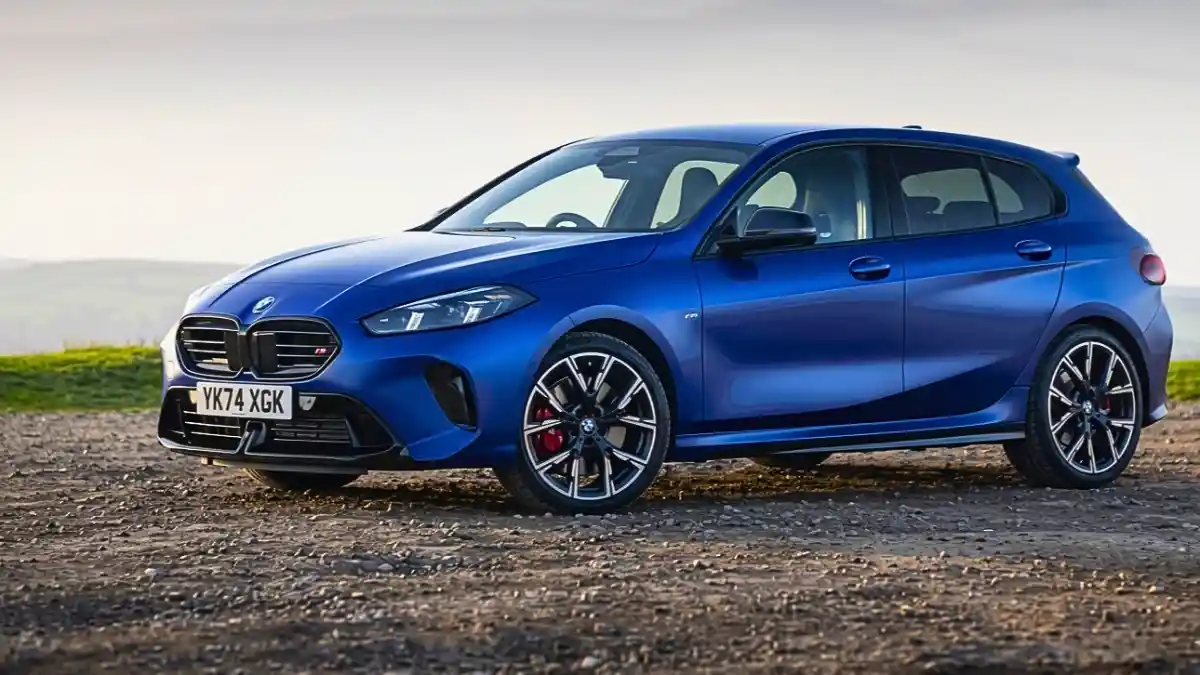
The Baleno, sitting lower and wider in the convoy, tells a more nuanced story. The premium hatchback segment has been bleeding volumes to compact SUVs for years. By giving the Baleno a thorough styling rework and connected tech upgrades, Maruti is essentially betting that there’s still a large, discerning buyer base that wants the driving ease and efficiency of a hatchback without feeling short-changed on modern gadgetry. This isn’t a capitulation to SUV mania; it’s an affirmation that the hatchback can remain aspirational if it evolves intelligently. Paired together, the Brezza and Baleno updates are Maruti’s way of telling its existing millions of customers: the cars you already trust are now even harder to fault.
Also Read – Next-Gen Hyundai i20 Is Coming Back Stronger – Here’s Everything You Need to Know Before 2027
The Silent Disruptor: Why the YMC MPV Changes Everything
And then there’s the third vehicle, the one that sits taller, longer, and with a boxy, upright honesty that screams family space. The YMC electric MPV isn’t just another addition to Maruti’s long-awaited EV portfolio; it’s the product that could make the electric people-carrier genuinely mainstream. Current electric offerings in India are predominantly SUVs or compact hatchbacks, often prioritizing style over third-row usability. An electric MPV around 4.5 metres long, sharing bones with the born-electric e Vitara platform, hits a deeply underserved sweet spot.
Consider the daily reality of a large Indian family: multiple generations, luggage for a wedding, the need to shuttle kids to school with zero tailpipe emissions in cities that are beginning to clamp down on air quality. A properly packaged seven-seat EV with a closed-off grille, generous glass area for an airy cabin feel, and a boxy tailgate that doesn’t sacrifice headroom for styling would directly challenge the default choice of diesel MPVs. The Kia Carens has shown the appetite for a modern family van. The YMC’s electric heart could shift the conversation from fuel economy to guilt-free usability, especially if Maruti manages to combine its legendary low-cost servicing network with an accessible price point. The fact that it rolled alongside two of the brand’s biggest volume sellers hints that Maruti is treating this EV not as a niche experiment but as a high-volume contender.
Also Read – 2026 Cadillac Escalade Sport Lease at $1,935/Month: Full Deal Breakdown and Smart Negotiation Tips
Maruti Suzuki Test Convoy 2026: A Convoy, Not a Coincidence
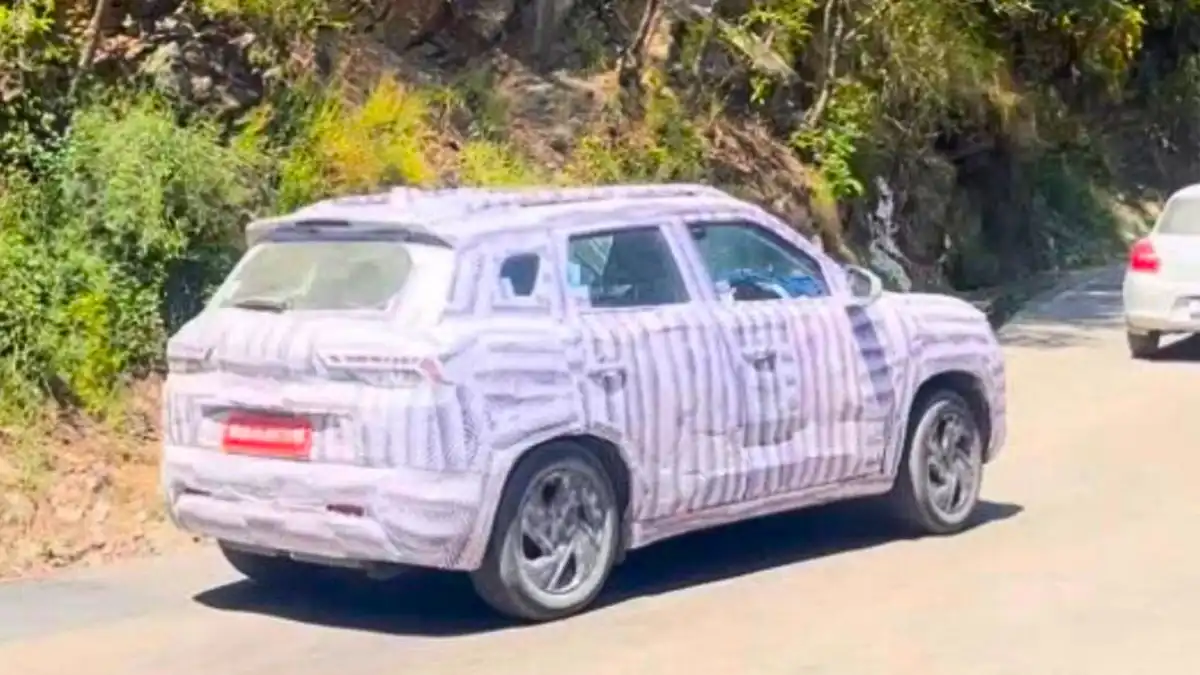
There’s an operational narrative here too. Getting three separate late-stage prototypes to move in a single convoy isn’t casual. It suggests synchronized validation cycles — maybe durability runs across the same heat and traffic conditions, or benchmarking sprints where engineers can directly compare ride quality and noise levels between an ICE Brezza, a naturally aspirated Baleno, and a near-silent electric MPV. For a company that has historically staggered its product cadence, this parallel testing signals a compressed launch timeline that could see a rapid-fire sequence of unveils from late 2026 into early 2027. That kind of manufacturing and engineering choreography is a muscle only a market leader can flex, and it leaves competitors with a much smaller window to respond.
What This Means for the Indian Road
Taken together, the three test cars outline a two-speed strategy. In the immediate term, Maruti will fight to retain and grow its core internal combustion and CNG volumes by making its bread-and-butter models feel thoroughly contemporary, not just adequate. In parallel, it is preparing an electric entry that sidesteps the crowded mid-size electric SUV field and targets family practicality at a scale no one has yet achieved. If the YMC can replicate the Brezza’s or Ertiga’s value-for-space formula in an EV avatar, it will do more for electric adoption in India than a dozen luxury sedans ever could.
The sight of those three mules moving together in traffic is a quiet promise: Maruti isn’t just updating its lineup; it is staging a takeover where the familiar and the futuristic advance down the same road, at the same time. For the car buyer, it means the next eighteen months will bring safer, smarter iterations of the cars they know, and one electrified people-mover that might just change their idea of what the family car can be.
Also Read – Tata Motors Future Plans 2027: Beyond the Sales Charts — What the Next 12 Months Mean for the Indian Road

If it runs on electricity or has a microchip, Rahul is on it. As our resident tech geek and electric vehicle (EV) specialist, Rahul decodes complex technologies into simple language for our readers. He stays ahead of the curve on battery technology, autonomous driving, and the latest digital trends in the automotive sector. If you want to know the real range of an EV or the future of mobility, Rahul has the answers.