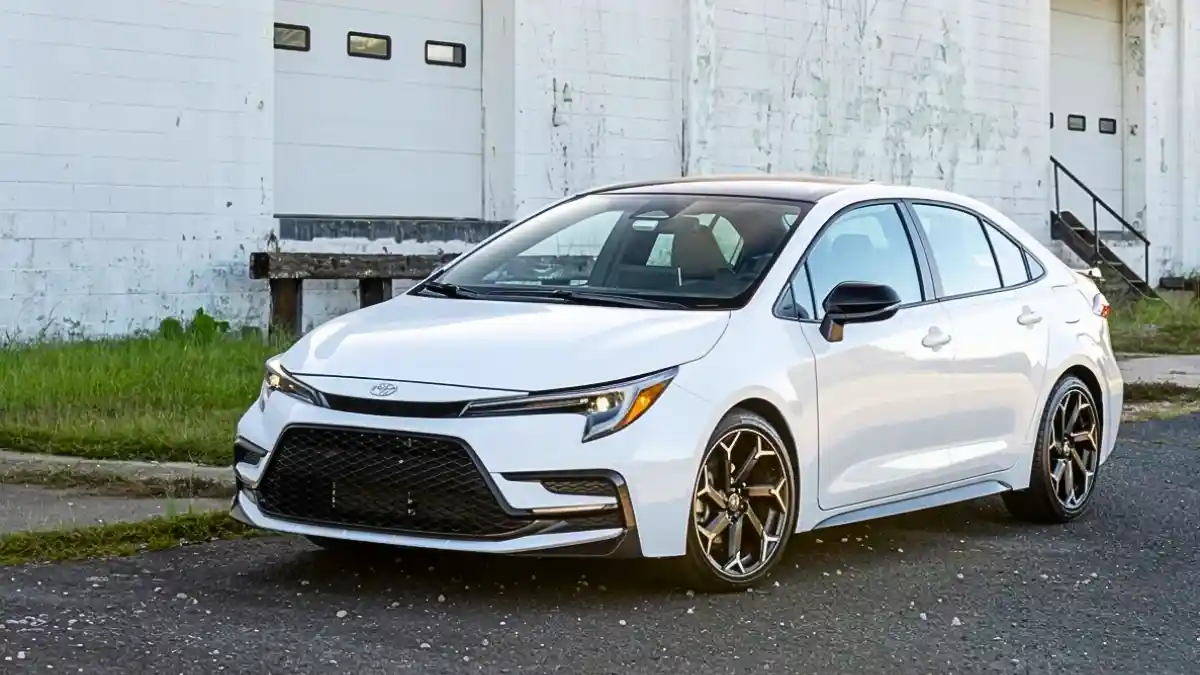
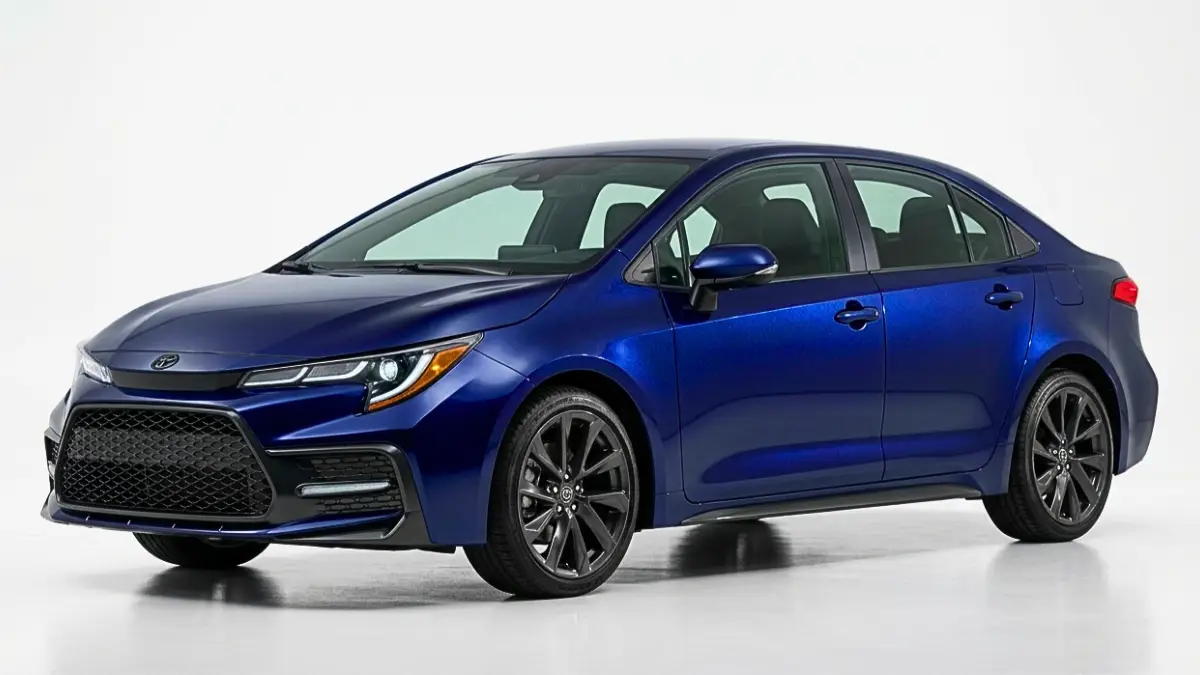
In an era where automobiles are morphing into smartphones on wheels, the 2026 Toyota Corolla Hybrid makes a radical choice: it refuses to chase novelty for its own sake. While competitors cram turbochargers into every engine bay, replace physical controls with haptic-feedback sliders, and layer direct-injection systems that demand costly maintenance, Toyota’s compact hybrid quietly doubles down on a philosophy the industry seems to have forgotten. Longevity sells. And the 2026 Toyota Corolla Hybrid might just be the purest expression of that idea on sale today.
The story behind this car isn’t about what’s new. It’s about what Toyota deliberately left alone.
The Paradox of Progress
Modern automotive engineering faces a tension that marketing departments rarely acknowledge. The technologies that generate excitement—high-strung small-displacement turbos, dual-clutch transmissions, fully digital cockpits—often introduce long-term fragility. Direct injection, for example, boosts fuel economy and power on a spec sheet. But it also starves intake valves of the fuel spray that cleans them, leading to carbon buildup that saps performance and requires expensive media blasting to remove. Turbochargers elevate horsepower figures but introduce extreme heat, oil coking risks, and an expensive failure point as mileage climbs.
Toyota has watched this play out across the industry. And with the 2026 Toyota Corolla Hybrid, it turned the other way.
Instead of chasing the latest horsepower war, the company leaned into one of the most proven powertrain foundations it has ever built: the 1.8-litre 2ZR-FXE engine. This isn’t a new engine. Its lineage traces back to 2009, and it has since powered everything from the Prius to the Lexus CT200h, quietly piling up hundreds of thousands of real-world miles on every continent. By sticking with port injection rather than direct injection, Toyota sidesteps the carbon-buildup problem entirely. There is no turbocharger to fail. There is no complex variable-geometry mechanism waiting to seize. The engine uses a single VVT-i and a robust, under-stressed architecture that mechanics routinely describe as one of the least troublesome powerplants in circulation.
That’s not an accident. It’s a deliberate engineering stance that says: reliability is a feature more valuable than a tenth of a second on a 0-60 time.
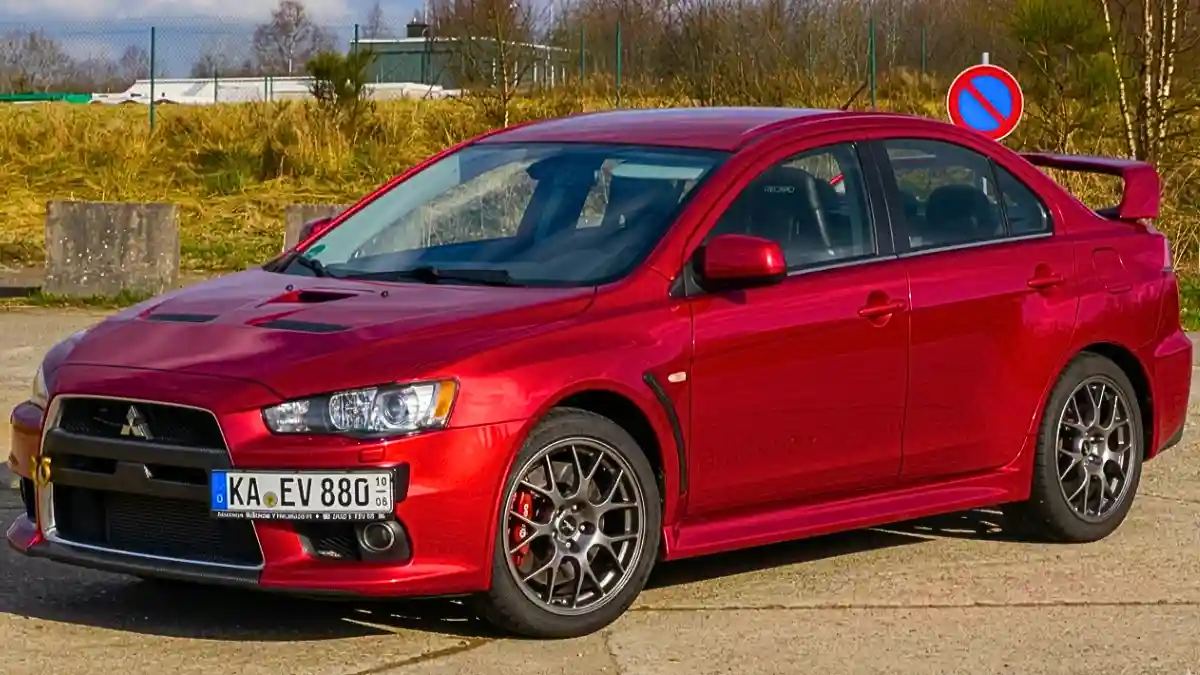
Also Read – The Mitsubishi Lancer Evolution Time Capsule: A 722-Mile Window into Everything We Lost
The Fifth-Generation Leap Nobody Notices
Describing the 2026 Toyota Corolla Hybrid as “old-school” would miss half the story. Toyota didn’t simply freeze the car in time. In 2023, the model received the company’s fifth-generation hybrid system, and it carries that into 2026. But here’s where the restraint becomes brilliant: the changes were focused entirely on refining the electric side without upsetting the mechanical dependability underneath.
The system now uses a lithium-ion battery pack instead of the older nickel-metal hydride unit, which improves energy density, allows for longer electric-only driving at low speeds, and makes the handoff between electric and petrol power almost imperceptible. The e-CVT—often misunderstood by drivers accustomed to conventional automatics—is in reality a planetary gearset that has virtually no wear items compared to belt-driven CVTs or dual-clutch units. Mechanics who service these transmissions will tell you they simply don’t break. That transmission remains, effectively, unaltered because it didn’t need fixing.
Other updates are so subtle only a technician would notice them. The catalytic converter has been repositioned into a less rust-prone area, reducing the risk of corrosion failure in salt-belt regions. The exhaust gas recirculation (EGR) valve, a component that has occasionally caused headaches on older hybrid engines, is now easier to access and replace, cutting labour time if service is ever needed. Even the shifter remains cable-operated rather than electronic, meaning a driver can still shift into neutral even with a completely dead battery—a small, human-centric design choice that disappears from spec sheets but proves its worth in a roadside emergency.
These are not changes designed to win comparison tests. They’re changes designed to keep the car out of the repair bay five, ten, fifteen years from now.
Also Read – IIHS Rear Seat Safety Standards 2026: One Flaw, No Prize—How a Single Test Redefined What Makes a Car Safe
2026 Toyota Corolla Hybrid: What Matters After the Showroom Floor
The case for the Corolla Hybrid becomes even clearer when you step outside the bubble of launch events and press drives. A seasoned mechanic known for his straight-talking assessments recently called this the best Toyota you can buy in 2026. His reasoning had nothing to do with touchscreen size or ambient lighting. It was grounded entirely in what he sees—and doesn’t see—on his lift day after day.
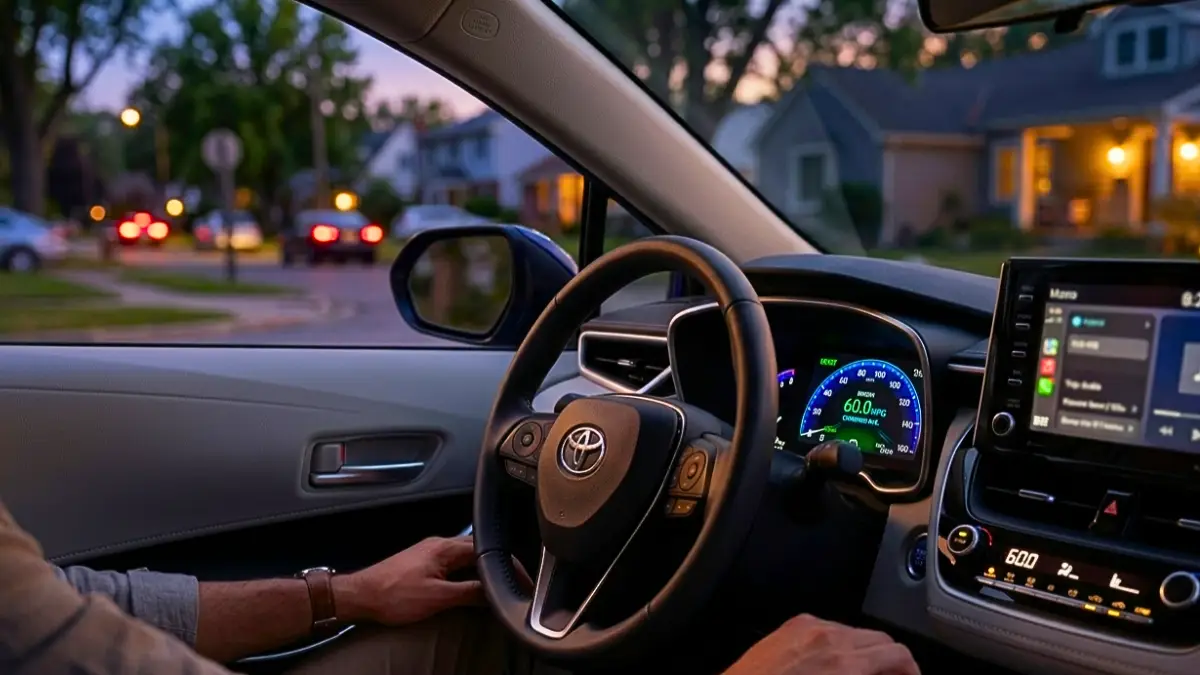
Consider the fuel economy figure, which hovers around 60 miles per gallon in real-world driving. That number isn’t new, but it’s achieved without forcing the engine into a high-strung, failure-prone state. The interior, meanwhile, is honest. Physical knobs for climate control. A straightforward gauge cluster. No gimmicky controls buried three menus deep. For anyone who has ever tried to adjust cabin temperature while navigating a labyrinth of touch-sensitive panels on a bumpy road, that simplicity is a quiet luxury.
The point isn’t nostalgia. It’s that Toyota has identified where complexity actually adds value—the hybrid system’s efficiency and refinement—and where it subtracts—engine and transmission longevity. That discernment is rare.
An Uncomfortable Truth for the Industry
The 2026 Toyota Corolla Hybrid exposes a tension the automotive world isn’t ready to confront head-on. As cars become more software-dependent and mechanically intricate, the total cost of ownership over a decade or more can balloon. Direct-injection carbon cleaning, turbocharger replacements, and electronic shifter failures are not theoretical risks; they’re line items on repair invoices in dealerships everywhere right now.
Toyota’s approach suggests a different path. It proves that a vehicle can meet tightening emissions standards and deliver exceptional fuel economy without abandoning the mechanical simplicity that built the company’s reputation. The fifth-generation hybrid system is genuinely modern where it counts, but the car beneath it remains refreshingly uncomplicated.
For buyers, the long-term implications are tangible. Lower maintenance costs. Fewer unexpected breakdowns. A vehicle that’s likely to retain its value because the second and third owners won’t inherit a ticking time bomb of deferred repairs. That’s not just a rational purchase decision; it’s a quiet rebellion against an industry that often treats cars as disposable gadgets.
The 2026 Toyota Corolla Hybrid doesn’t shout. It doesn’t dominate headlines with outrageous horsepower or transforming interiors. What it does, with almost stubborn clarity, is remind us that the smartest engineering decision in 2026 might just be the courage not to change what already works.
Also Read – Volvo Burnt the Combustion Engine Blueprint — No More Engine Factories, No Looking Back

Sapna is the storytelling powerhouse of the team. With a sharp eye for detail and a knack for uncovering the human interest side of automobiles, she covers everything from industry launches to feature stories. She believes that every car has a story and every rider has a journey. Her writing is known for its clarity, depth, and ability to connect with the common man.