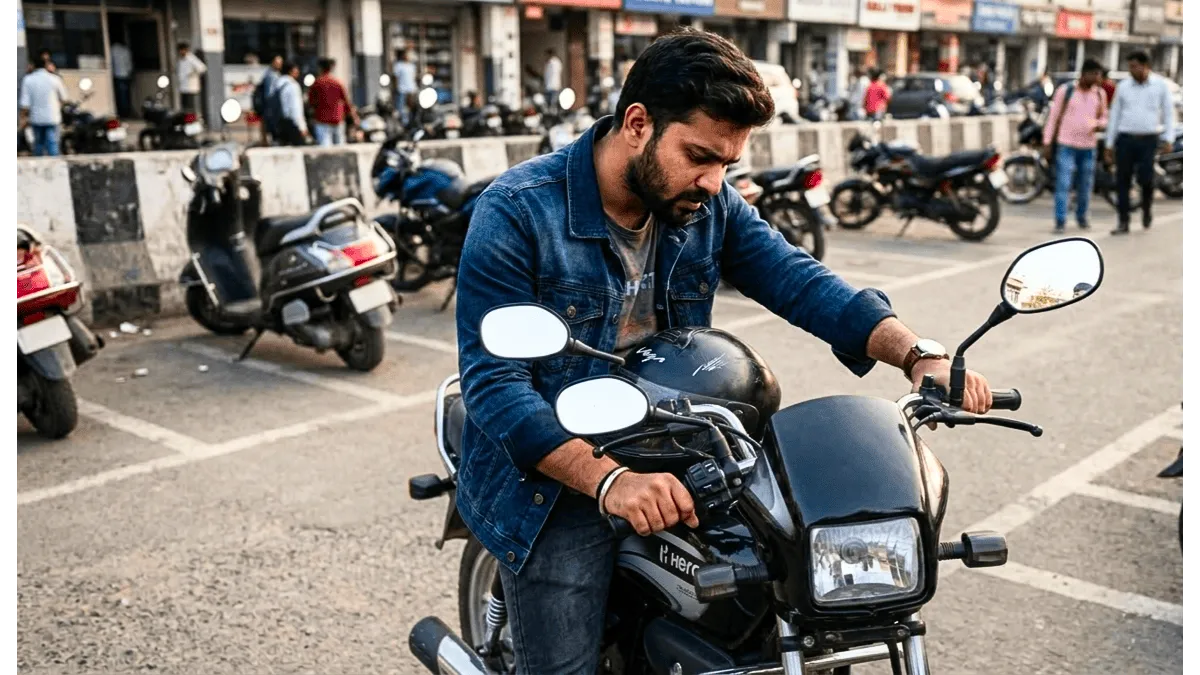
Hello Everyone! We’ve all faced that heart-sinking moment. You’re late, keys in, hit the magic button… and nothing happens. Just a sad click, a groan, or pure silence. Panic starts bubbling, right? Stop right there! Before you imagine a massive repair bill or call for help, take a breath. Figuring out what to do when bike self-start is not working is usually way simpler than you think. I’ve wrestled with this more times than I can count on my old Bullet and trusty Splendor. Let’s break it down together, step-by-step, like mates figuring it out in the parking lot. By the end of this guide, you’ll be a pro at diagnosing what to do when bike self-start is not working.
Step 1: Seriously, Check the Dumb Stuff First (It Fixes Half the Problems!)
No shame here! We all overlook the basics when stressed. Take two seconds:
- Neutral Light On?: Many bikes only start in neutral. Glance down. Is that green light glowing? If not, wiggle the gear lever into neutral.
- Kill Switch in the Wrong Spot?: Happens constantly! Flipped it while washing the bike? Bumped it while squeezing through traffic? Make sure it’s set to “RUN” or “ON”. Double-check it.
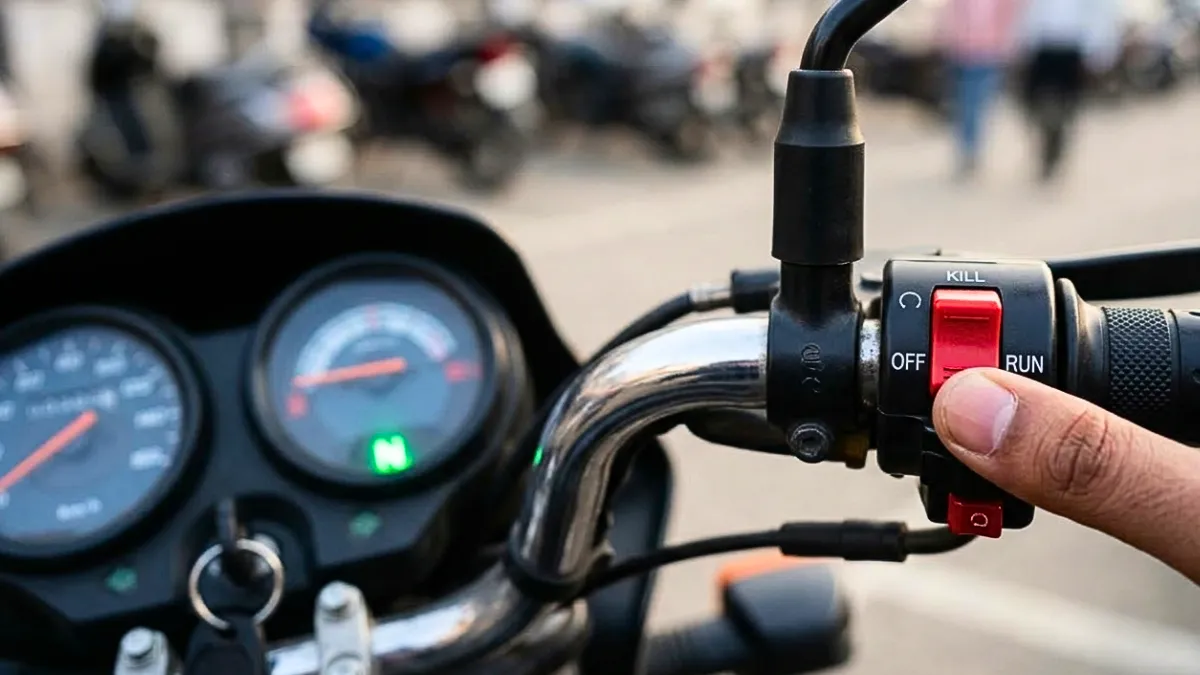
- Is the Side Stand Down?: Most modern bikes have a safety cut-off. Stand down + bike in gear = no start. Kick that stand up firmly.
- Got Fuel?: Sounds obvious, but did you actually run dry? Check the gauge (if FI). For carbs, is the fuel tap on “ON” or “RESERVE”? Give it a gentle shake – hear any sloshing?
These quick checks are the first step in understanding what to do when bike self-start is not working.
Step 2: Listen Like a Mechanic – What’s the Sound Telling You?
This is your biggest clue! Press the button and really listen:
- Dead Silence (No Click, No Whirr): Screams “flat battery” or “a totally busted connection.” Super common, especially with short commutes.
- Rapid Clicking (Like a Gecko on Speed): Classic weak batter. Enough juice to tickle the relay, not enough to crank the motor.
- One Solid “CLUNK!” Then Nothing: Could be a super-weak battery, or maybe the starter motor is jammed, or its solenoid is stuck.
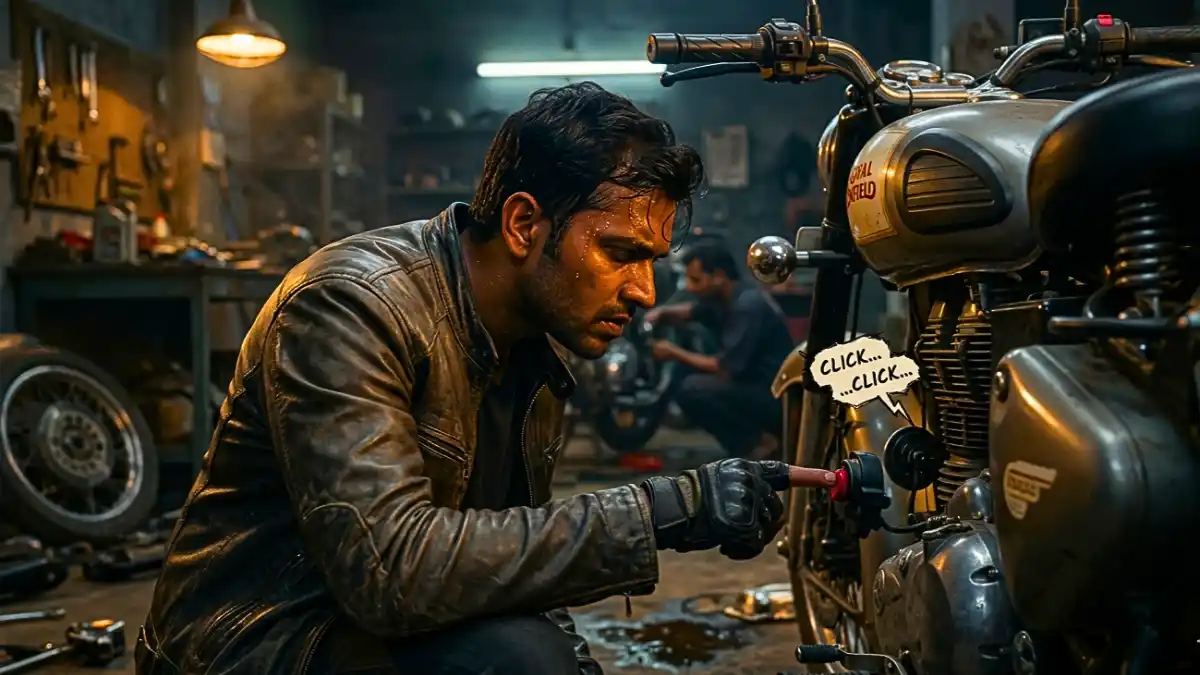
- Slow, Dragging Crank (Like it’s Tired): Again, points heavily to a tired battery or maybe corroded terminals sapping power.
- Normal Cranking (Spins Fine) But No Fire: This shifts the blame! If the engine spins healthily but doesn’t catch, your issue is likely FUEL (clog, pump, injector), SPARK (plugs, coil, wiring), or AIR (super clogged filter).
Listening carefully helps you quickly figure out what to do when bike self-start is not working based on the symptoms.
Step 3: What to Do When Bike Self-Start is Not Working – The Battery (The Usual Suspect: Seriously, 90% of the Time!)
Honestly, in my experience, especially with bikes a few years old or ones used for short commutes, the battery is the prime suspect when you’re wondering what to do when bike self-start is not working. Here’s how to investigate:
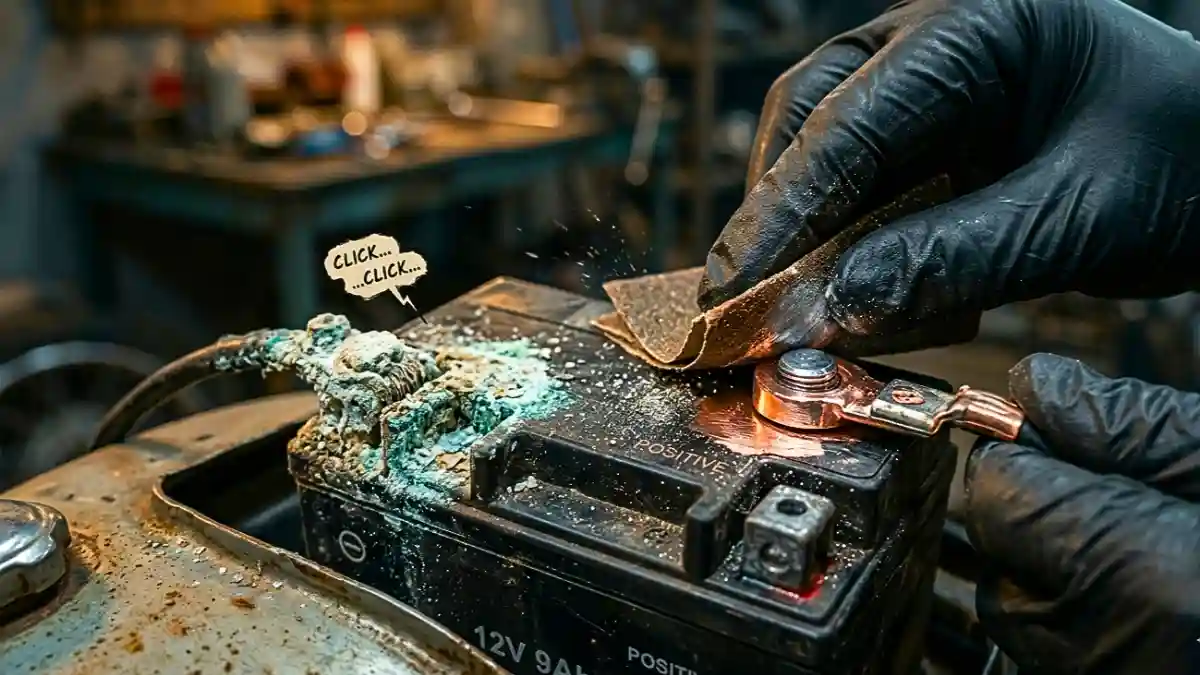
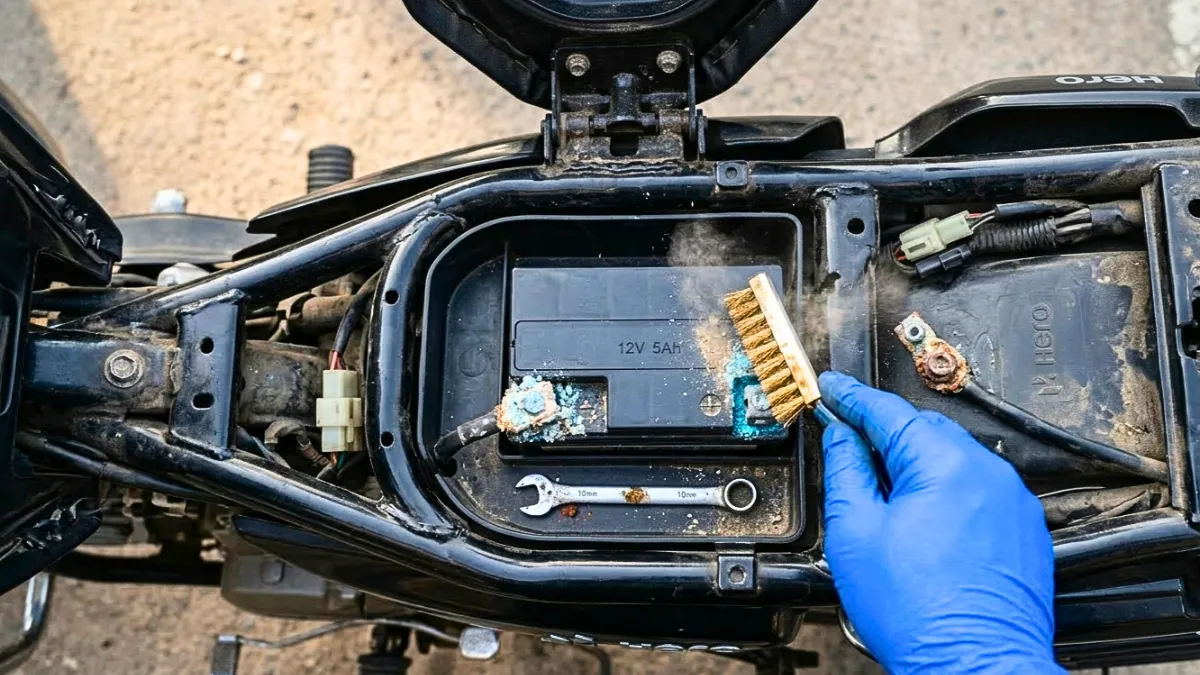
- Terminal Check: Pop open the seat or battery cover. Look at the battery terminals (the big red + and black – connectors). Are they crusty? Covered in white/green powder (corrosion)? Are they loose?
- Quick Fix: If loose, tighten the nuts snugly. If corroded, disconnect (BLACK/NEGATIVE first). Scrub terminals clean with sandpaper or a wire brush. Reconnect (BLACK/NEGATIVE last). Often, this simple terminal cleaning solves what to do when bike self-start is not working (wear gloves – that gunk is nasty).
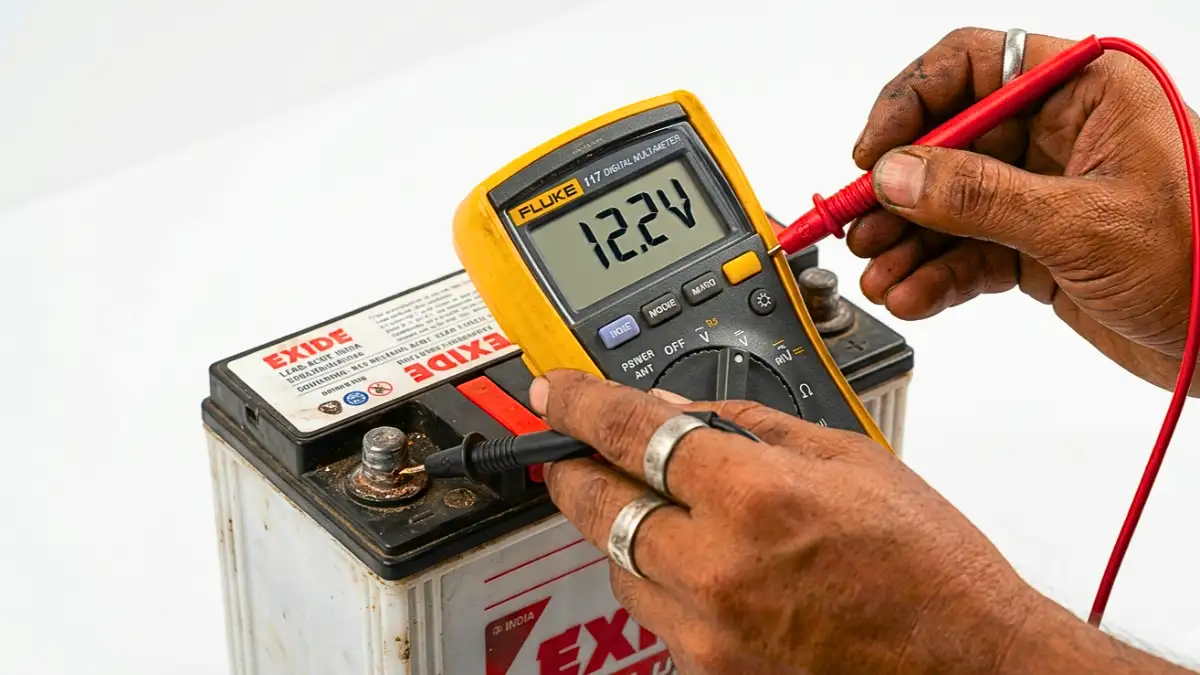
- Voltage Check (Got a Multimeter?): Gold standard. Set to DC volts (20V). Red probe on red (+), Black probe on black (-).
- 12.7V – 13.2V: Battery’s fine. Look elsewhere
- 12.4V – 12.6V: Battery’s okayish, might struggle if old/cold.
- 12.0V – 12.4V: Battery’s low. A likely culprit when you’re figuring out what to do when bike self-start is not working.
- Below 12.0V: Dead flat. Needs charging or replacing.
- Headlight Test (No Tools?): Turn ignition ON (don’t start). Flip the headlight to high beam.
- Bright & Steady: Maybe okay… but not guaranteed under starter load.
- Dim/Flickering: The battery’s weak.
- Dies When You Hit Start: Battery can’t handle the strain. Confirmed as the reason for what to do when bike self-start is not working.
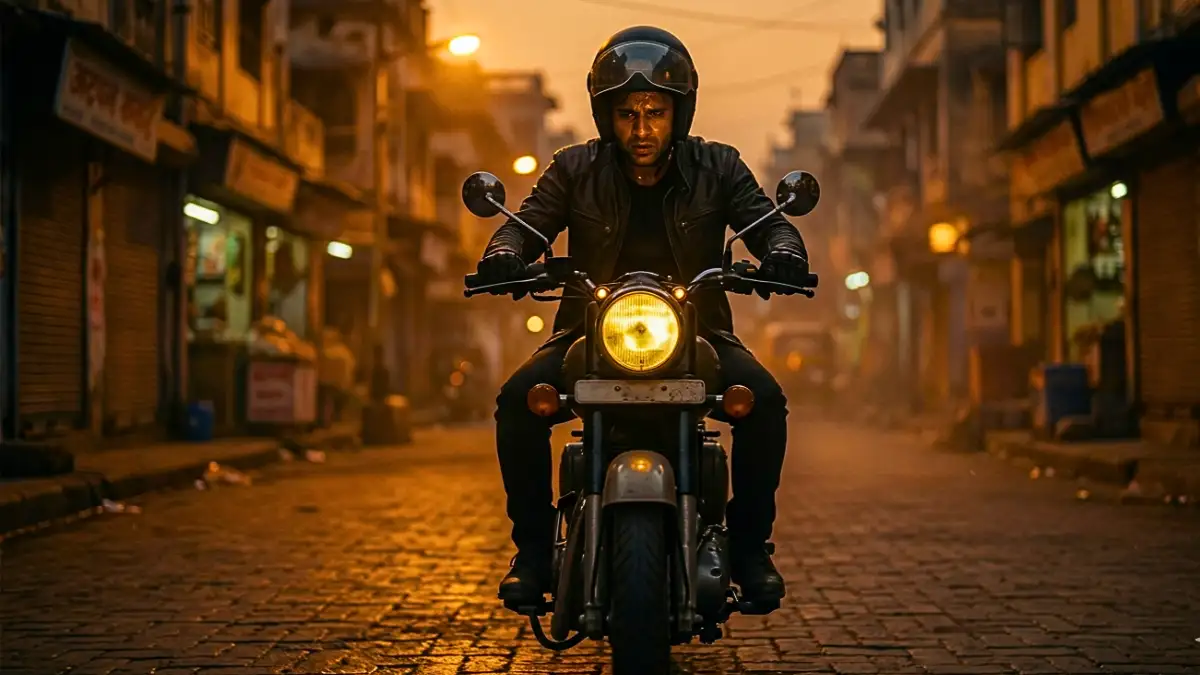
- Battery’s dead? Here’s Your Escape Plan:
- Kickstart saviour: Got one? Use it! Pull choke if cold. Find that compression point (slight resistance on the kicker), then a firm, full kick. Once running, ride for 30-45 mins at speed (not crawling) to recharge. The best roadside fix for anyone asking what to do when bike self-start is not working.
- Push-Start / Bump-Start (No Kick?): Needs a helper or a slope. Safely!
- Ignition ON. Kill Switch RUN!
- Bike in 2nd gear (smoother than 1st).
- Clutch lever pulled in fully.
- Get pushed or roll downhill. Get moving (brisk walk pace).
- Smoothly but quickly dump the clutch. The engine should catch.
- Instantly pull the clutch back in. Rev gently. Don’t stall!
- Safety First! Only in safe, open areas. Control is key. Solo on a busy road? Don’t try it!
- Charge It: Got home/charger? Hook up a proper bike battery charger overnight.
- Replace It: Is the battery old (3-5 years)? Dies after charging? Swollen? Time for a new one. Match specs (Ah, CCA).
Step 4: Beyond the Battery – Hunting Other Electrical Gremlins
Is the battery good? Are the terminals clean? Starter still dead? If you’ve done the basics and still need answers on what to do when bike self-start is not working, let’s dig deeper:
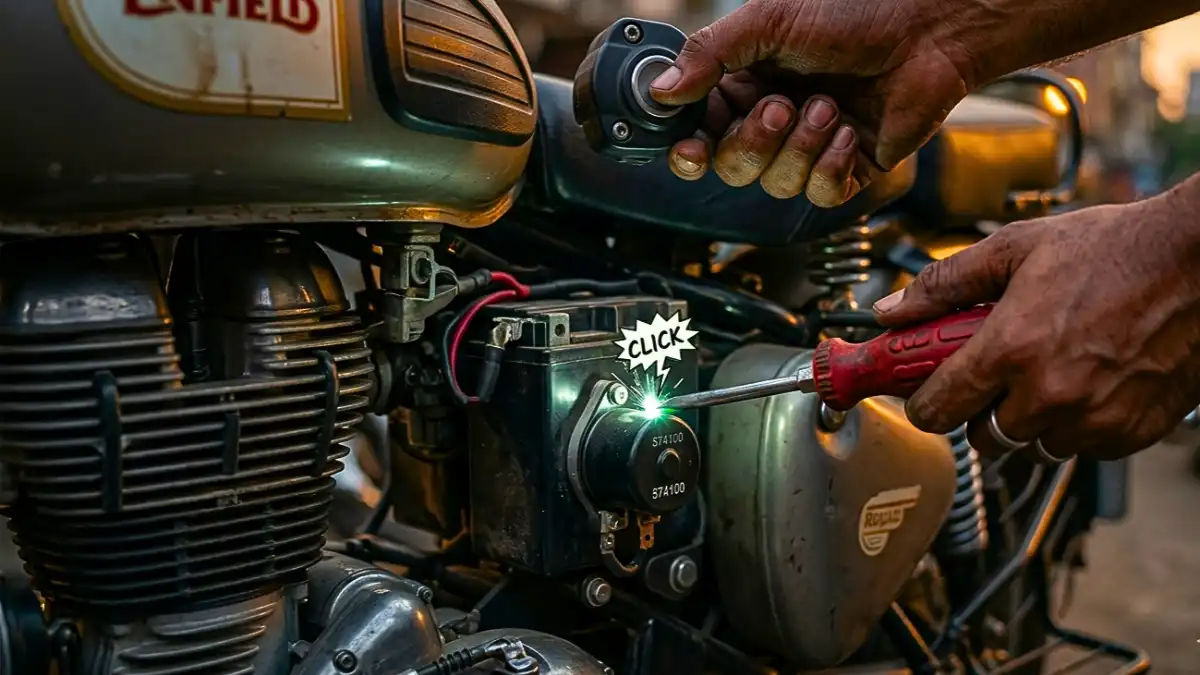
- Starter Relay (The Clicky Box): This heavy-duty switch sends power to the starter. Usually near the battery.
- The Tap Trick: Relays stick. Find it. Get a mate to press start while you give it a solid whack with a screwdriver handle. If it suddenly cranks? Faulty relay – replace it.
- Swap Test: Got identical relays (like the horn relay)? Swap them (check the manual!). If the problem moves, you found the dud.
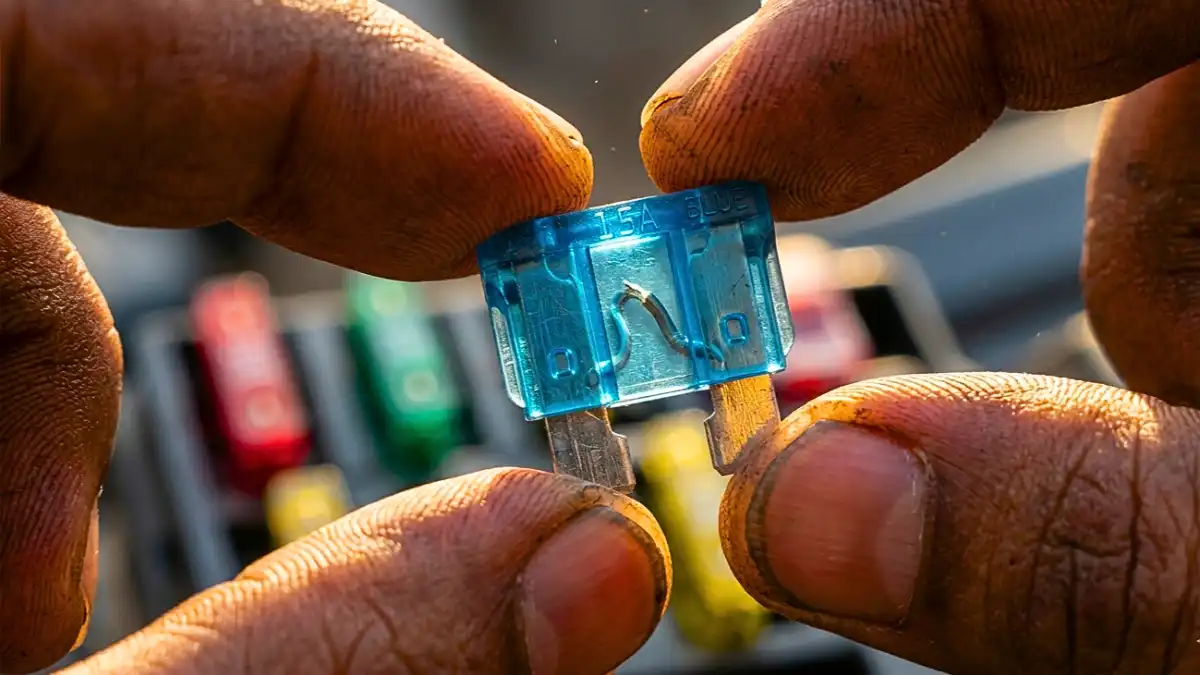
- Fuses: Less common for the main starter, but check anyway. Find the fuse box (near the battery/under the seat). Look for the ignition/starter fuse. See a broken wire inside? Replace with the exact same rated fuse. Never upsize!
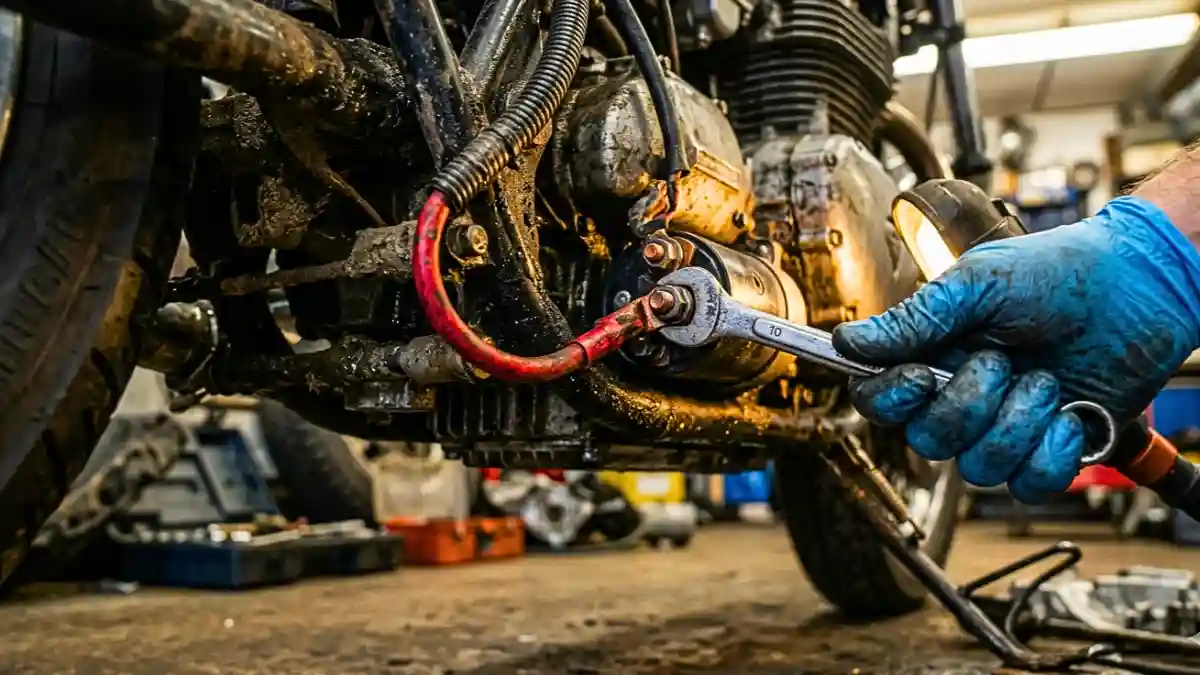
- Starter Motor (The Big Boy): The relay clicks loudly, but no crank? The motor might be dead or the connections might be bad.
- Check Cables: Trace the thick cable from battery (+) to relay, then another thick one to the starter motor (bolted on engine). Are connections clean and tight ?. This step is crucial in the journey of what to do when bike self-start is not working.
- Direct Jump Test (Expert/Use Caution!): Bypasses everything. Bike in Neutral. Ignition Off.
- Find the main fat cable on the starter motor.
- Use heavy pliers or a big screwdriver to briefly touch this terminal directly to the battery’s positive (+) terminal. Avoid touching the bike frame! Sparks will fly!
- If the starter spins/jumps, the motor is okay – problem is upstream (relay, switch, wiring). If nothing? Starter motor’s likely toast. Needs pro help. Only if you’re confident!
Step 5: Cranks But Won’t Start? (The Infuriating False Hope)
Engine spins fine, but just won’t fire? The starter system is working. Your issue is elsewhere, but you’re still dealing with what to do when bike self-start is not working. Quick checks:
- Fuel Reality Check: Really out of petrol? Switch to reserve (carbs). FI bike? Trust the low fuel light. Tap ON?
- Flooded? (Carb Bikes): Smell petrol? You probably flooded it trying to start. Hold the throttle wide open and crank for 5-10 secs (choke OFF). Clears excess fuel. Try starting normally.
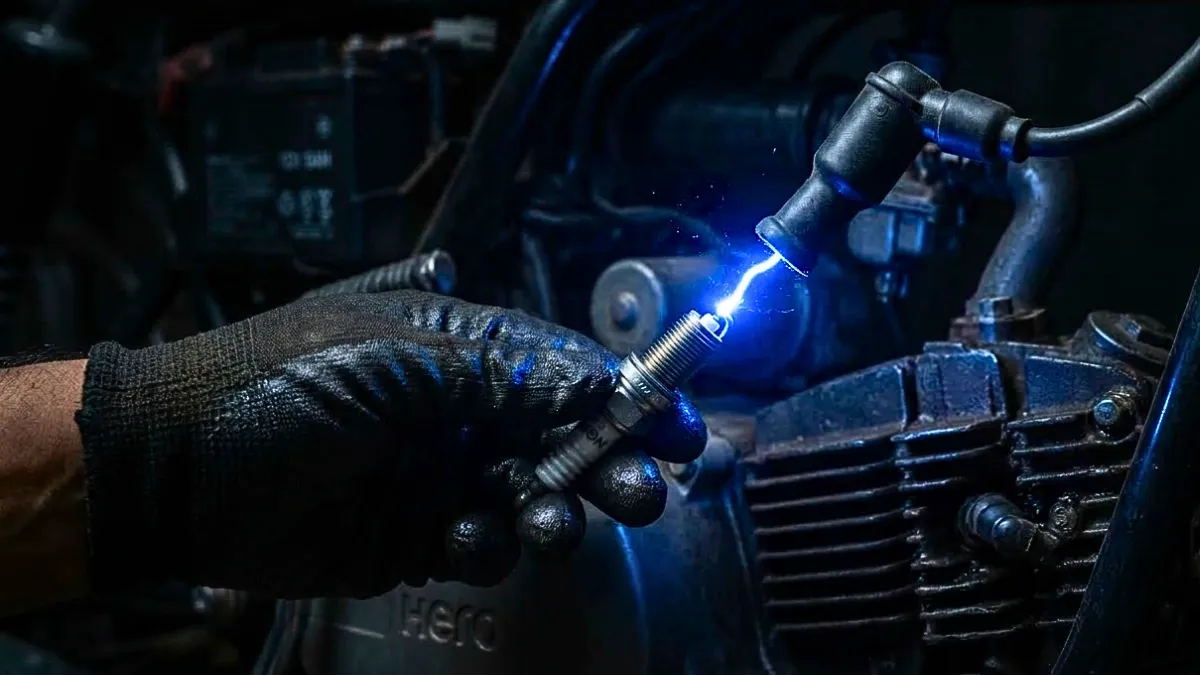
- Spark Plug SOS (Tricky Roadside): Got tools? Can you safely access a plug?
- Pull one spark plug out.
- Plug it back into its ignition coil wire.
- Hold the plug’s metal body firmly against the engine block (metal contact).
- Crank the engine (or kick). See a strong, snappy blue spark jump the gap inside?
- No Spark? Fault in ignition coil, wire, CDI/ECU, wiring. Weak/Yellow Spark? Fouled plug or weak component. Good Spark? Likely fuel or air problem.
- Choked on Air?: Is your air filter caked in dust (especially after dry rides)? Might start with a full choke but run badly. Needs cleaning ASAP. These fuel and spark checks are advanced steps for what to do when bike self-start is not working despite a healthy crank.
Step 6: When to Call in the Pros (Or Get a Tow)
Love DIY, but be smart. If you’ve covered the big stuff and exhausted all ideas on what to do when bike self-start is not working:
- Battery good & charged.
- Connections clean & tight.
- Fuses okay.
- Relay clicks.
- Still no crank (points to starter motor failure).
- Or it’s complex electrical gremlins.
- Or suspect major fuel pump/injector or ignition ECU failure.
- Or you’re just out of your depth/time/tools.
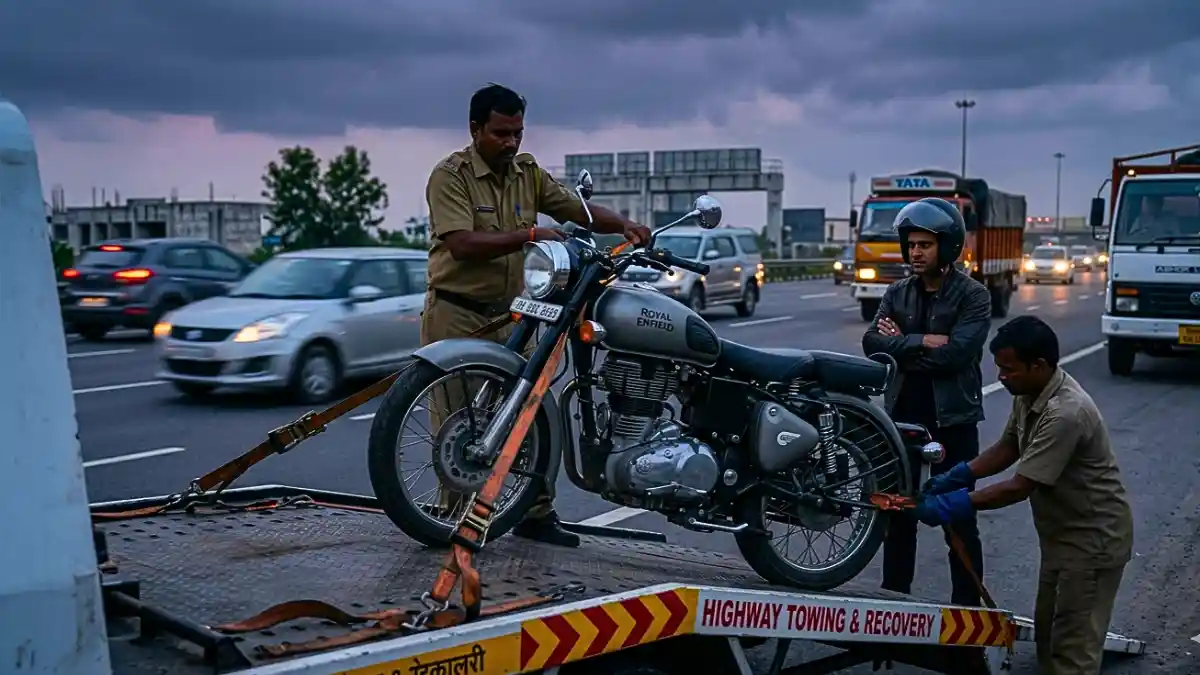
It’s tow truck time. Get it to a trusted mechanic. Forcing things or complex roadside electrical work can make it worse and cost more.
Prevention is Better (and Cheaper!) Than Cure: Your Self-Start Health Checklist
Stop problems before they start! Follow these easy habits so you never have to panic about what to do when bike self-start is not working:
- Regular Rides: Short commutes kill batteries. Take your bike for a good 30-45 minute ride at highway speeds weekly to fully recharge the battery.
- Terminal TLC: Check battery clamps every few months. Clean corrosion, tighten. A smear of petroleum jelly after tightening prevents future gunk.
- Know Your Battery’s Age: They last 3-5 years max here. Replace proactively around year 4, before monsoon or winter hits.
- Long Storage?: Use a bike-specific trickle charger/maintainer. Or disconnect the negative terminal.
- Listen to Your Bike: That sluggish crank one morning? Get the battery tested before it dies completely the next day, saving you from asking what to do when bike self-start is not working again.
- Quality Parts: When replacing the battery, relay or starter motor, use a reputable brand. Cheap parts fail faster, often at the worst time.
- Air Filter Service: Replace/clean your air filter as per the manual schedule (or more often in dusty conditions). A clean engine breathes easy.
Bottom Line: Stay Calm, You’ve Got This!
So next time your bike gives you the silent treatment on that self-start button, remember this guide. What to do when bike self-start is not working? Start simple! Neutral? Kill switch? Stand? Fuel? Listen carefully. Battery and connections are almost always the guilty party. Master the kickstart or push-start – it’s essential biker knowledge. Work through the steps calmly.
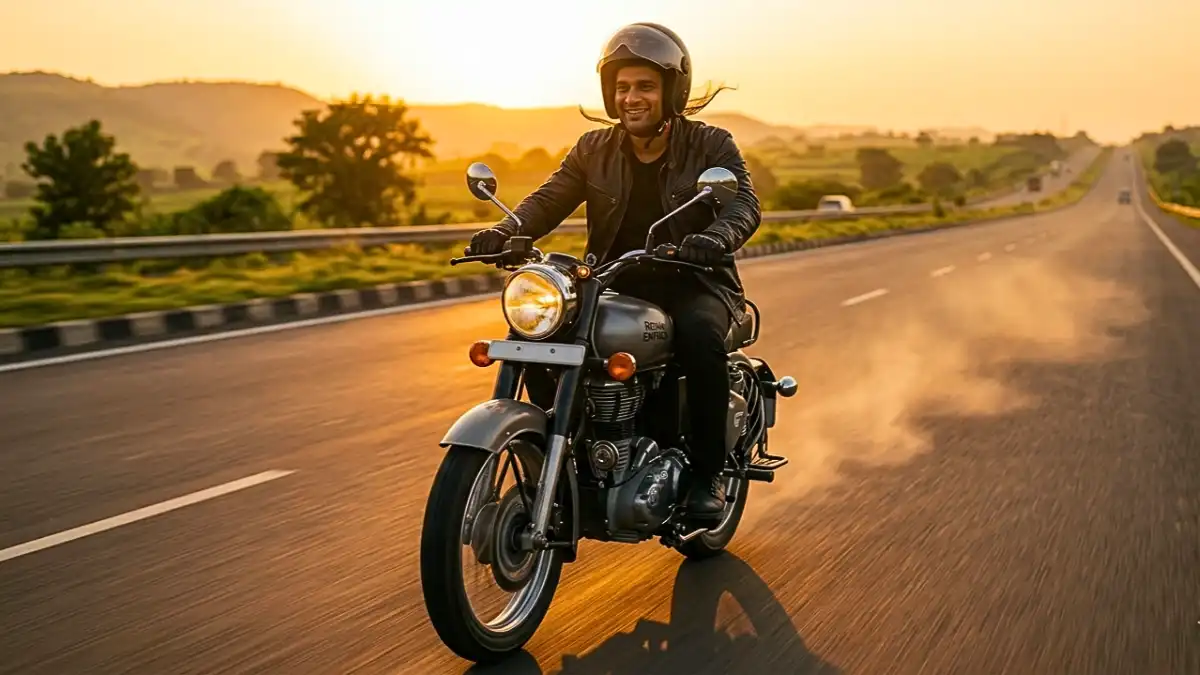
Knowing what to do when bike self-start is not working saves cash, time, and a ton of stress. It makes you feel more in tune with your machine. Most fixes are genuinely simple. And if it is something serious? At least you ruled out the easy stuff and know you need expert help. That’s valuable too!
FAQ –
1. Why is my self starter not working?
Ans – Your car self not working could be attributed to several reasons, ranging from a dead battery, a blown fuse, clogged fuel filters or even an empty fuel tank. Luckily, you can resolve this issue through some simple troubleshooting if there are no major issues with your car.
2. How to test a self starter?
Ans – First check the battery and its terminals (See Checking the batteries )and the other end of its earth strap. Use the circuit tester or test lamp to find if electric current is reaching the solenoid. Check for solenoid-to-starter current by connecting a test lamp between the solenoid output terminal and earth.
3. What is the life expectancy of a self start motor?
Ans – A car starter motor typically lasts between 100,000 to 150,000 miles or about 7 to 10 years, depending on usage, vehicle type, and maintenance. Frequent short trips and extreme temperatures can shorten its lifespan.
4. What is 1 n 2 3 4 5 gear pattern bike?
Ans – It shows the order of the gear and allows you to select the one you need by moving the shift lever up or down. The majority of motorbikes today have a shift pattern of 1-N-2-3-4-5. This implies you move the shift lever down for first gear and up for higher gears.
5. What is the 4 second rule on a motorcycle?
Ans – The 4-second rule for motorcyclists is a critical safety guideline to maintain a safe following distance, ensuring enough time to react to hazards by counting four seconds between your bike and the vehicle ahead using a fixed roadside object like a sign or tree. This distance, which increases to 6-8 seconds in poor weather, is crucial because motorcycles lack protective structures, allowing for gradual braking and preventing sudden stops that could cause a flip or rear-end collision, making it a foundational skill for all riders.
Also Read – How to Negotiate Car Prices in India: Conquer the Showroom Like a Pro

Rohit is the visionary behind CarBikeJunction. With over a decade of experience in automotive journalism and a deep love for mechanical engineering, he ensures that every piece of content that goes live meets the highest standards of quality and accuracy. As Editor-in-Chief, he oversees the editorial direction of the website and is often found test-driving the toughest SUVs or analyzing market trends. His leadership is the driving force behind our platform.