
Hey, fellow rider! So, you’ve got that gorgeous Royal Enfield Classic 350 parked outside? That deep, soulful thump isn’t just a sound, it’s a feeling, right? It’s your freedom machine, your weekend escape pod, your head-turner on every street corner. But here’s the real talk: that legendary thump and bulletproof reliability? They don’t happen by magic. They happen when you follow the right maintenance tips for Royal Enfield Classic 350 and show your Classic some regular, genuine love. Think of it less like a chore and more like spending time with your best friend on a two-wheeler.
I’ve been through this too, terrible roadside breakdowns (usually my own fault!), mysterious noises, and sudden drops in performance. Over years of riding my own Classic 350 (and helping mates rescue theirs!), I’ve learned one golden rule: consistent, smart maintenance is everything. Forget intimidating garage speak. Forget confusing schedules. I’m breaking down the essential maintenance tips for Royal Enfield Classic 350 exactly how I’d tell a friend, over a cold drink after a ride. Simple, practical, and totally doable. Let’s keep that thumper happy!
Why Bother? (Spoiler: It’s Not Just About the Bike!)
Okay, I get it. Life’s hectic. Who has time to fuss over tire pressure every week? But trust me, skipping the small stuff is a fast track to:
- Emptying Your Wallet: Fixing a worn chain? Not too bad. Replacing a seized engine because the oil turned to sludge? Yeah, that’ll hurt. Prevention is always cheaper, and following proper maintenance tips for Royal Enfield Classic 350 saves you from these big expenses.
- Playing Russian Roulette on the Road: Brakes that bite properly, tires that actually grip, lights that let you see (and be seen)… these aren’t optional. It’s your safety net.
- Killing the Vibe (and Fuel Efficiency): A clogged air filter chokes your engine’s breath. A dry chain saps power. Bad oil makes it sluggish. All this steals your smooth ride and your mileage. Good maintenance tips for Royal Enfield Classic 350 directly boost your fuel economy.
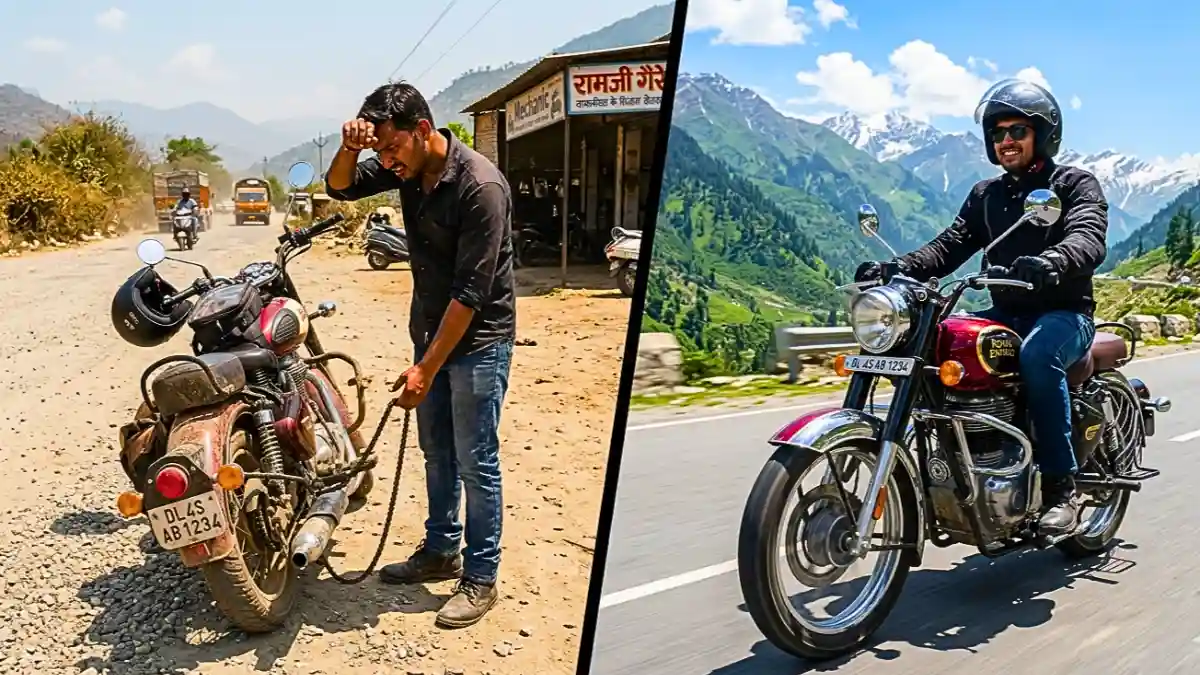
- Watching Your Investment Crumble: A well-looked-after Classic holds its value way better than a neglected one. Future you (or the next lucky owner) will high-five you. Applying these maintenance tips for Royal Enfield Classic 350 protects your investment.
- Missing Out on Pure Joy: There’s an unmatched confidence when you know your bike is tip-top. That smooth throttle response, the precise handling, the lack of weird rattles… it makes every kilometer sweeter.
Alright, pep talk over! Let’s get into the real meat – the stuff you gotta do to keep your Classic 350 singing. These maintenance tips for Royal Enfield Classic 350 are your roadmap to reliability.
Your Classic 350 Survival Kit: Must-Do Maintenance Tips for Royal Enfield Classic 350
Imagine this as your bike’s regular health check-up. Non-negotiable stuff for a long, happy life together. I’ve gathered the best maintenance tips for Royal Enfield Classic 350 from years of experience, so pay close attention.
1. Engine Oil & Filter (Don’t Skip This!)
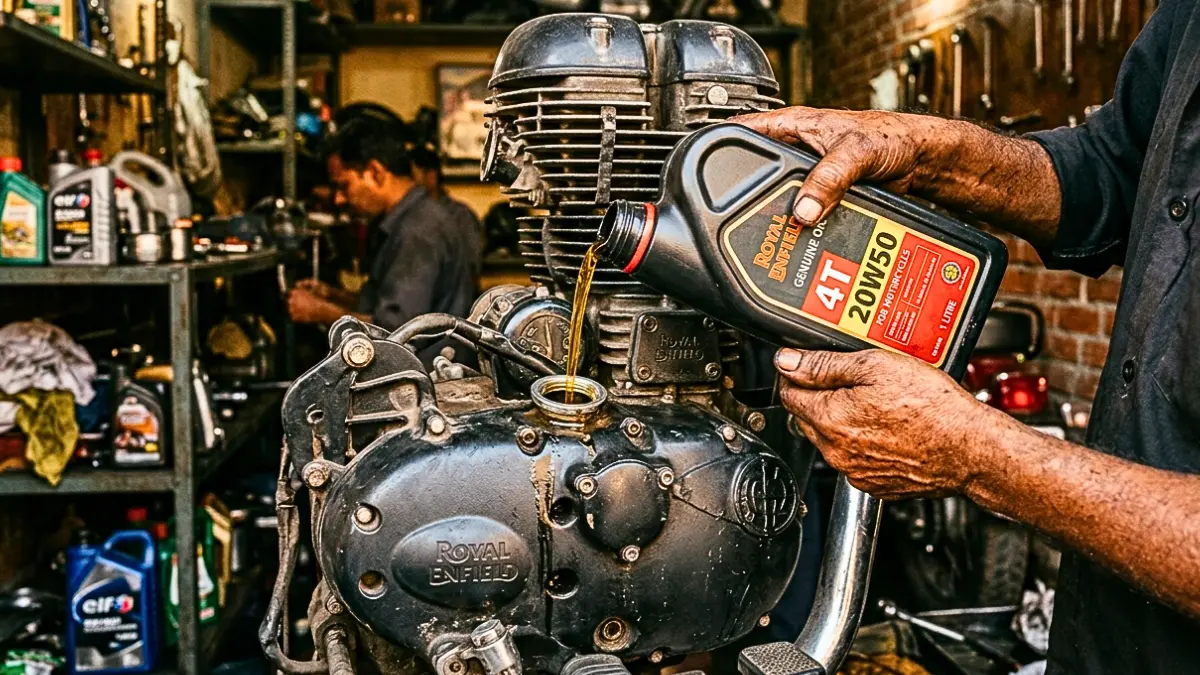
- Why?: Oil is your engine’s superhero. It lubes, cleans, cools, and protects all the tiny, expensive bits inside. Old, dirty oil turns into nasty sludge. Sludge = friction. Friction = wear and tear. Wear and tear = sad noises and sadder bills. This is one of the most critical maintenance tips for Royal Enfield Classic 350.
- Your Simple Action Plan:
- When?: Every 3000-5000 km. Seriously, set a reminder. Indian heat, dust, and stop-go traffic demand it. Don’t push it!
- Which oil?: 20W50 mineral or semi-synthetic. Choose trusted brands like Motul, Shell Advance, or Gulf. Be sure to look for “JASO MA/MA2” on the bottle—that means it’s safe for your wet clutch. Avoid fancy full synthetics unless your manual specifically says it’s okay for your engine (UCE/J-series).
- The Filter?: Change the oil filter every time you change the oil. It’s cheap and traps the gunk. The genuine RE filter is perfect.
- How? (Super Simplified):
- Warm the engine slightly (5 mins ride)
- Park on level ground. Grab a big drain pan.
- Undo the drain bolt underneath (careful, hot oil). Let it drain completely.
- Replace the little washer on the drain bolt (super important, stops leaks!).
- Wrench off the old oil filter (a strap wrench helps). Lightly oil the rubber seal on the new filter. Screw it on hand-tight (don’t go Hulk!).
- Pour in the exact amount of new oil (check your manual! Usually ~2.1-2.2 litres) through the filler hole near your foot.
- Check the dipstick after it sits for a minute. Start the bike, let it idle for 60 seconds, and check for leaks under it. Turn it off, wait 5 mins, and check the dipstick again. Top up slowly if needed.
- Dispose of the old oil responsibly! Most mechanics or auto shops will take it.
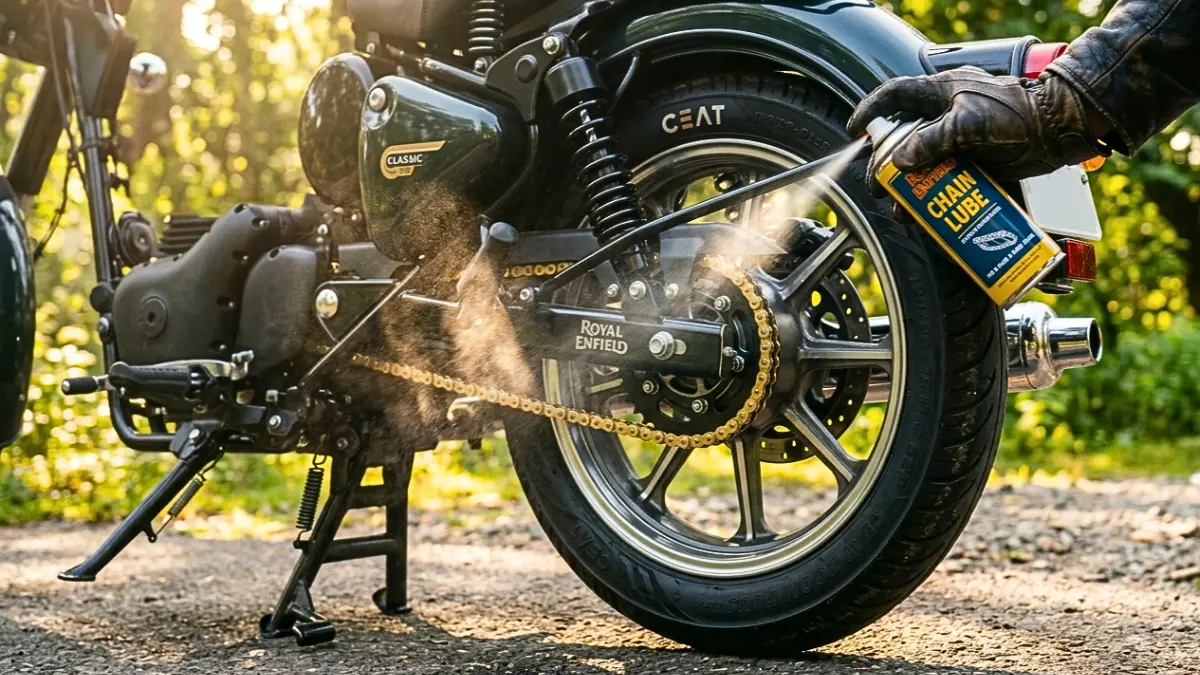
2. Chain Lube & Slack
- Why?: This chain is how your engine’s power gets to the wheel! A dry, rusty, or badly adjusted chain chews up sprockets, makes the ride jerky, wastes fuel, and worst-case, can snap (super dangerous!). Proper chain care is a cornerstone of good maintenance tips for Royal Enfield Classic 350.
- Your Simple Action Plan:
- Lube It: Clean and lube every 500 km. Or immediately after riding in rain, dust, or mud. Use a proper chain spray lube (Motul Chain Lube Road is great). Never use thick grease or engine oil—it just makes a mess flying everywhere.
- Clean It First: Before lubing, clean off the old gunk! Use kerosene and an old toothbrush on a cold chain. Wipe it down well with a rag.
- Check Slack: Do this every 1000 km. Park on the side/centre stand. Find the tightest spot in the chain (push up/down midway between sprockets). You want 20-25mm of free play (check manual!). Loosen the rear axle nut, turn the adjusters on both sides equally (mark their position first!). Tighten the axle nut really tight. Make sure the wheel alignment looks straight (use the swingarm markers). Too tight = stress. Too loose = danger.
3. Brakes (Fluid & Pads)
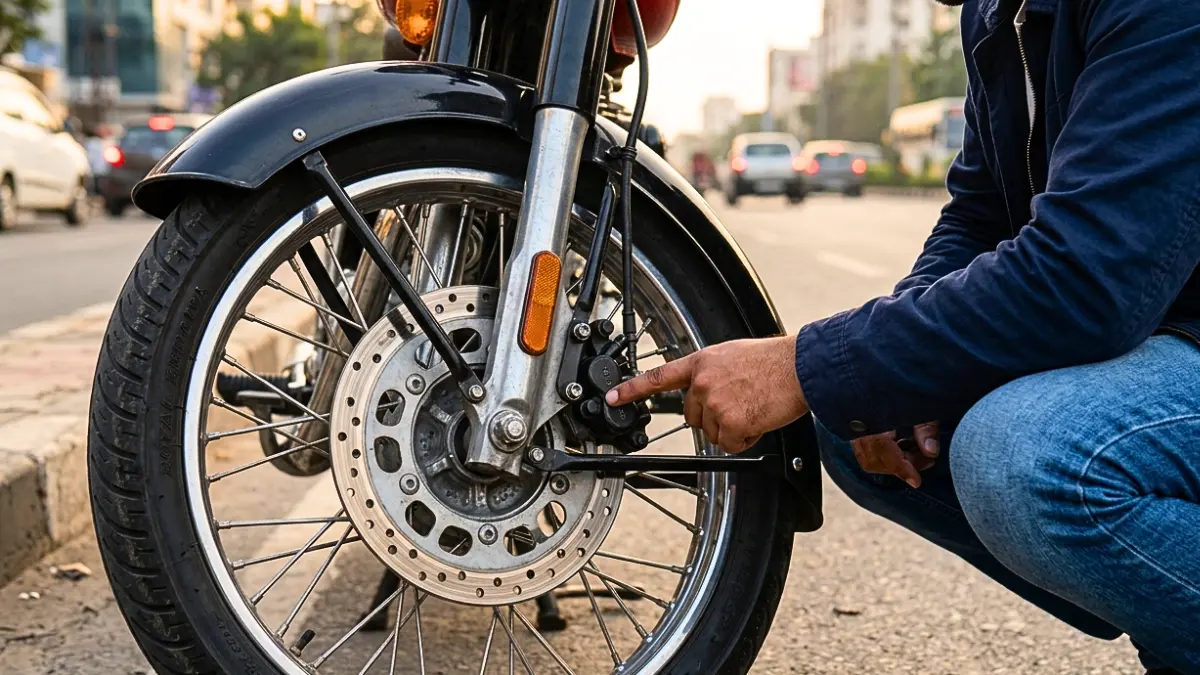
- Why?: Braking is very important! Brake fluid absorbs moisture over time, making it spongy and less effective (especially on hills or in emergency situations). Pads wear out and become completely useless. Don’t overlook brake care when going through maintenance tips for Royal Enfield Classic 350.
- Your Simple Action Plan:
- Fluid Swap: Change the brake fluid every 2 years, no excuses. Use DOT 4 fluid only. Bleeding brakes properly is key to getting air out. If you’re not 100% confident doing this yourself, please get a mechanic. Spongy brakes are not worth the risk.
- Pad Check: Peek at them every 3000 km. Look through the caliper at the pad material. If it’s thinner than 2-3 mm (about the thickness of a coin edge), replace both pads on that wheel now. Squealing is often your bike yelling, “Hey! I need new pads!” Don’t wait for the horrible metal-on-metal grinding sound.
4. Tire Pressure & Health
- Why?: These are your only contact patches with the road! Wrong pressure messes with handling, grip, tyre life, and fuel economy. Damaged tyres? Blowout risk. The most comprehensive maintenance tips for Royal Enfield Classic 350 list start with tyre checks.
- Your Simple Action Plan:
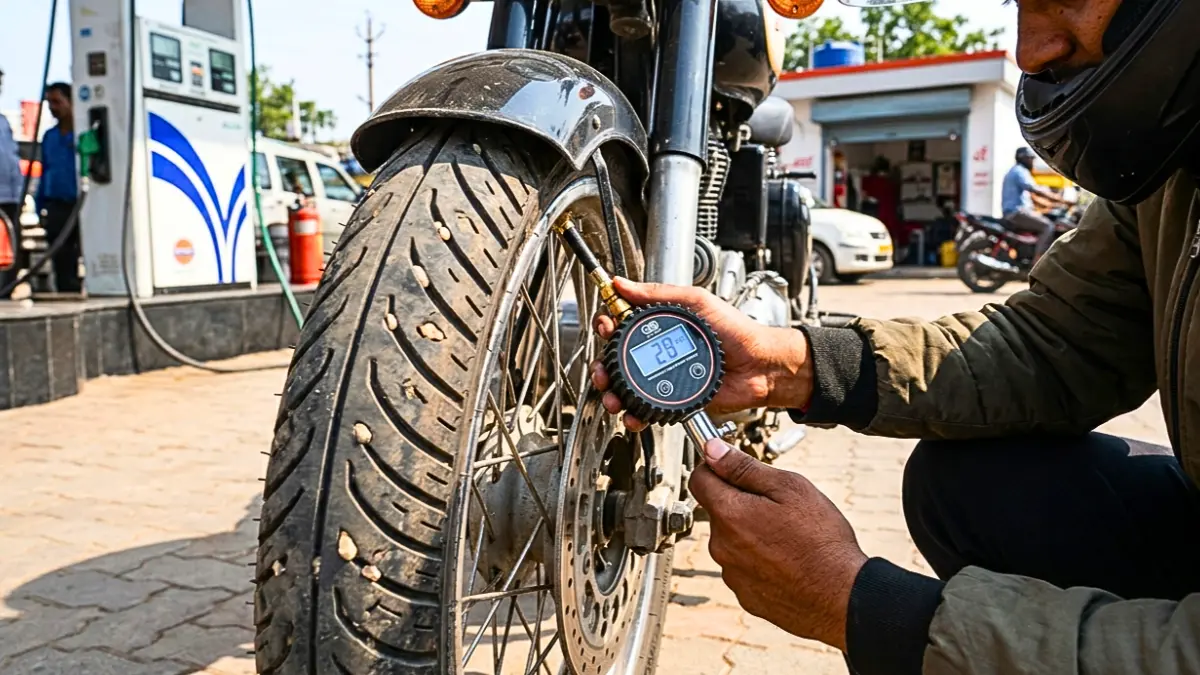
- Pressure Check: Do this cold, at least once a week, and always before a long trip. Use your own reliable gauge; petrol pump ones are often wrong. Typical pressures: Front: 25-28 PSI, Rear: 32-35 PSI (Check your manual/swingarm sticker!). Add 1-2 PSI for heavy loads. Under-inflation is a tyre killer!
- Look Them Over: Every time you check pressure, scan the tyres. Look for nails, screws, cuts, cracks, bulges, or weird wear patterns (like one side wearing faster, hinting at alignment/pressure issues). Tread depth matters; if it’s looking shallow, replace them before it’s illegal or unsafe.
5. Battery
- Why?: Your fuel injection (or carb), lights, and starter all need juice. A dead battery = stranded rider. These maintenance tips for Royal Enfield Classic 350 ensure you’re never left stranded.
- Your Simple Action Plan:
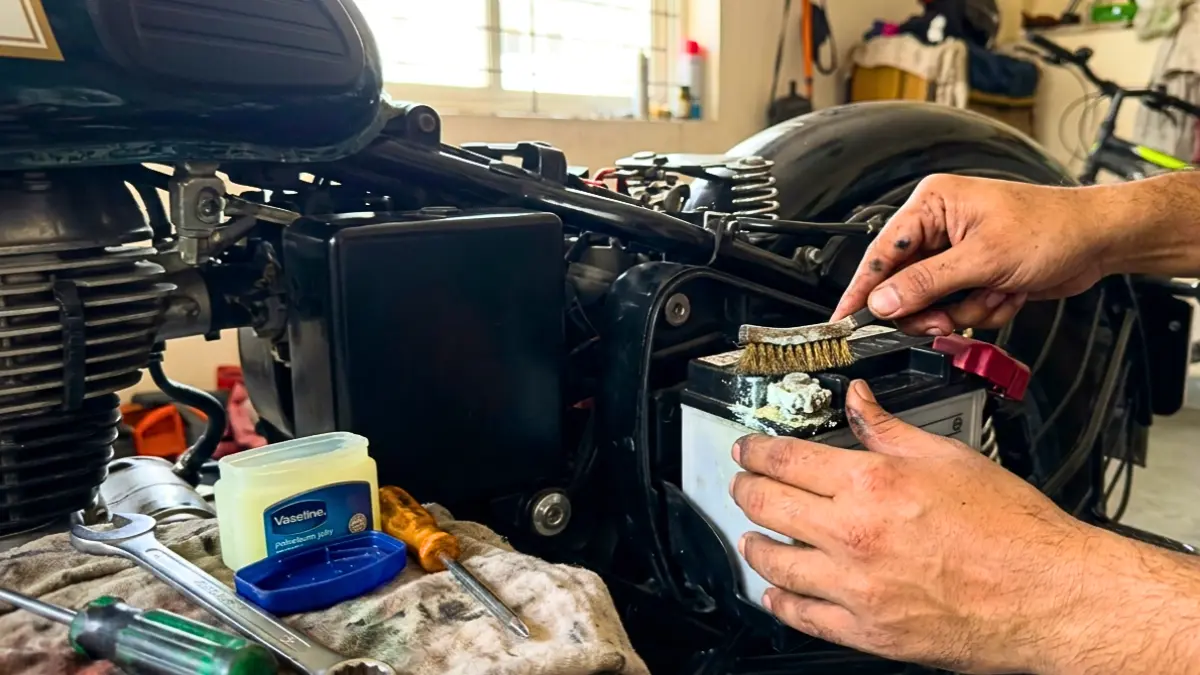
- Terminals: Keep them clean and tight. A tiny dab of petroleum jelly stops nasty corrosion. Quick monthly glance.
- Water (If Applicable): Got an old-school battery? Check the electrolyte level monthly. Top up only with distilled water if the plates are showing. Don’t overfill.
- Charge It: If your Classic sits unused for more than a week, get a battery tender/maintainer. It gently keeps the battery topped up and extends its life massively. Weak batteries hate cold mornings.
- Age: They last 2-4 years, usually. If it’s getting old or struggles to start, swap it out before it leaves you hanging.
6. Lights & Electrics
- Why?: Being invisible is dangerous. Faulty lights get you fined and increase crash risk massively. Following these maintenance tips for Royal Enfield Classic 350 keeps you visible and legal.
- Your Simple Action Plan:
- Do a quick light check once a week: Headlight (high/low beam), tail light, brake light (check both brake lever and pedal!), indicators (both sides!) , horn. Replace any blown bulbs fast (keep spares under the seat!). Glance at wiring near the steering head and rear fender for damage. Keep those lens covers clean. Make sure switches feel smooth.

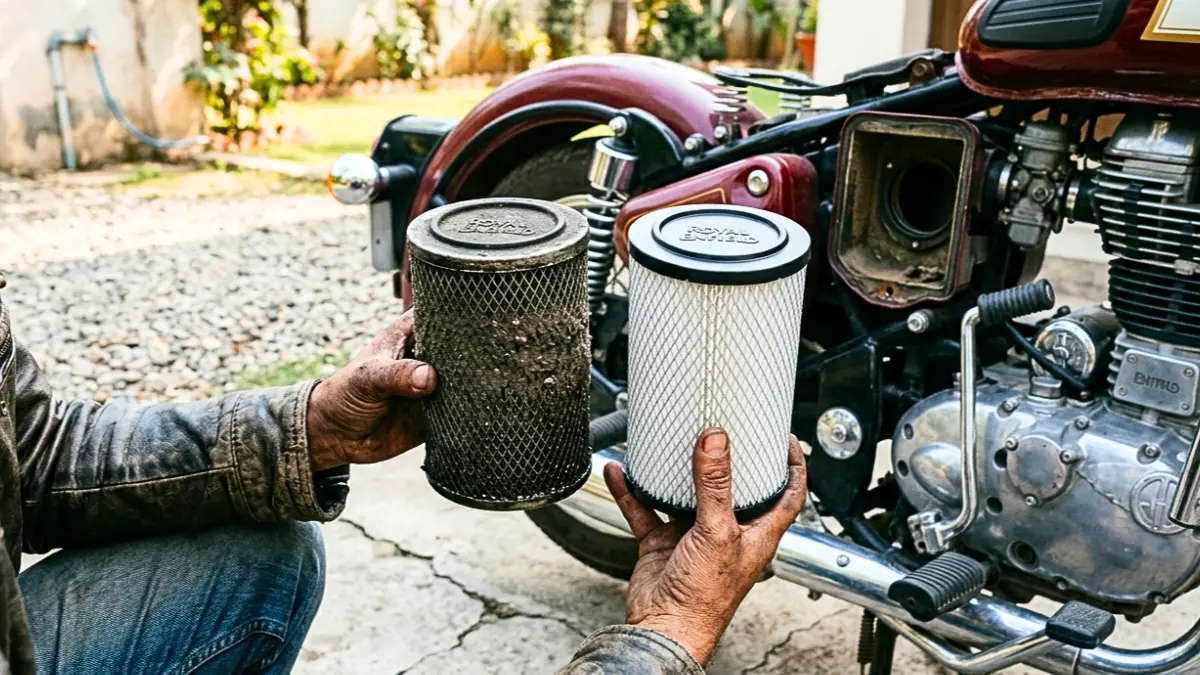
7. Air Filter
- Why?: A clogged filter is like making your engine breathe through a straw! Less power, worse mileage. Indian dust is brutal. This is one of the simpler maintenance tips for Royal Enfield Classic 350 but hugely impactful.
- Your Simple Action Plan:
- Paper Filter (Most New Classics): Peek at it every 3000 km, swap it every 6000 km (or sooner in crazy dust). It’s in a box near the battery – super easy, just unclip the cover.
- Foam Filter (Older/Aftermarket): Clean every 3000 km. Wash gently in soapy water, rinse thoroughly, let it dry completely (patience!), then lightly oil it with proper foam filter oil. Never run it dry or dripping wet.
- Always: Make sure the airbox lid seals tight. No sneaky dirt allowed.
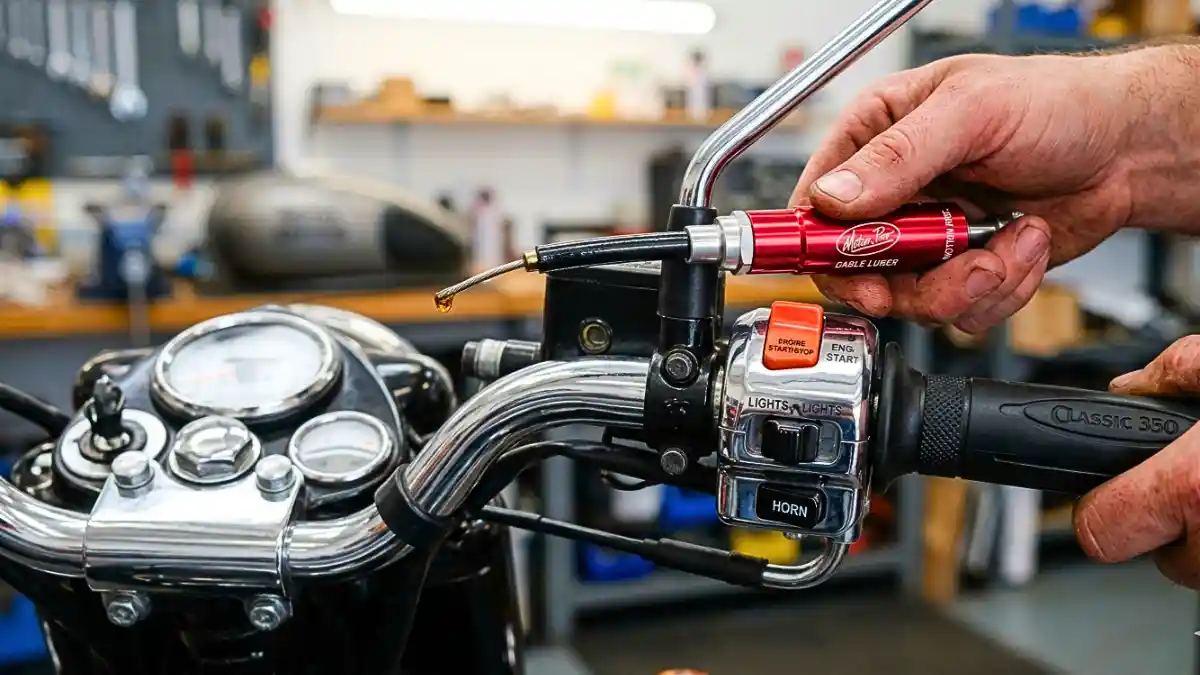
8. Cables & EFI Health
- Why?: Sticky throttle or clutch cables make riding jerky and tiring. EFI systems hate dirty connections. These maintenance tips for Royal Enfield Classic 350 ensure your controls feel crisp and responsive.
- Your Simple Action Plan:
- Cables (Carb Models): Lube throttle and clutch cables every 5000 km. Use a cable luber tool or carefully drip thin oil (like sewing machine oil) down the inner cable. Should feel buttery smooth.
- EFI Models: Pretty low-maintenance, but keep electrical connectors clean, dry, and clicked in tight. Rough idling or stalling after a wash? Check connectors near the throttle body. For persistent issues, a service centre diagnostic is best.
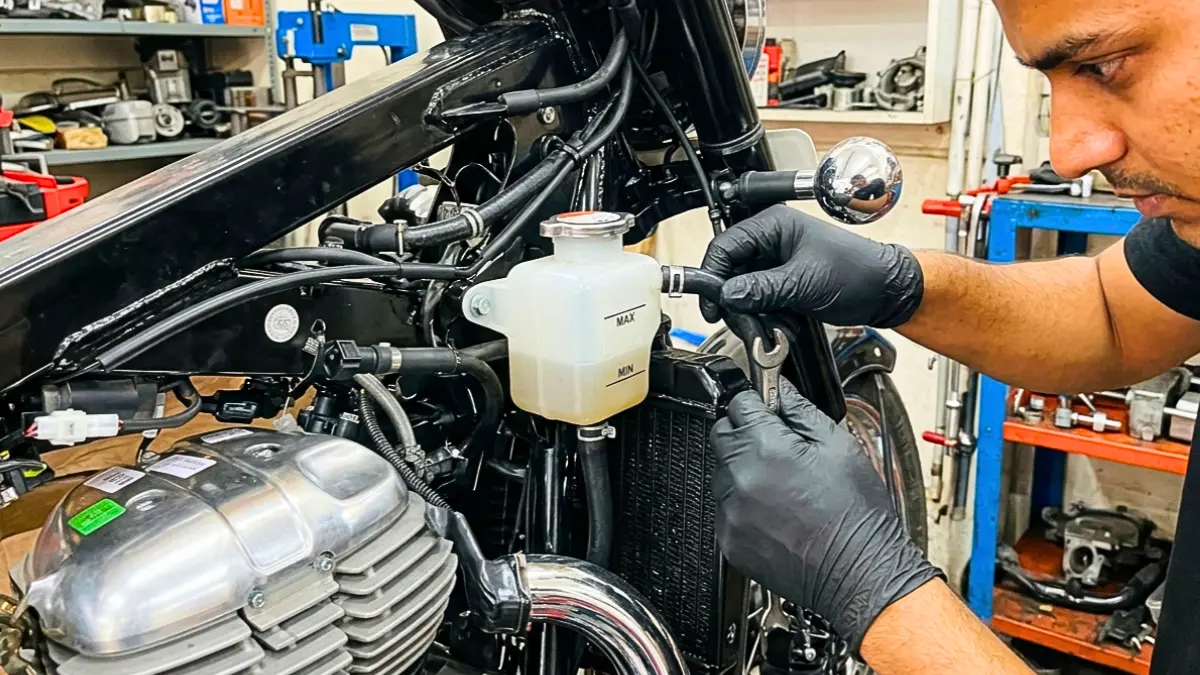
9. Coolant (EFI Models)
- Why?: Stops your engine from cooking itself! Critical. Remember these maintenance tips for Royal Enfield Classic 350 especially if you ride in heavy traffic.
- Your Simple Action Plan:
- Coolant: Check the coolant level weekly (when the bike is cold) in the see-through reservoir. Should be between MIN and MAX. Replace the coolant every 2 years with the recommended type (specific bike coolant mix). Never open the radiator cap when hot! If the level keeps dropping, find the leak!
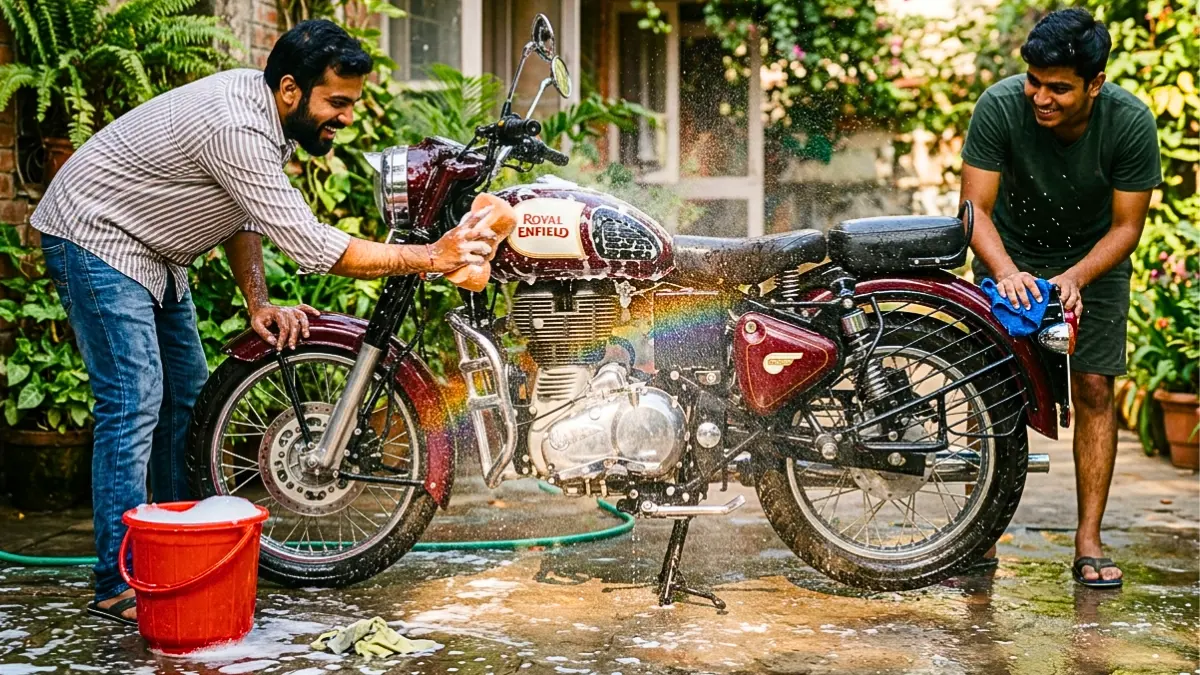
10. Wash & Protect
- Why?: Dirt hides leaks, accelerates rust (especially on that beautiful chrome!), and just makes your pride and joy look neglected. Monsoons and road salt are evil. Even aesthetic upkeep matters in maintenance tips for Royal Enfield Classic 350.
- Your Simple Action Plan:
- Wash Often: especially after rain or muddy rides. Use bike shampoo, a soft sponge/mitt and plenty of water. Avoid high-pressure jets near wheel bearings, seals and electrical components!
- Dry It Properly: Microfiber cloth or chamois is your friend. Trapped water = rust city.
- Chrome Love: Polish chrome parts regularly with good chrome polish to keep rust at bay. Spot a rust speck? Attack it fast with super-fine steel wool (000 grade) or rust remover.
- Paint Shine: A decent wax or sealant every few months protects the paint from sun fade and grime.
- Post-Monsoon/Heavy Rain: Extra thorough wash and dry. Re-lube that chain after it’s dry.
11. Big Service Checkups
- Why?: Some jobs need expert eyes, ears, and tools. Don’t skip these! These professional maintenance tips for Royal Enfield Classic 350 are best left to the experts.
- Your Simple Action Plan:
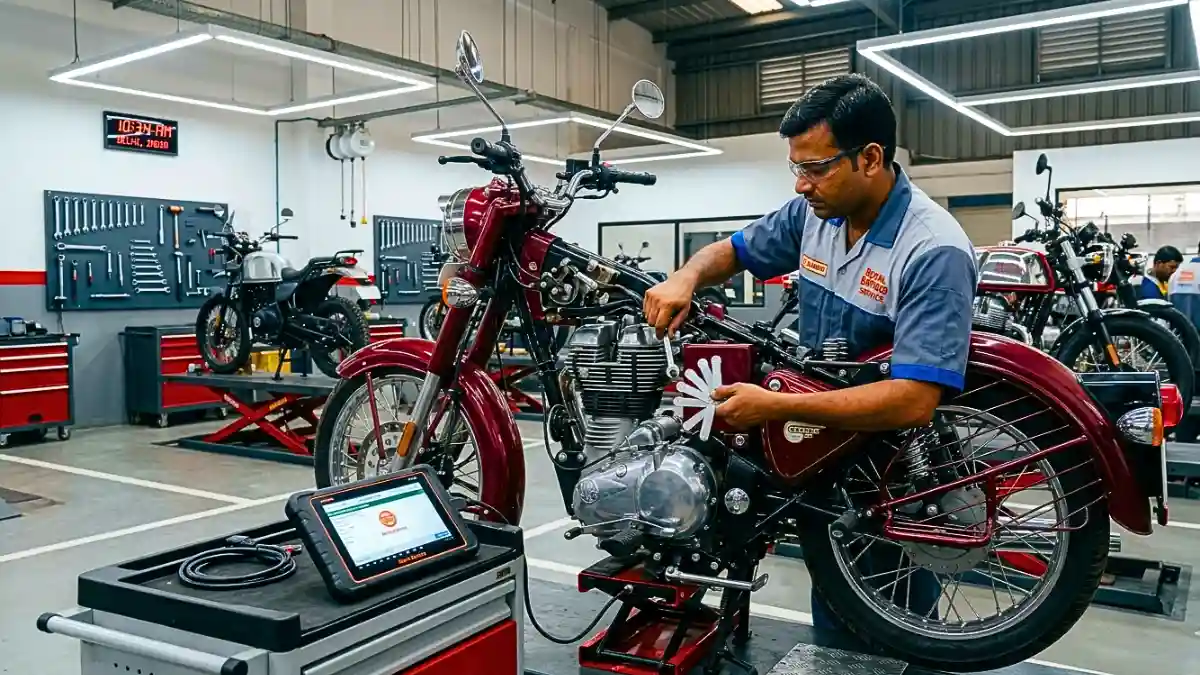
- Get a full service by a trusted mechanic or RE service centre at major milestones (e.g., 10,000 km, 20,000 km). This should cover:
- Valve Clearance Check/Adjustment (Huge for smooth running and power)
- Wheel bearing check.
- Steering head bearing check.
- Suspension check (forks & shocks).
- Tightening critical bolts (axles, engine mounts).
- Deep brake system check.
- Diagnostic scan (EFI models).
- Get a full service by a trusted mechanic or RE service centre at major milestones (e.g., 10,000 km, 20,000 km). This should cover:
Bonus Wisdom from the Road (Learned the Hard Way!)
- Listen Closely: New rattle? Whine? Exhaust note changed? Your bike is talking! Don’t ignore its whispers – investigate before they become screams. This is one of those intuitive maintenance tips for Royal Enfield Classic 350 that comes with experience.
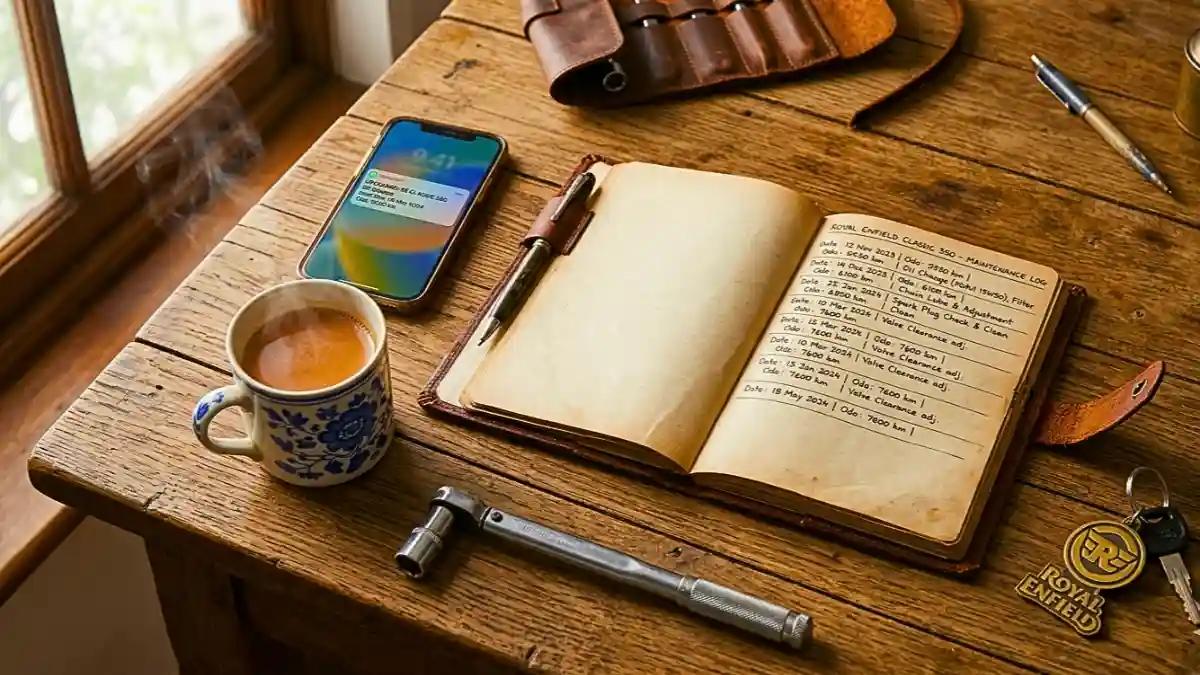
- Log It, Love It: Scribble down oil changes, chain adjustments, services in a notebook or phone note. Future-you will be grateful.
- Grab Basic Tools: A decent socket set, spanners, screwdrivers, and a torque wrench (for axle nuts & engine bolts) are worth every rupee. A paddock stand makes chain work bliss. Having the right tools makes following maintenance tips for Royal Enfield Classic 350 much easier.
- Don’t Cheap Out: Use good quality oils, filters, lubes, and parts. Budget stuff often costs more long-term. Stick to known brands. Quality components are essential for effective maintenance tips for Royal Enfield Classic 350.
- RTFM! (Read The Fine Manual): Your owner’s manual isn’t decoration. It has your bike’s specific needs – torque settings, intervals, diagrams. Crack it open.
- Monsoon Mode: Extra chain lube, protect electrical connectors with dielectric grease, double-check brakes, and always dry thoroughly after rides. Think about anti-rust spray for vulnerable spots.
- Storing It?: Fill the tank (add fuel stabiliser), disconnect the battery (on a tender), lift the bike off the ground (or roll it weekly), cover it. Change the oil before parking it long-term.
The Real Reward? Pure Riding Bliss.
Look, keeping your Classic 350 happy isn’t about turning into a full-time mechanic. Nah. It’s way simpler than that. It’s just about getting to know your bike, y’know? Giving it a bit of that love & care it deserves. By following these maintenance tips for Royal Enfield Classic 350, you’re building a relationship with your machine.
Think about it: Those 10 minutes on a Saturday just checking the tyre pressure? Totally worth it. Or that really satisfying feeling after you’ve cleaned and lubed the chain? Pure gold. Little things like that? They give you serious peace of mind. You just know when you fire her up, she’s ready for anything – whether it’s a quick dash to the shops or a massive adventure cross-country. These simple maintenance tips for Royal Enfield Classic 350 are all it takes.

And a well-looked-after Classic 350? Oh man. It’s not just reliable; it feels alive. That deep thump, the effortless pull, feeling totally dialed into the road… it’s magic. Stops feeling like just a hunk of metal, right? Becomes your proper riding buddy. Your trusty partner on the road.
FAQ –
1. Is classic 350 expensive to maintain?
Ans – No, Royal Enfield Classic 350 maintenance cost is affordable compared to other cruiser motorcycles. With annual maintenance cost between ₹3,000 and ₹6,000, it is suitable for daily riders and touring enthusiasts.
2. How many free services for Bullet 350?
Ans – Royal Enfield typically offers three free labour services for the Bullet 350, usually scheduled at 1,000km/1 month, 5,000km/6 months, and 10,000km/12 months, covering labour costs but not parts like engine oil, filters, or consumables. Some newer models or service packages, like the Maestros Cover, might offer slightly different terms, so always confirm with your dealer, but generally, the first three scheduled maintenance checks have free labour.
3. How to increase the mileage of a Classic 350?
Ans – To increase your Classic 350’s mileage, focus on smooth riding habits (gentle throttle, steady speeds 60-70 km/h, minimal hard braking), regular maintenance (clean air filter, correct tyre pressure, timely oil changes, carb tuning/injector cleaning), and reduce unnecessary weight, using good quality fuel for optimal efficiency.
4. What are the disadvantages of Royal Enfield 350?
Ans – Lack of Highway Performance
The Bullet 350 is not a fast bike, it never has been. Even with the new J-series engine, its performance is just adequate for highway use. While 60-80 kmph is the sweet spot for touring on it, post 80 kmph it starts feeling strained
5. What is the monthly fuel cost of Bullet?
Ans – As per current inputs, the monthly fuel cost for the Bullet 350 with a mileage of 35 kmpl is ₹ 1457.
Also Read – What to Do When Bike Self-Start is Not Working? Your Mechanic Mate’s Step-by-Step Rescue Plan

Sapna is the storytelling powerhouse of the team. With a sharp eye for detail and a knack for uncovering the human interest side of automobiles, she covers everything from industry launches to feature stories. She believes that every car has a story and every rider has a journey. Her writing is known for its clarity, depth, and ability to connect with the common man.