


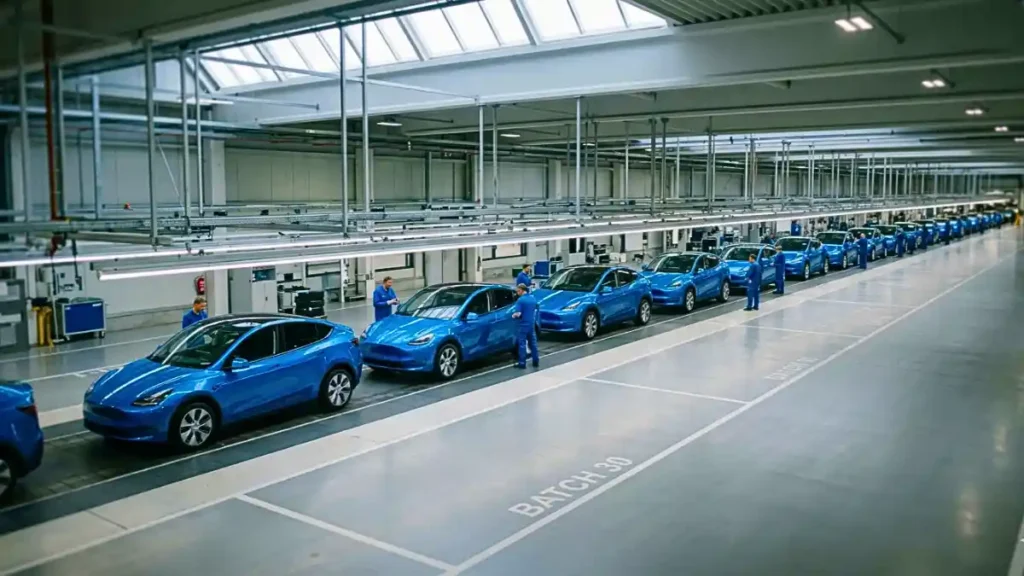

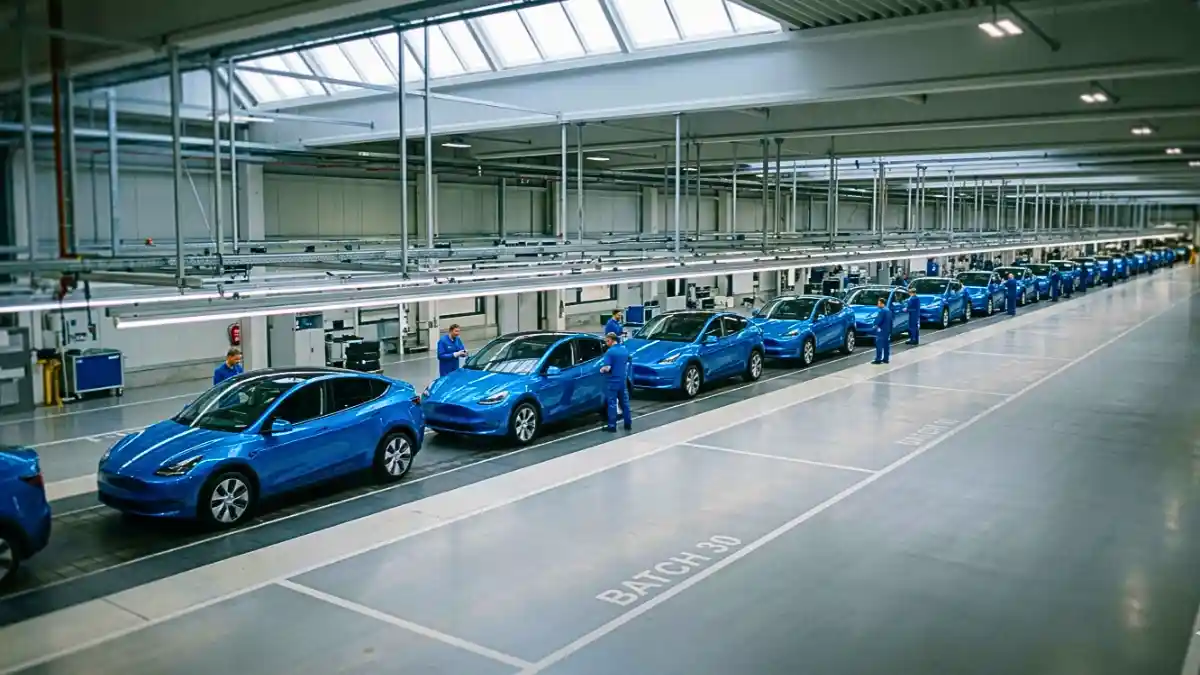
The auto industry is obsessed with grand gestures. Million-mile batteries, gullwing doors, dashboard-length screens — the more extravagant, the more attention it gets. But inside a sprawling factory in Kansas City, the GM batch-build strategy Chevy Bolt is quietly rewriting the rules. By building 30 identical cars in a row, General Motors is proving that the most transformative idea for the electric vehicle revolution might be stunningly dull — and brilliantly effective.
The 2027 Chevrolet Bolt, GM’s next shot at an affordable EV for the masses, is being assembled in deliberate, identical batches at the Fairfax Assembly plant. Instead of mixing trims and paint colors randomly as they snake down the line — the standard chaos of modern manufacturing — workers now see a homogeneous parade of matching Bolts. Same color, same trim, same configuration, one after the other. It sounds like a factory manager’s sleepy fantasy, but it’s actually a tactical weapon in the fight to make cheap electric cars that don’t feel cheap.
The real innovation isn’t under the hood — it’s in the sequence
For decades, automakers have chased “economies of scale” by building as many vehicles as possible and sorting out the variations later. That approach works, but it comes with hidden friction. Every time a different color body enters the paint booth, equipment needs purging. Every time a different wiring harness appears on the line, a worker’s muscle memory has to recalibrate. Those micro-pauses accumulate into errors, rework, and cost. By grouping 30 nearly identical Bolts — say, a batch of white LT models followed by a batch of blue RS models — GM slashes those interruptions. Paint shop downtime shrinks because color changes happen far less often. Suppliers ship parts in predictable waves rather than erratic spurts. Floor space opens up because you don’t need to stockpile a chaotic mix of components.
How the GM Batch-Build Strategy Chevy Bolt Turns Repetition Into Reliability
But the most human benefit is invisible to a spreadsheet: the worker at station 47, who installs the same door seal 30 times consecutively, becomes exceptionally good at it. Repetition isn’t drudgery here; it’s a quality control mechanism. The mind stops guessing and starts perfecting. This is the factory-floor equivalent of a musician practicing a single phrase until it’s flawless. When GM measures what it calls “Electrical First-Time Quality” — the percentage of vehicles passing rigorous electrical checks without needing a do-over — those batch-built Bolts are already scoring higher.
Also Read – Forget Practicality: The 2027 BMW iX4 Electric “Coupe-SUV” Has Been Spied, and Honestly, I’m Intrigued
Why a predictable factory matters more than a flashy spec sheet
To understand why this matters, step back and look at the EV landscape. The market is splitting into two hostile tribes: premium electric vehicles that few can afford, and cheap ones that feel like penalty boxes. The affordable end is littered with cars that creak over bumps, have glitchy infotainment, and wear interior plastics that scratch if you look at them wrong. Price-sensitive buyers aren’t just budget-conscious; they’re risk-averse. A vehicle that rattles or needs an early dealer visit for electrical gremlins can sour an entire household on EVs for a generation.
The Bolt’s mission isn’t to win drag races. It’s to be the car someone’s skeptical uncle buys and then reluctantly admits, “You know, this thing is actually solid.” That conversion moment relies entirely on perceived quality — the door thud, the even panel gaps, the tactile click of a turn signal stalk. These sensations are manufactured on the assembly line, not in the design studio. By embracing batch repetition, GM is betting that a factory process can engineer trust. It’s the manufacturing equivalent of saying: if we can’t surprise you with our price, we’ll disarm you with our competence.
The ghost of Toyota lingers, but GM is writing its own chapter
Lean production acolytes will immediately recognize echoes of the Toyota Production System. GM’s famous NUMMI joint venture with Toyota in California — a 1980s experiment where the Japanese taught the American giant how to eliminate waste and respect workers’ wisdom — planted seeds that took decades to germinate. Fairfax’s batch strategy isn’t a carbon copy of Toyota’s methods, but it shares the same philosophy: simplicity repeated reliably is more powerful than complexity managed heroically.
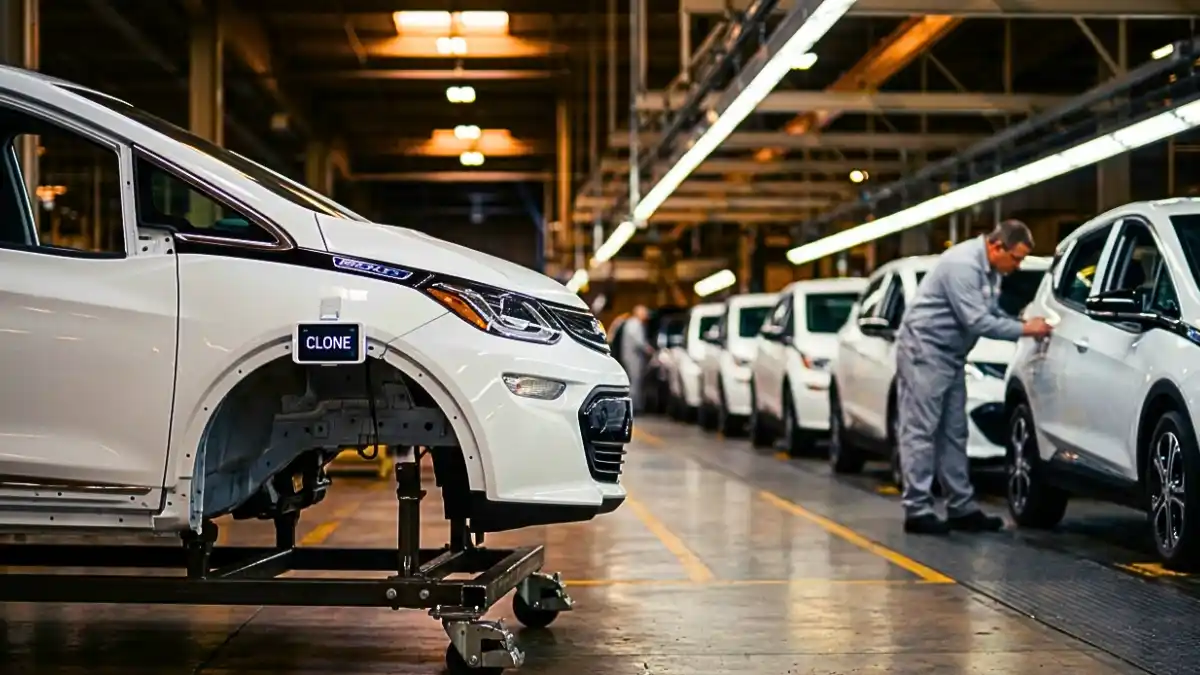
What’s new is applying that mindset to the idiosyncratic world of electric vehicles. EVs are mechanically simpler than combustion cars, but their electrical architectures are fiendishly complex. A misplaced connector or a software misconfiguration can cascade into maddening failures. The batch system doesn’t just reduce mechanical errors; it gives workers an almost meditative focus on the electrical connections that matter most. It’s telling that GM is already using “clone” body shells — exact duplicates — to pull a suspect vehicle from the line and seamlessly slot in a replacement without disrupting the rhythm. That’s a level of production resilience that’s quietly extraordinary.
Also Read – Build Your Dream Rivian R2: The Configurator Is Finally Live – Here’s What You Need to Know
Beyond the Bolt: a template for the affordable EV era
The implications stretch far beyond a single hatchback. GM has signaled that lessons from the Bolt program will flow into the Chevrolet Equinox EV and an upcoming Buick compact utility vehicle. If batch-building can lift the dependability of high-volume, price-sensitive models, it could reshape GM’s entire quality reputation at a time when every J.D. Power survey is scrutinized. The Equinox is already praised for dependability; batch methods could harden that advantage.
For the broader industry, this signals a shift in how we define “manufacturing innovation.” For years, the conversation has been about gigacasting, structural battery packs, and alien-like assembly robots. Those things matter, but they’re not the whole story. Sometimes the breakthrough is simply resisting the temptation to mix everything together. A factory that runs like a metronome produces cars that feel more expensive than they are.
The most radical EV of 2027 might be the most boring
The 2027 Bolt isn’t trying to be a Tesla killer or a design icon. It’s aiming to be the car that makes EV ownership utterly unremarkable — in the best way. Affordable, practical, and so free of defects that owners forget the dealer service lane exists. That’s a quiet revolution, forged not in a Silicon Valley hackathon but on a Kansas City assembly line where doing the same thing over and over again is the whole point. In a world addicted to the next big thing, GM found a surprisingly simple way forward: stop shuffling the deck and just play the same hand perfectly, again and again.
Also Read – 2026 Cadillac Escalade Sport Lease at $1,935/Month: Full Deal Breakdown and Smart Negotiation Tips


Raj is the creative mind curating the special content for the website. From exclusive first-drive reviews to buyer’s guides and comparison tests, Raj ensures our features are engaging and helpful. He loves getting behind the wheel of new launches and creating content that helps our readers pick their dream vehicle. His passion for motorcycles and performance cars is evident in his energetic writing style.