


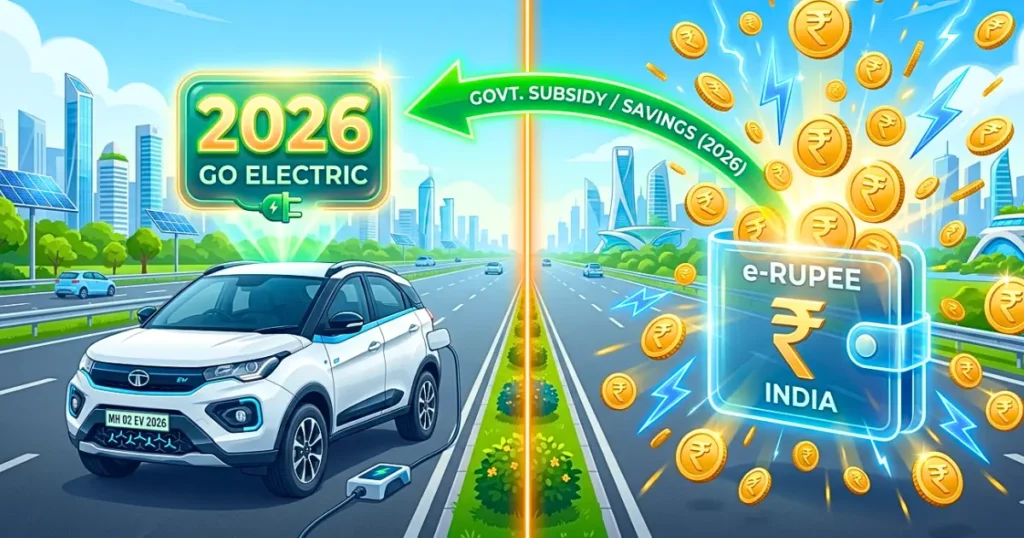

Hey everyone! Still looking at those sleek EVs zipping past and thinking, “Man, I wish…” but gettin’ whiplash from the price tag? Totally feel you. That initial hit can be steep. But hold up! The landscape for government subsidies for electric cars in India has just gotten a major upgrade in 2026. Think of them like a hidden nitro boost for your wallet. Let’s cut through the jargon and see exactly what’s up for grabs right now, how it works, how you save, and what’s changed. Buckle in!
Why Bother With Subsidies Anyway? (The Real Deal)
Okay, before we geek out on numbers, why is the government pushing EVs so hard? It’s not just about cool tech (though, let’s be real, instant torque is awesome). It’s about:
- Cleaner Air: Our cities need a break. Tailpipe fumes? Big polluters. EVs? Zero tailpipe nasties. Huge win.
- Kickin’ the Import Habit: Relying less on pricey imported oil? Massive national win. Electricity? We make that right here.
- Building Something Big: India wants to be a global EV powerhouse! These initiatives kickstart factories, charging spots, and create jobs. Win-win-win.

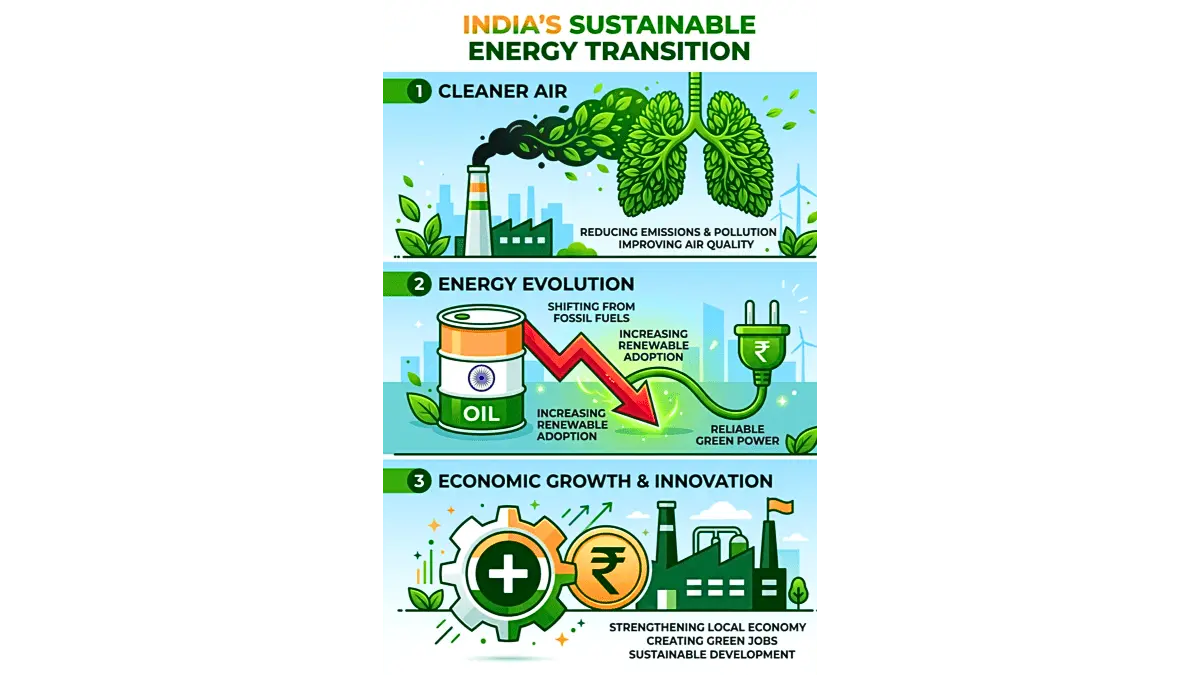
Good for your pocket, good for India, and good for the planet. Sweet. Now, let’s talk cash, because the government subsidies for electric cars in India are the key to making that math work.
The New Era: Understanding Government Subsidies for Electric Cars in India (EMPS 2026 & Beyond)
If you’ve been tracking the old FAME-II scheme, it’s time for an update. As of early 2026, the central government has transitioned to the Electric Mobility Promotion Scheme (EMPS) 2026. This is the new main pot of gold, designed to keep the momentum going with a sharper focus on affordability and local manufacturing. Here’s the latest lowdown on how the government subsidies for electric cars in India work now:
- The Direct Price Chop: This is the sweet discount you see right at the showroom. While the per-kWh incentive has been slightly restructured to promote higher-efficiency models, the focus remains on keeping the upfront cost low.
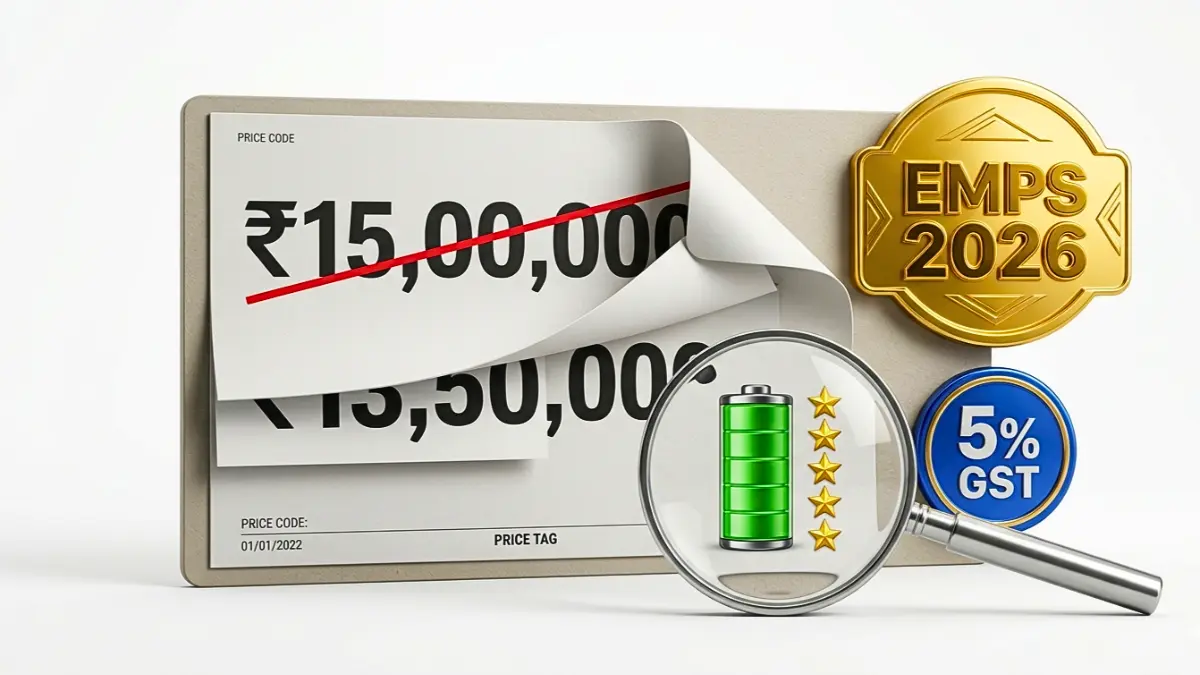
- The New Structure: Instead of a flat ₹10,000/kWh, the scheme now offers a tiered incentive based on battery size and vehicle efficiency. The maximum benefit can still reach up to ₹1,50,000 for qualifying passenger vehicles.
- Car Price Limit: The scheme continues to focus on mass adoption, so the price cap for eligible cars remains competitive, ensuring these benefits reach the maximum number of buyers.
- The Stealth Saver: Low GST: Don’t sleep on this! EVs still enjoy a massive advantage with only 5% GST. Petrol/diesel cars? A brutal 28% plus tax. This isn’t a flashy discount, but it massively slashes the tax baked into the price. It’s a critical component of the overall government subsidies for electric cars in India framework.
Your State’s Secret Extra Perks
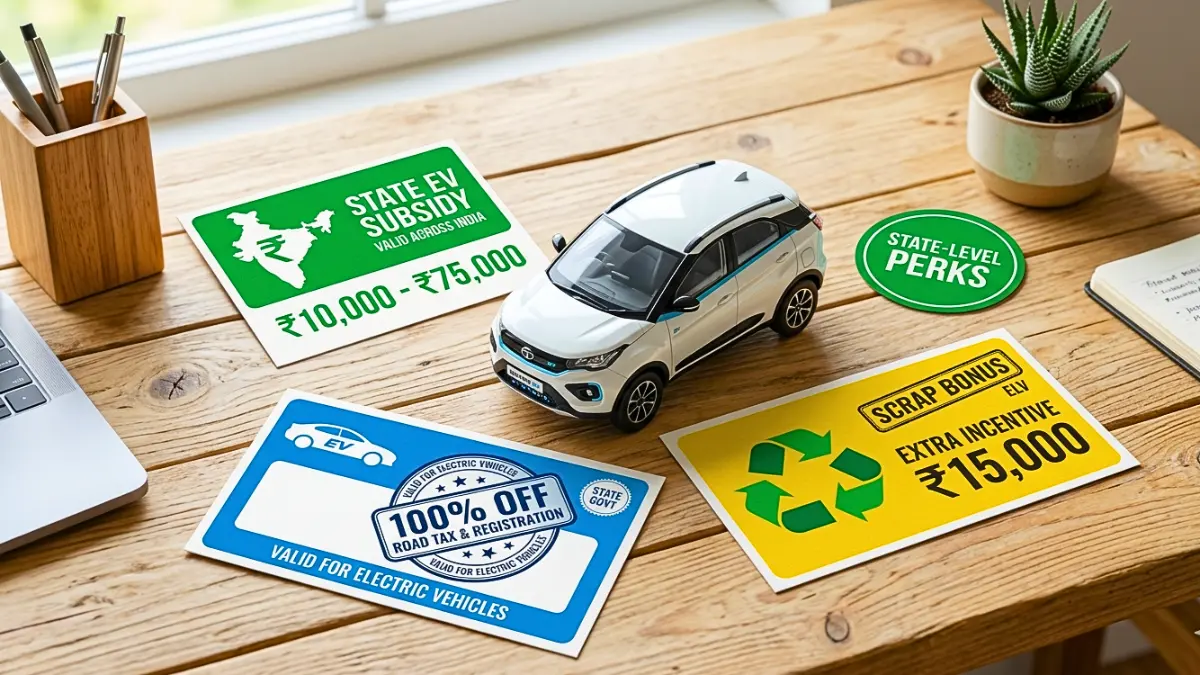
The central schemes are nationwide, but your state government might be throwing extra goodies on the pile! This is where it gets spicy (and varies wildly). Seriously, check your state’s latest rules for 2026! Common perks that stack with the central government subsidies for electric cars in India include:
- Extra Cash Off: States like Gujarat, Maharashtra, Delhi, and Karnataka continue to offer additional state-level incentives, maybe another ₹10k to ₹75k flat, or more based on battery size.
- Road Tax & Reg Fee BYE-BYE: This one’s gold! Places like Delhi, Karnataka, Telangana, Maharashtra, and Rajasthan often give 100% exemption on road tax and registration fees. This alone can save you another ₹10,000 to ₹1,00,000+ easily!
- Scrap & Save: Trading in an old petrol/diesel guzzler for an EV? States like Delhi and Maharashtra give you extra incentives if you scrap the old ride properly through authorized centers.
- Loan Help (Sometimes): A few states are now piloting programs to chip in on your loan interest, making EMIs lighter.
How Do You Actually Grab These Subsidies?
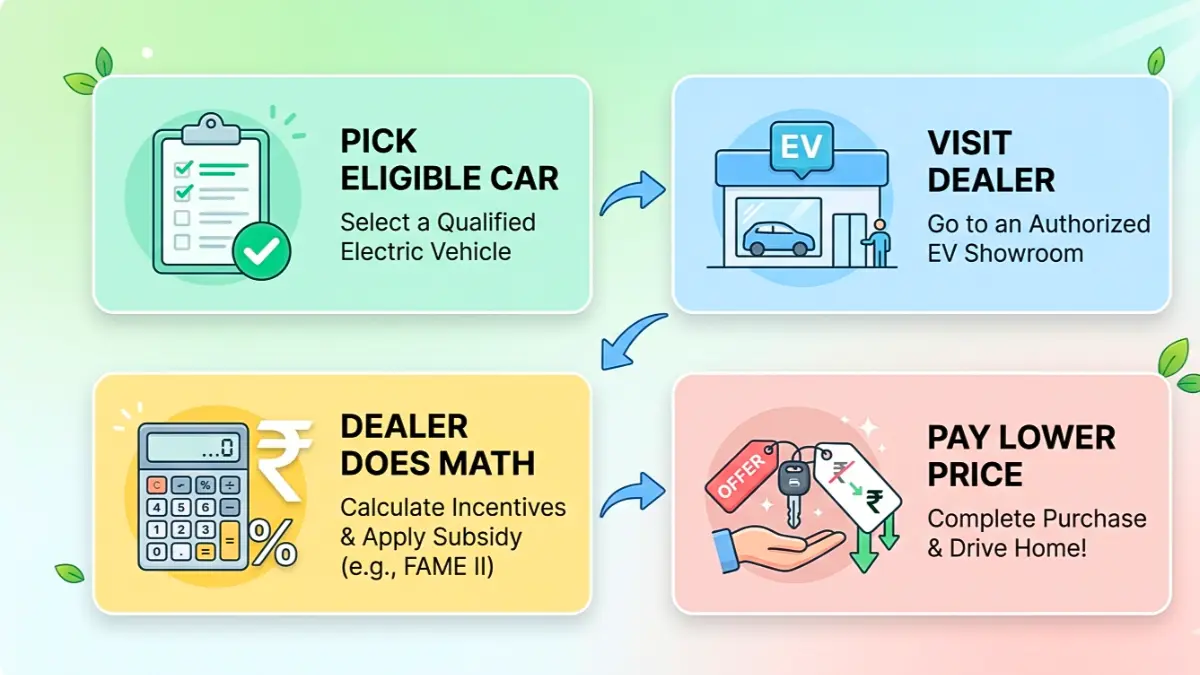
Best part? You usually don’t lift a finger! The process for availing government subsidies for electric cars in India is designed to be dealer-driven:
- Pick an Eligible EV: Find one that qualifies under the new EMPS 2026 price caps and is listed on your state’s approved EV list.
- Hit Up a Registered Dealer: Make sure they’re legit and signed up for both the central EMPS 2026 scheme and your specific state scheme.
- Dealer Does the Math: They calculate all the discounts – Central + State- and apply them directly to your invoice.
- You Pay the Lower Price: Simple! Pay the final, subsidized on-road price. Done.
Pro Tips
- STATE POLICY IS KING: I can’t stress this enough. Policies change! Hit up your State Transport Department website or search “[Your State] EV Policy 2026”. The e-AMRIT portal (www.e-amrit.niti.gov.in) has been updated for 2026 and is your best friend – use their EV Calculator!
- “Ex-Factory Price” Matters: The price cap for central government subsidies for electric cars in India is always before taxes, insurance, etc. The online “on-road price” includes those. Ask the dealer for the ex-factory figure to confirm eligibility.
- Trust, But Verify (The Dealer): A good dealer knows their stuff. Ask them to clearly break down every discount applied. If it feels sketchy, walk.
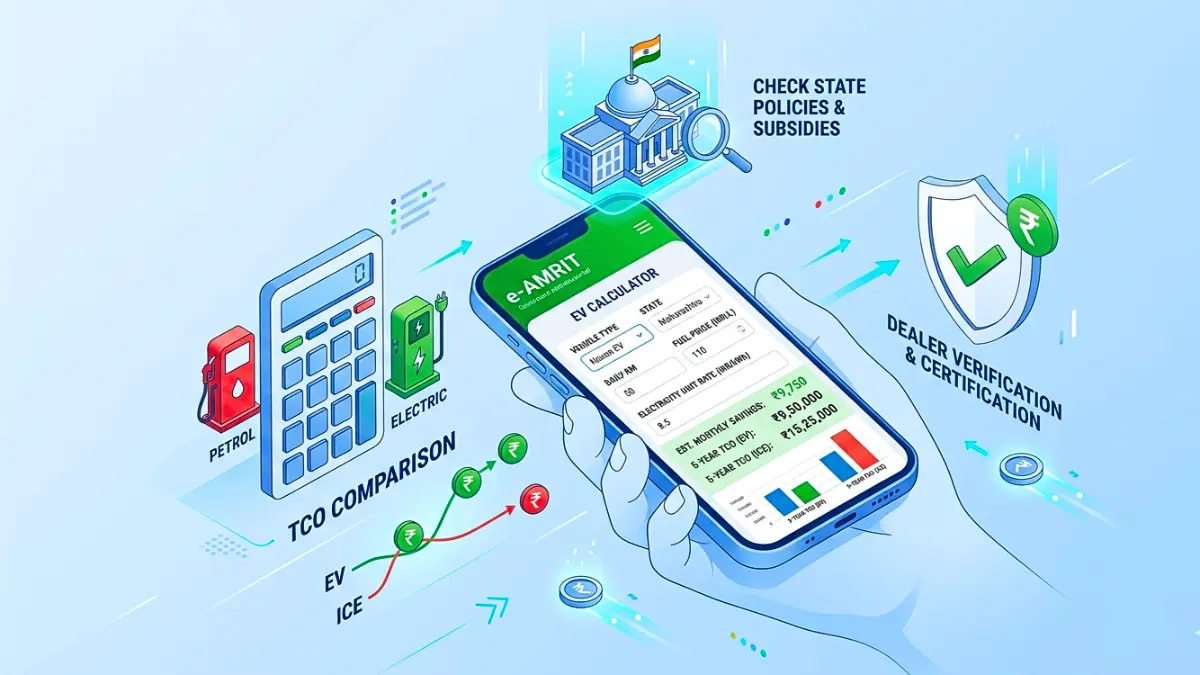
- Think Total Cost of Ownership (TCO): Look beyond just the sticker price! Factor in crazy cheap “fuel” (electricity vs petrol!), way lower maintenance (fewer things to break!), and those tax waivers. Over time, EVs often win big on TCO.
- New Portal Alert: The government has launched a unified subsidy portal in 2026. Ask your dealer for the subsidy claim confirmation. It’s a great way to ensure everything is above board.
So, Should You Jump In Now?
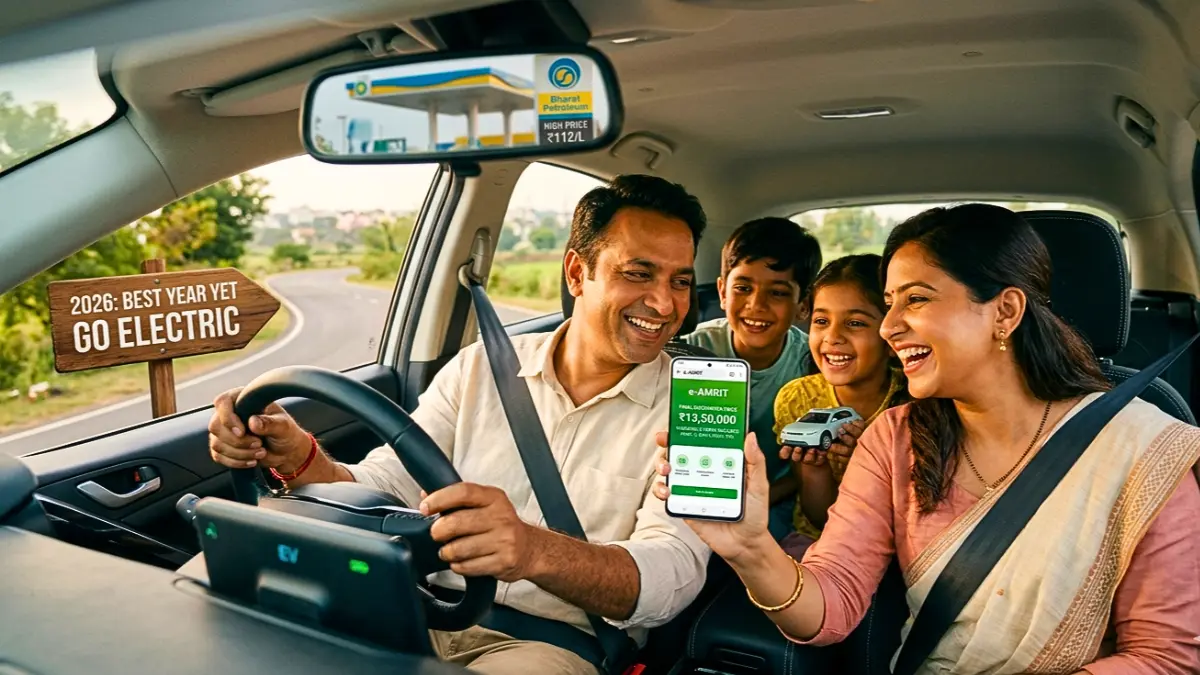
Honestly? Thanks to the robust government subsidies for electric cars in India, 2026 is shaping up to be the most compelling year yet to make the switch. Between the new EMPS 2026 scheme slicing off up to ₹1.5L, the tiny 5% GST, and potentially thousands more saved on state taxes and fees, that upfront price gap is shrinking faster than ever. Add in the pennies-per-km running cost? It starts looking like a seriously smart move.
If you’ve been tempted, do your homework. Check out models you like, crunch the numbers for your state using the updated e-AMRIT portal, and chat with dealers. You might just be shocked (pun fully intended!) at how achievable that smooth, silent, clean drive really is.
Got questions? Fire away below! Which new 2026 subsidy surprised you? Which EV has you dreaming? Let’s chat!
Disclaimer:
*Subsidy details, schemes, and policies are dynamic and subject to change. This information is based on the latest available data as of April 2026. Always double-check the current rules and eligibility for government subsidies for electric cars in India with official sources (like the e-AMRIT portal, EMPS 2026 guidelines, or your State Transport Dept) or a trusted dealer before making a purchase.*
FAQ –
1. What is the 80% rule for EV?
Ans – It means always keeping your electric vehicle (EV) charged above 20% and never topping it up over 80%. We’ll explain how this works and why it’s important. If you’re new to EVs, it’s natural to want to fully top up. But there’s a good reason for the rule, and 80% is usually more than enough for most journeys.
2. Which state has zero tax on EV?
Ans – Is road tax waived for EVs in India? Many states, including Maharashtra, Karnataka, and Tamil Nadu, offer 100% exemptions on road tax for electric vehicles.
3. What happens to EV after 8 years?
Ans – This means the average battery is projected to have 81.6% of its original capacity (state of health or SOH) after eight years.
4. How to claim EV subsidy?
Ans – To claim an EV subsidy in India, the key documents for individuals are:
- PAN card (for financial verification)
- Aadhaar Card (to verify identity and ensure only one subsidy per person for a 2-wheeler EV and 1 for a 4-wheeler EV)
5. Can I claim tax relief on an electric car?
Ans – Businesses can claim 100% First Year Allowance on qualifying electric cars, allowing the full cost to be deducted against taxable profits in the year of purchase. This provides immediate corporation tax relief rather than spreading it over several years.
Also Read – How to Buy a Used Car in India: Tips and Tricks You Need


Raj is the creative mind curating the special content for the website. From exclusive first-drive reviews to buyer’s guides and comparison tests, Raj ensures our features are engaging and helpful. He loves getting behind the wheel of new launches and creating content that helps our readers pick their dream vehicle. His passion for motorcycles and performance cars is evident in his energetic writing style.