
Alright, gearheads and future car owners! Remember that mix of pure excitement and sheer terror when you finally spot your dream machine on the showroom floor? Yes, that heart-wrenching moment when you think, “This is it!”… and then immediately afterwards you glance at the price sticker and your wallet crinkles? It’s all done, got a slightly expensive t-shirt! Buying a car in India? It’s a massive deal, right up there with buying a house. And let’s be brutally honest: walking in and paying that sticker price? That’s basically leaving a fat stack of cash on the table for no reason. Learning how to negotiate car prices in India isn’t just smart; it’s your ticket to saving serious lakhs, and honestly, it’s way less scary than you think.
Mastering how to negotiate car prices in India is a skill, and today I will give you the real information. No jargon, no corporate nonsense, just simple and practical advice that I wish someone had given me the first time around. Let’s get you home in your dream car, without any nerves.
Arm Yourself Like a Pro to Master How to Negotiate Car Prices in India (Knowledge is Your Secret Weapon!)
Forget fancy suits or loud voices. Your real power comes from knowing your stuff. Negotiation starts weeks before you even smell that new-car scent.
- Zero In on YOUR Exact Machine: Don’t wander in vaguely saying, “Show me a good 7-seater.” Be a laser beam! Know the exact make, model, variant (Seriously, ZX vs ZX+ matters!), fuel type (Petrol, Diesel, CNG, EV?), transmission (Manual’s fun, Auto’s easy!), and even your top 2 colour choices. Prices and deals swing wildly based on this. Walking in confused? That’s like handing the dealer a blank cheque.
- Become a Pricing Ninja: That price list isn’t one number; it’s a puzzle. Break it down.
- Ex-Showroom Price: This is the big one – the base price before taxes, insurance, etc. This is your primary battlefield. Find it: Manufacturer’s official website (always start here!).
- RTO & Road Tax: This one’s fixed by your state, but you can know it beforehand. Use: Online calculators on CarDekho/CarWale – pick your state! Crucial for your total budget.
- Insurance: Your Biggest Leverage Point (Often Missed!): Never just nod at the dealer’s first insurance quote. Do This: Before stepping into the showroom, get quotes from PolicyBazaar, Coverfox, or directly from ICICI Lombard, HDFC Ergo, Tata AIG. Make sure the IDV (Insured Declared Value) and add-ons (Zero Depreciation is Gold!) are identical. Dealers make fat commissions here. Often, you can save thousands getting it yourself, but sometimes their bundled deal might offer easier claims. Compare!
- Handling Charges/Logistics Fee: This is almost pure dealer profit. Can range from a cheeky ₹2,000 to a ridiculous ₹10,000+! Your Mantra: “This is negotiable. Can we waive this?” (Spoiler: Often, yes!).
- Essential Accessories: Floor mats, mud flaps, basic seat covers. Don’t get fleeced! Check prices on Amazon, Boodmo, or local accessory shops first. Dealers mark these up like crazy. Knowing the real cost is power.
- Extended Warranty/AMC: Understand what it covers and the cost. Crucial: Negotiate this separately, after the car price is locked down. Bundles can be good, but compare the standalone price.
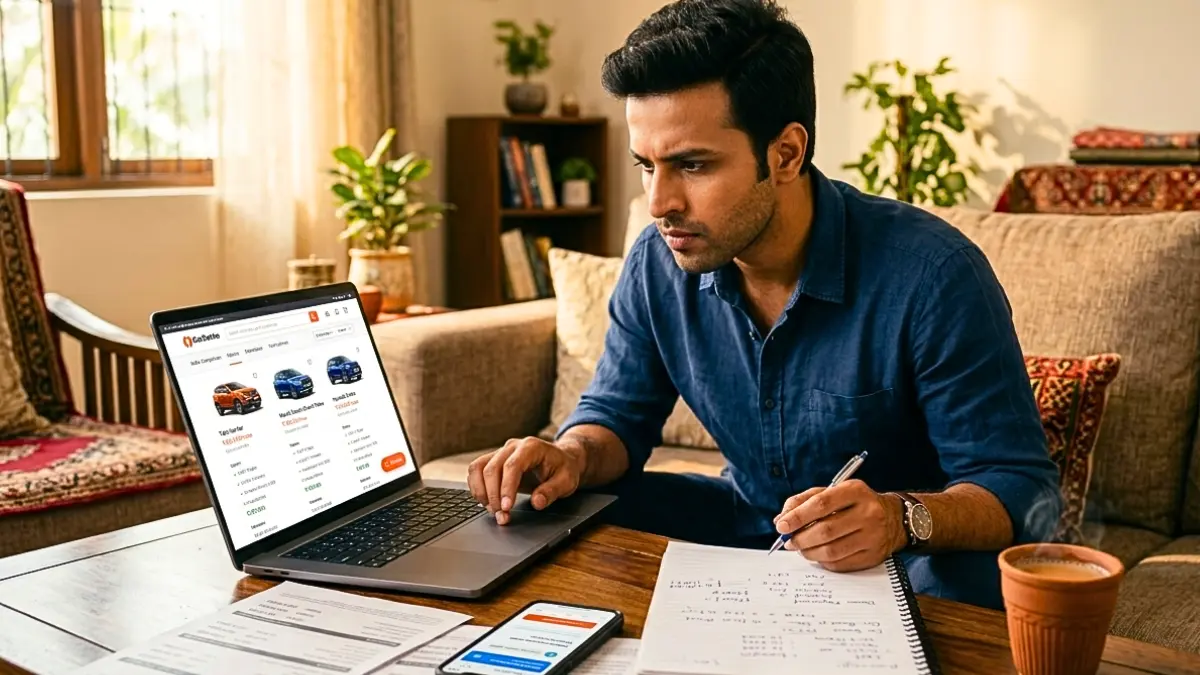
- Become an Offer Hunter-Gatherer: Time to scour the internet like a pro.
- Official Sources: Hit the manufacturer’s website. Look for “Offers” or “Schemes.” Corporate discounts? Exchange bonuses? Festive specials? Note them All.
- Auto Portals are Goldmines: CarDekho, CarWale, etc., have dedicated sections listing current discounts city-by-city, model-by-model. This is your intel. They are a great resource when you are learning how to negotiate car prices in India.
- Broker Hints: Sites like Spinny, Cars24 (even though they focus on used) sometimes list new car prices including discounts. Gives you a benchmark (verify with dealers!).
- Festive Power: Diwali, Dussehra, New Year = Peak discount season. If you can hold off, the savings can be massive.
- Understand the Dealer Mindset: Dealers have targets! They get bonuses for hitting monthly/quarterly sales numbers, clearing old stock (especially before a new model or facelift hits), and pushing specific models. Your Advantage Points: End of the month (like last 3-4 days!). End of quarter (March, June, Sept, Dec!). Knowing a facelift is coming soon? Jackpot for negotiating the current model.
- Play the Field: Get MULTIPLE Quotes: This is non-negotiable, yaar! Don’t just talk to one dealer for your chosen brand. Contact at least 3-4 dealers of the same brand in your city or nearby towns. Email is great for initial quotes: “Hi, please send your best offer for [Exact Car Details] including ex-showroom, RTO, insurance quote, and any current offers.” Save these emails! Then, use them: “Dealer Y is offering me ₹X discount. Can you match or do better?” This is a classic move in how to negotiate car prices in India.
The Showroom Shuffle – Keeping Your Cool & Getting the Deal
You’re prepped. Now, walk in like you own the place (confidence, even faked, works wonders!).
- Timing is Your Silent Partner:
- End of Month/Quarter: Dealers are sweating targets. Your leverage is highest. Mastering this timing is a fundamental part of how to negotiate car prices in India.
- Weekday Warriors: Tuesdays-Thursdays are often quieter. Sales folks have more time (and patience) to deal.
- Festive Strategy: Offers are good, but showrooms are zoos. Go early in the festive period (first week) or just after the main rush for better attention and potentially less pressure.
- Vibe Check: Be Chill and respectful, but also very clear that you mean business. A smile and polite conversation can go a long way. A good salesperson always wants to have a happy and repeat customer, not just a one-time sale. Build that rapport. This initial connection can significantly ease the process of how to negotiate car prices in India. But be crystal clear that you are serious about buying and need the right deal.
- Aim for the Bullseye: The Ex-Showroom Price: This is your main fight. Based on your epic research, know the realistic discount range. Start slightly higher: “I’ve done a lot of homework, and for this [Exact Variant], I’m seeing discounts around ₹X on the ex-showroom price. What’s the best you can do?” If they push back, cite your sources calmly: “X(website) listings show offers up to Y%.”
- Slice and Dice: Negotiate Each Bit Separately! Don’t let them drown you in one big “On-Road Price” number. Break it down:
- Ex-Showroom Discount: Fight for this first and hardest.
- “Handling Charges? Brother…”: “I understand there’s a handling fee. Honestly, I’ve had quotes from other dealers where this is waived completely. Can we remove this?”
- Accessories: Don’t Get Packaged! “Rather than a complete accessory kit, I really only need the all-weather mat and mud flaps.. I know these cost around ₹Z in the market. Can we do a fair price for just these?”
- Insurance Showdown: “I’ve got quotes from outside for ₹A with identical coverage (Zero Dep, etc.). Can you match this premium, or should I handle insurance myself?” If they match, Check The Policy Docs!
- Warranty/AMC Later: “Let’s lock down the car price first, then I’ll decide on the extended warranty.”
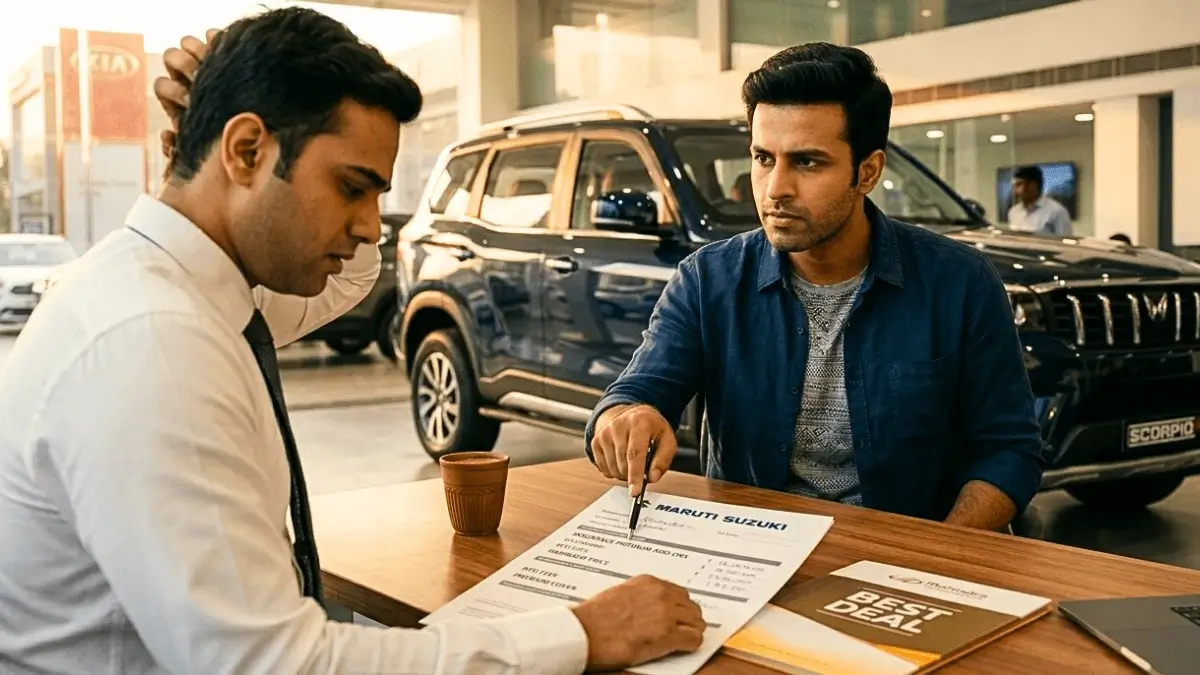
- Master the Pause & The Walkaway: After you drop your number… shut up. Seriously. Let the silence hang. The salesperson will often jump in with a better offer just to fill the void. If their number isn’t close? Smile, stand up, offer a handshake: “Thanks so much for your time. I need to think about this / check with the other quotes I have. I’ll let you know.” Start walking towards the door. This is magic. 8 times out of 10, you’ll hear, “Wait sir, let me just check with my manager one more time…” Be prepared to actually leave. There are other dealers. This is a crucial psychological aspect of how to negotiate car prices in India.
- Use Your Quotes as Ammo (Politely!): “I really like your dealership and would prefer to buy from you. Just to be upfront, [Dealer Name] in [Area] has offered me ₹X discount and waived the handling charges. Is there any way you can match or improve on that to make it work for me?” Have that email/quote ready on your phone.
- Trading In? Play it Smart:
- Know Your Old Car’s Worth First: Get valuations from Cars24, Spinny, OLX Auto, Droom, and a local trusted used car guy before mentioning it to the new car dealer. Don’t let them lowball you, knowing you’re desperate for the new car.
- Negotiate NEW CAR Price First: Get the absolute best deal on the new car before you even mention your trade-in. Then, negotiate the trade-in value separately, armed with your independent quotes. Often, the “exchange bonus” is just part of the main discount – ask for clarity.
- Corporate Perks? Use ‘Em! If you or a family member works for a big company (many have auto tie-ups), mention it early. It’s usually a straightforward manufacturer discount.
Crossing the Finish Line – Dotting the I’s and Avoiding Gotchas!
Price haggled? Awesome! But don’t sign just yet. Let’s seal it properly. Even at this final stage, the principles of how to negotiate car prices in India still apply to ensure you don’t leave money on the table.
- The Freebie Fest! (Now’s the Time!): With the price locked, ask for goodies. This is the final, satisfying step in how to negotiate car prices in India.
- Essential Kit (Mats, Mudflaps – get the good ones!)
- Decent Seat Covers (Not the flimsy free ones)
- A Proper Car Cover
- Fuel Vouchers (Free petrol/diesel? Yes please!)
- Service Credits (₹3000-₹5000 off your first service)
- Extended Warranty (If you want it, now’s the time to push for a deal)
- Dashcam (Super useful!)
- Focus on stuff you’ll actually use. That free keychain isn’t worth much. Negotiate these after the final price is set. This is the final, satisfying step in how to negotiate car prices in India.
- Delivery Day (Be Sherlock Holmes): Don’t hand over the final cheque until you’ve done a thorough inspection. Remember, a thorough inspection is the final step in how to negotiate car prices in India, as catching issues here can lead to last-minute discounts or fixes.
- VIN & Birth Certificate: Check the VIN number etched on the windshield/door pillar matches the invoice. Find the manufacturing month/year sticker (usually driver’s door frame or B-pillar). Avoid cars sitting for over 6 months (“old stock”) unless they give you a massive extra discount.
- Close-up inspection: Bright daylight is your friend. Check for dents, scratches, paint flaws, and an uneven gap between the panels. Sit inside the car and check for all buttons, screens, AC vents, windows, lights (inside and out), and upholstery for stains/tears. Look under the hood for leaks. Check the tyres – brand new? Matching? Any damage? Check the spare too!
- Paperwork Patrol: Triple-check Everything:
- Invoice (Matches agreed price? Lists all discounts? Correct variant?)
- Registration Application (Form 20/21)
- Insurance Policy (Correct start date? Correct IDV? All add-ons included? NCB applied?)
- PUC (If applicable)
- Owner’s Manual & Warranty Cards
- Get all the discounts, freebies, and waived fees on the final invoice in writing before paying the full amount.
- Be smart in making payments: Avoid making huge cash payments.Use cheque, NEFT/RTGS, or cards (know your card’s transaction fee limit!). Final payment Only after car inspection and paperwork verification.

EVs: The New Negotiation Game
EVs are changing the rules slightly. If you’re planning to go electric, understanding how to negotiate car prices in India for this new segment requires a slightly different playbook. Here’s the lowdown:
- Tighter Margins (Sometimes): Don’t expect huge ex-showroom discounts like on some ICE cars. The focus shifts to other areas where you can save big. Mastering how to negotiate car prices in India for an EV means knowing exactly where the real value lies.
- State Subsidies & Tax Breaks are KING: Check your state transport website! Many states offer direct cash subsidies and waive road tax for EVs. This is often bigger than any dealer discount. Know the schemes! This is a new variable in how to negotiate car prices in India for EVs.
- Charger Deals: Negotiate hard on the home charger. Free installation? Hefty discount on the charger unit? Ask for charging credits on networks (like Tata Power for a Nexon EV). This is a unique aspect of how to negotiate car prices in India in the EV segment.
- Battery Warranty is Sacred: Understand the fine print: Years covered? Kilometres? What level of battery degradation is covered? Don’t skip this.
- Software & Connectivity: Will future big updates cost extra? What about the connected car features after the free period? Get clarity.
Pro Tips from the Battlefield
Here are some battlefield-tested pro tips that will make how to negotiate car prices in India feel very easy :
- “Let me ask my manager” is usually Theatre: They know their limits. It’s just part of the dance. Recognising this little drama helps you stay calm and focused on how to negotiate car prices in India effectively.
- Free Samosas ≠ A Good Deal: Stay focused on the numbers, not the hospitality.
- Patience is Profitable: This might take a few visits or calls. Don’t rush. Never show desperation.
- Get it in Writing: Every discount, every freebie, every waived fee. On the official quote. Before you pay the booking amount. Verbal promises vanish faster than a plate of hot pakoras.
- Gut Feeling is Real: If something feels off, or the pressure is too much, walk away. There’s always another dealer, another car. Trust your instinct.
- Online Brokers? Maybe: Check Spinny/Cars24 for new car prices too. Sometimes competitive, sometimes not. Compare! Master these small secrets, and you’ve truly cracked the code for how to negotiate car prices in India like a pro.
The Real Secret Sauce? It’s Not What You Think
Mastering how to negotiate car prices in India isn’t about being the loudest or the pushiest. It boils down to two superpowers: Relentless Homework and Calm, Friendly Confidence. You’re not begging; you’re a knowledgeable customer making a fair deal. Remember, the dealer wants to sell that car. Your job is to make sure it’s on your terms.
You’re all set for this. Walk into that showroom with the quotes on your phone, your research notes, a polite smile and the quiet confidence that you know your stuff. That dream car, at a price that makes you smile? It’s waiting.
FAQ –
1. What is the 70 30 rule in negotiation?
Ans – The 70/30 rule in negotiation is a communication guideline suggesting you listen 70% of the time and talk only 30%, to better understand the other party’s needs, build rapport, and uncover critical information, transforming meetings into collaborative problem-solving sessions rather than monologues. By asking open-ended questions and actively listening, you encourage the other side to reveal their motivations, concerns, and flexibility, leading to more successful, mutually beneficial agreements.
2. What is the 20/4-10 rule for cars?
Ans – The 20/4/10 rule is a car-buying guideline suggesting a 20% down payment, a maximum 4-year loan term, and total monthly car expenses (loan, insurance, maintenance) staying under 10% of your gross monthly income, helping you avoid debt and budget wisely. This helps ensure the car remains affordable and doesn’t strain your finances long-term, as longer loans accrue more interest.
3. What is a red flag in a dealership?
Ans – Car dealership red flags include high-pressure tactics (focusing on monthly payments, not total cost), hiding fees, steering you away from inspecting the car thoroughly, repeated negative patterns in online reviews (like “bait-and-switch”), unclear title history, and pushing unnecessary add-ons like extended warranties or “dealer processing fees”. Ignoring these signs can lead to overpaying or buying a problematic vehicle, so always verify vehicle history, get all numbers in writing, and trust your instincts.
4. Is 7% a good rate for a car loan?
Ans – Yes, 7% is generally a very good interest rate for a car loan, especially compared to the typical 8.7% to 15% range seen with many lenders in early 2026, indicating a strong credit profile or a favorable promotional offer, saving you significant money over the loan’s life. Rates vary by credit score, lender, loan type, and market, but a lower rate like 7% means more of your payment goes to the principal, reducing total cost.
5. How much income to buy a 25 lakh car?
Ans – To comfortably afford a ₹25 Lakh car (on-road), aim for an annual net income of ₹12-20 Lakhs or more, ideally following rules like the car cost not exceeding 50% of your annual income, or keeping total car expenses (EMI, fuel, insurance) under 10-15% of your monthly salary, though higher incomes offer greater financial peace of mind for such purchases. A good guideline is an income at least twice the car’s price, or enough to make a significant down payment and keep monthly costs low.
Also Read – Hyundai Creta vs MG Astor: Which One’s Actually YOUR Perfect SUV? (No Robo-Talk, Just Real Talk !)

If it runs on electricity or has a microchip, Rahul is on it. As our resident tech geek and electric vehicle (EV) specialist, Rahul decodes complex technologies into simple language for our readers. He stays ahead of the curve on battery technology, autonomous driving, and the latest digital trends in the automotive sector. If you want to know the real range of an EV or the future of mobility, Rahul has the answers.