


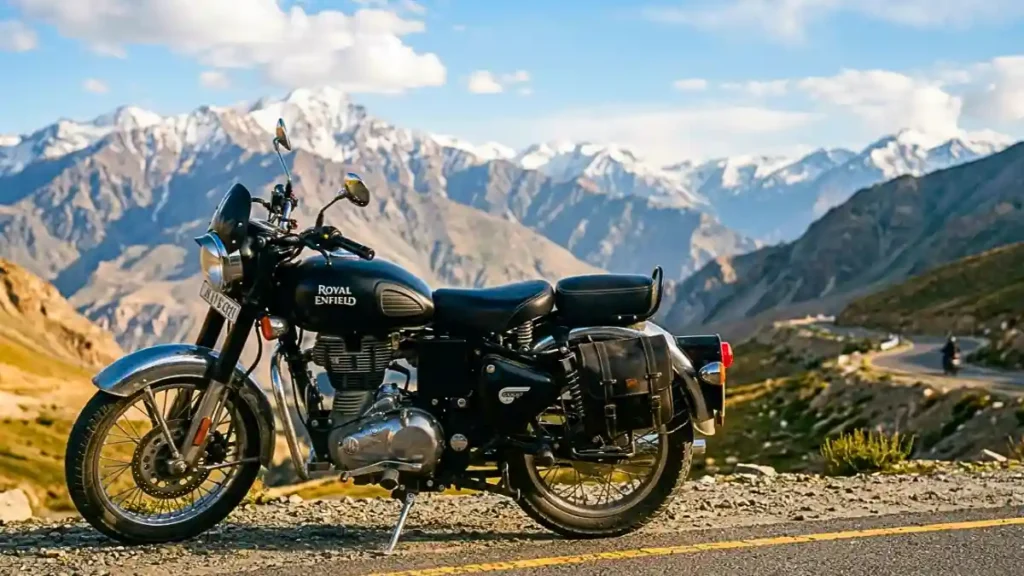

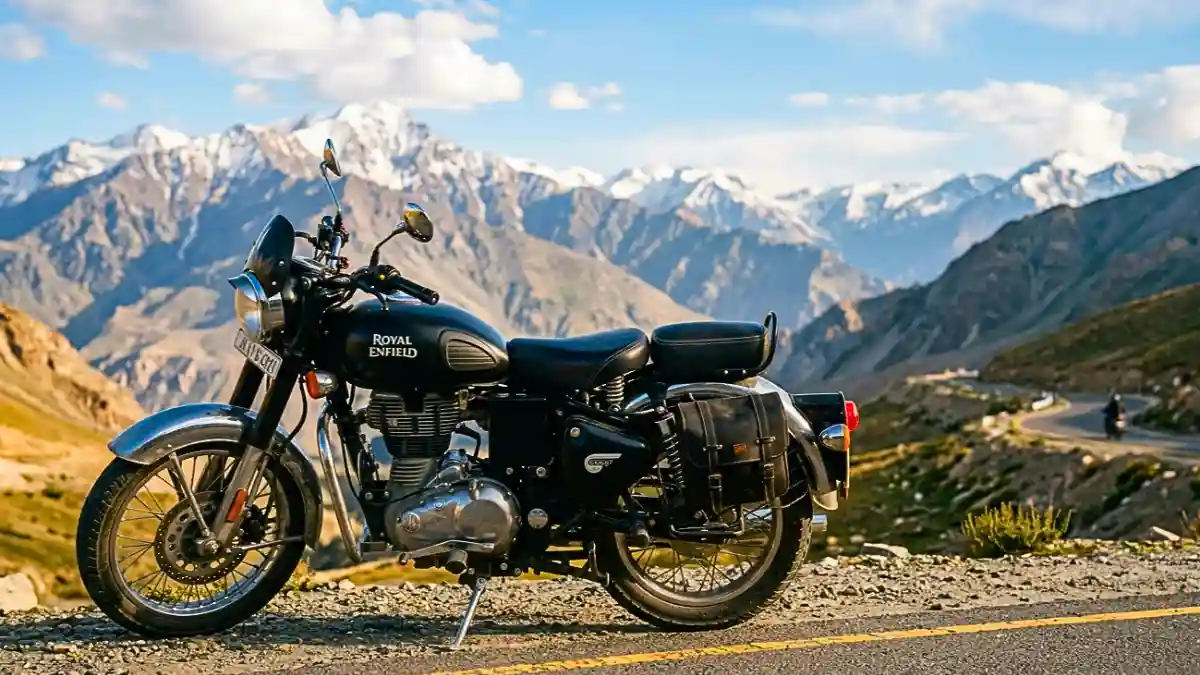
In the early 1990s, Royal Enfield was selling a few hundred motorcycles a month, barely clinging to life. Today, a single month’s dispatches regularly cross one lakh units. Now, its parent company Eicher Motors has lit the fuse on a capacity expansion that will push the company’s annual production capability close to 20 lakh motorcycles by FY28. That figure isn’t just a target on a spreadsheet; it’s a declaration that one of the world’s oldest motorcycle marques is gearing up to become one of its largest, and Royal Enfield global export growth is the undercurrent powering much of that ambition.
This is not a story about incremental growth. It’s about a brand that has spent the past decade perfecting the art of scaling desire without diluting identity. And the next chapter, shaped by fresh investment, new factories, and an electric sub-brand, deserves to be examined for what it really represents: a cultural and industrial pivot that will echo far beyond India.
Why Royal Enfield Global Export Growth Changes the Equation
To understand the weight of 20 lakh units, place it against the backdrop of the global motorcycle industry. Royal Enfield’s current installed capacity sits at roughly 14.6 lakh units annually. Adding an estimated 5.4 lakh units, a 37% leap, will catapult the company into a production league occupied by very few mid-to-premium motorcycle manufacturers anywhere. These aren’t low-margin commuter machines. Royal Enfield’s portfolio begins where the mass market’s ambition ends, and its average selling price carries significantly more heft.
The expansion includes a Rs. 958 crore brownfield build-out at the Cheyyar facility in Tamil Nadu, slated to start rolling out metal during FY27 and ramp up through FY28. At the same time, a brand-new greenfield plant near Tirupati in Andhra Pradesh is taking shape with a reported investment of around Rs. 2,500 crore. The Cheyyar outlay, remarkably, will be funded entirely from internal accruals. In an industry accustomed to debt-heavy capital expenditure cycles, Eicher Motors is writing a cheque from its own profits, a signal of financial discipline and accumulated strength that few automotive firms can match.
But why build so much capacity now? The answer lies squarely in the trajectory of Royal Enfield global export growth. During FY26, overseas dispatches reportedly crossed 1.3 lakh units, with Latin America, Europe, and Southeast Asia leading the charge. When your domestic monthly sales routinely top one lakh units and international demand keeps climbing, factory ceilings start feeling very real. Capacity is no longer a cushion; it’s a bottleneck waiting to happen.
Also Read – Suzuki e-Access Electric Scooter India 2026: Japan’s Quiet EV Revolution
The Geography of a Global Ambition
There is a quiet logic embedded in where Royal Enfield is planting its factory flags. Cheyyar already anchors a sizable chunk of production, but the move toward Andhra Pradesh near Tirupati isn’t random. The location offers excellent connectivity to the Krishnapatnam and Chennai ports, both critical arteries for export logistics. For a company that now counts Royal Enfield global export growth as a strategic pillar, proximity to efficient shipping corridors isn’t a nice-to-have; it’s a competitive necessity.
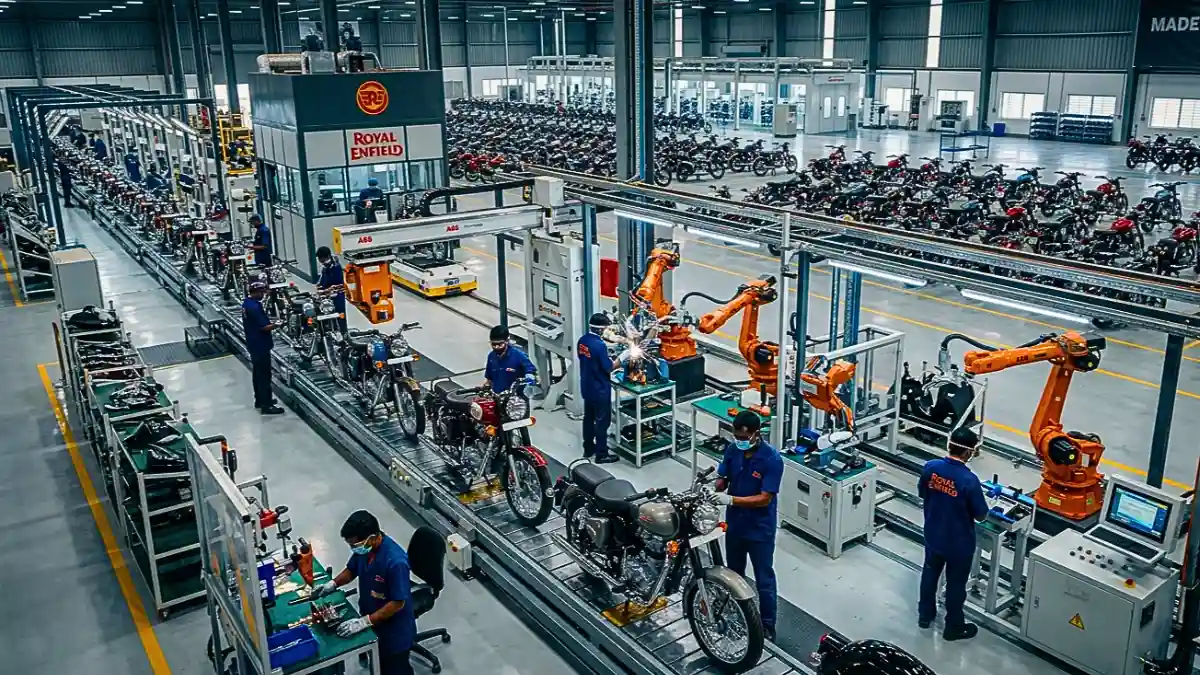
The export push changes the nature of Royal Enfield’s identity. Historically seen as an Indian icon with a retro-British soul, the company is now positioning itself as a genuine global player. Assembly operations and retail footprints overseas are expanding in lockstep with production at home. Every new knockdown kit facility in Colombia or Thailand, every new showroom in Paris or Sao Paulo, adds another layer of demand that the Chennai headquarters must fulfil without stretching domestic supply. The Tirupati facility, once fully operational, could very well become the pivot around which this global supply chain turns, especially once electric vehicles enter the picture.
When you dig into the numbers, the structural shift becomes clear. Export volumes crossing 1.3 lakh units in a single fiscal year may still be a fraction of domestic sales, but the growth rate and the margin profile tell a different story. Overseas buyers often purchase higher-spec variants, 650 twins, for instance, which carry richer unit economics. Sustained Royal Enfield global export growth doesn’t just add volume; it improves the revenue mix and reduces the company’s dependence on the Indian market’s seasonal and regulatory fluctuations.
Playing Two Hands at Once: Pistons and Electrons
Royal Enfield’s product cadence over the next two years reveals a company unwilling to bet the farm on a single powertrain philosophy. On one side, the internal combustion engine pipeline is rich: a Bullet 650, a Himalayan 750, a 450cc-based scrambler, a more accessible Himalayan 440, and a revised Continental GT 650 with meaningful hardware updates. These are motorcycles that speak directly to the brand’s touring DNA, its thumping torque appeal, and the aspirations of a rapidly diversifying rider base, both in India and in the international markets where Royal Enfield global export growth is most pronounced.
On the other side, there’s the Flying Flea S6, an electric scrambler that revives a wartime Enfield nameplate in a thoroughly modern avatar. The decision to house future electric motorcycle production in Andhra Pradesh, possibly adjacent to or within the new Tirupati complex, suggests a deliberate separation of church and state. Rather than electrifying existing model lines and risking the dilution of a carefully curated legacy, Royal Enfield appears to be building an EV brand with its own mythology, its own factory floor, and its own emotional register. That is brand architecture thinking at its sharpest.
This dual-track approach lets the company feed the profitable 350cc and 650cc business, where the Classic 350, Hunter 350, and Bullet 350 remain the cash engine, while incubating an electric future without pressure to deliver immediate scale. It also creates room for international markets to pull different levers. European demand may skew electric faster, while Latin American and Southeast Asian customers continue to favour internal combustion. A diversified production base with room for both means Royal Enfield global export growth doesn’t have to follow a single storyline.
Also Read – Suzuki GSX-S1000 Unfiltered Litre Class India: The Honest Naked That Needs a Comeback
Why This Moment Is Different
Royal Enfield has scaled before, but never under such a confluence of favourable currents. The 350cc segment has matured into a reliable bedrock, the 450cc and 650cc platforms are attracting younger and touring-oriented buyers who would have walked into Triumph or Harley-Davidson showrooms a few years ago, and the export funnel is widening just as global supply chains in the mid-size segment look vulnerable. Competitors are not standing still, but few can match the combination of factory scale, dealership density, and service network that Royal Enfield has built across India and is now replicating abroad, a direct enabler of its export momentum.
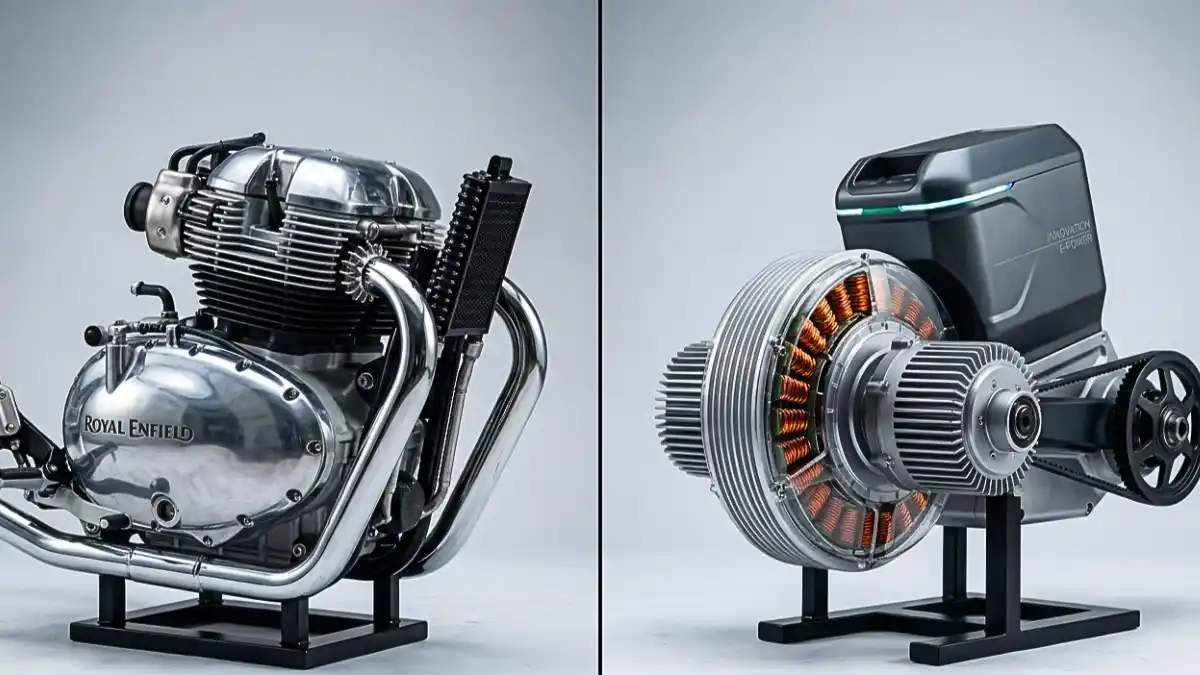
The fact that the company can fund a major brownfield expansion from its own cash reserves also means it isn’t at the mercy of interest rate cycles or investor sentiment swings. That insulation matters when you’re executing a multi-year capacity build while simultaneously developing a ground-up electric platform and chasing Royal Enfield global export growth in markets where brand loyalty takes years to earn and moments to lose.
What the Rider Sees—and What the Industry Should Watch
For the rider, all of this translates into tangible gains: shorter waiting periods, more accessible price points on models like the upcoming Himalayan 440, and a faster refresh cycle for enthusiast staples. An international customer in Bogotá or Barcelona benefits from the same manufacturing surge that serves a buyer in Bhopal. That’s the quiet promise embedded in the production expansion.
For the industry, the implications are sobering. A Royal Enfield capable of churning out nearly two million motorcycles a year with strong margins will set aggressive cost benchmarks in the 350cc to 750cc space. New entrants and existing rivals alike will face pressure on pricing, dealer viability, and spare parts availability. The moat isn’t just emotional anymore; it’s being reinforced with concrete, steel, and kilowatt-hours. And as Royal Enfield global export growth continues, the competitive pressure will be felt not just in India but on showroom floors from Milan to Manila.
The Road to FY28
Numbers like 20 lakh units can sound sterile until you realise they represent hundreds of thousands of riders discovering motorcycling through a brand that once symbolised hand-painted pinstripes and kickstart rituals. Royal Enfield’s expansion isn’t about chasing volume for its own sake. It’s about having the headroom to serve a global constituency that increasingly sees the Chennai-born brand as a legitimate alternative to far older, far larger competitors.
The next three financial years will test whether the company can maintain its quality standards, its dealer morale, and its cultural cachet while running at a pace no one imagined possible just a decade ago. If the execution matches the ambition, the thump that once echoed across Himalayan passes will soon resonate in cities and highways from Bogotá to Bangkok, backed by an industrial engine that has learned to roar in two million-unit harmony, and sustained by a wave of Royal Enfield global export growth that is only just beginning.
Also Read – Yamaha YZF-R15 in India 2026: Everything You Need to Know Before You Buy


Raj is the creative mind curating the special content for the website. From exclusive first-drive reviews to buyer’s guides and comparison tests, Raj ensures our features are engaging and helpful. He loves getting behind the wheel of new launches and creating content that helps our readers pick their dream vehicle. His passion for motorcycles and performance cars is evident in his energetic writing style.