





Hey, fellow riders! I spend weekends tinkering with my old Bullet, planning the next Himalayan ride, and probably arguing about EVs vs. petrol. Today, we’re gonna talk about the single most important piece of gear you own: your helmet. And specifically, what is the 2-2-2 rule when fitting a helmet on your head?
Sounds like some secret code, right? It’s actually brilliantly simple, and honestly, it’s a game-changer. A helmet that doesn’t fit right is like wearing flip-flops on a track day, utterly pointless and downright dangerous.
Think about it. We obsess over tyre pressure, engine oil, brake pads… but neglect the thing literally protecting our brain? Friends, this doesn’t make sense. So let’s understand this 2-2-2 rule. I wish someone had explained to me so clearly what is the 2-2-2 rule when fitting a helmet on your head when I bought my first helmet!
Why Does Helmet Fit Even Matter?
A bad fit isn’t just annoying; it’s dangerous. Think about it. We are obsessed with tyre pressure, engine oil changes, brake pad wear… but slap just any lid on our most valuable asset? It makes zero sense. A poorly fitted helmet is a safety hazard:
- The Wobbly Nightmare: Too loose? In a crash, it can spin, tilt, or even fly off completely. Game over.
- The Headache Giver: Too tight? Hello, throbbing temples and pressure points that’ll ruin even the best ride. You’ll be fidgeting constantly, not ideal when splitting traffic!
- The Wind Howler: Gaps around your cheeks and neck? That’s a direct highway for deafening wind noise, making you miss horns, sirens, or even your own thoughts. Exhausting!

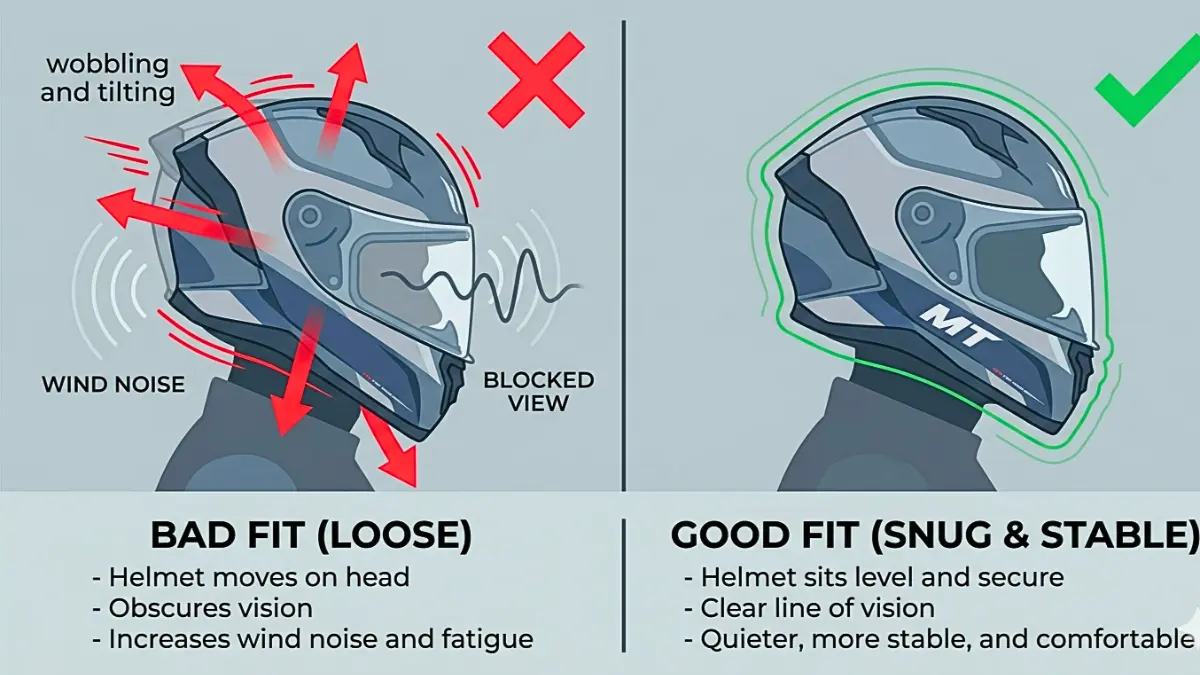
- The Vision Blocker: Sitting too low? Blocks your view. Too high? Hello, exposed forehead. Both are accidents waiting to happen.
- The Quick Quitter: A loose helmet rubs and shifts, wearing out the padding way faster. Your safety gear shouldn’t retire early!
What is the 2-2-2 rule when fitting a helmet on your head? It tackles all of this head-on (yep, pun intended!). It’s your quick, foolproof checklist using just your fingers. Let’s crack this code!
Unlocking the Code: What is the 2-2-2 Rule When Fitting a Helmet on Your Head?
Simple! It’s three quick checks, each using roughly two fingers as your measuring tape. We’re focusing on three key spots: your cheeks, your forehead (brow), and the chin strap. Here’s the breakdown:
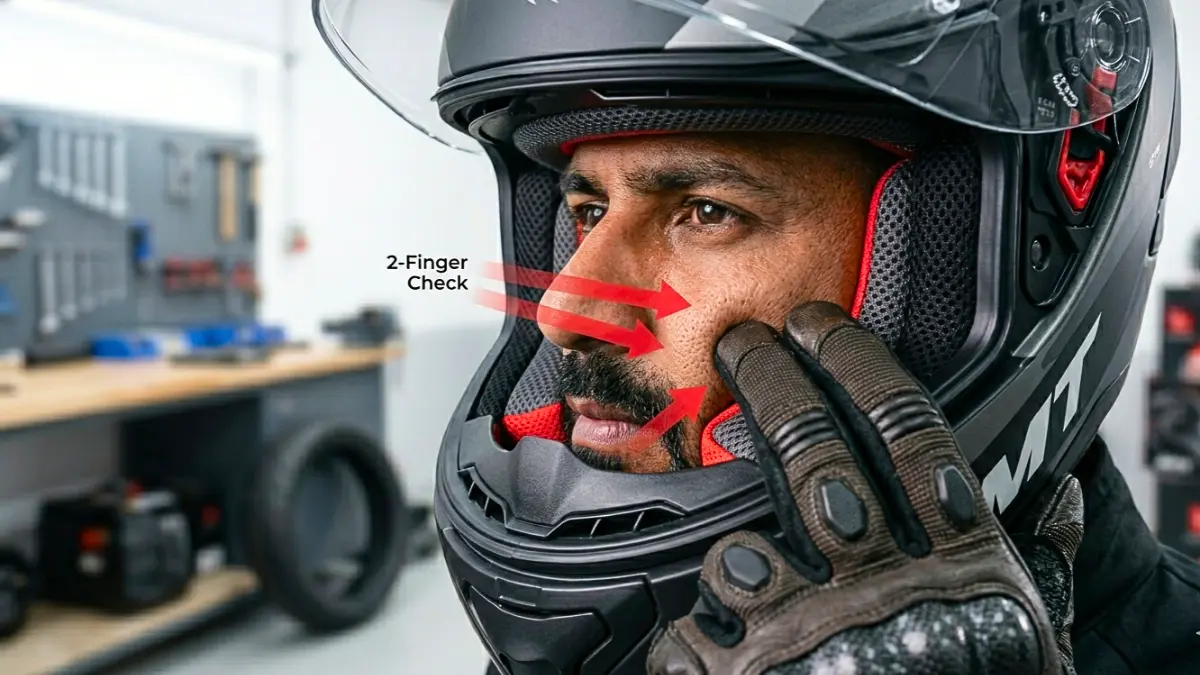
1. Cheeks: The “Firm Hug” Check (First 2!)
- Do This: Once the helmet is securely fastened on your head (more on that later!), you should be able to fit no more than two fingers (index and middle finger together) between the helmet’s cheek pads and your cheeks.
- Perfect Fit: You can get two fingers in, but it’s snug. Like a firm, reassuring hug for your face. You might even feel your cheeks squished a bit (making you look adorably like a chipmunk). This is good! It shouldn’t be painful, but definitely tight.
- Why It Rocks: This keeps the helmet glued to your face during an impact, especially side hits or spins. Prevents twisting that can cause nasty brain injuries. Also massively cuts wind noise! Win-win.
- Common Mistakes:
- Too Loose: You can easily fit three or four fingers? The helmet will wobble and shift constantly. Nope.
- Too Tight: Can’t even fit one finger comfortably? Instant headache and pressure sores guaranteed. Cheek pads usually break in a little, but they shouldn’t feel like a vice.
- Beards/Hairstyles: Guys with awesome beards, ladies with braids/buns, make sure the pads contact your skin, not just squashing hair. Comfort is key!
2. Eyebrows: The “Forehead Guardian” Check (Second 2!)
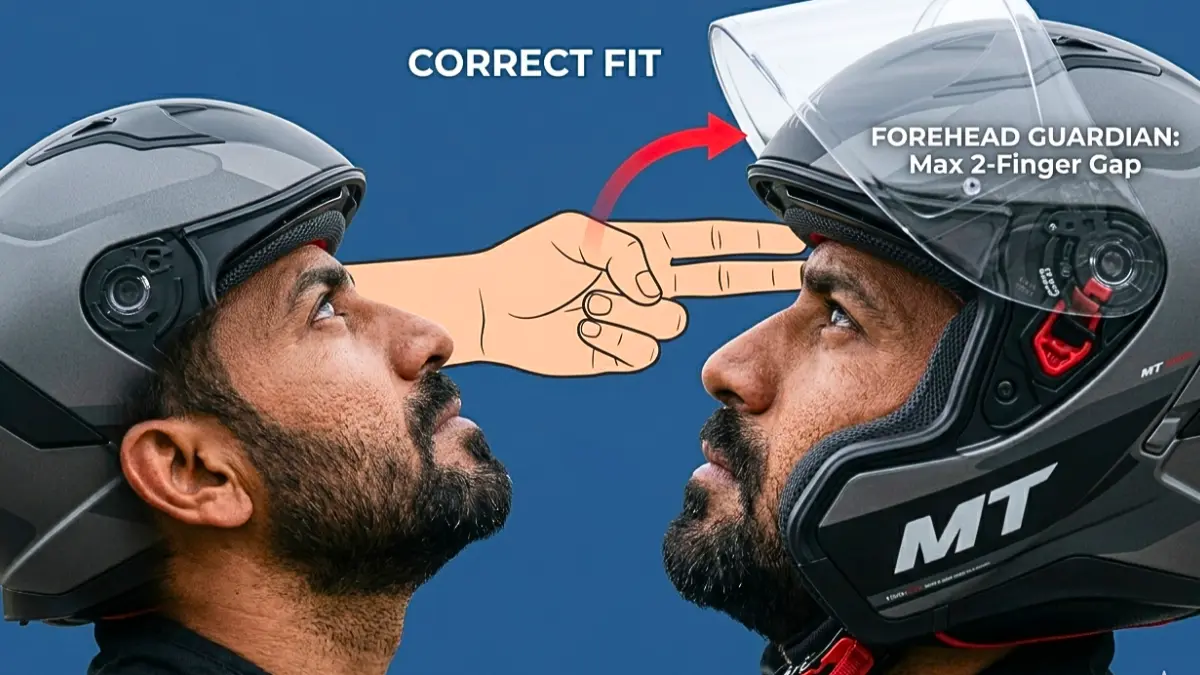
- Do This: Look UP towards the sky! Now, check the space between your eyebrows and the front edge of the helmet liner inside. Can you fit two fingers flat in that gap?
- Perfect Fit: The helmet sits nice and low on your forehead. When you look up, you shouldn’t see a big gap above your brows. Two fingers max should fit. Your forehead should feel covered, not exposed.
- Why It Rocks: This is crucial for frontal impacts (think hitting the brakes hard or, worse, a collision). If the helmet’s perched high like a crown, your forehead is totally unprotected. This also stops the helmet from tipping back easily. If you’re still wondering what is the 2-2-2 rule when fitting a helmet on your head, this forehead check is often the most overlooked part!
- Common Mistakes:
- Helmet Sitting Too High: This is super common! People often wear helmets perched back on their head, exposing the entire forehead. If you can fit your whole palm between your brow and the helmet, it’s way too high and offers zero protection in a frontal impact.
- Blocking Vision: While it should sit low, it absolutely should not block your forward or peripheral vision. You should see the very top edge of the visor opening in your upper peripheral vision, not have it cutting across your main sightline. Tilting your head down slightly to see clearly? That’s a sign it’s too low or the wrong shape.
- Bindi/Sindoor: For those who wear bindis or apply sindoor, ensure the brow pad doesn’t constantly dislodge it uncomfortably. A good fit avoids this.
3. Chin Strap: The “Hold On Tight!” Check (Third 2!)
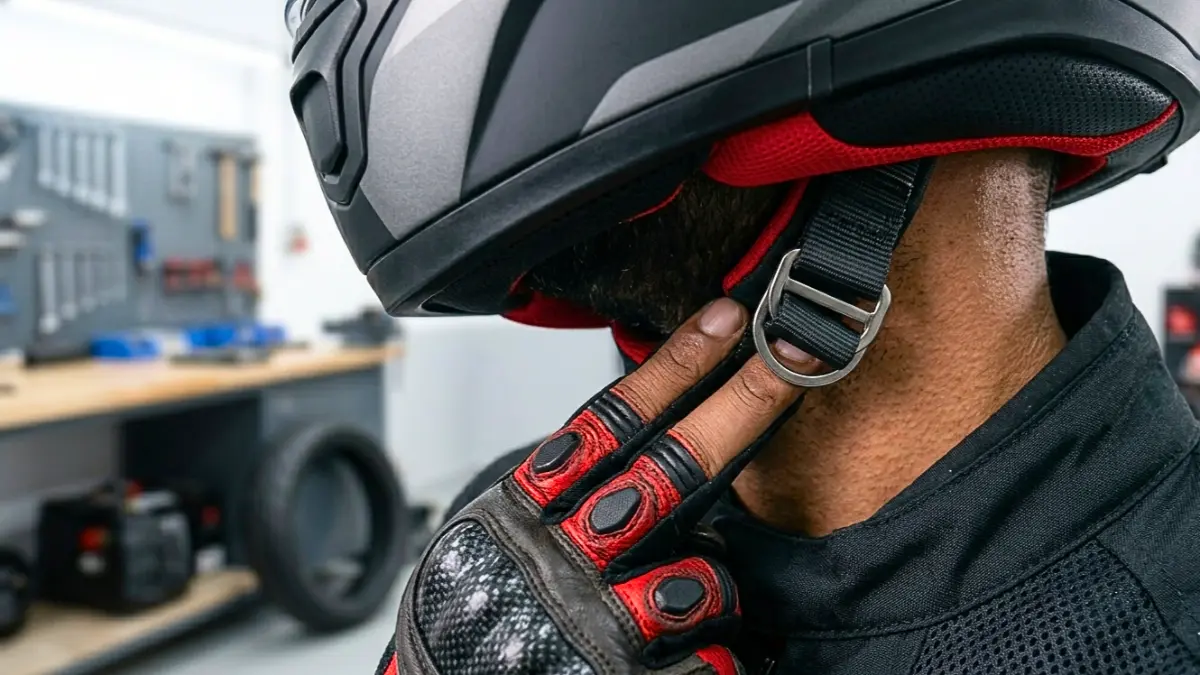
- Do This: Strap fastened nice and snug. Now, try to slide two fingers (flat, stacked) underneath the strap, right under your chin/jaw.
- Perfect Fit: You can get two fingers under, but it’s tight. The strap should feel firm against your skin. Now, try a big, dramatic yawn. The helmet should pull down slightly on your head, but the strap shouldn’t choke you. You should be able to talk and swallow comfortably.
- Why It Rocks: This is arguably the most important part! The strap is what keeps the helmet on your head during an accident. If it’s loose, the helmet flies off. Game over. A snug strap keeps it locked in place so the helmet can do its job. This step is the final answer to what is the 2-2-2 rule when fitting a helmet on your head; it locks everything in place.
- Common Mistakes:
- Strap Way Too Loose: This is everywhere! Straps dangling loosely with room for a whole hand underneath. Utterly defeats the purpose. In a crash, the helmet flies.
- Strap Uncomfortably Tight: Snug is good; choking is not. You shouldn’t feel like you’re being strangled! Breathe easy, ride safe.
- D-Ring Not Done Properly: Make sure it’s threaded properly and the loose end is tucked away neatly. No flappy bits! If your helmet has a neck curtain, the strap goes under it.
Your Action Plan: Putting the 2-2-2 Rule to Work!
Theory’s cool; let’s get practical! Now that you know what is the 2-2-2 rule when fitting a helmet on your head, here’s how to use it when buying or checking your lid:
- Shape Matters: Indian heads aren’t all the same! Common shapes: Round, Intermediate Oval (most common), Long Oval. Brands fit differently (Axor, Steelbird, MT, LS2, SMK vs. pricier AGV/Shark/Shoei/Arai). Try different ones!
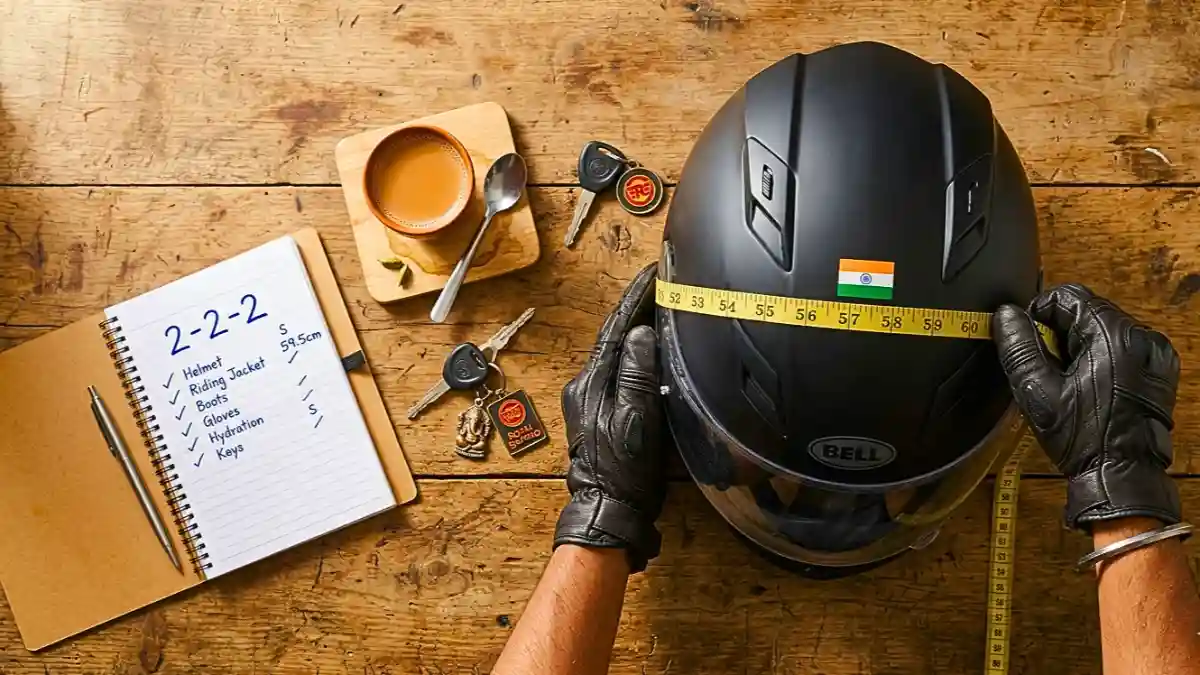
- Measure Up: Grab a tailor’s tape. Measure around the widest part of your forehead, just above your ears. Check the brand’s size chart! Don’t guess “medium” because you always wear medium.
- The Initial Squeeze Test: Put the helmet on without fastening the strap. Grip the chin bar and try to rotate the helmet side-to-side and front-to-back. Your scalp and skin should move with the helmet. If the helmet slides easily over your skin, it’s too big.
- STRAP ON: Seriously, never skip this step for the checks. Buckle up snugly.
- Run the 2-2-2 Drill:
- Cheeks: Slide two fingers between the cheek pad and your cheek. It should be snug, with a maximum of two fingers.
- Brow: Tilt your head back and look up. Can you see the liner edge hovering? Place two fingers above your eyebrow towards the helmet edge. Shouldn’t be a huge gap.
- Strap: Slide two fingers flat under the strap at your throat. Should feel snug, not loose. Try the yawn test. If you forget what is the 2-2-2 rule when fitting a helmet on your head, just remember: two fingers at each spot!
- The Patience Test: Wear it fastened for 10-15 minutes in the shop. Walk. Shake your head “No,” and “Yes,” look over your shoulders. Any sharp, painful pressure points (forehead, temples, top)? Minor snugness is okay (it breaks in), but sharp pain means the wrong size/shape. Does it lift when you yawn?
- Vision & Visor: Clear view all around? Visor opens/closes smoothly? Seals well against dust/rain? Essential!
- Listen Up: Shake your head gently. Does the helmet move with you or wobble independently? It should feel like one with your head.
Pro Tips for the Indian Rider (Because Our Roads & Weather Are Special!)
- Sweat Warriors: Our heat is brutal! Look for helmets with removable, washable liners and cheek pads. Hygiene is safety too! Sweat breaks down materials faster.
- Safety Sticker: NO CERTIFICATION = NO DEAL! Look for the ISI mark (a must-have in India) OR ECE 22.06 (the latest global gold standard). Avoid DOT-only helmets—the testing isn’t reliable enough. Check the label inside the helmet and on the strap. Your brain deserves certified protection!
- New Helmet Stiffness: A new helmet is always the tightest it will be. Cheek pads especially soften by about 10-15% in the first few rides. It should be snug from day one, not painful. When trying it on, keep what is the 2-2-2 rule when fitting a helmet on your head in mind to account for that break-in period.
- Replace After Impact: Even a seemingly minor drop can compromise the EPS liner. If you crash, even if the shell looks fine, replace the helmet. Its job is done. Don’t risk it.
- Replace Periodically: Sun, sweat, heat, cold—they all wear down a helmet. Replace it every 3-5 years, even if it looks fine. Check the manufacturer date inside (usually a sticker under the liner).
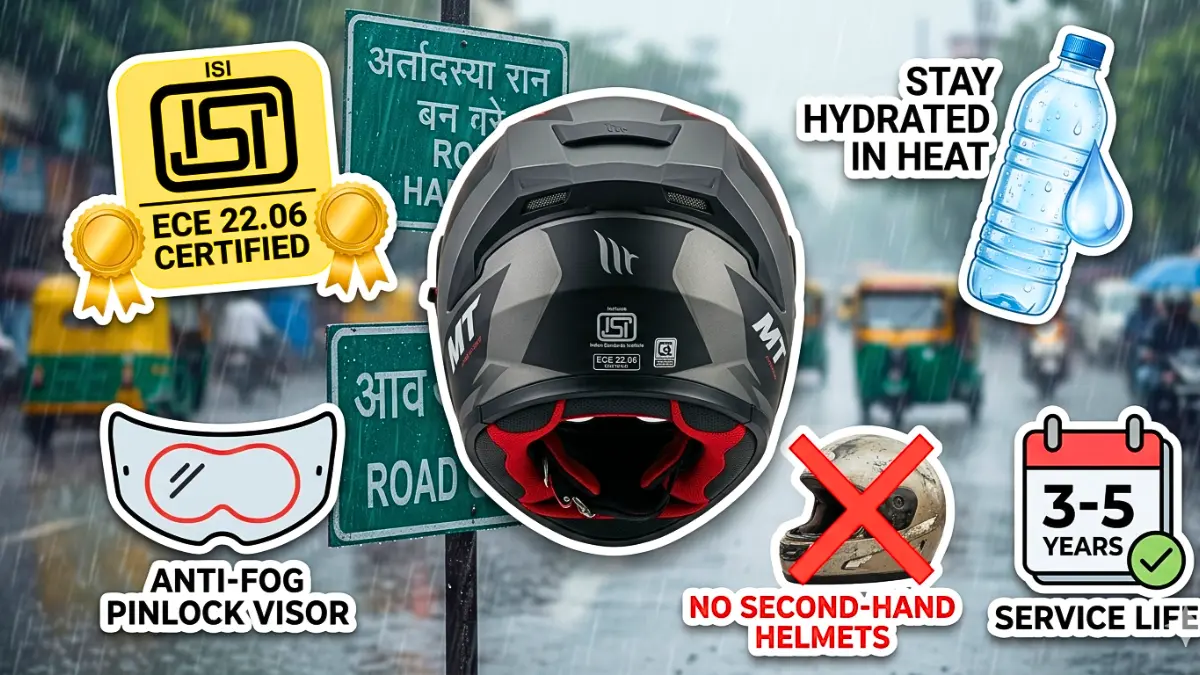
- Visor & Pinlock: Fogging is real! Invest in a Pinlock-ready visor and insert. It’s a lifesaver (literally, for visibility) in monsoon or cold mornings.
- Avoid Second-Hand Helmets: You have no clue about its history. Cracks, drops, degradation – invisible killers. Always buy new and certified. And when you do, make sure you know what is the 2-2-2 rule when fitting a helmet on your head to test the fit properly.
Wrapping It Up: Fit Right, Ride Safe!
Look, I love talking mods, exhaust notes, and the thrill of acceleration as much as the next guy. But nothing beats the feeling of coming home safe after an amazing ride. Your helmet is your partner in that. It’s not about looking good; it’s about being here for the next ride, the next adventure, the next party with your riding mates.
So, remember the magic numbers: 2-2-2. Now you know exactly what is the 2-2-2 rule when fitting a helmet on your head.
- Two fingers snug on the cheeks.
- Two fingers max above the brow.
- Two fingers tight under the strap.

It takes 60 seconds. It costs nothing. And it could save everything.
Go check your lid right now! And next time you’re helmet shopping, walk in armed with the knowledge of what is the 2-2-2 rule when fitting a helmet on your head. Be that smart rider.
FAQ –
1. Is wearing a helmet necessary for a 1km 2km drive?
Ans – Yes, wearing an ISI-certified helmet is mandatory for all two-wheeler rides, including short 1km-2km distances. Accidents frequently occur on short trips due to lower caution, and neglecting a helmet can result in heavy fines (₹500–₹1,000), license suspension, and severe head injury risk.
2. Is half helmet illegal in India?
Ans – Half-helmets that do not meet Bureau of Indian Standards (BIS) standards are not allowed in India. To be legal, a helmet must have an ISI mark, be properly fastened, and cover the head properly, which makes flimsy or “skull cap” style half-helmets illegal and subject to fines under the Motor Vehicles Act.
3. How to check original Steelbird helmet?
Ans – To check if a Steelbird helmet is original, check for a valid ISI mark (IS:4151) and verify the certification number on the BIS website. Authentic Steelbird helmets feature high-impact ABS shells, durable visors with double-coating for scratch resistance, secure metal-to-metal locks, and firm, high-density thermocol (EPS) liners.
4. Which is better, dot or isi?
Ans – DOT (Department of Transportation) certification is generally better for higher-speed, high-impact protection, while ISI (Indian Standards Institute) is mandatory for legal compliance in India and suitable for city commuting. DOT standards are often more rigorous, but ISI is sufficient for lower speeds.
5. How to spot a fake helmet?
Ans – Many helmets have counterfeit DOT stickers and a limited few also have manufacturer’s labelling. But the design and weight of a helmet, the thickness of the inner liner, and the quality of the chin strap and rivets are extra clues to help distinguish safe helmets from non-complying ones.
Also Read – The Future of Electric Vehicles in India by 2030: Buckle Up, It’s Going to Be a Wild Ride!


If it runs on electricity or has a microchip, Rahul is on it. As our resident tech geek and electric vehicle (EV) specialist, Rahul decodes complex technologies into simple language for our readers. He stays ahead of the curve on battery technology, autonomous driving, and the latest digital trends in the automotive sector. If you want to know the real range of an EV or the future of mobility, Rahul has the answers.