


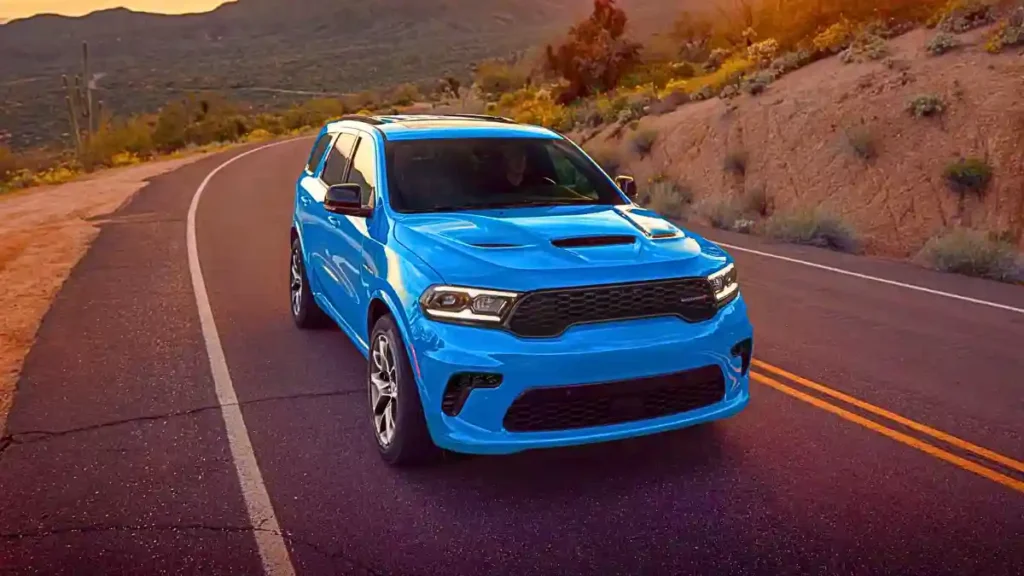

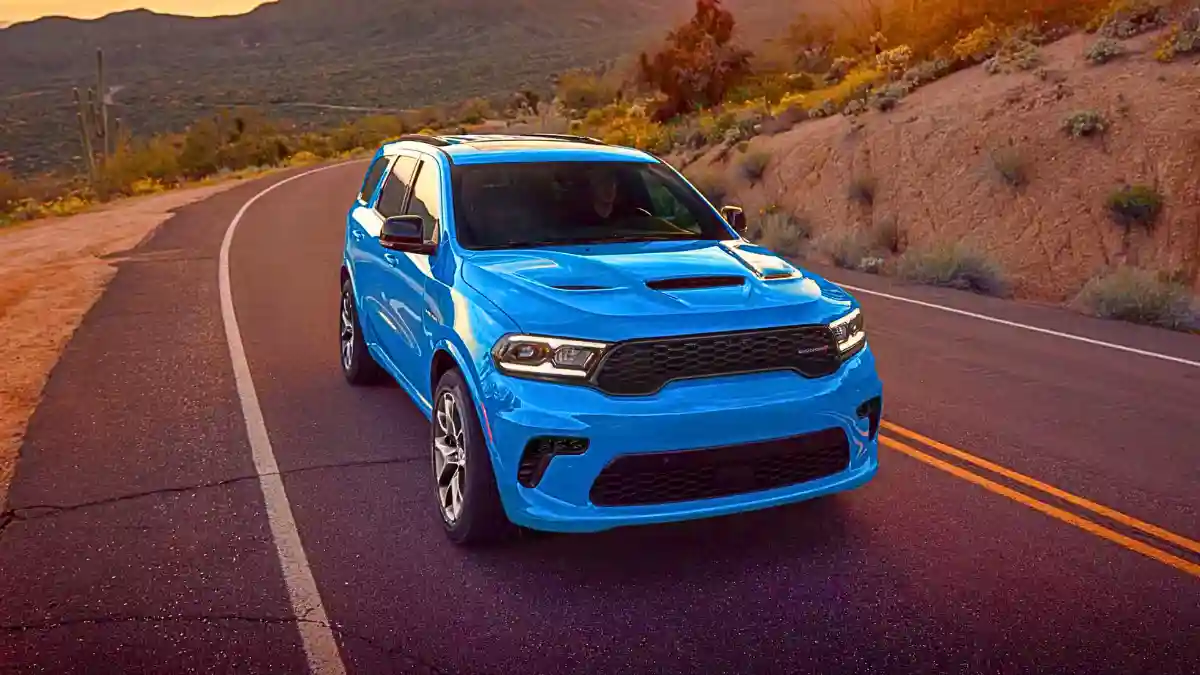
It’s 2026. Gas prices just hit a four-year high. The White House is pushing new emissions standards. And every automaker from Ford to Mercedes is desperately cramming batteries into anything with four wheels.
Then there’s Dodge. The 2027 Dodge Durango V-8 SUV arrives as a defiant middle finger to convention – because the same brand that brought you the Hellcat just looked at the market, shrugged, and said: “What if we made our family SUV only available with V-8s?” That’s not a business strategy. That’s a statement.
The Contrarian Playbook: Why the 2027 Dodge Durango V-8 SUV Makes No Sense (And That’s the Point)
The 2027 Durango isn’t new. It’s not revolutionary. It’s not even particularly efficient. What is the last honest-to-God muscle SUV standing – and Dodge knows exactly what it’s doing.
Starting at $45,670 for the entry-level GT Hemi, this three-row beast eliminates the V-6 option entirely. No more compromise. No more “well, the base model is sensible.” If you want a new Durango, you’re getting eight cylinders thumping under the hood. Period.
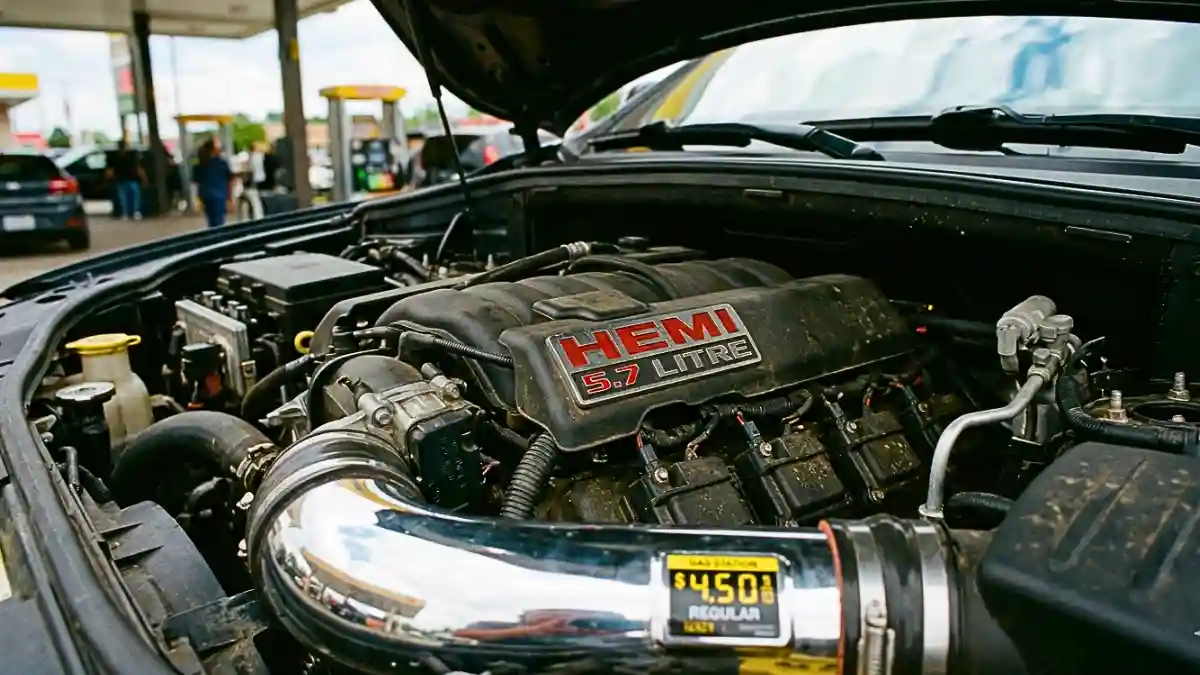
The math is almost perverse when you think about it. Last year’s AWD base model cost about $42,700 with the wheezy 295-horsepower V-6. For 2027, you’re paying roughly $3,000 more – but you’re getting 360 horsepower from a 5.7-liter Hemi. Dodge essentially forced customers to upgrade while convincing them it’s a value play. And honestly? For a certain kind of buyer, it absolutely is.
Also Read – Dodge Copperhead SRT Coupe Returns to Lead a Bold New SRT Army
The Three-Headed Beast
Here’s where the lineup gets interesting – and where Dodge’s strategy becomes clear.
The GT Hemi ($45,670–$52,270) is your entry drug. Three hundred sixty horses. All-wheel drive standard. Eight-speed automatic. It’s the “responsible” choice, if you can call any V-8 SUV responsible. The new Brass Monkey package adds some visual swagger – distinctive badges, special 20-inch wheels – without pretending this thing sips fuel.
The R/T 392 ($52,990–$59,590) is the sweet spot. That 6.4-liter V-8 pumps out 475 horsepower and 470 pound-feet of torque. For context, that’s more grunt than a 1990s Ferrari F40. In a vehicle that can carry your kids and their friends. The new Plus trim adds Nappa leather, ventilated seats, and enough comfort features to make you forget you’re burning premium fuel at an alarming rate.
Then there’s the Hellcat: Seventy-one hundred. No, not the price – that’s $82,490. I’m talking about horsepower. The supercharged 6.2-liter V-8 in the SRT Hellcat produces 710 horsepower and will rip this 5,500-pound family bus to 60 mph in 3.6 seconds.
Think about that for a second. A three-row SUV that can out-drag a Porsche 911 Carrera. That traps the quarter-mile at 115 mph. That makes sounds so intoxicating your neighbors will either hate you or ask for a ride.
The Jailbreak package – $995 extra – lets you customize everything from paint colors to seating configurations. Because if you’re spending Hellcat money, you deserve to make it weird.
Why This Actually Matters
Here’s the thing most auto writers won’t tell you: The 2027 Durango is a niche product for a dying breed of buyer. And that’s precisely why it’s important.
We’re watching the sunset of the naturally aspirated V-8. Between EU emissions regulations, California’s accelerating timeline to ban new ICE sales, and the simple economics of battery production, the days of walking into a dealership and buying a brand-new V-8 are numbered. Five years from now, this lineup might not exist.
Dodge knows this. Stellantis knows this. That’s why the Durango continues to soldier on with what’s essentially a platform that dates back to 2011. They’re not investing in reengineering it for hybrid power or downsized turbo fours. They’re selling the last of the V-8s while they still can.
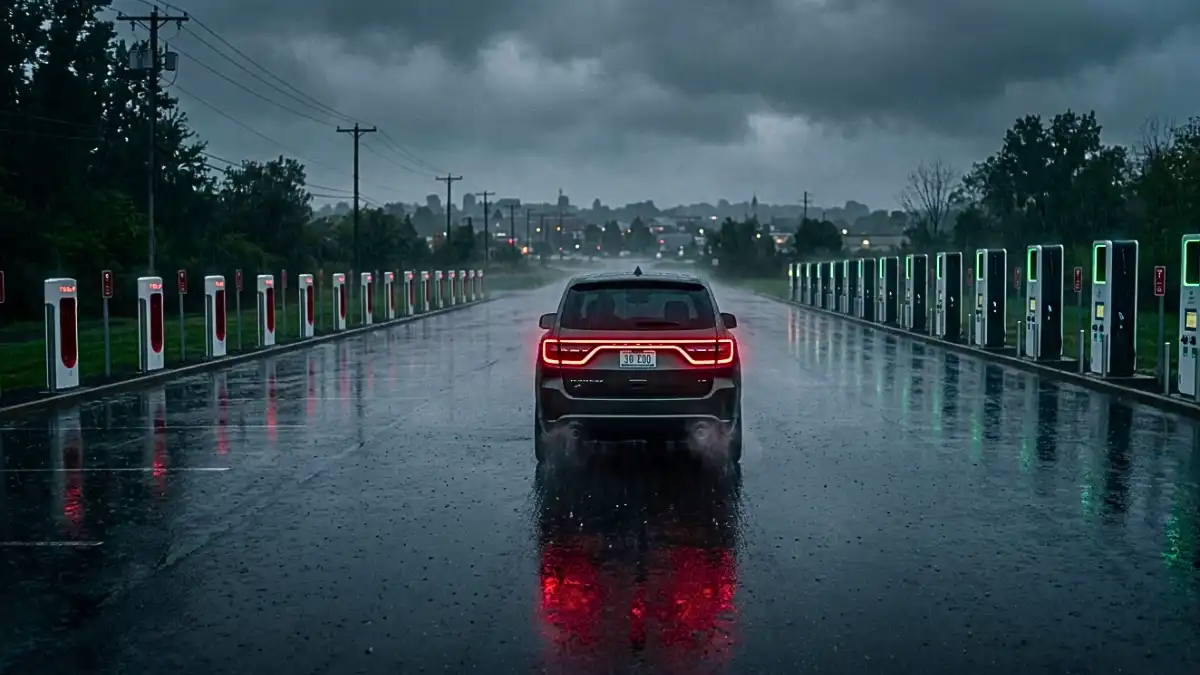
And you know what? There’s something almost noble about that. Not sensible. Not forward-thinking. Certainly not green. But noble in the same way that building a handcrafted wooden sailboat in the age of fiberglass is noble. It’s a choice driven by passion rather than practicality.
Who Is This Actually For?
Let me be direct about the buyer here.
This isn’t for someone comparing fuel economy spreadsheets. The GT Hemi will be lucky to see 16 mpg combined on a good day. The Hellcat? You’re looking at single digits if you drive it the way God intended. At current prices, that’s a $75 fill-up that lasts you maybe 250 miles.
This is for the person who has a separate line item in their budget for “automotive therapy.” The dad who secretly wishes his minivan made noise. The mom who spent her twenties driving Mustangs and refuses to let suburban life kill her spirit.
It’s also for collectors. Because mark my words: A clean, low-mileage 2027 Durango Hellcat will be worth real money fifteen years from now. It’s the last of a species.
Also Read – Ferrari Mazda Luce Trademark Dispute: Before Ferrari Could Say “Luce,” Mazda Already Owned the Light
What’s Missing
I need to be honest about the drawbacks.
The Durango’s platform is old. Really old. The interior, while refreshed, doesn’t compete with the new Jeep Grand Cherokee or even the Hyundai Palisade’s cabin. Infotainment technology moves fast, and Dodge has been mostly standing still.
The towing capacity is solid – 8,700 pounds when properly equipped – but so is the Ford Expedition’s, and that comes with a modern twin-turbo V-6 that makes decent power with better efficiency.
And let’s talk about the elephant in the room: Dodge’s own future. The brand has shown the Charger Daytona EV, and an electric Durango is almost certainly coming. When it does, the V-8 version will feel like a relic.
That’s either the selling point or the dealbreaker, depending on who you are.
The Verdict
Look, I’m not going to stand here and tell you the 2027 Dodge Durango makes logical sense. It doesn’t. It’s expensive to fuel, outdated in places, and objectively worse than several competitors at being a practical family vehicle.
But since when did “sense” have anything to do with it?
The Durango GT Hemi starts under $46,000. That’s real money for most families, but it’s also the cheapest way to put a new V-8 in your driveway with three rows of seating. The R/T 392 delivers muscle-car performance without crossing into six-figure territory. And the Hellcat is simply absurd – in the best possible way.
If gas prices matter to you, buy a Toyota Grand Highlander Hybrid. If reliability is your only concern, get a Honda Pilot. If you want to feel something every time you press the accelerator – if the sound of eight pistons firing in sequence makes you smile despite your better judgment – then Dodge is ready to take your order this fall.
The V-8 is dying. The Durango is one of its last strongholds. Enjoy it while it lasts. Preferably with the windows down.
Also Read – Theon Design 964 Restomod: When Less Is the Fastest Thing on the Road


If it runs on electricity or has a microchip, Rahul is on it. As our resident tech geek and electric vehicle (EV) specialist, Rahul decodes complex technologies into simple language for our readers. He stays ahead of the curve on battery technology, autonomous driving, and the latest digital trends in the automotive sector. If you want to know the real range of an EV or the future of mobility, Rahul has the answers.