


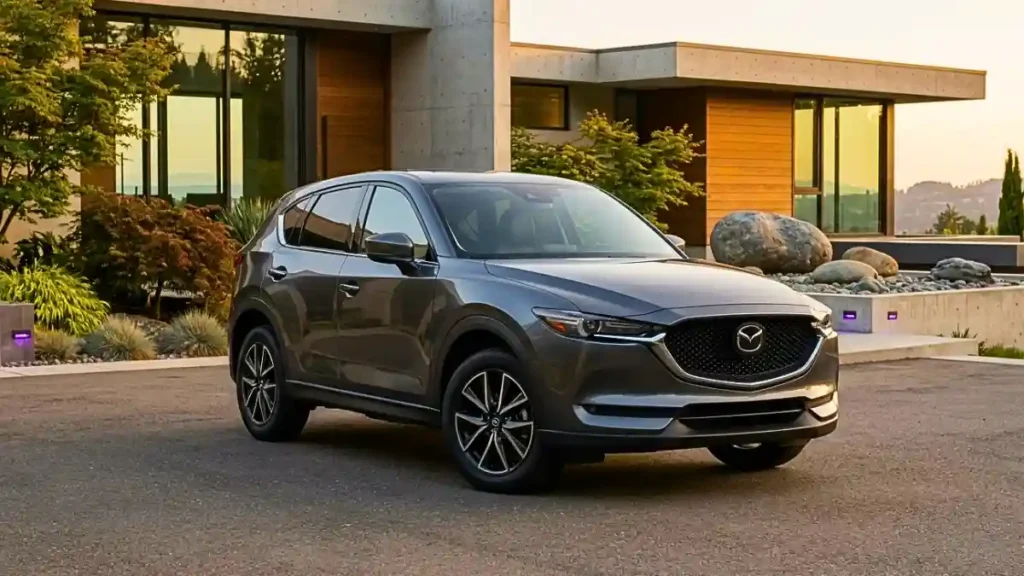

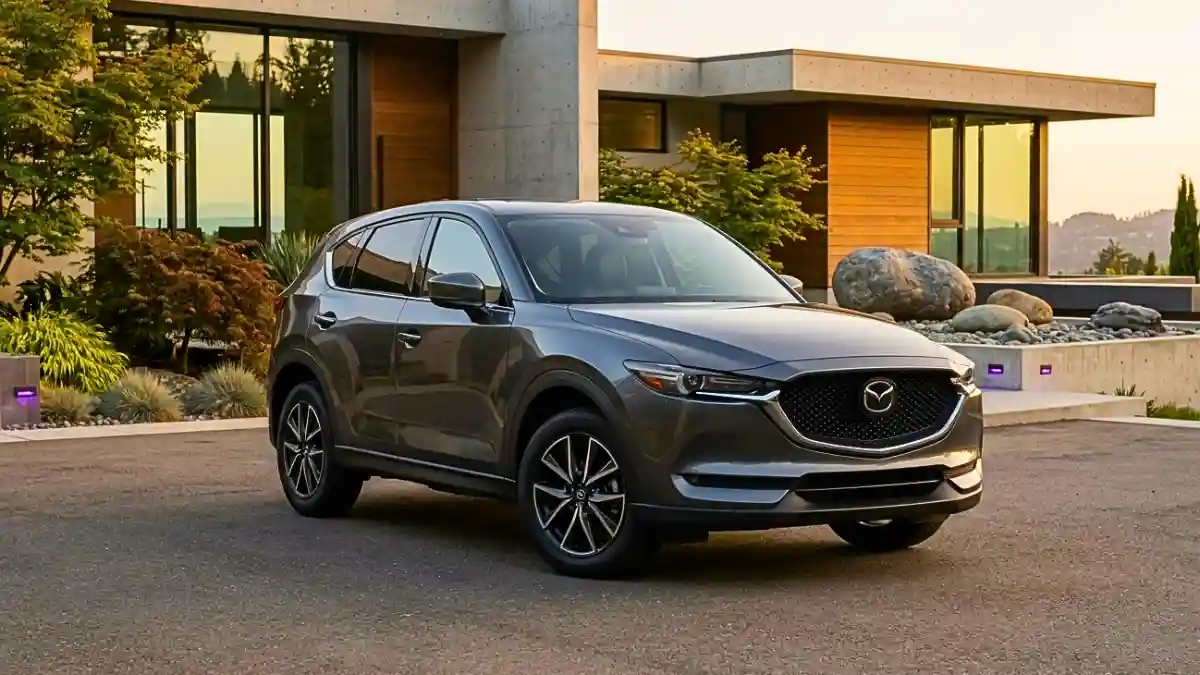
A name that Ferrari plans to stamp onto its first electric car was already carried with elegance and Italian DNA by a Japanese automaker fifty years ago. This is not a footnote. It is the story at the heart of the Ferrari Mazda Luce trademark dispute.
There is a peculiar kind of irony at work when one of the world’s most celebrated automotive brands reaches for a name, only to find that a Japanese company from Hiroshima has been holding it for decades. That is precisely where Ferrari finds itself in 2026, locked in a trademark dispute with Mazda over a single word: Luce.
Ferrari announced the Luce as the name for its first fully electric vehicle. It’s a poetic choice, Italian for “light,” rich in symbolism for a brand stepping into an electrified future. There’s one problem: Mazda got there first. Sixty years first, to be exact.
Why the Ferrari Mazda Luce Trademark Dispute Actually Matters
On the surface, this looks like a squabble over branding, the kind of legal fine print that rarely makes headlines. But dig a little deeper, and the dispute reveals something worth paying attention to: the question of who owns automotive heritage, and whether legacy brands can simply absorb history that was never theirs.
Ferrari has claimed global rights to the Luce nameplate. Mazda, quiet but firm, has maintained active trademark registration in Japan, which means Ferrari’s debut EV may need a different name the moment it tries to enter one of the world’s most significant automotive markets. Japan is not a peripheral concern for a luxury automaker; it is a market of considerable prestige.
“Did anyone say Luce?” Mazda’s social media caption alongside a photograph of its 1966 executive sedan. Terse. Pointed. Effective.
Mazda has not filed an injunction or issued a stern legal statement. Instead, it has done something far more entertaining: it has trolled Ferrari on the internet with the confidence of an institution that knows it is right. The company posted archival photographs and published a short comic celebrating its Italian design roots. Ferrari, meanwhile, has remained publicly silent on the subject, busy, perhaps, defending the broader concept of the Luce to its own audience.
Also Read – JSW Motors Electric Car India Launch: Betting Everything on Electric, Fast
The 1966 Luce: A Japanese Car With an Italian Soul
The Mazda Luce was not a humble economy car given an ambitious name. It was the company’s first genuine attempt at the executive segment market, where image, ride quality, and design authority matter as much as mechanical specifications. It debuted in 1966 and remained Mazda’s flagship for twenty-five years, spanning five distinct generations until 1991.
What made the original Luce remarkable was its origin story. The car was penned by Giorgetto Giugiaro, the Italian design legend whose portfolio includes the original Volkswagen Golf, the Alfa Romeo Giulia GT, and the BMW M1, among dozens of others. Giugiaro was not yet globally famous when he drew the Luce; he was a young designer at Bertone, operating at the intersection of ambition and discipline. What he produced for Mazda was unmistakably European in character: a tall, formal glasshouse, a long hood that implied seriousness, a single unbroken shroud housing the headlights and grille, and a wraparound windshield that would be considered commercially unworkable today.
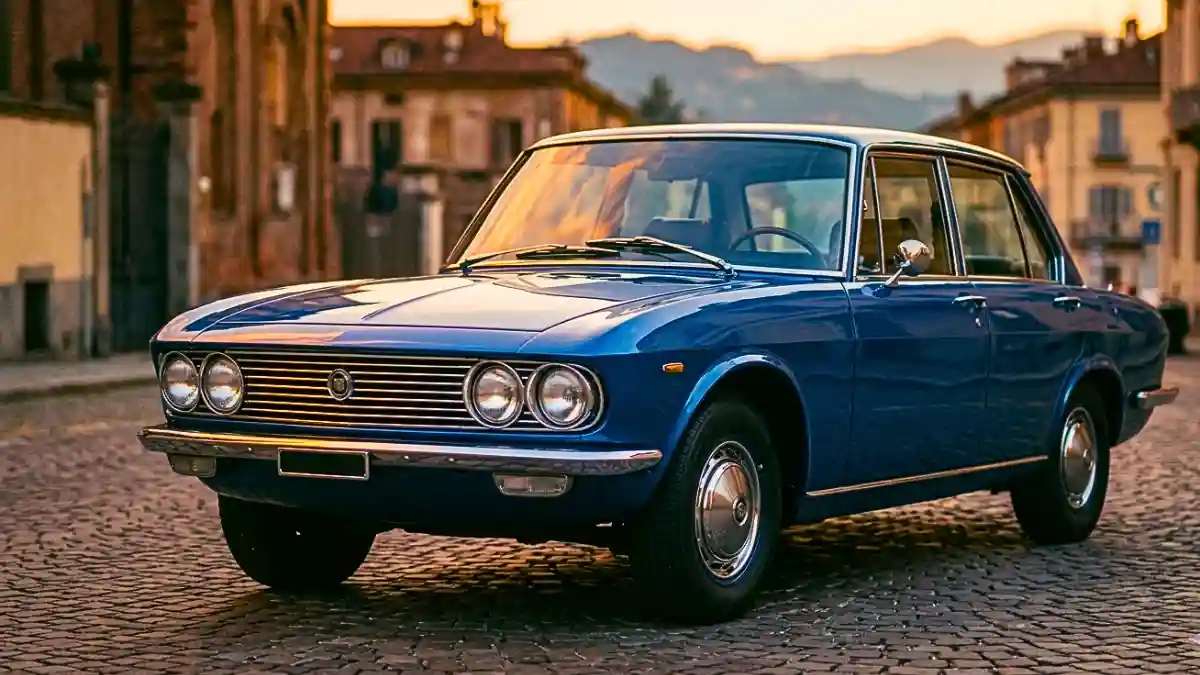
Look at early photographs of the Luce sedan, and the lineage is visible, echoes of Fiat, traces of Lancia, something of Alfa Romeo’s restrained gravity. The influence was not superficial. It was structural.
- 1960: Hieyuki Miyakawa meets Marisa Bassano at the Turin Motor Show. Their relationship becomes the bridge between Bertone and Mazda.
- 1963: The Mazda Familia debuts. Giugiaro’s first design for the Japanese automaker blended European proportions with Japanese restraint.
- 1966: The Luce arrives. Mazda’s executive flagship, designed by Giugiaro, enters production, and the name is registered.
- 1969: The Luce Rotary Coupe launches. Lower, sleeker, pillarless car that whispered rather than shouted its intentions.
- 1991: The Luce nameplate retires after five generations and 25 years of production. Export models carried the 929 badge in Western markets.
- 2026: Ferrari announces its first EV under the name Luce. Mazda’s response is swift, dry, and historically airtight.
The Turin Connection: How a Romance Built a Design Alliance
The Mazda-Italy axis did not happen by corporate strategy. It happened because two people fell in love at a motor show.
In 1960, a Mazda engineer named Hieyuki Miyakawa crossed paths with Marisa Bassano at the Turin Motor Show. The two eventually married. Through that relationship, they introduced Tsuneji Matsuda, Mazda’s president, to a young designer named Giorgetto Giugiaro, then working at Bertone. The meeting produced a creative partnership that shaped Mazda’s identity for a generation.
This is not marketing mythology. It is documented history, and it matters to the current dispute because it directly undermines any suggestion that Mazda’s invocation of Italian design is performative. The Italian influence on Mazda’s 1960s output was literal: a specific designer, working for a specific Italian coachbuilder, shaping specific cars. The Familia of 1963 came first, then the Luce in 1966, then the Luce Rotary Coupe in 1969, each one an expression of what happens when Japanese precision meets Italian sensibility.
The Rotary Coupe: The One That Got Away
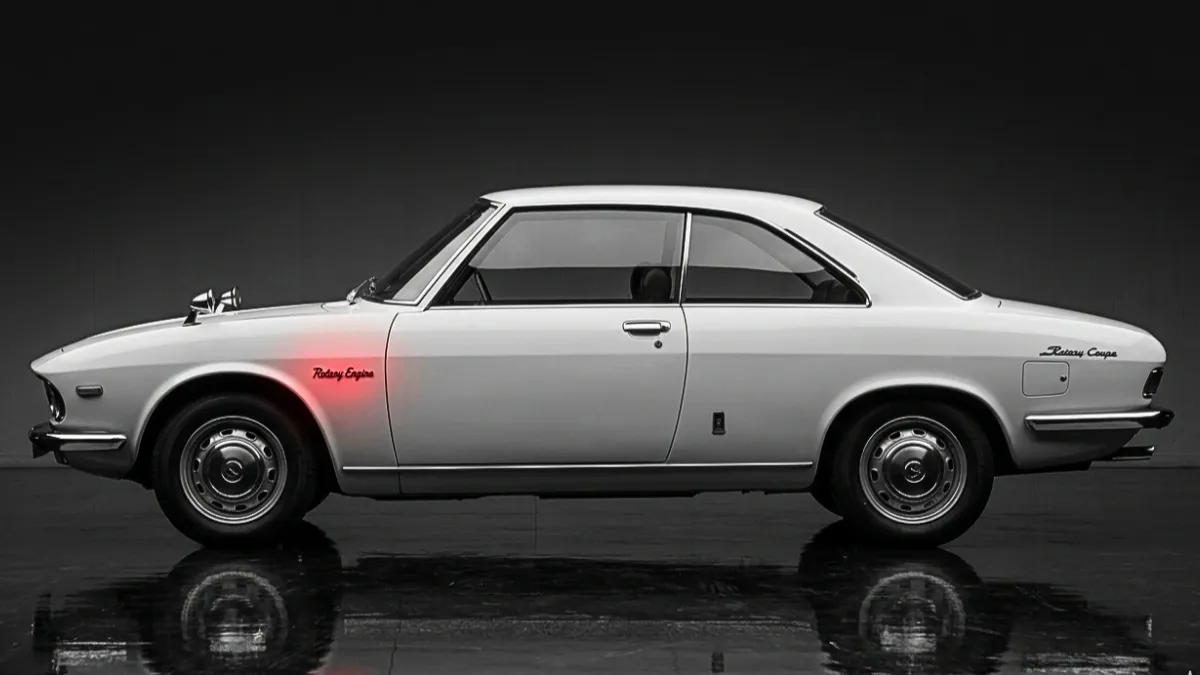
If the Luce sedan was elegant, the Luce Rotary Coupe of 1969 was something altogether different. It sat lower to the ground, stretched longer, and shed every trace of the sedan’s upright formality. The pillarless door design, still rare in 1969, gave the car an uninterrupted glasshouse that allowed light to pass through unobstructed, lending it a visual weightlessness that few coupes of the era achieved.
Comparisons to the Lancia 2000 Coupe or the Lancia Beta Coupe are inevitable, but the chronology settles the argument: the Mazda came first. It was clean in the way that only a designer who has not yet learned to second-guess himself can be clean. No decorative additions. No unnecessary surface tension. A shape that resolved itself without flourish.
The contrast with the Ferrari Luce, a vehicle whose design has already attracted considerable debate, is stark. Where the Mazda was spare, the Ferrari is demonstrative. Where the Mazda trusted the line, the Ferrari appears to trust the logo.
Also Read – The Next-Gen Hyundai Creta 2027 Is About to Get Bigger — and Smarter
America Got the Luce. Sort Of.
The United States received a version of the Luce, sold simply as the 1800, a name that communicated the car’s engine displacement and nothing else. It arrived in extremely limited numbers, and surviving examples are genuinely rare today. The subdued reception was understandable, if unfortunate: this was the late 1960s, and the American market’s relationship with Japanese products was still complicated by the aftermath of the Second World War.
Later generations of the Luce reached export markets under the name 929, a nameplate that carried its own identity, appealing to buyers in the US, Europe, and Australia through the 1970s, 80s, and into the early 90s. The 929 is now widely regarded as an overlooked chapter in luxury sedan history: technically capable, stylistically composed, and perpetually underestimated.
What Happens Next
The legal mechanics of the dispute will unfold in trademark offices and, possibly, courts. Mazda’s position in Japan is legally solid; what happens in other jurisdictions will depend on when and where Ferrari registered its claim, and whether Mazda chooses to contest those registrations.
The more interesting question is what the dispute says about how automotive brands relate to history. Ferrari is not a company short on heritage; it has more than enough of its own. Reaching for a name that carries someone else’s story, particularly a story as well-documented as Mazda’s Italian-Japanese design collaboration, invites exactly the kind of response Mazda has delivered: not outrage, but quiet, well-sourced amusement.
Mazda has spent the last several months reminding anyone who will listen that it had the Luce before Ferrari had an EV program. The company is not being defensive. It is being historically accurate. There is a difference, and in this case, the difference is fifty years wide.
Also Read – Bugatti Tourbillon Bolide Mashup: A Diamond in the Rough


Sapna is the storytelling powerhouse of the team. With a sharp eye for detail and a knack for uncovering the human interest side of automobiles, she covers everything from industry launches to feature stories. She believes that every car has a story and every rider has a journey. Her writing is known for its clarity, depth, and ability to connect with the common man.