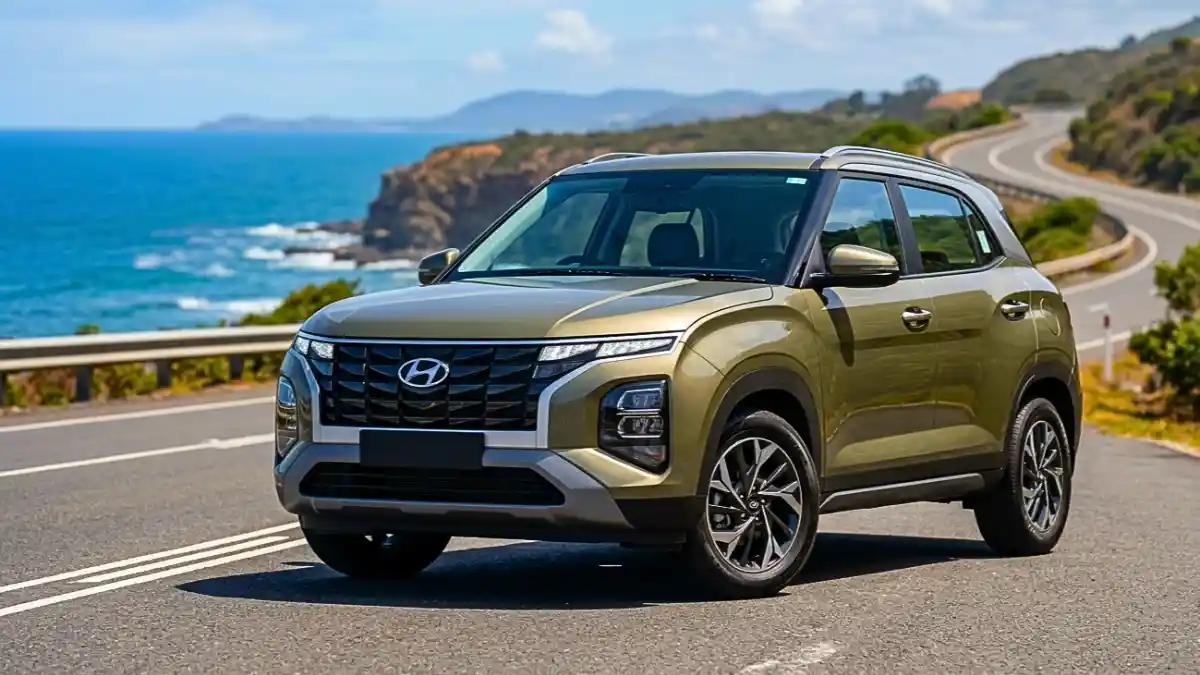
Hyundai’s decision to offer a Creta Rs 1 lakh discount June 2026 on its single best-selling model raises questions that go beyond a monthly offer sheet.
In the Indian car market, discounts are rarely just discounts. When a brand puts cashback and exchange bonuses on a model that essentially prints money, it is worth pausing to ask what is actually happening beneath the headline number.
Hyundai has done exactly that this month with the Creta, its highest-volume, most-recognised product. June 2026 brings benefits of up to Rs 1 lakh on the petrol and diesel variants, and up to Rs 85,000 on the electric version. For buyers, the timing is attractive. For analysts, the move signals something about competitive pressure in the compact SUV space that no single press release will spell out.
A decade in, still leading — but not effortlessly
The Creta was launched in 2015. It essentially created the modern mass-market SUV category in India, teaching a generation of buyers that they could have a tall, feature-rich vehicle without stepping into luxury territory. Eleven years and three generations later, it still leads Hyundai’s sales charts, a remarkable achievement in a segment that has since been crowded with serious rivals.
What makes this month’s discount structure interesting is its layering. The headline Rs 1 lakh is not a flat cashback; it is assembled from a cash discount of Rs 35,000, an exchange or scrappage benefit of up to Rs 50,000, and an upgrade offer of Rs 15,000. Government employees and corporate buyers get a further Rs 3,000 on top. The structure is designed to reward loyalty and trade-ins rather than pure conquest buying, which is a deliberate signal: Hyundai wants existing owners back in its showrooms.
- ICE Creta: max benefit – ₹1,00,000 Petrol variants (ex. E trim)
- ICE price range: ₹10.90L to ₹19.91L (ex-showroom)
- Creta EV: max benefit – ₹85,000 All variants (June 2026)
- EV price range: ₹18.02L to ₹23.67L (ex-showroom)
Creta Rs 1 lakh discount June 2026: How the numbers are structured
ICE Creta — benefit components (petrol, non-E trim)
- Cash discount: ₹35,000
- Exchange / scrappage benefit: Up to ₹50,000
- Upgrade offer: ₹15,000
- Corporate / government add-on: ₹3,000
- Maximum combined benefit: Up to ₹1,00,000
Creta EV — benefit components
- Flat cash discount: ₹15,000
- Exchange / scrappage benefit: Up to ₹35,000
- Corporate offer: ₹20,000
- Upgrade offer: ₹15,000
- Maximum combined benefit: Up to ₹85,000
There is a nuance in the diesel numbers that buyers should not miss. Scrappage benefits on diesel variants are capped at just Rs 5,000, compared to Rs 50,000 on petrol. This is not arbitrary. Tighter emission norms and the long-term policy direction away from diesel in urban markets make it rational for Hyundai to steer buyers toward petrol and electric options. The structure of the offer does the steering quietly, without a press release announcing it.
“When India’s best-selling SUV gets its biggest-ever monthly benefit stack, the competitive map has clearly shifted.”
The EV discount deserves a separate reading
Offering Rs 85,000 in benefits on the Creta EV is a more consequential move than it appears. The electric version competes in a rapidly filling space against the Maruti e Vitara, Mahindra BE 6, Tata Curvv EV, MG ZS EV, and the newer VinFast VF6. Every one of those rivals has either launched aggressively or is expanding its dealer footprint in 2025–26.
The Creta EV sits between Rs 18 lakh and Rs 23.67 lakh ex-showroom, a bracket where buyers are making a genuinely considered financial decision, often weighing it against a premium petrol car or a slightly aspirational diesel. Shaving Rs 85,000 off through a combination of exchange bonuses and corporate discounts shifts that calculation meaningfully for a buyer on the fence.
Also Read – The Jimny Grows Up — But Only Just Enough: Suzuki Jimny Malaysia variants strategy
ICE Creta competitors
- Kia Seltos – Closest volume rival
- Maruti Grand Vitara – Strong hybrid option
- Renault Duster, VW Taigun, Skoda Kushaq – Feature-rich contenders
Creta EV competitors
- Mahindra BE 6 – Range benchmark
- Tata Curvv EV – Volume player
- Maruti e Vitara – Brand-trust challenger
- MG ZS EV / VinFast VF6 – Value pressure from imports
What does it mean for buyers right now?
If you own a petrol car and are considering trading it in for a new Creta, June 2026 may be the most financially sensible month to do so in recent memory. The exchange benefit alone at Rs 50,000 is substantial. Add the Rs 35,000 cash component and a Rs 15,000 upgrade credit, and the effective price of a mid-variant Creta comes meaningfully closer to the entry-level competition.
For EV buyers, the calculus is slightly different. The Rs 85,000 in combined benefits does not reduce the sticker price, but it reduces the out-of-pocket cost in a way that changes monthly EMI calculations, particularly for buyers using the corporate or government channel discount of Rs 20,000, which often goes unclaimed simply because buyers are unaware of it.
One thing worth noting: the entry-level E trim is largely excluded from the main benefit stack. The cash discount available on E grade is just Rs 5,000, versus Rs 35,000 on every other variant. If you were planning to buy the base model, the headline discount does not apply to you- a detail that tends to get lost in the promotional noise.
The bigger picture: where is the Creta going?
Hyundai has also placed generous discounts on the rest of its lineup this month: Rs 95,000 on the Verna, Rs 78,000 on the Grand i10 Nios, Rs 75,000 on the Alcazar. The Creta, despite being the company’s highest-selling model, actually carries the largest benefit of the lot. That is not a coincidence. It reflects the reality that volume leadership requires active defence in a market where Kia, Maruti, Mahindra, and Tata are not standing still.
Looking ahead, the trajectory of the EV benefits is the more interesting thread to follow. As the Creta EV matures in its product lifecycle and newer rivals arrive with longer ranges and sharper pricing, Hyundai’s ability to offer real-money benefits rather than just features will determine whether it holds its dominant position or cedes ground. For now, Rs 85,000 is a confident answer to that question.
Also Read – GM Variable Deployment Airbag Patent: The Airbag That Finally Learns Who You Are

If it runs on electricity or has a microchip, Rahul is on it. As our resident tech geek and electric vehicle (EV) specialist, Rahul decodes complex technologies into simple language for our readers. He stays ahead of the curve on battery technology, autonomous driving, and the latest digital trends in the automotive sector. If you want to know the real range of an EV or the future of mobility, Rahul has the answers.