


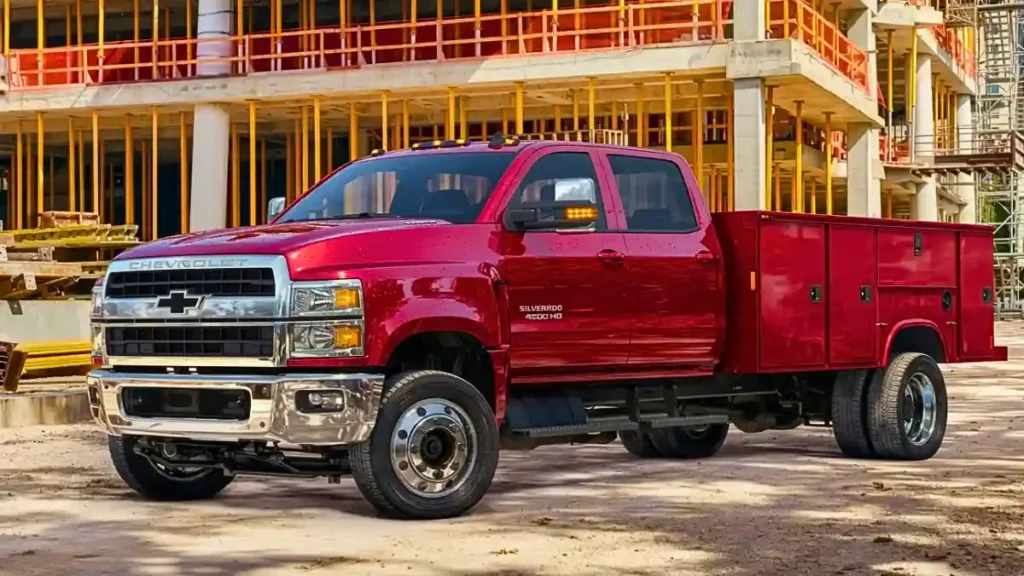

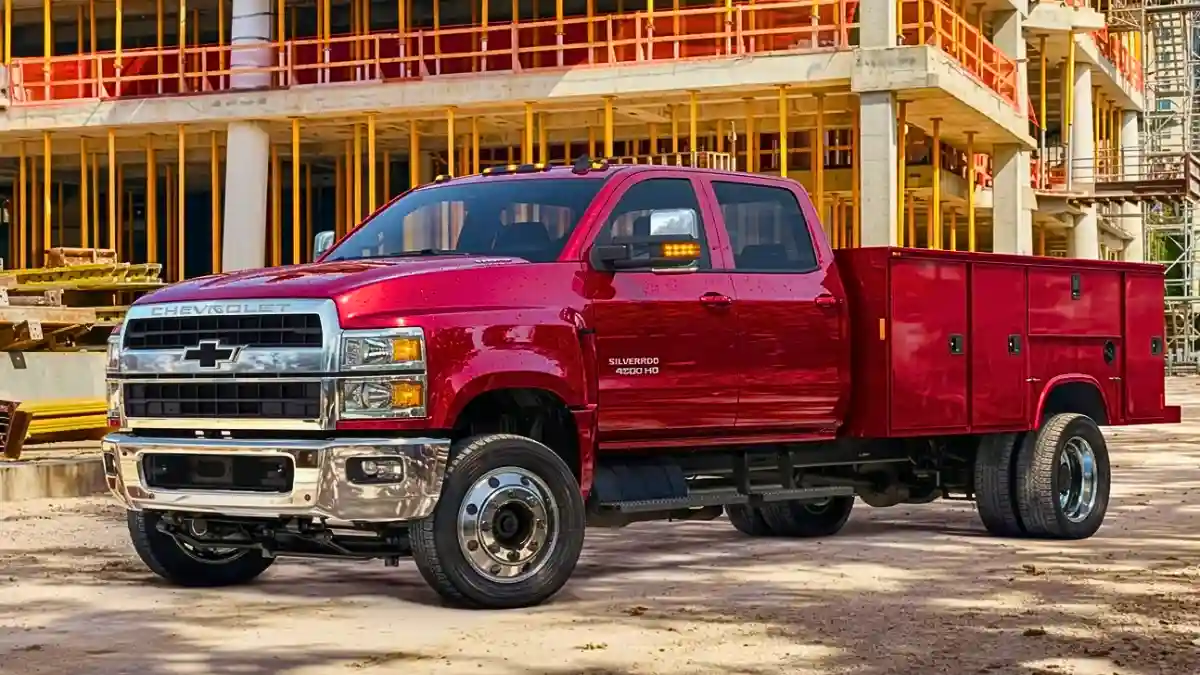
For a small but fiercely loyal group of American businesses, the Chevrolet Silverado 4500HD, 5500HD, and 6500HD weren’t just trucks. They were rolling offices for landscapers, mobile command centers for construction crews, and the backbone of rural delivery fleets. These were the trucks you bought when a one-ton dually wasn’t nearly enough, but a full-blown semi was too much. Now that option is vanishing, and the Chevrolet Silverado medium-duty discontinuation impact is about to be felt across an entire ecosystem of commercial fleets.
On the surface, it’s a footnote in an industry obsessed with electric pickups and software margins. Underneath, it’s a sharp signal about how one of the world’s largest automakers is rethinking the dirty, unglamorous work of hauling concrete blocks and flatbed trailers — and what that retreat means for the people who actually buy these vehicles.
To understand why this moment matters, you have to look past the corporate press release. The real story isn’t just that a truck is being killed. It’s that GM built these machines at arm’s length, watched them lose ground in a market it never fully committed to, and now faces a future where its commercial vehicle identity is more fragmented than ever.
An Uncomfortable Arrangement Comes Apart
Unlike the Silverado 1500 to 3500HD lines that Chevrolet engineers, designs, and builds in-house, the 4500–6500HD series was never entirely GM’s own. Since the program’s inception, the trucks have been assembled at an International Motors plant in Ohio under a manufacturing agreement. International, itself an icon of heavy-duty trucking, provided the chassis underpinnings, the factory floor, and a good chunk of the industrial DNA. Chevrolet draped its familiar grille and bowtie badge over the result and sold them through its dealer network, offering a diesel workhorse that could be upfitted into dump trucks, tow rigs, and utility bodies.
That partnership was always a marriage of convenience. GM got a quick ticket into a niche segment without having to bankroll a dedicated assembly line. International gained extra volume for its factory. But the foundation cracked in March when International Motors announced it would sell that very Ohio assembly plant. With the factory changing hands, GM’s production contract — set to expire September 30 — lost its footing. Rather than scramble for an alternative manufacturing partner or commit to bringing the designs in-house, GM took the exit ramp.
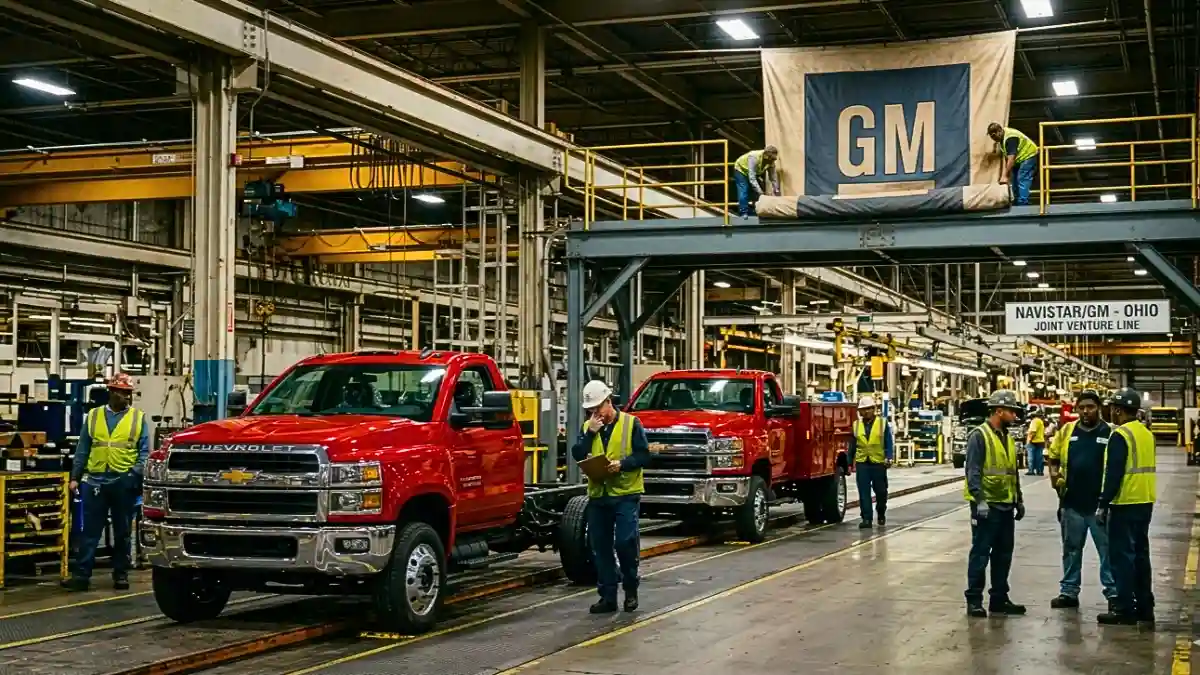
A company spokesperson confirmed the end of the line not just for the medium-duty Silverados, but also for some Chevrolet Express and GMC Savana cutaway van variants that were part of the same contract. The statement, while polite, offered little comfort: “GM will end production … following the September 30 conclusion of our manufacturing agreement with International Motors.” The language was careful, but the subtext was clear — for now, GM is done with this class of truck.
Also Read – Shock Exit: Chevrolet Kills Its Biggest Silverado Trucks — What It Means for Pickup Fans
Numbers Don’t Lie, but They Don’t Tell the Whole Story Either
Declining sales certainly make the decision easier to explain. In 2025, Chevrolet sold just 8,341 of these medium-duty trucks, a 19.2 percent drop from the year before. The first quarter of this year painted an even grimmer picture: a 37.4 percent plunge, with only 1,273 units leaving dealer lots through March. To put that in perspective, Ford — which builds its competing F-450 and F-550 chassis entirely on its own — moved nearly twice as many heavy-duty trucks in the same period.
Yet pointing to the sales chart and calling it a day misses the deeper dynamics. GM’s medium-duty entries were never volume leaders because the company never treated them as a core franchise. Dealers rarely stocked them prominently. Marketing was whisper-quiet. Fleet customers who test-drove a Silverado 5500HD often found themselves comparing it not just to Ford’s offerings, but to Ram’s 4500/5500 chassis cabs and, critically, to International’s own trucks — which often offered more integrated support and a wider body-builder network. When your product is built in the same plant as a direct competitor’s, the line between collaboration and cannibalization gets awfully thin.
The Chevrolet Silverado Medium-Duty Discontinuation Impact: What Fleets Lose When Options Shrink
For the businesses that did choose the Chevy, the loss is immediate and practical. A landscaper who’s been cycling Silverado 6500HD flatbeds into a fleet every five years now faces a forced rebrand. Municipalities that standardized on Chevrolet medium-duties for snowplow duty will have to rewrite procurement specs. Upfitters who designed bodies around the Silverado chassis will gradually sunset those lines. It’s a quiet disruption that won’t make headlines in Silicon Valley, but will ripple through local dealership parts counters and fleet manager spreadsheets for the next decade.
More broadly, reduced competition in the medium-duty pickup segment matters. When a player like GM exits, it concentrates power further among Ford, Ram, and the traditional big-truck manufacturers. Ford in particular has been relentless in capturing vocational chassis business, offering factory-backed upfitter support and increasingly sophisticated power and torque ratings. Without Chevrolet’s presence as an alternative, upward pricing pressure and fewer configuration choices become real possibilities for buyers.
Also Read – 2026 Cadillac Escalade Sport Lease at $1,935/Month: Full Deal Breakdown and Smart Negotiation Tips
The Unspoken Calculation: Where GM Is Really Placing Its Bets
Analysts and industry watchers will argue about whether GM’s move is a temporary retreat or a permanent surrender. The company says it is “evaluating future portfolio options for medium-duty,” a phrase that leaves the door open to re-entering the market someday with an in-house design, perhaps an electric or hydrogen-powered chassis. Don’t hold your breath, though.
The strategic calculus inside GM is almost certainly being driven by broader tectonic shifts. The company is funneling billions into its Ultium EV platform, the BrightDrop electric van ecosystem, and the forthcoming electric Silverado retail trucks. Commercial customers are increasingly poking at electrification not just for delivery vans but for work trucks that idle less and operate on predictable routes. Designing a clean-sheet medium-duty chassis — whether diesel or electric — would be a nine-figure investment at a moment when capital is being fiercely guarded and redirected toward zero-emission technology.
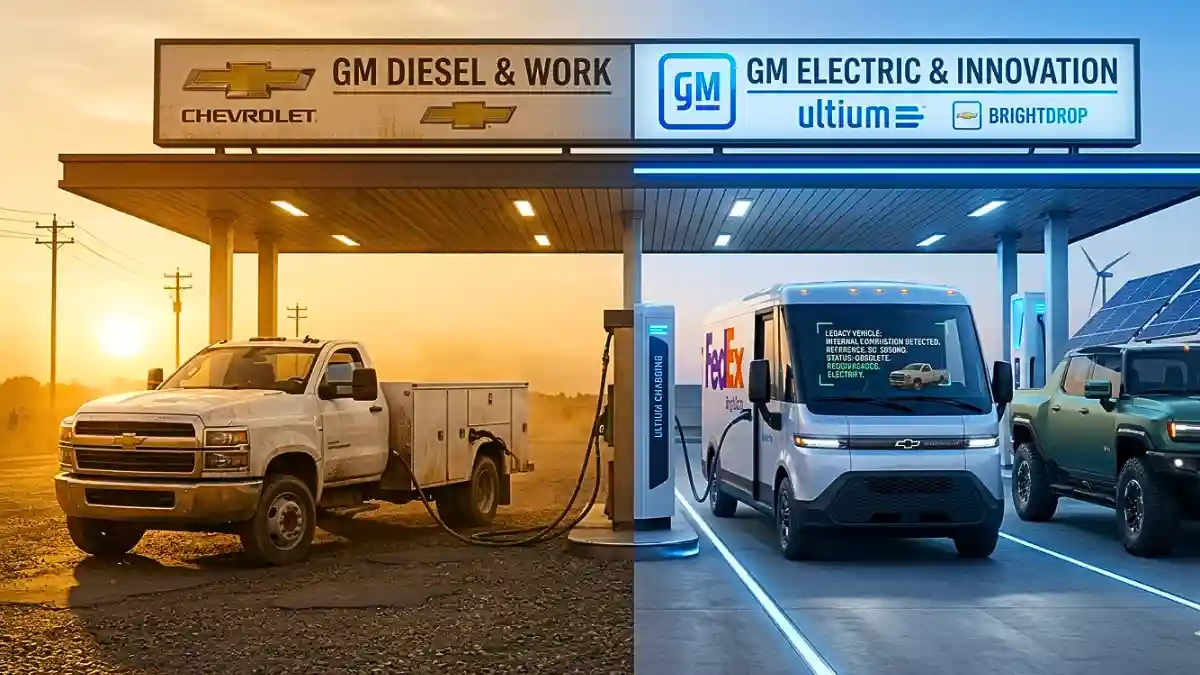
At the same time, the Express and Savana cutaway van discontinuation hints at a wider erosion of GM’s legacy commercial internal combustion portfolio. Those cutaway models are the bare chassis sent to body builders for ambulances, shuttle buses, and small motorhomes. Walking away from them, even partially, signals that the company may be willing to cede more traditional commercial ground to rivals while it races to define the next-generation delivery and service vehicle.
A Fork in the Road for an Iconic Brand
There’s a historical echo here that’s hard to ignore. Chevrolet spent decades building its reputation on being the every-person’s workhorse, from farm trucks to medium-duty haulers badged as the old Kodiak. The Silverado name was supposed to carry that torch into the modern era. Letting its heaviest offerings fade away while rivals double down on capability claims — Ford just unveiled its 2027 Super Duty with staggering towing numbers — risks eroding some of the blue-collar cred that still drives loyalty in pickup country.
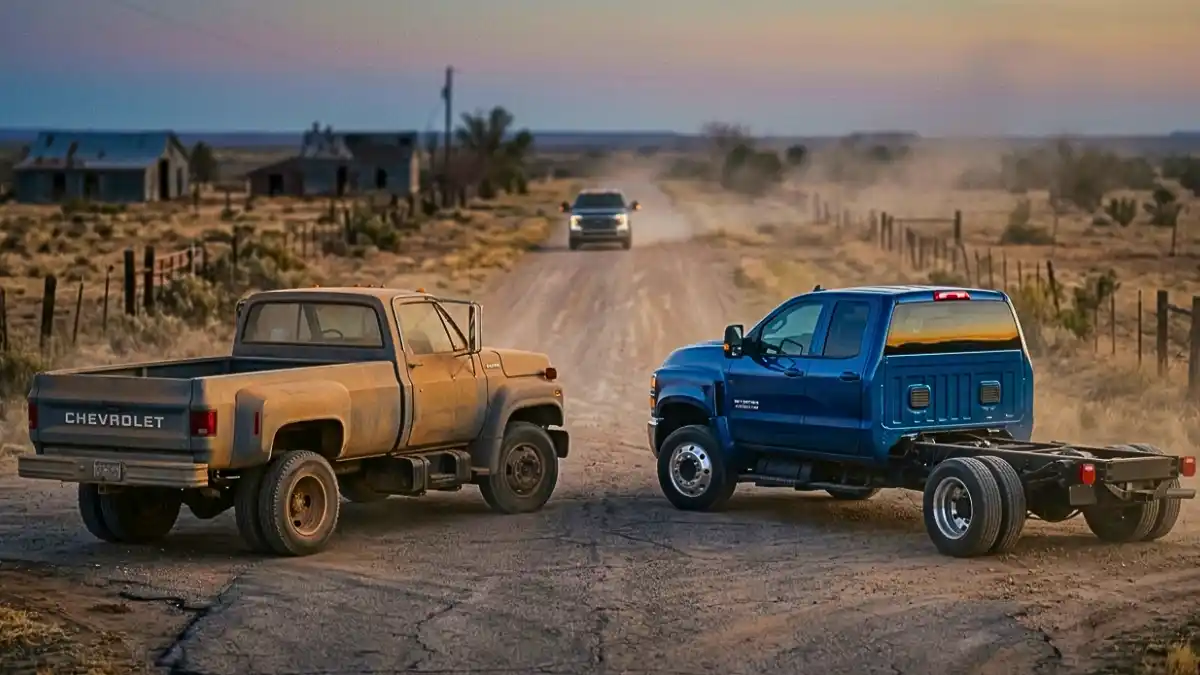
For GM, the challenge now is to prove that a modern commercial vehicle strategy doesn’t require a one-stop-shop hierarchy from half-ton to Class 6. The company will likely argue that a customer who needs a 5500HD today could be served by a well-equipped Silverado 3500HD for lighter work, or pointed toward an electric BrightDrop for last-mile deliveries. But that’s a patchwork answer that doesn’t address the needs of someone who requires a 19,500-pound gross vehicle weight rating in a chassis cab format and doesn’t have reliable charging infrastructure at every job site.
The Road Ahead
Production officially winds down at the end of September 2026. Between now and then, a modest number of the trucks will trickle out to fill existing orders. After that, Chevrolet’s heaviest pickups become a memory. The real test for GM won’t be in the press cycle this announcement generates, but in how it supports the orphaned fleets, what it tells its commercial dealers about the future, and whether it can credibly fill the gap before loyal buyers develop new habits.
The medium-duty truck segment isn’t going away. America’s infrastructure still needs gravel haulers, crane carriers, and utility service rigs built on stout chassis. What’s disappearing isn’t the demand — it’s GM’s willingness to keep answering it with a badge-engineered, partner-dependent product that never truly felt like a priority. In that light, the discontinuation isn’t a sudden crisis. It’s just the final acknowledgment of a long, slow drift. The question no one can answer yet is whether Chevrolet will ever again make the kind of truck that wears mud and diesel soot not as a blemish, but as a badge of honor.
Also Read – GM’s Batch-Build Strategy for the Chevy Bolt Is So Boring It’s Genius — Here’s Why


Rohit is the visionary behind CarBikeJunction. With over a decade of experience in automotive journalism and a deep love for mechanical engineering, he ensures that every piece of content that goes live meets the highest standards of quality and accuracy. As Editor-in-Chief, he oversees the editorial direction of the website and is often found test-driving the toughest SUVs or analyzing market trends. His leadership is the driving force behind our platform.