


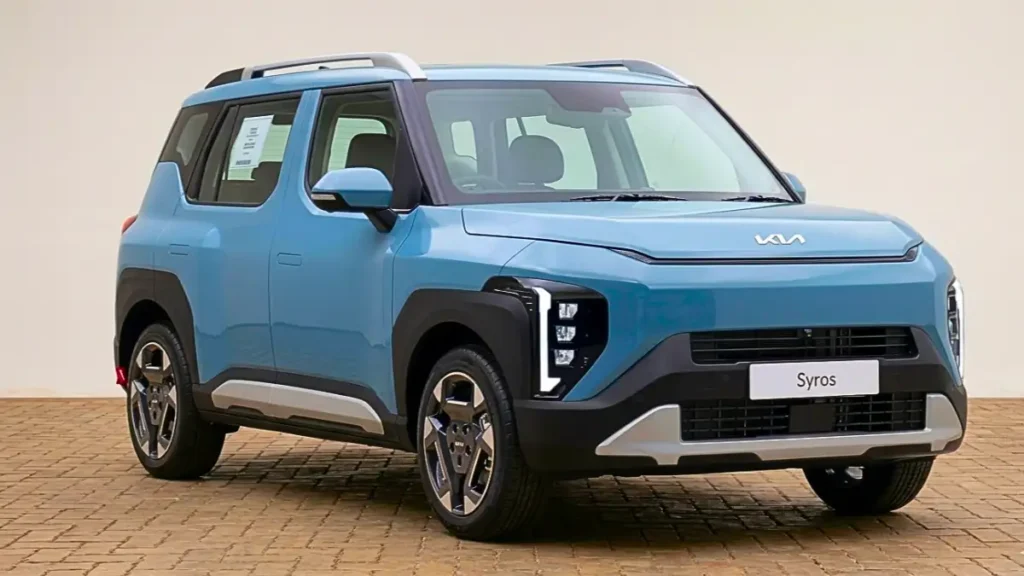

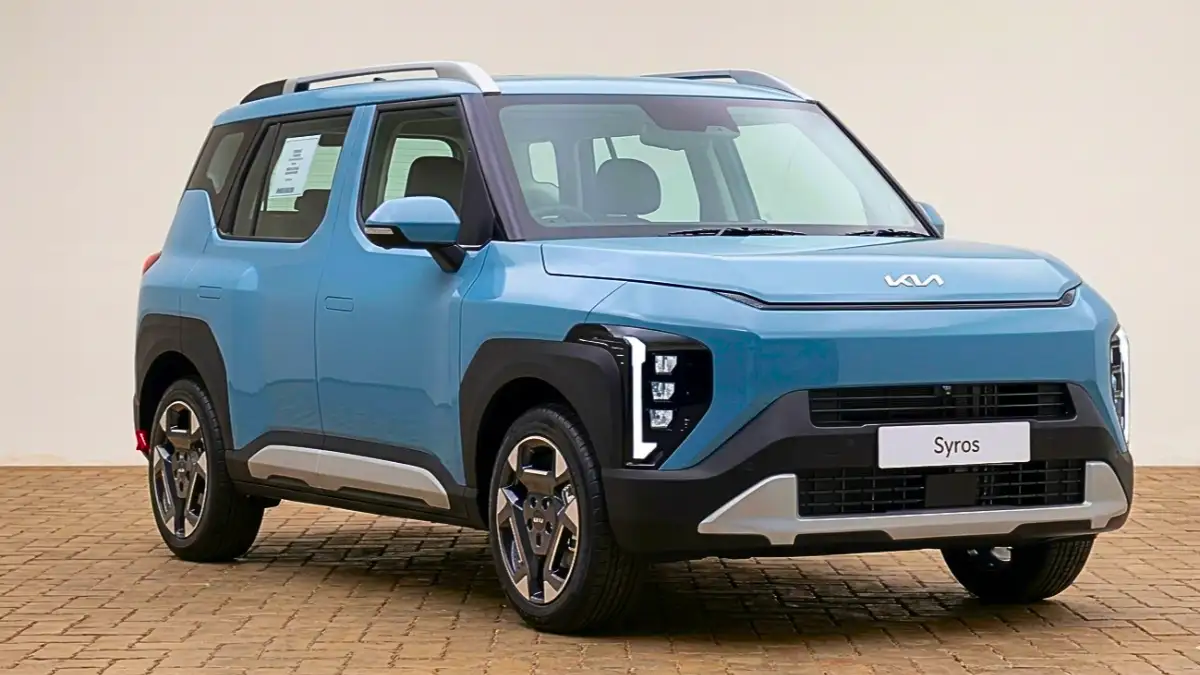
Over three decades, Hyundai has quietly moved from selling the humble Santro to becoming India’s second-largest passenger vehicle maker. Kia, in just a handful of years, has rewritten the rulebook on what a new entrant can achieve with the Seltos and Carens. Now, both South Korean siblings are synchronising their next act – and it looks less like a product launch calendar and more like a coordinated land-grab across the three battlegrounds that will define India’s automotive future: affordable electric, intelligent hybrid, and the fiercely contested mid-size SUV space.This is the core of the Hyundai Kia India upcoming cars 2026-2027 strategy.
By the time the current financial year closes in March 2027, four new nameplates will roll out. While the sheet metal, badges and showrooms will differ, the underlying message is unified: Hyundai Motor Group is no longer just participating in India’s transformation – it intends to dictate its tempo.
The affordable EV twin-attack, built on a single spine
For years, India’s mass-market electric car conversation has been dominated by Tata and Mahindra, with Hyundai watching from the expensive end of the spectrum via the Ioniq 5. That changes fundamentally in 2026. The two new electric SUVs – the Kia Syros EV and Hyundai’s internally codenamed HE1i – are not isolated experiments. They are fraternal twins, separated at birth by a few styling choices and brand philosophies, but sharing the same industrial DNA.
Both will be born from the group’s cost-efficient E-GMP (K) platform, a derivative of the global Inster architecture. This isn’t the 800-volt, hyper-fast-charging system reserved for premium cars. It’s a pragmatic, front-wheel-drive, 400-volt setup designed from the outset for high localisation and compact footprints. The numbers – 42 kWh and 49 kWh battery packs, a maximum range approaching 370 kilometres – might not set spec-sheet records, but they will reset price expectations.
The real masterstroke here is the battery sourcing strategy. Hyundai is expected to procure cells from Exide Energy Solutions, marking one of the first instances of a major global OEM using domestically manufactured cells for a volume EV. When the most expensive component of an electric car shifts from imported to local, sticker prices don’t just creep down – they tumble into the psychological sweet spot. Expect the Hyundai HE1i to land somewhere between Rs 12 and 16 lakh ex-showroom, directly head-butting the Tata Nexon EV, the Mahindra XUV 3XO EV, and the MG Windsor.
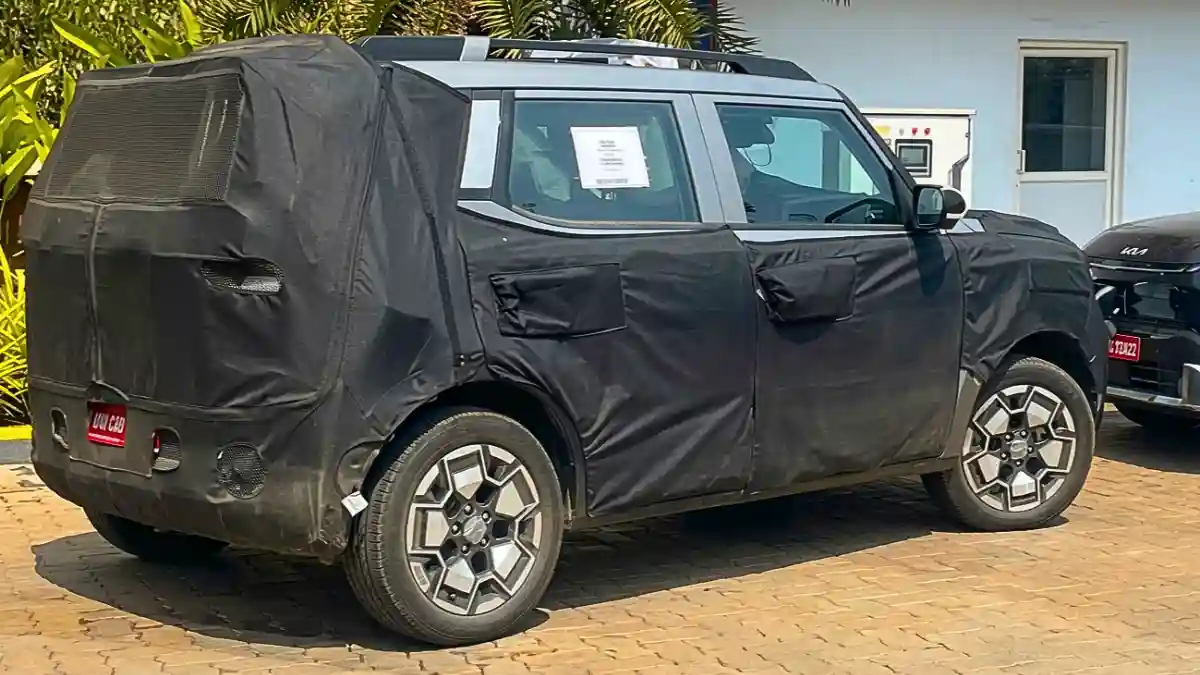
Kia, meanwhile, will use the Syros EV to carve out a slightly different niche. By taking the boxy, spacious Syros silhouette and electrifying it, Kia isn’t merely dropping a battery into an ICE body. It’s offering a cabin loaded with dual 12.3-inch screens, a panoramic sunroof, and ventilated seats both front and rear – a features list that, in the sub-Rs 20 lakh EV segment, currently looks like it belongs to a class above. The Syros EV will become the most accessible electric Kia in India, and for a brand that entered the country with a premium aura, this is a clear pivot toward democratising its EV line-up.
Why this matters: The sibling rivalry is a mirage. Hyundai’s HE1i will likely chase volume with sharp pricing, while Kia’s Syros EV will chase margins and desirability. Together, they create a pincer movement that squeezes existing players on both cost and perceived value, all while amortising development expenses across two brands – a classic Hyundai Motor Group playbook that worked wonders with the Creta and Seltos twins.
Also Read – Build Your Dream Rivian R2: The Configurator Is Finally Live – Here’s What You Need to Know
The hybrid hegemon, because diesels are running out of road
Buried in the fine print of this product offensive is a quiet death. The Kia Carnival Hybrid, arriving via the completely built-up import route, signals the beginning of the end for the diesel MPV in India’s premium garage. For a vehicle that ferries CXOs, celebrities, and large families, the shift to a 1.6-litre turbo-petrol parallel-hybrid is not about extreme fuel efficiency. It’s about regulatory survival and refinement.
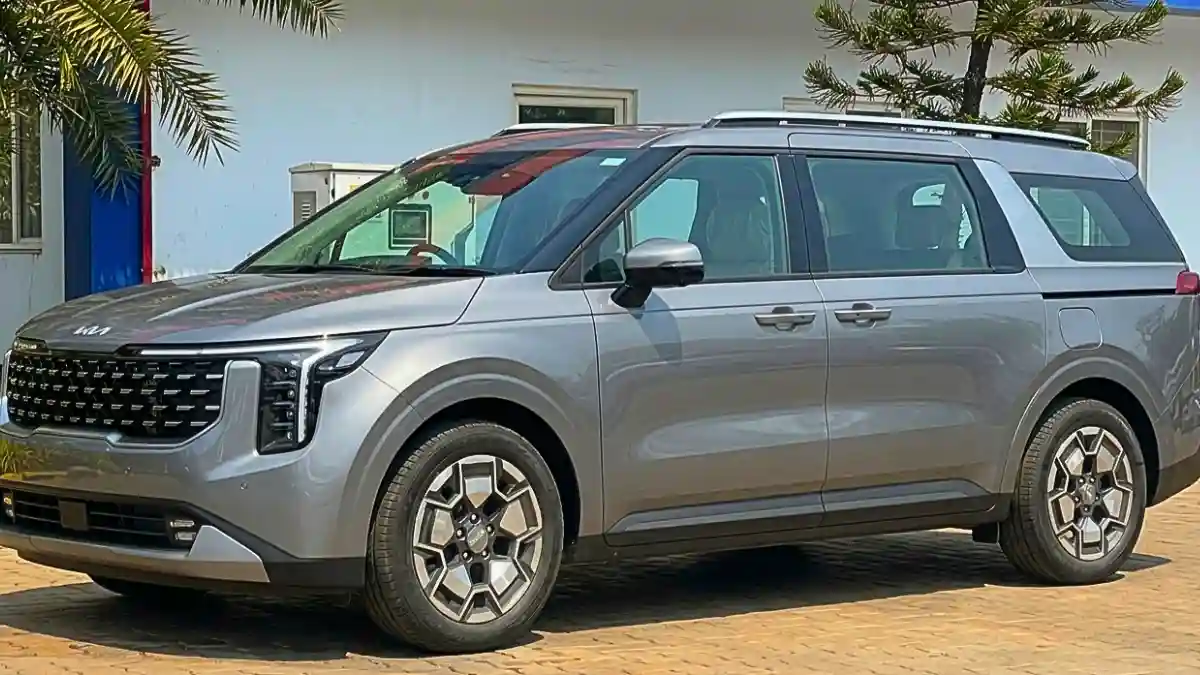
The American-spec Carnival hybrid produces 272 horsepower and 367 Nm of torque, paired with a six-speed automatic – outputs that comfortably out-muscle the existing diesel while cutting urban noise and tailpipe emissions. More crucially, as Corporate Average Fuel Economy norms tighten across the subcontinent, a large CBU diesel becomes an increasingly expensive albatross around the neck of manufacturers. A hybrid, even one commanding a premium, offers a smoother glide path into the future. Expect India to get a seven-seater configuration, and don’t be surprised if the starting price reflects a deliberate attempt to create a secluded premium niche between the Innova Hycross and the Mercedes V-Class.
Also Read – 2026 Cadillac Escalade Sport Lease at $1,935/Month: Full Deal Breakdown and Smart Negotiation Tips
The white-space warrior: Bayon and the art of filling a gap that shouldn’t exist
For years, Hyundai’s SUV portfolio had a glaring hole. You could buy a Venue (under four metres, affordable), or you could jump straight to the Creta (4.3 metres, firmly mid-size). The space between – occupied by the Skoda Kushaq, Volkswagen Taigun, and a host of Chinese-ancestry rivals – remained vacant. Tarun Garg, Hyundai India’s CEO and Managing Director, confirmed in the Q4 FY26 earnings call that the Bayon will plug that hole at 4.18 metres long.
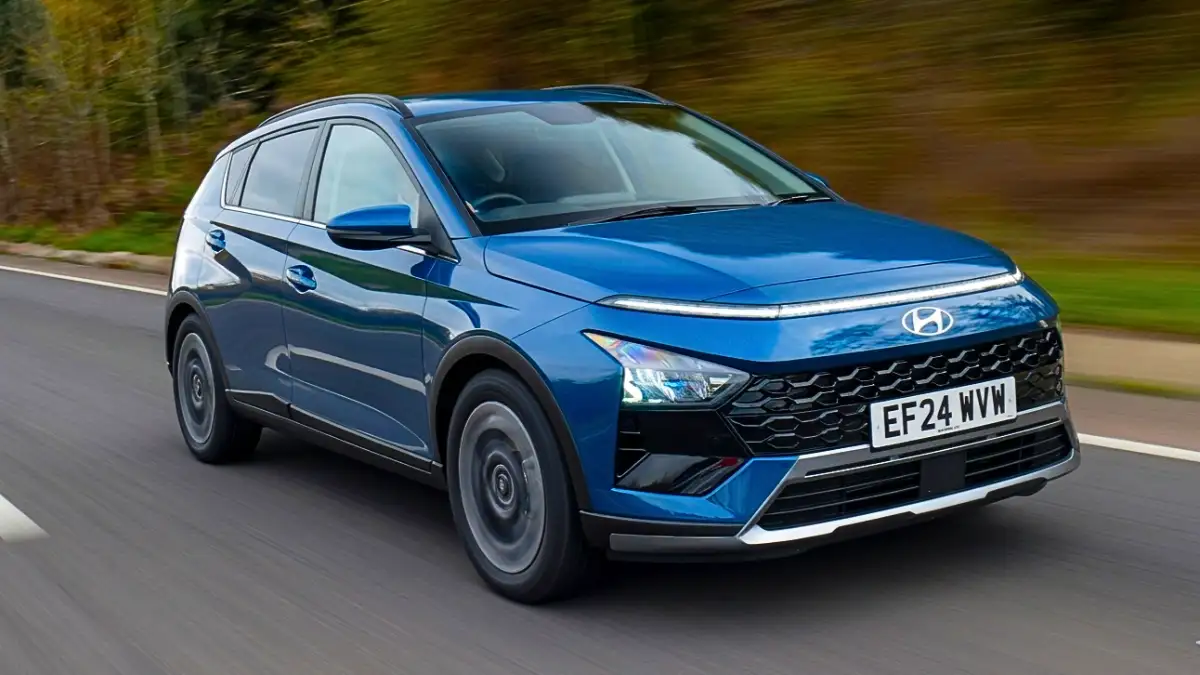
This isn’t a micro-SUV and it’s not a full-blown Creta competitor. It is a surgeon’s incision into a growing sub-segment of buyers who find the Venue a touch too compact and the Creta a bit too expensive. The powertrain strategy reinforces that positioning. A naturally aspirated petrol engine will anchor the affordable end, but the real tactical weapon is the bi-fuel petrol-CNG variant with a dual-cylinder boot setup. Hyundai has learned from the aftermarket clutter and the compromised cargo space of earlier CNG conversions. By engineering twin smaller tanks, the Bayon can offer genuine family practicality without forcing owners to choose between fuel savings and luggage – a distinct advantage in markets where CNG penetration is no longer a fringe trend but a mainstream buying criterion.
What the Hyundai Kia India upcoming cars 2026-2027 strategy reveals
Look past the individual names – Syros EV, HE1i, Carnival Hybrid, Bayon – and the larger blueprint emerges. Hyundai has pledged 26 new models and variants by FY31. These four are the opening moves in a strategy that no longer separates internal combustion from electric, or mainstream from premium. The group is building an interlinked ecosystem: heavy localisation of EV components to control costs, hybridisation of big-ticket models to manage emissions, and rapid-fire filling of every white space in the internal combustion engine segment before the electric wave hits its full stride.
For consumers, this means the price of a genuinely usable electric SUV is about to fall out of the experimental-early-adopter bracket and into the family-replacement territory. For rivals, it means the cost advantage they enjoyed from early EV investments is about to be tested by a competitor that knows how to manufacture at scale and leverage a shared parts bin like few others. And for India’s automotive trajectory, it confirms that the road to 2030 won’t be a simple switch from petrol to electric – it will be a messy, multi-fuel slugfest where petrol, CNG, hybrid and battery-electric all find space in the same showroom, sometimes on the same platform.
The South Koreans have spent three decades learning how India buys cars. These four launches suggest they now understand how India will buy them tomorrow.
Also Read – GM’s Batch-Build Strategy for the Chevy Bolt Is So Boring It’s Genius — Here’s Why


If it runs on electricity or has a microchip, Rahul is on it. As our resident tech geek and electric vehicle (EV) specialist, Rahul decodes complex technologies into simple language for our readers. He stays ahead of the curve on battery technology, autonomous driving, and the latest digital trends in the automotive sector. If you want to know the real range of an EV or the future of mobility, Rahul has the answers.