




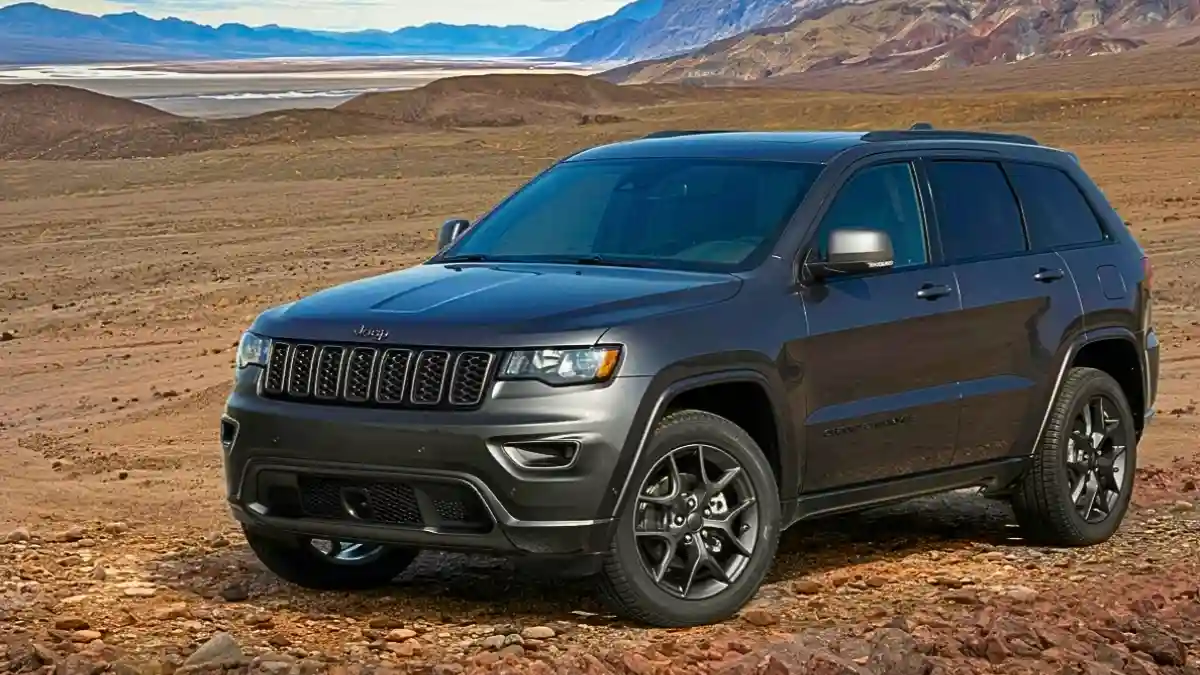
Imagine coasting at highway speed when, without warning, every horse under the hood disconnects from the wheels. No shudder, no limp-home mode — just a silent, complete surrender of drive power. Now imagine discovering that same vehicle, parked on what looked like level ground, has quietly rolled into the street. This isn’t a hypothetical failure chain; it’s the quiet threat at the core of the Jeep Cherokee PTU recall, now hanging over more than 60,000 owners.
Jeep has told federal regulators that 61,711 of its 2019–2023 Cherokee SUVs harbor a potentially catastrophic defect in the two-speed power transfer unit, a transmission-mounted component that splits torque between the front and rear axles. When it fails, it does so without a backup plan. The wheels go dead. And, in a separate but equally chilling revelation buried in the NHTSA filing, a broken unit can also defeat the parking pawl, allowing the vehicle to creep away even with the shifter in Park.
At first glance, a recall figure hovering around 60,000 units might seem like a modest statistical blip in an industry that counts vehicle deliveries in the millions. That impression is dangerously misleading. This is a defect of a different character: it is acute, unpredictable, and strips the driver of control at any speed. For the estimated 0.5 percent of the recalled population that Jeep believes actually carries the flaw, the math works out to roughly 300 ticking time bombs on American roads. The problem isn’t scale — it’s severity.
Why a “Two-Speed PTU” Matters More Than You Think
To understand the failure, you have to leave behind the simplistic image of a transfer case in a body-on-frame off-roader. The Cherokee’s two-speed power transfer unit is a compact, front-wheel-drive-biased device engineered to deliver on-demand all-wheel drive and a low-range crawl ratio in a unibody crossover. It must package the magic of a mechanical gear reduction into a space barely larger than a shoebox, all while spinning at engine speed. The unit’s internal failure mode, which Jeep has not publicly detailed, is severe enough that it not only severs the connection between engine and wheels — making continued motion impossible — but also severs the mechanical link that holds the vehicle stationary. That’s a rare dual failure that suggests something fundamental, like a disintegrating shaft or hub, rather than a slow-wearing clutch pack.
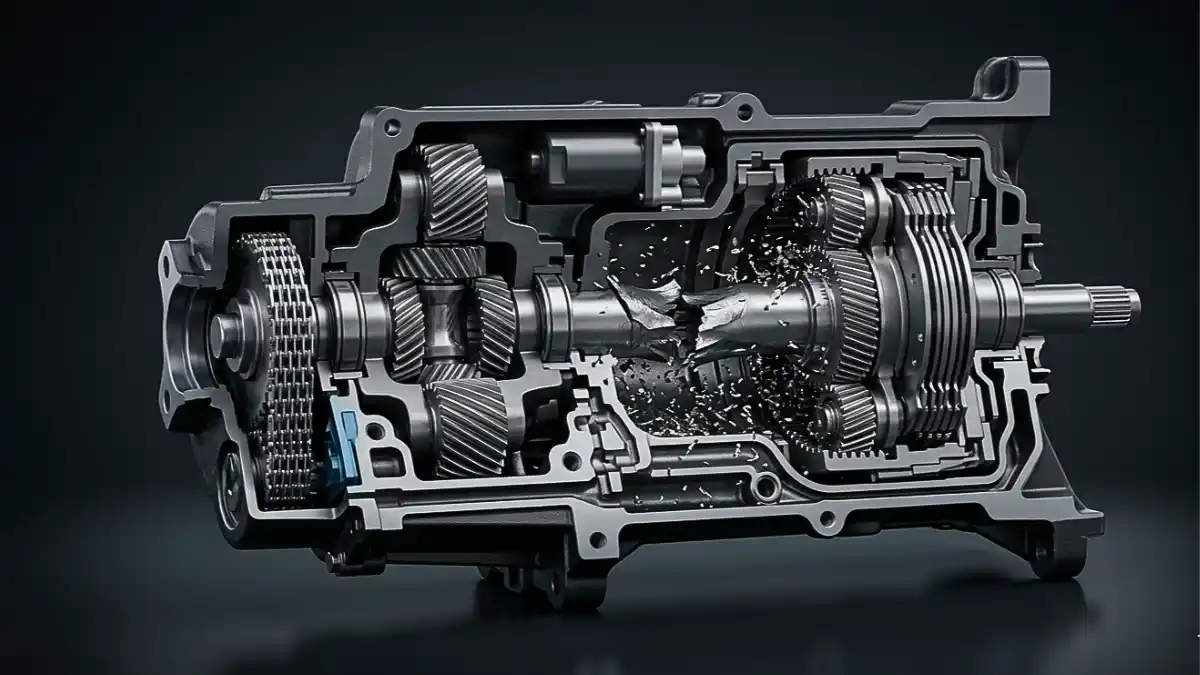
As a journalist who has tracked powertrain defects for years, I can count on one hand the number of recalls that simultaneously cite “unrecoverable loss of drive power” and “rollaway while in Park.” The combination turns a single component into a singular threat envelope. A vehicle that loses motive force on a fast-moving freeway puts occupants at the mercy of surrounding traffic. That same vehicle rolling silently away in a driveway or a parking lot becomes a hazard to pedestrians, property, and anyone nearby. Both scenarios share a common root: a component designed to be robust breaking in a way that no software patch or dashboard warning can safely manage.
Also Read – GM’s Batch-Build Strategy for the Chevy Bolt Is So Boring It’s Genius — Here’s Why
The Jeep Cherokee PTU Recall That Has No Fix — Yet
This is where the story moves from mechanical drama to a test of corporate accountability. Jeep has already alerted its dealer network and plans to mail interim owner notification letters in late June. But the automaker hasn’t finished engineering a permanent remedy. That means tens of thousands of drivers will receive a letter that essentially says, “There’s a problem we can’t yet solve, and your vehicle might be at risk.” No timeline for a repair has been promised.
For owners, that vacuum of certainty is its own kind of anxiety. An interim notice is not a fix. It is a legally required step that acknowledges the danger while the manufacturer buys time. And for a vehicle line that ended production after the 2023 model year — Jeep quietly discontinued the Cherokee, leaving a hole in its lineup — the engineering resources devoted to solving a defunct model’s PTU malady might not move with the same urgency as a problem in a current high-volume cash cow. The challenge is not lost on industry observers: how do you quickly re-engineer a complex metal assembly for a vehicle you no longer build, ensuring the supply chain can produce thousands of replacement units, all while the clock ticks on owner trust and potential incidents?
Also Read – 2028 BMW 1 Series Rear-Wheel Drive: How Electrification Returns the Hatch to Its Roots
The Wider Ripple
This recall arrives at a sensitive moment for Stellantis, Jeep’s parent company. The brand has been navigating quality perception headwinds, and recalls that involve catastrophic loss of drive — however statistically small — can leave deep scars on a nameplate built around “Go Anywhere, Do Anything” ruggedness. The Cherokee’s audience includes families who bought it as a daily driver with weekend soft-road capability. Those buyers may not obsess over differentials, but they will remember a letter warning them that their car could strand them or creep into traffic.
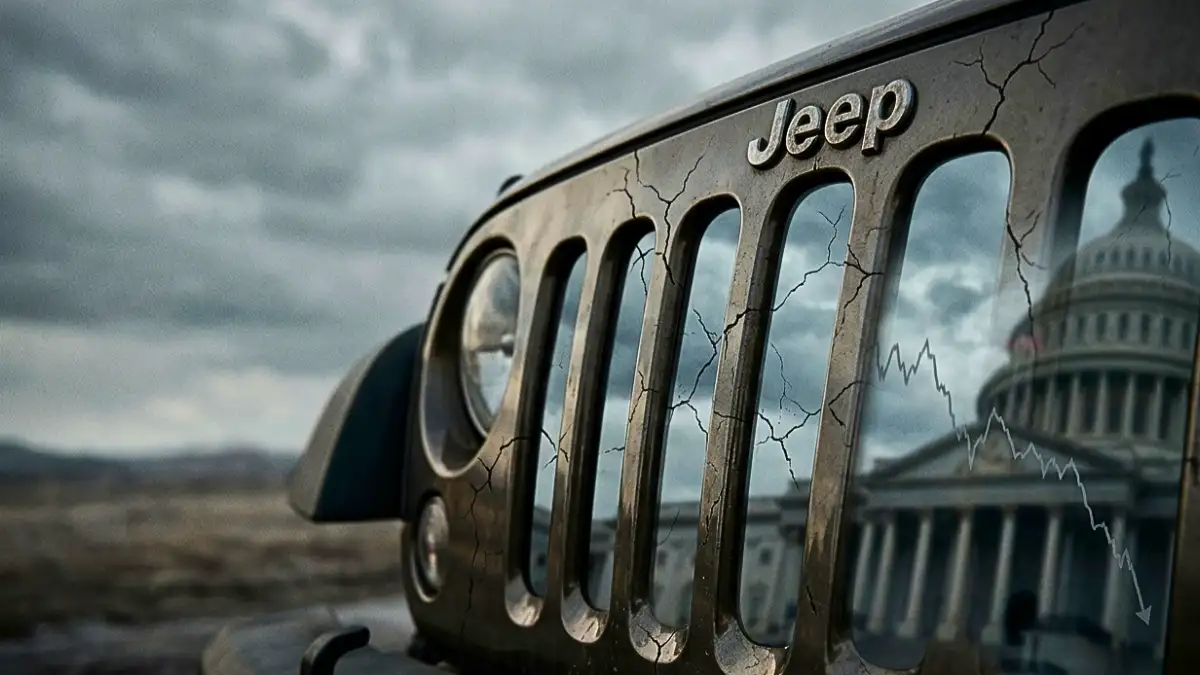
Regulators are watching, too. The NHTSA recall database catalogs the failure details, but the rollaway aspect may attract additional scrutiny. If an incident occurs before the remedy arrives, the cost to Jeep escalates from parts and labor to litigation and reputational damage. A sluggish fix process could also push the agency to push harder, perhaps with a formal investigation or a demand for a faster remedy timeline.
What Owners Should Do Now
Until a permanent fix is available, vigilance becomes the first line of defense. The recall documents point to potential warning signs: a “Service 4WD” message lighting up the instrument cluster, new vibrations, unexpected noises, or a subtle degradation in how the vehicle drives. These aren’t just nuisances — they could be a countdown. If any of those symptoms appear, the safest course is to stop driving and contact a dealer immediately. When parking, even on seemingly flat ground, apply the electronic parking brake religiously and don’t rely on the transmission’s Park position as a sole anchor.
To check if a specific Cherokee is caught in this net, owners can run their VIN through the NHTSA’s recall lookup tool on its website. It’s a simple step that could prevent a complex disaster.
Jeep built the Cherokee to be an everyday adventure vehicle. But for 61,711 of them, the most unexpected journey may be the one that starts when the power vanishes, and the road — or the driveway — slips away. The fix is coming, but in the gap between notification and remedy, knowledge and caution are the only gears that truly engage.
Also Read – Volvo Burnt the Combustion Engine Blueprint — No More Engine Factories, No Looking Back


Sapna is the storytelling powerhouse of the team. With a sharp eye for detail and a knack for uncovering the human interest side of automobiles, she covers everything from industry launches to feature stories. She believes that every car has a story and every rider has a journey. Her writing is known for its clarity, depth, and ability to connect with the common man.