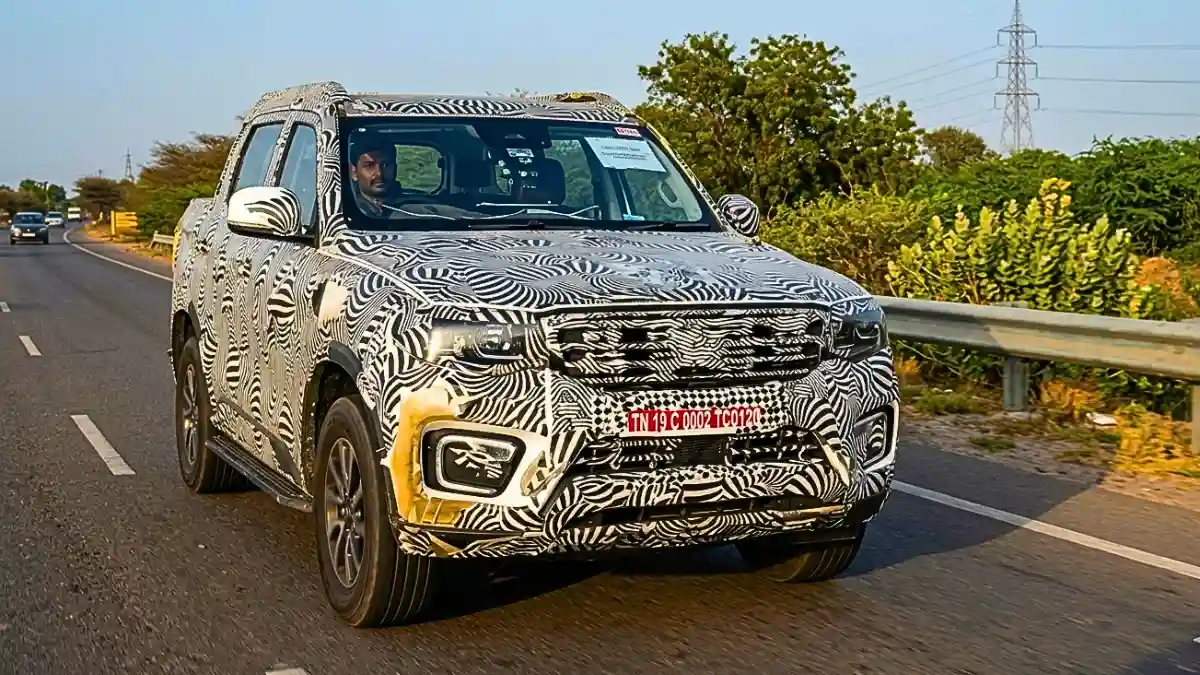
The Jaisalmer sighting of a heavily camouflaged test mule, believed to be the Mahindra Scorpio-N facelift 2026, isn’t just another spy shot; it signals a deeper question about how Mahindra plans to defend its crown in a market that has fundamentally changed around it.
When the Scorpio-N launched in the summer of 2022, it landed like a statement. Mahindra had taken one of India’s most emotionally charged nameplates and rebuilt it from near-scratch, shedding the agricultural ruggedness of its predecessor for something that dared to compete with Ford Endeavours and Toyota Fortuners on aspiration. It worked. Waitlists stretched for months. The nameplate, always a bestseller, became a cultural moment. That was four years ago. The market has moved. So has Mahindra.
Mahindra Scorpio-N Facelift 2026: Why a Facelift, and Why Now
A mid-cycle refresh at the four-year mark is not unusual; it’s practically the industry standard. But in the current Indian SUV segment, the timing carries more urgency than the calendar alone would suggest. Rivals have not stood still. The Tata Safari and Harrier have both received updates, MG has introduced new variants of the Gloster, and the used-car market is now populated with early Scorpio-N units that are beginning to dilute the model’s perceived exclusivity. Mahindra needs the facelift to do more than cosmetic work; it needs to recommit to wavering consideration.
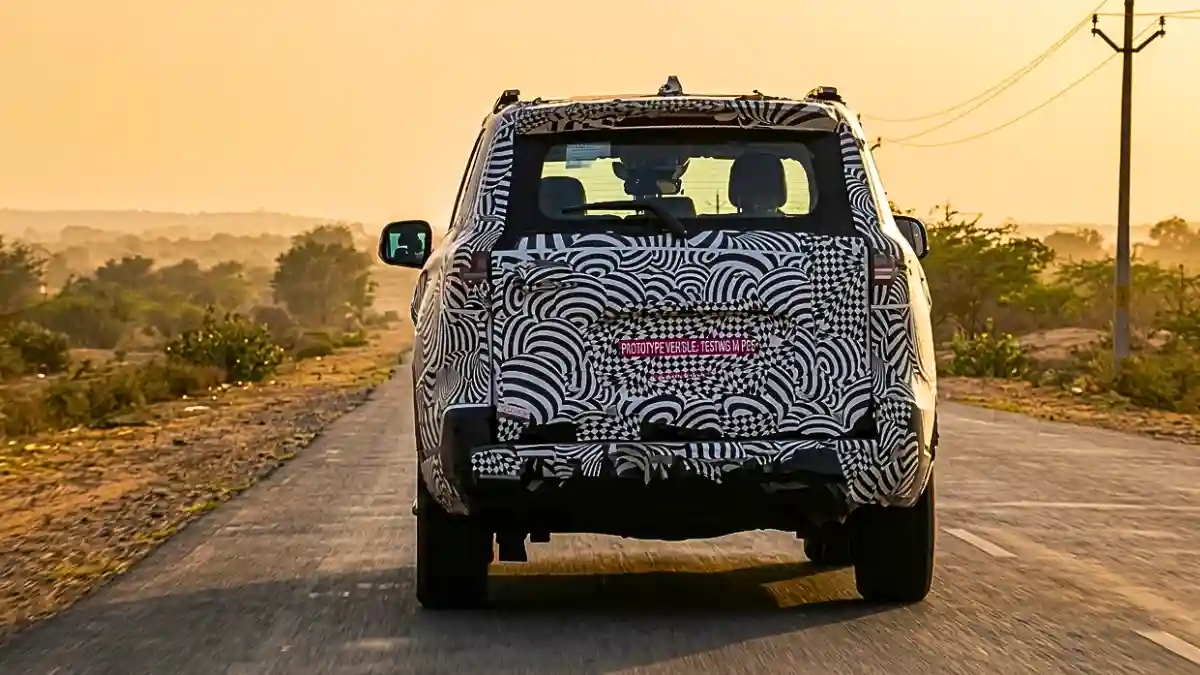
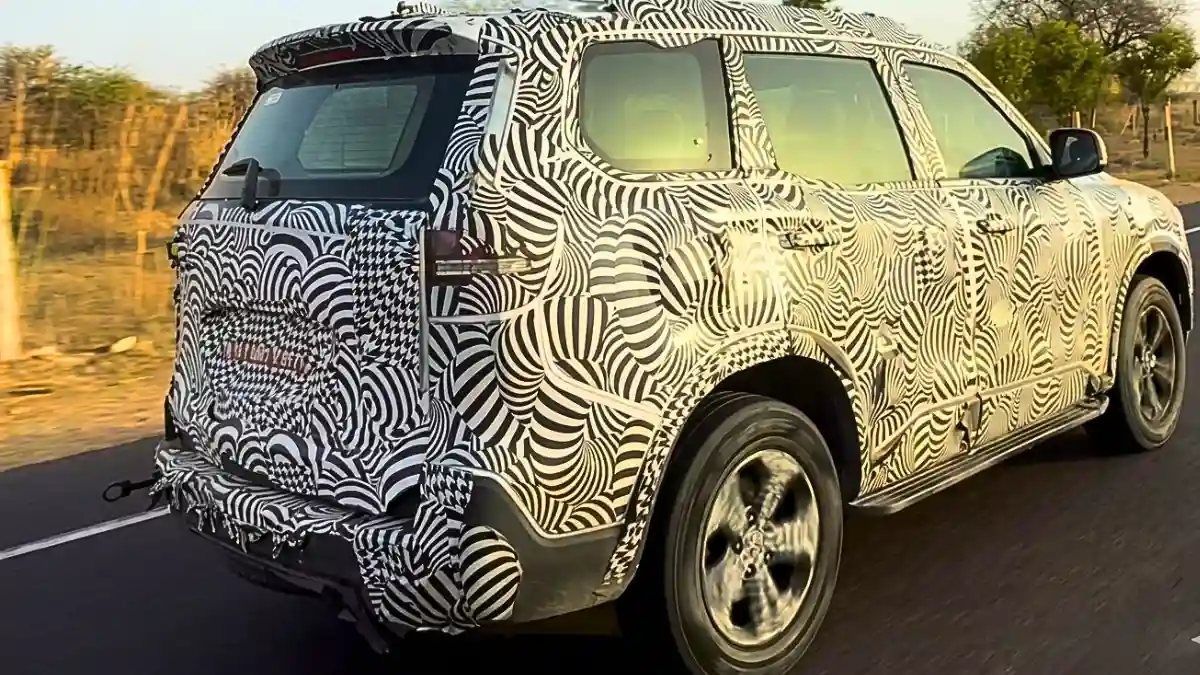
The prototype spotted near Jaisalmer, an area Mahindra frequently uses for hot-weather durability testing given its extreme summer conditions, was still under heavy disguise, but not so thoroughly wrapped that nothing could be gleaned. What was visible pointed toward a design language that Mahindra has been carefully seeding since its Vision.S concept debuted in August 2025.
Also Read – Creta Rs 1 lakh discount June 2026: India’s Favourite SUV Is Now Even Cheaper — But the Real Story Is Why
What the spy shots tell us
The most meaningful design cue visible through the camouflage is a revised front grille with horizontal slots, a departure from the current model’s more vertical, ladder-rung pattern. This mirrors the design vocabulary introduced by the Vision.S concept, suggesting Mahindra is serious about aligning its production lineup with that design direction rather than treating it as a one-off show exercise.
Design: evolution, not revolution
Based on what has emerged from multiple rounds of spy photography, the Scorpio-N facelift will be a careful, targeted update rather than a visual overhaul. The fundamental silhouette, the upright, boxy body-on-frame proportion that loyalists find so characterful, is not expected to change. What Mahindra appears to be refining is the face it presents to the world.
The new horizontal-slat grille is the anchor of the front-end redesign. Paired with what are likely reworked headlamp internals (the housings may retain their shape but gain updated light signatures), a fresh lower air intake, and a redesigned front bumper, the visual result should read as distinctly newer without alienating the existing owner base. At the rear, tweaked taillights and a revised bumper are expected to complete the bookend refresh. The addition of new 18-inch alloy wheel designs, a detail that sounds minor but dramatically changes a car’s streetside presence, could prove to be one of the facelift’s most effective visual changes.
The interior overhaul may matter more
If the exterior updates are evolutionary, the cabin changes suggest Mahindra is taking the interior criticism seriously. The current Scorpio-N’s dashboard has always been a point of contention, serviceable and functional, but not especially cohesive compared to the interiors of more expensive European-derived rivals. The facelift appears to address this directly.
The most significant change is the move to a floating touchscreen infotainment unit, measuring approximately 10.25 inches diagonally. The jump from the current model’s integrated 8-inch screen is meaningful in two ways: the size increase itself, and the visual separation from the dashboard, which gives the cabin a more contemporary, tech-forward feel that buyers in this segment have increasingly come to expect.
- New infotainment: 10.25″ (Up from current 8″ unit, floating mount)
- Digital cluster: Fully digital (Replaces semi-digital analogue setup)
- AC vents (centre): Horizontal (Revised layout, new dashboard architecture)
The instrument cluster upgrade is equally significant. Swapping out the current semi-digital unit, which combines an analogue speedometer and tachometer with a 7-inch multi-information display in the middle, for a fully digital 10.25-inch cluster brings the Scorpio-N in line with what Mahindra’s own newer models (and most competitors in the segment) already offer. It also enables richer in-cluster displays for navigation, driving data, and ADAS feeds.
Engines: the strategic case for leaving well enough alone
Mahindra is widely expected to carry over the existing powertrain lineup without modification, and this decision, which might read as inertia, is more deliberate than it appears.
The 2.0-litre turbocharged petrol producing 200 hp remains genuinely competitive at this price point, particularly in automatic form where the torque figure climbs to 380 Nm. The diesel options- a 130 hp entry-level 2.2-litre and a 172 hp higher-output variant, continue to offer the kind of usable, tractable power that Scorpio buyers have historically preferred for a mix of highway cruising and light off-road use. These are not ageing powertrains in need of replacement; they are proven, well-sorted units with a track record in Indian conditions.
Powertrain quick reference:
- 2.0L turbo petrol – 200 hp, 370 Nm (MT) / 380 Nm (AT)
- 2.2L diesel (base) – 130 hp, 300 Nm, MT only
- 2.2L diesel (high-output) – 172 hp, 370 Nm (MT) / 400 Nm (AT)
More practically, a mid-cycle update is rarely the moment to introduce a new engine. Certification timelines, manufacturing retooling, and the risks of pairing an unproven powertrain variant with an update that is supposed to generate positive press all argue against it. If Mahindra has a next-generation powertrain story to tell and its investment in hybrid architecture suggests it does, that story is more likely to arrive with a full-generation replacement, not a facelift.
Also Read – The Jimny Grows Up — But Only Just Enough: Suzuki Jimny Malaysia variants strategy
The broader picture: Mahindra’s design direction is converging
There is a larger strategic narrative embedded in the Scorpio-N’s grille update that goes beyond a single model’s refresh cycle. The horizontal-slot language drawn from the Vision.S concept is not accidental. Mahindra has been methodically aligning its passenger vehicle range around a cleaner, more design-forward identity since bringing Pratap Bose back as Chief Design Officer in 2019. The BE and XEV electric series have already demonstrated that Mahindra can produce vehicles that compete on design sophistication with European and Korean rivals. The Scorpio-N facelift appears to bring that intent into the higher-volume body-on-frame segment.
If executed well, the visual effect across the Mahindra range will be one of coherence: a family of vehicles that look like they belong together, built by a company that knows what it is. That is a harder thing to achieve than any individual model update, and it is ultimately more valuable to the brand.
When and what to expect
Industry sources point to an early third-quarter 2026 launch window, which would position the facelifted Scorpio-N ahead of the festive season- historically the most important selling period in the Indian market. Pricing will be watched closely. Mahindra will need to calibrate the premium over the outgoing model carefully: enough to justify the updates, not so much as to compress the gap to the Thar Roxx and XUV700, where Mahindra itself holds the competing product.
For buyers currently weighing a Scorpio-N purchase, the calculation is now complicated in the familiar way. Wait for the facelift and get the more modern cabin and updated face, or buy now and take a negotiating position on a model that dealers will be motivated to move. Neither is wrong. Both are reasonable. That kind of pre-launch paralysis is, in its way, a kind of flattery for the product.
Also Read – The Muscle Truck Is Back: Ram 1500 Rumble Bee Swings for the Fences

If it runs on electricity or has a microchip, Rahul is on it. As our resident tech geek and electric vehicle (EV) specialist, Rahul decodes complex technologies into simple language for our readers. He stays ahead of the curve on battery technology, autonomous driving, and the latest digital trends in the automotive sector. If you want to know the real range of an EV or the future of mobility, Rahul has the answers.