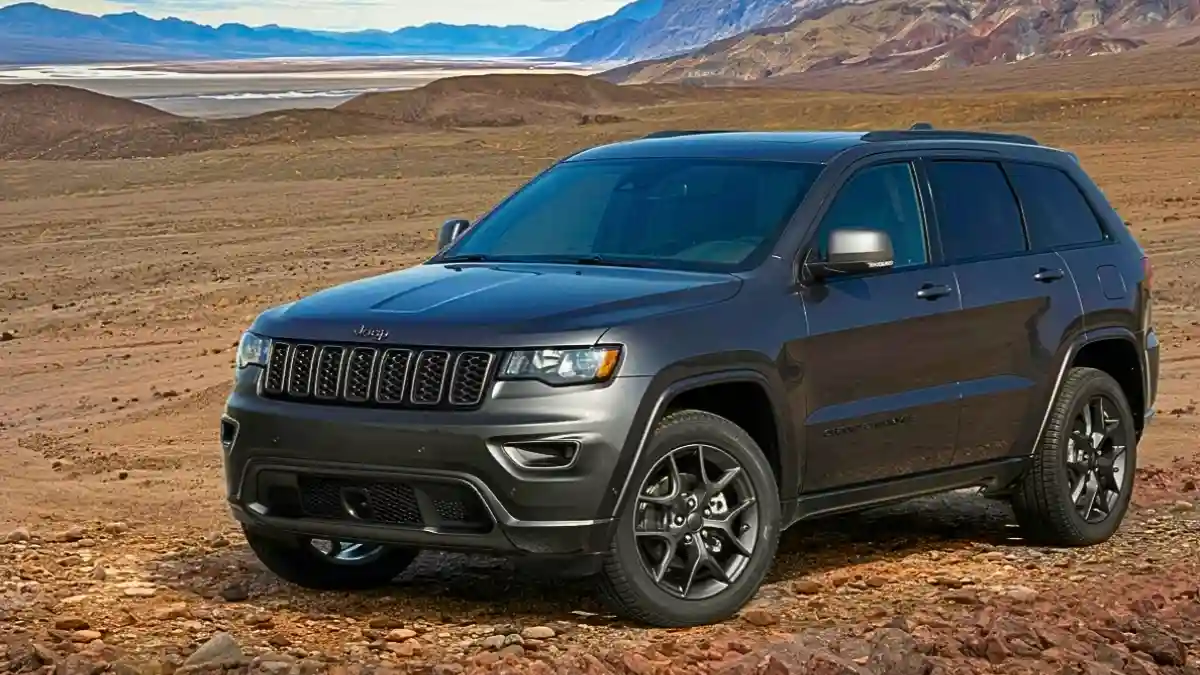
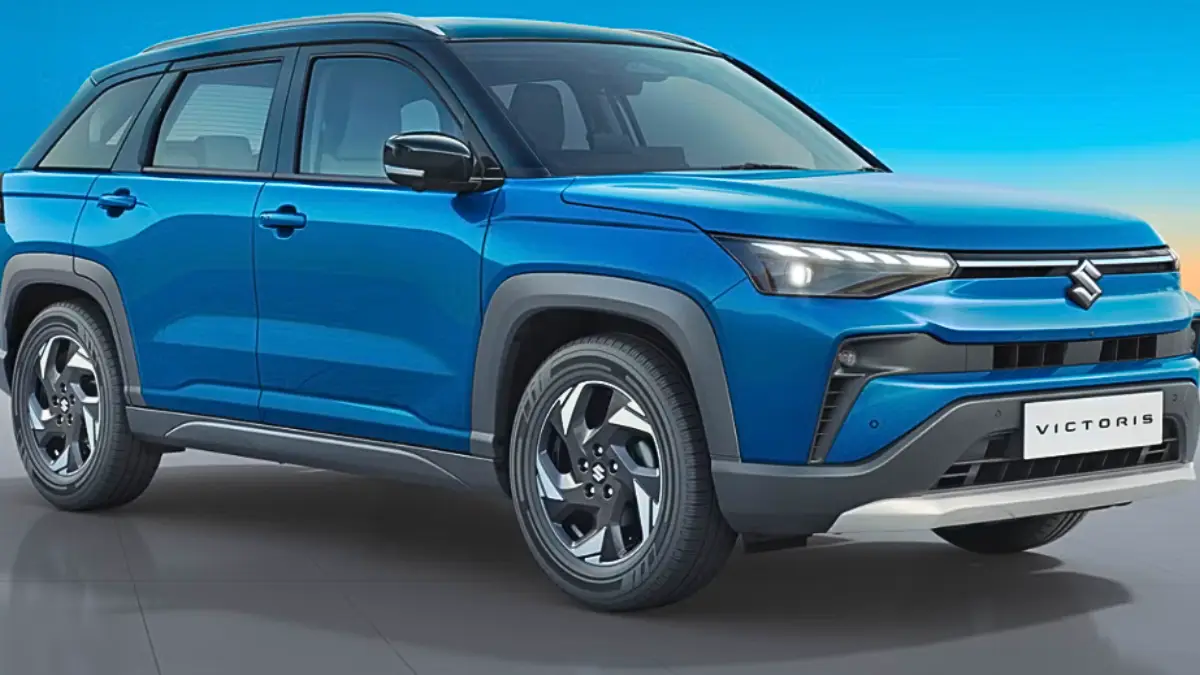
For millions of Indian families, a Maruti Suzuki has long been more than a vehicle; it’s the first step toward aspiration, the reliable bridge between a two-wheeler and the dream of four wheels. That bridge just got a little narrower and noticeably more expensive. Maruti Suzuki has confirmed that from 1 June 2026, prices across its lineup will rise by as much as ₹30,000, and the Maruti Suzuki price hike June 2026 impact on affordable cars is shaping up to be far more consequential than a routine quarterly adjustment. And while a price hike announcement from an automaker isn’t unusual, the story beneath this one is what should worry the average buyer: the era of the truly affordable car is quietly being laid to rest, not by a single blow, but by a thousand relentless cuts.
Why This Hike Feels Different: Examining the Maruti Suzuki Price Hike June 2026 Impact on Affordable Cars
Maruti’s statement points to the usual suspects: rising input costs and persistent inflation. Steel, aluminium, precious metals used in catalytic converters, semiconductor components, and logistics expenses have all been on an upward trend for months. What’s new is the admission that the company’s internal cost-reduction efforts have finally hit a wall. For several quarters, Maruti absorbed a significant chunk of cost pressure to protect its price-sensitive customer base. That buffer has now evaporated.
This is not a seasonal adjustment or a routine cyclical move. This is a structural recalibration. The ₹30,000 ceiling on the hike might seem modest if you’re shopping for a ₹15 lakh Grand Vitara, but on an entry-level Alto or S-Presso, models that were deliberately repriced below ₹3.5 lakh ex-showroom after the GST rationalisation in September 2025, the increase can represent a nearly 9% jump. That’s a massive real-world burden for buyers who often stretch every rupee to make the down payment.
Also Read – Maruti Suzuki Test Convoy 2026: Maruti’s Secret Convoy Just Gave Away Its Plan to Own the Road Ahead
The Domino Effect Across the Industry
Maruti isn’t alone. It’s simply the latest and most significant domino to fall. In April 2026, Mahindra hiked prices on its SUV portfolio by up to 2.5%, with an average increase of around 1.6%, blaming input and operational cost escalation. Tata Motors, effective 1 April 2026, pushed through an average 0.5% rise for similar reasons. What was once an annual or bi-annual ritual is now becoming a quarterly, sometimes monthly, event for certain models.
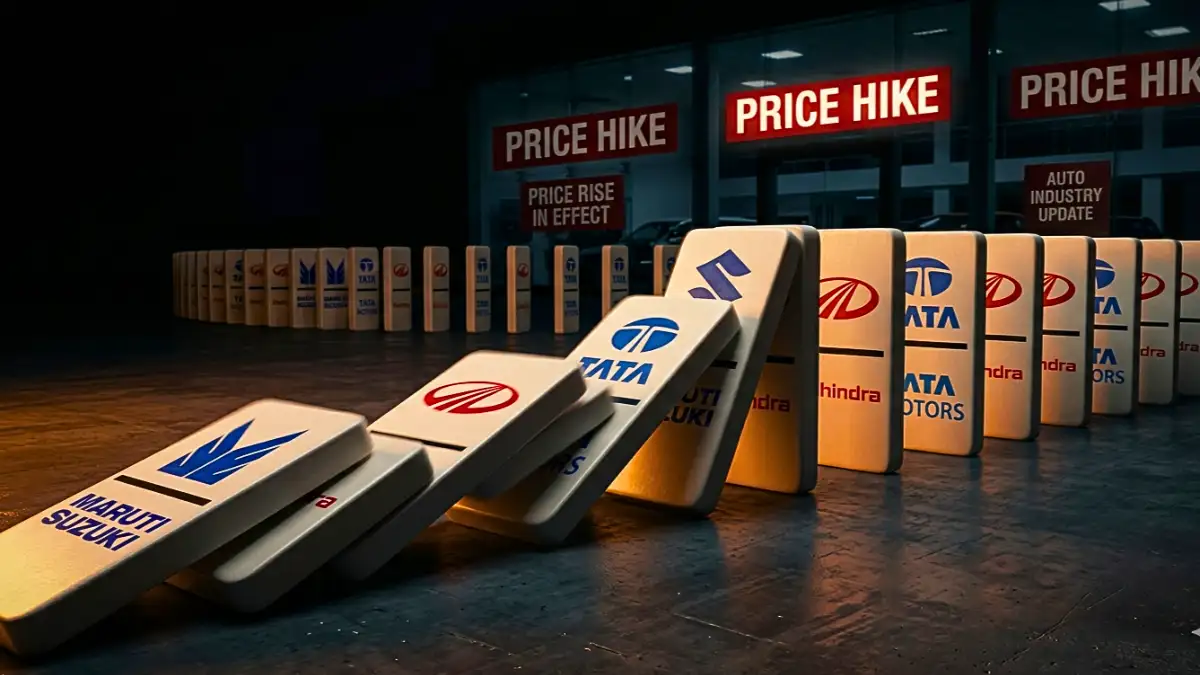
The trend points to a fundamental shift in how automakers manage margins. Instead of waiting for a new financial year or a model refresh to reset prices, manufacturers are increasingly adopting a dynamic pricing approach, more akin to what we see in commodities or airline tickets. For consumers, this means the price you see today may not be the price you pay next month, even without any change in features or specifications.
The Ghost of the GST Cut
A crucial piece of context has faded from public memory. In September 2025, the government moved sub-4 metre cars with petrol engines up to 1200cc and diesel engines up to 1.5 litres into the 18% GST slab, a significant reduction from the earlier 28% plus cess. Maruti seized that moment to aggressively reposition its small cars, bringing starting prices to levels that sparked genuine excitement about a revival of the entry-level segment.
That window of relief is now firmly shut. The cumulative effect of multiple price hikes since then has not only erased the GST benefit but has pushed real transaction prices higher than pre-rationalisation levels on several models. Buyers who deferred their purchase, hoping for stability, are now staring at a market where waiting has cost them money. The affordable hatchback, the quintessential Indian family car, is no longer a volume driver that grows the market; it’s a loss-leader that manufacturers tolerate rather than celebrate.
What This Means for the Indian Auto Market
The implications go beyond individual household budgets. India’s car penetration remains below 60 vehicles per 1,000 people, a fraction of developed markets. Growth depends on converting two-wheeler owners and first-time buyers. When the entry price point keeps creeping upward, that conversion pipeline narrows. We’re already seeing a structural shift: demand is concentrating in the ₹10 lakh+ segments, particularly compact SUVs, while the sub-₹6 lakh market shrinks as a proportion of total sales.
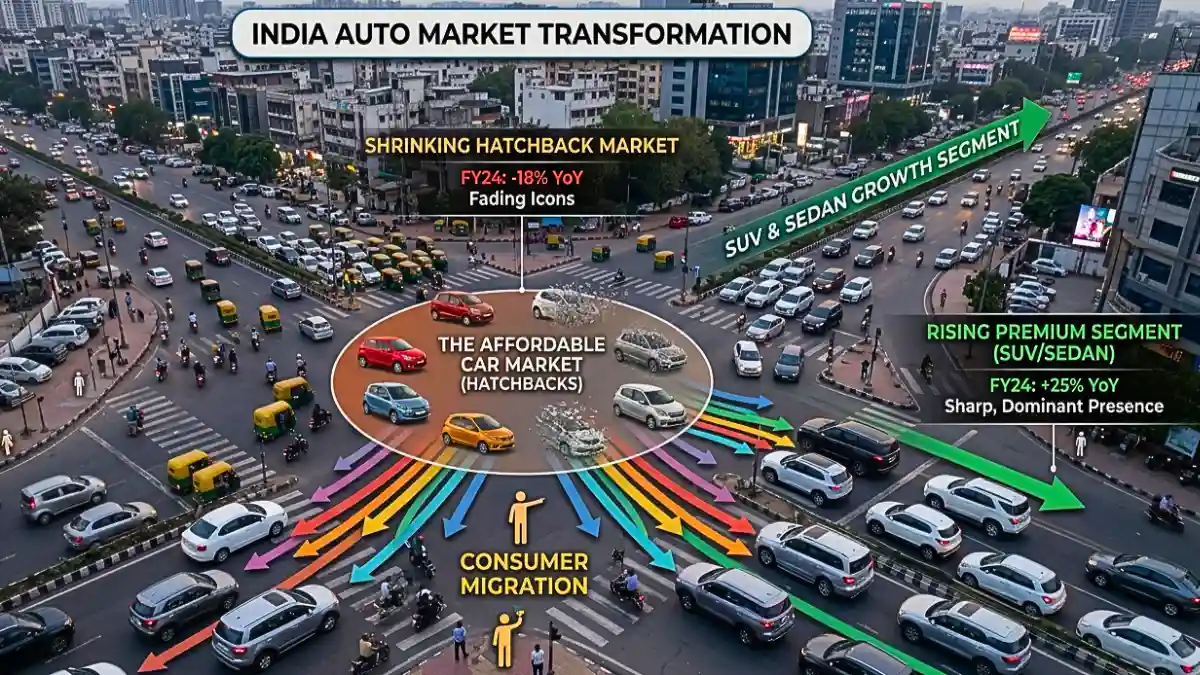
This creates a risky feedback loop. As margins on small cars shrink further, manufacturers allocate less investment, fewer model updates, and less marketing energy to the segment. Supply constraints then nudge buyers toward pricier options, and the bottom of the pyramid slowly empties out. For an industry that once prided itself on serving the “common man,” the drift is unmistakable.
The Regulatory and Commodity Elephant in the Room
Behind the headline inflation numbers lie deeper forces. The transition to stricter emission norms, mandatory safety features such as six airbags and advanced braking systems, and the upcoming CAFE-III (Corporate Average Fuel Efficiency) targets are silently piling on per-vehicle costs. Each regulation is individually justifiable; together, they have added tens of thousands of rupees to manufacturing cost structures over the past five years alone.
Add to that the global scramble for battery materials, copper, and rare earth metals, driven by the electric vehicle revolution, and even conventional internal combustion engine cars face supply chain competition that pushes input prices up. Maruti’s price hike, seen through this lens, is less a corporate decision and more an inevitable response to a macroeconomic environment over which no single company has control.
Also Read – Tata Motors Future Plans 2027: Beyond the Sales Charts — What the Next 12 Months Mean for the Indian Road
A Glimmer of Strategy: Maruti’s Delicate Balancing Act
Maruti has not disclosed the model-wise break-up of the price increase, and that silence is strategic. The company knows that a flat ₹30,000 hike on the Alto K10 would cause sticker shock, while the same amount on a Ciaz or Invicto would barely be noticed. Expect the actual burden to be heavily skewed toward models that have seen strong demand or thin margins, with the possibility that some high-volume small cars receive a much smaller, token increase to soften the blow.
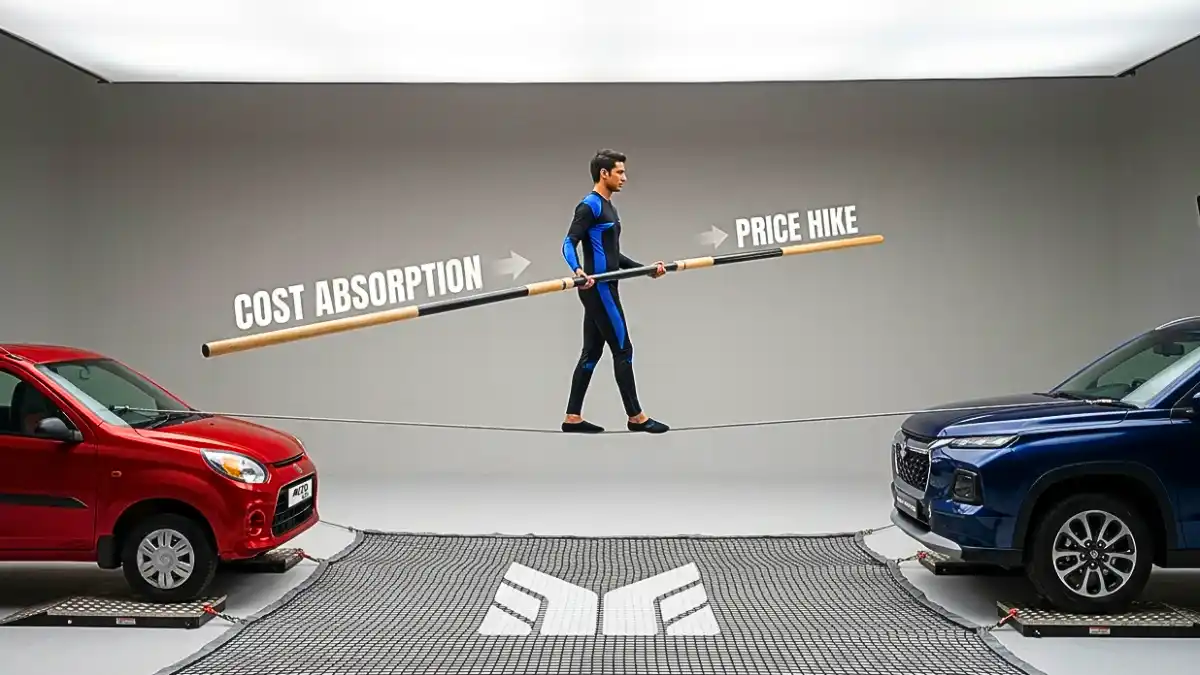
The brand’s massive scale and deep supply chain integration still give it a buffer that rivals lack. The fact that Maruti held off longer than Mahindra and Tata on passing through costs signals its acute sensitivity to price elasticity at the lower end. That sensitivity, however, has its limits.
What Buyers Should Do Now
For anyone sitting on the fence, the calculation has changed. The direction of travel for car prices is unambiguously upward through the rest of 2026 and into 2027. Regulatory deadlines in 2027 for the next phase of emission standards and crash-test requirements will add another layer of cost. Waiting for a “better time” may backfire. The practical advice is not to rush into a purchase recklessly, but to treat the current window before 1 June as a tangible discount period, especially if you’re targeting a model likely to see the higher end of the hike range.
More fundamentally, this moment calls for a reset in buyer expectations. The ₹5 lakh new car, effectively already gone, isn’t coming back. The used car market will likely absorb much of the displaced demand from entry-level buyers, pushing up prices there too. Affordable personal mobility is inching toward becoming a policy challenge, not just a market outcome.
The Bigger Picture
Maruti’s price hike is a news story that will generate a few days of headlines and then recede. But it’s a marker of a profound shift. The Indian automobile industry, the backbone of manufacturing jobs and a bellwether of consumer confidence, is moving into a phase where volume growth at the bottom can no longer subsidise the aspirations of the middle. The dream of a car in every driveway is not dead, but it’s getting more expensive, and we’re all going to have to adjust our roadmaps accordingly.
Also Read – Tata Sierra EV Launch 2026 Confirmed for Festive Season – Price, Range, Battery & All You Need to Know

If it runs on electricity or has a microchip, Rahul is on it. As our resident tech geek and electric vehicle (EV) specialist, Rahul decodes complex technologies into simple language for our readers. He stays ahead of the curve on battery technology, autonomous driving, and the latest digital trends in the automotive sector. If you want to know the real range of an EV or the future of mobility, Rahul has the answers.