


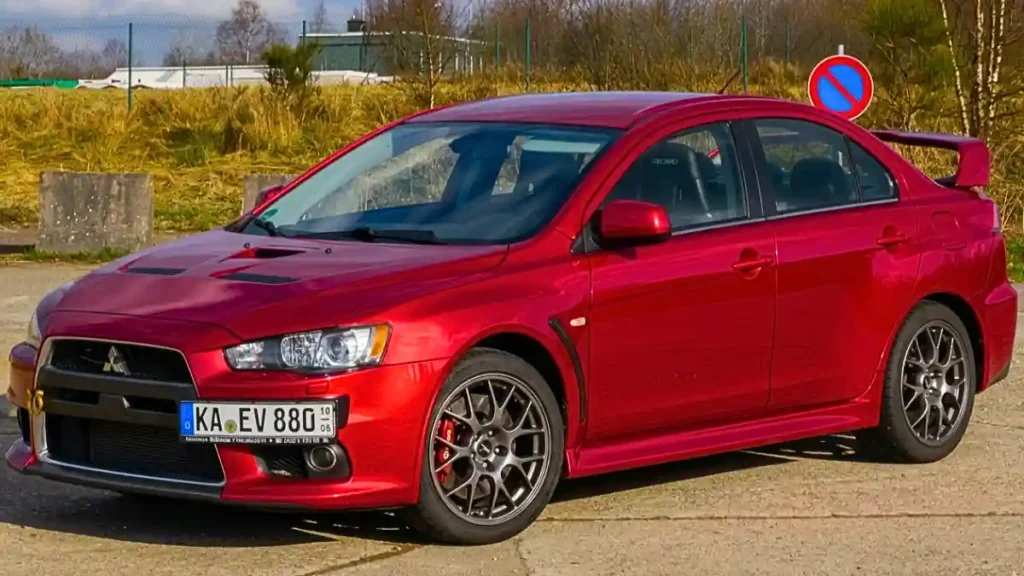

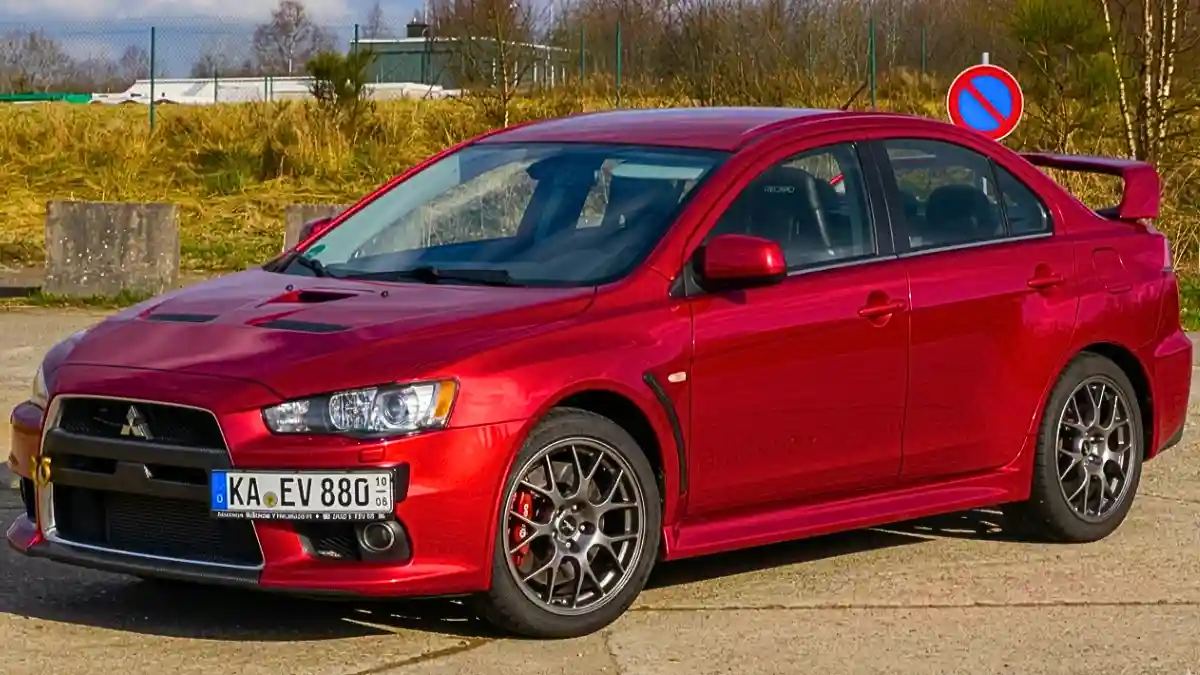
The automotive world has a peculiar habit of mourning something only after it’s gone. When Mitsubishi pulled the plug on the Lancer Evolution in 2015, the grief was sharp but, for many, theoretical. The Evo had been fading from relevance in a market hungry for crossovers, and its exit felt like the final, quiet cough of a rally-bred bloodline that had already been on life support. A decade later, a 722-mile Mitsubishi Lancer Evolution time capsule has surfaced, and the conversation has shifted from regret to revelation. This isn’t just a low-mileage used car hitting the auction block. It’s a mirror reflecting everything we lost — and everything we’re only now beginning to value correctly.
Unboxing the Mitsubishi Lancer Evolution Time Capsule
At first glance, the 2015 Lancer Evolution Final Edition listed on Bring a Trailer looks like a dealership delivery photo come to life. Number 949 of the 1,600 units allocated to the U.S., it wears its age impossibly lightly. The odometer hasn’t even broken the four-figure mark. That detail alone is enough to make collectors sit up, but the deeper story is about what this car represents at a time when the performance landscape has been utterly reshaped.
The Final Mechanical Heartbeat
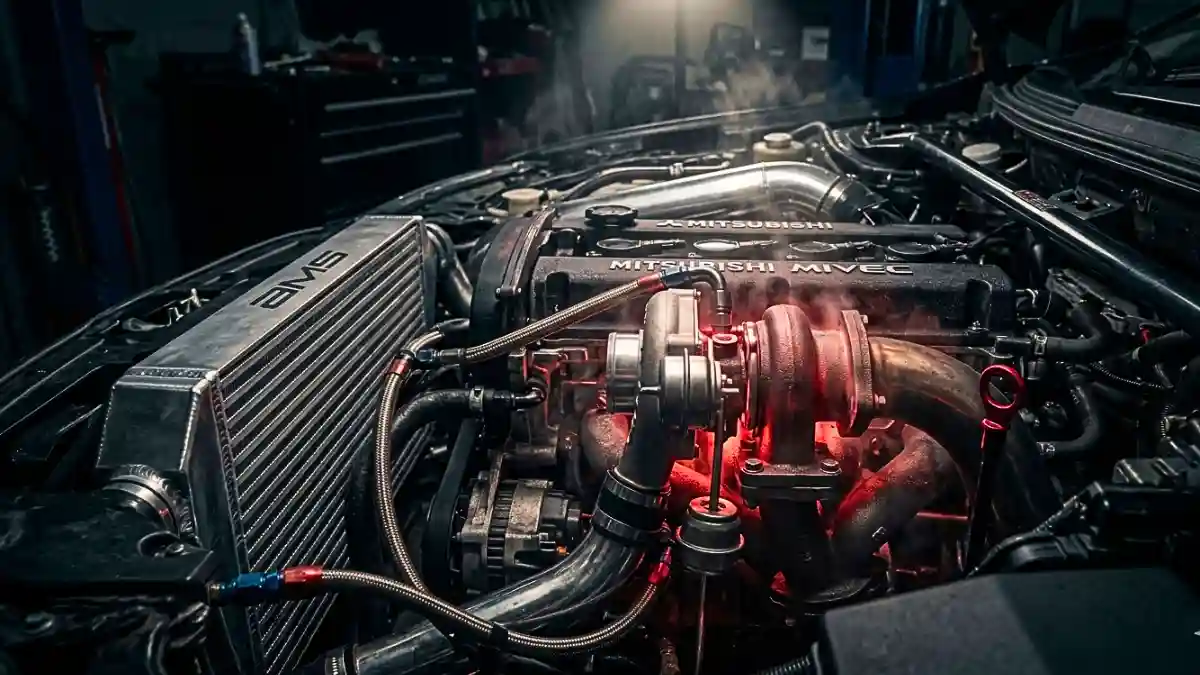
When the Evo X arrived in 2007, it was already an anomaly. Mitsubishi ditched the iron-block 4G63T that had defined the Evo’s relentless, tunable character for the aluminum 4B11T — a cleaner, more modern engine that purists initially eyed with suspicion. The all-wheel-drive system, however, was a masterpiece of active yaw control and torque vectoring, allowing the sedan to carry speed through corners in ways that felt almost heretical for a four-door family car. The Final Edition closed the chapter with a 2.0-liter turbocharged four-cylinder sending 303 horsepower and 305 lb-ft of torque through a five-speed manual gearbox. It was a love letter written in boost, but by 2015, few were reading it.
Also Read – 2028 BMW 1 Series Rear-Wheel Drive: How Electrification Returns the Hatch to Its Roots
The Market That Left the Evo Behind
The market context is crucial here. In the mid-2010s, the hot hatch and sport sedan segment was in a strange flux. The Subaru WRX STI was the Evo’s eternal sparring partner, but both were being undercut by a wave of refined German machinery and, soon, the electrified torque of cars like the Tesla Model 3 Performance. Mitsubishi, bleeding money and starved of a coherent product strategy, decided to retreat into crossovers and plug-in hybrids. The Evo’s death wasn’t a shock; it was a footnote in a broader story of a manufacturer that had forgotten how to make enthusiasts’ hearts beat faster.
The Price of Nostalgia in a Digital Age
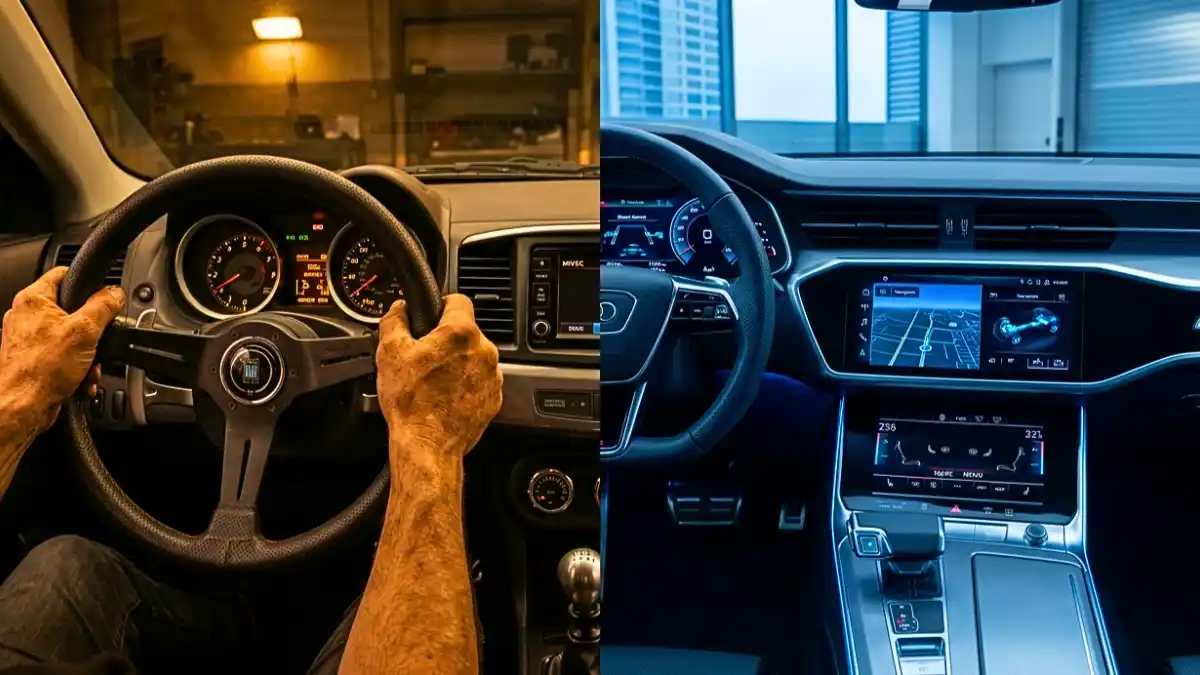
Why, then, does a car that felt like a remnant of a bygone era even when new now command bids approaching $40,000 — and possibly double that by the hammer fall? The answer lies in the way nostalgia compresses time. Cars from the 2010s are entering their collectible phase faster than any previous generation, accelerated by the creeping homogenization of driving experiences. Modern performance vehicles are faster, safer, and more capable, but they’re also heavier, more insulated, and increasingly digitized. The Evo X, with its hydraulic steering, manual gearbox, and rally-bred nervousness, offers a raw tactility that is now effectively extinct outside of six-figure special editions.
Modified, But Not Molested
This particular car complicates the collector narrative in an interesting way. It’s not a museum-grade, factory-fresh specimen in the strictest sense. The current owner has fitted XXR wheels, Eibach springs, Bilstein shocks, an AMS intercooler and downpipe, a Manzo exhaust, and a Tial blow-off valve, among other tweaks. To an outsider, modifications spell trouble — a sign the car was driven hard, its value diluted. But the Evo community has long understood that light, high-quality modifications are a language of care, not abuse. The fact that the original Enkei wheels, stock seats, and factory head unit are included in the sale tells you this was a project approached with reverence, not reckless ambition. The buyer gets a split personality: a tastefully enhanced driver’s car that can be returned to showroom condition at will.
Two Cars in One: The Collector’s Dilemma
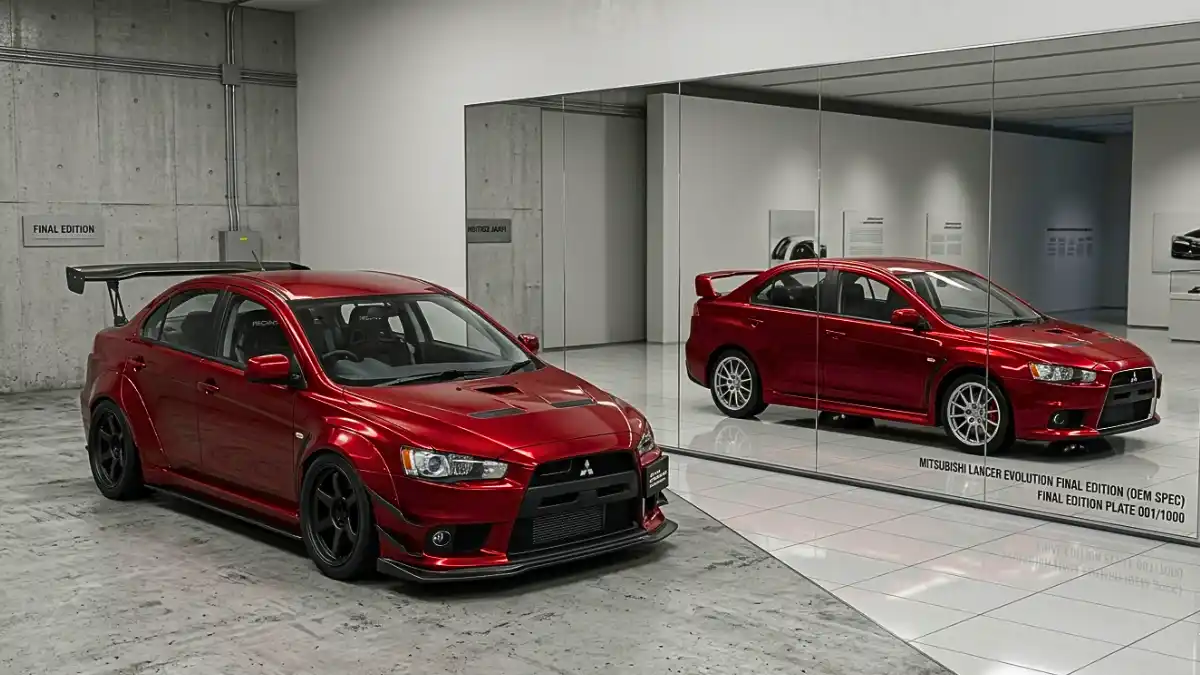
From an expert perspective, this dual nature actually broadens the car’s appeal. A purist might balk at the non-original parts, but the Evo buyer pool is uniquely split between collectors who want concours perfection and enthusiasts who plan to use the car as intended. The presence of all stock components neutralizes much of the risk, effectively offering two cars in one. It’s a negotiating position that could push the final bid well beyond the $39,195 original MSRP; some estimates have floted a ceiling near $70,000. Recent history supports the optimism: earlier Evo generations, particularly the IX, have breached six figures for pristine examples. The X is still climbing the value curve, and a 722-mile Final Edition sits precisely at the inflection point where low supply meets awakening demand.
Also Read – Volvo Burnt the Combustion Engine Blueprint — No More Engine Factories, No Looking Back
When an Ecosystem Died
But beyond the auction drama, this car matters because it captures the moment when a certain kind of performance car ecosystem began to dissolve. The Evo wasn’t just a vehicle; it was an entry point into a culture of grassroots motorsport, midnight tuning sessions, and the belief that a sedan could embarrass dedicated sports cars on a wet backroad. Mitsubishi’s pivot to crossovers like the Eclipse Cross — a nameplate that now lives as a monument to irony — severed that connection. Rumors of an Evo revival persist, likely electrified, but they miss the point. The soul of the Evo wasn’t its all-wheel-drive layout or its turbocharger; it was the sense that you were driving something engineered with an almost reckless commitment to speed, unpolished and alive.
The Future of the Time Capsule
The future implications of sales like this are subtle but significant. As internal-combustion performance cars dwindle, every low-mileage survivor becomes a historian’s artifact. Values will not rise in a smooth line; they will spike for the milestones — the Final Editions, the special colors, the unmodified holdouts. The 722-mile Evo is a reminder that time capsules exist, hidden in garages, waiting to reset our perception of what a “modern classic” can be. For the next owner, the choice is poetic: preserve the miles and watch the value climb, or fire up the Manzo exhaust, feel the aftermarket blow-off valve chirp, and remind the world why the Lancer Evolution mattered in the first place. Either path is a testament to a car that refused to be forgotten.
Also Read – The Unseen Danger in Your Driveway: The Jeep Cherokee PTU Recall and a Flaw That Parks Itself


Raj is the creative mind curating the special content for the website. From exclusive first-drive reviews to buyer’s guides and comparison tests, Raj ensures our features are engaging and helpful. He loves getting behind the wheel of new launches and creating content that helps our readers pick their dream vehicle. His passion for motorcycles and performance cars is evident in his energetic writing style.