


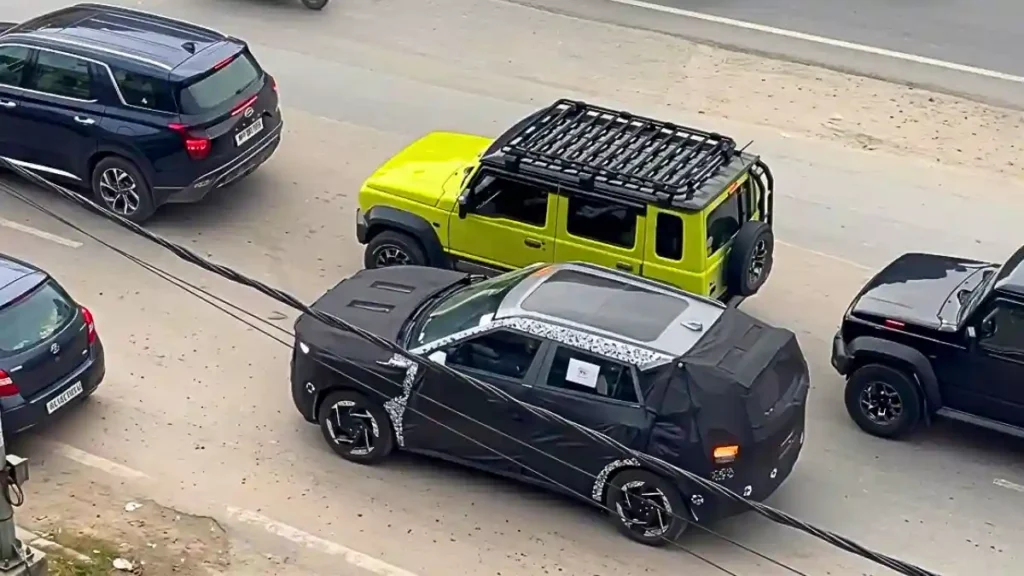

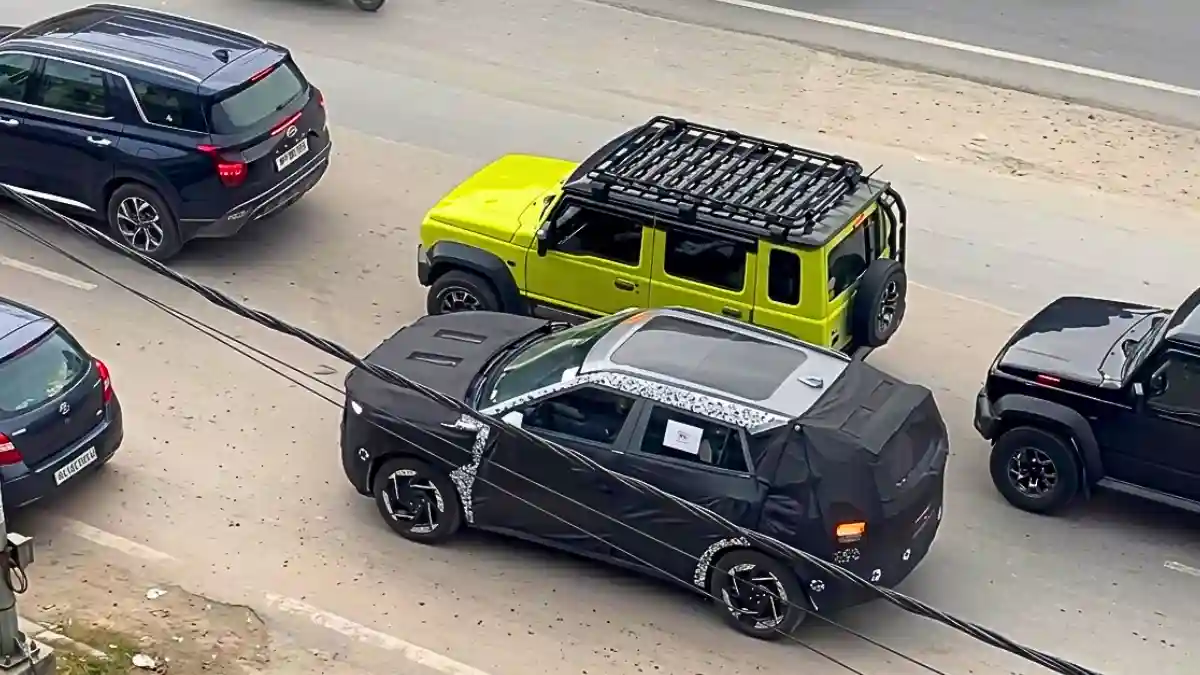
Spy shots from Manali have confirmed what insiders suspected: the third-generation Hyundai Creta will be a meaningfully different machine, not just an update, but a rethink of what an affordable family SUV can be.
A heavily camouflaged test mule winding through the mountain roads of Manali isn’t unusual. What made this sighting different was the moment the vehicle, widely expected to be the next-gen Hyundai Creta 2027, pulled alongside a current-generation model and stopped. That single frame of two SUVs of the same lineage, parked nose to nose, did more to reveal Hyundai’s ambitions than any press release could.
The size difference was immediately obvious. Even with temporary testing equipment mounted at the rear adding bulk, the new model appeared visibly longer, with a roofline that stretched further back and a body that carried itself with noticeably more presence. For a model already dominant in its segment, that is a bold strategic choice.
Why Growing the Next-Gen Hyundai Creta 2027 Is a Calculated Bet, Not Excess
India’s SUV market has been shifting steadily upward. Buyers who once settled for hatchbacks are now comparing mid-size SUVs. Buyers who once compared mid-size SUVs are now stretching toward larger, more premium options. Hyundai clearly read that movement and decided the third-generation Creta must be ready to catch that next wave of aspirational demand.
An estimated length of close to 4.5 metres places the new Creta in interesting territory, larger than its predecessor, yet still compact enough to remain practical for Indian traffic and parking conditions. The extra centimetres are not about vanity; they are primarily structural, a consequence of Hyundai’s new K3 modular platform, which demands a longer wheelbase to deliver its engineering benefits.
The platform is the real story here. K3 isn’t just a new floor; it’s a complete rethinking of how the vehicle is built, allowing the same architecture to support petrol, hybrid, and full electric variants without a fundamental redesign.
- Current length: 4.33m (Gen 2 Creta)
- Expected length: ~4.5m (Gen 3 estimate)
- Size increase: +17cm (Approximate gain)
- Global debut: Late 2026
- India launch: early 2027
Also Read – Bugatti Tourbillon Bolide Mashup: A Diamond in the Rough
The K3 Platform: Engineering That Matters Beyond the Spec Sheet
Most buyers will never hear the words “K3 architecture” after purchase, but they will feel its effects. The longer wheelbase that comes with the platform translates directly into legroom, particularly in the second row, where Indian family car buyers spend considerable time. Luggage capacity is also expected to grow, addressing a persistent criticism of the current model.
More importantly, K3 was designed from the outset to accommodate multiple powertrain types. This is not a petrol car with an electric motor awkwardly grafted on. The platform supports hybrid and battery-electric systems natively, which means the Creta’s future variants, including a full EV version, share a common, optimised foundation rather than compromising one powertrain to accommodate another.
The dynamic improvements may be the most underreported aspect. Reports suggest select variants could get a multi-link rear suspension setup, a meaningful upgrade over beam axles that remain common in this segment. Combined with all-wheel-drive availability on certain trims, the third-generation Creta begins to encroach on territory once held exclusively by far pricier vehicles.
Hybrid Power, Electric Ambition
The expected powertrain combination, a 1.5-litre petrol engine paired with an electric motor capable of running in electric-only mode, reflects Hyundai’s broader global hybrid strategy. India’s fuel economy consciousness makes this pairing commercially sensible. City commuters would draw real-world savings from the electric-only capability at low speeds, while highway driving would lean on the petrol engine efficiently.
This positions the new Creta directly against the Maruti Grand Vitara and Toyota Urban Cruiser Hyryder, both of which have proven that Indian buyers will pay a premium for strong hybrid technology when the fuel savings justify it over a typical ownership period. Hyundai entering this space with the Creta’s brand weight changes that competitive picture substantially.
Also Read – Dodge Copperhead SRT Coupe Returns to Lead a Bold New SRT Army
Inside: Ambition Meets Expectation
Previous test sightings have already revealed Hyundai’s Pleos Connect interface inside the cabin, a significant hint at the interior direction. The dashboard and centre console are expected to receive a more premium treatment, with new technologies layered on top of an already feature-rich foundation. The current Creta is no Spartan machine; the next generation appears set to push the category standard further.
This matters because the mid-size SUV segment in India is no longer purely a value proposition. Buyers comparing the Creta with rivals are increasingly evaluating perceived luxury alongside price. Hyundai’s interior upgrade signals an understanding that the battleground has moved.
What This Means for the Market
A global debut expected towards the end of 2026, followed by an Indian market launch likely in early 2027, gives Hyundai time to refine the product while rivals attempt to respond. The Creta’s dominance is not accidental. It has held segment leadership through consistent updates, but a third generation this substantial is not an update. It is a statement.
For the buyer deciding between a Creta and the rapidly expanding competition, the wait may well be worth it. A longer, more capable platform, hybrid efficiency, improved dynamics, and a more premium cabin in the same broad price band would be a compelling offer. The question the market will answer is whether Hyundai can deliver on the ambition those Manali spy shots have set.
Also Read – More Than Just a New Face: What the 2026 Tata Tiago Facelift Tells Us About Tata’s Ambition


If it runs on electricity or has a microchip, Rahul is on it. As our resident tech geek and electric vehicle (EV) specialist, Rahul decodes complex technologies into simple language for our readers. He stays ahead of the curve on battery technology, autonomous driving, and the latest digital trends in the automotive sector. If you want to know the real range of an EV or the future of mobility, Rahul has the answers.