


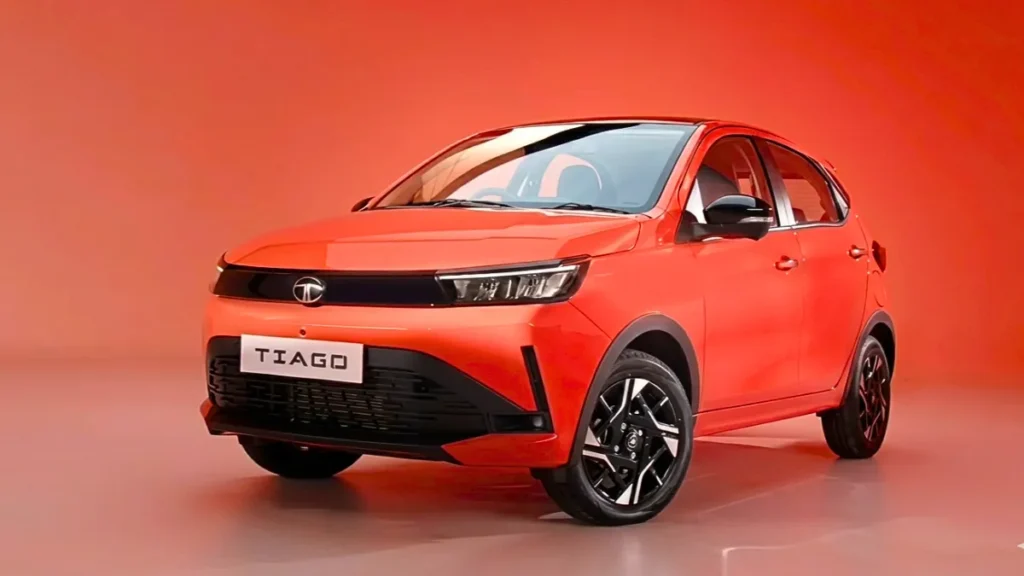

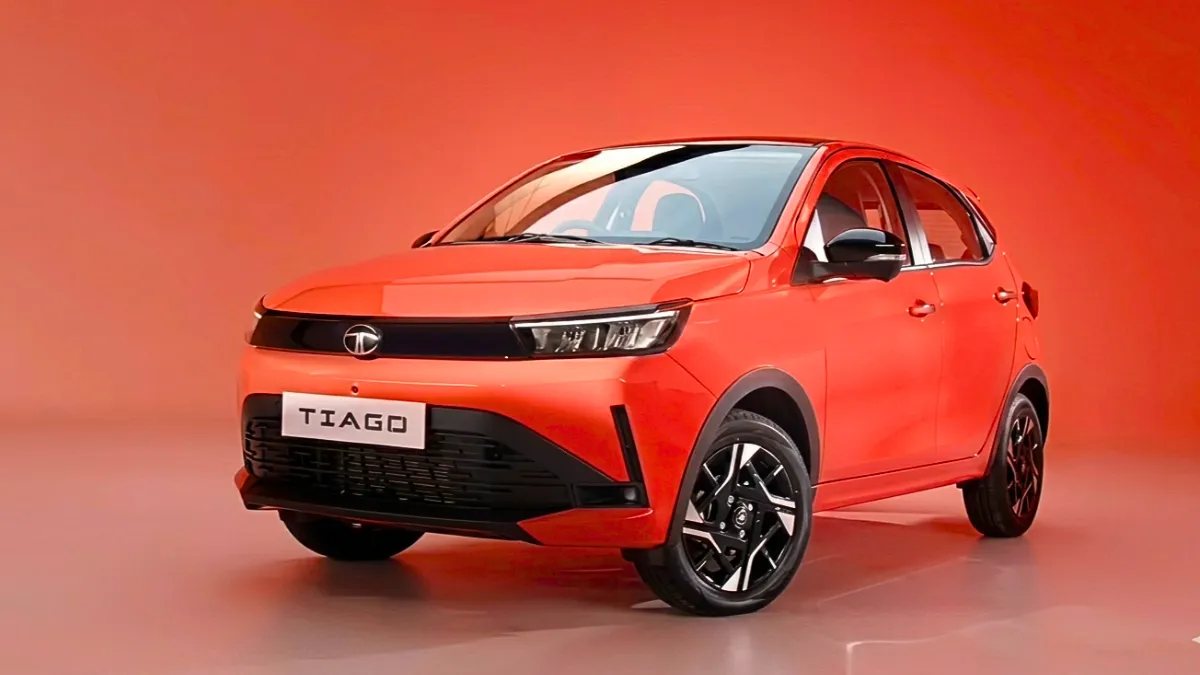
In a market where budget hatchbacks are often treated like white goods, functional, forgettable, and updated with the enthusiasm of a government file movement, Tata Motors is quietly refusing to play by the old rules. The 2026 Tata Tiago facelift, revealed fully ahead of its 28 May launch, isn’t just another mid-life nip and tuck. It’s a statement of intent from a manufacturer that increasingly sees its entry-level car not as a compromise, but as a showcase.
For years, the Tiago has been the sensible choice. Solid build, proven safety credentials, and a mature ride quality won it a loyal following, but the design language was starting to feel like a museum exhibit next to the company’s own Altroz and Punch. This update changes that equation entirely. What we’re witnessing is less a facelift and more a strategic repositioning, one that could reshape buyer expectations at the affordable end of the Indian car market.
Inside the 2026 Tata Tiago Facelift: A Cabin That Learnt The Right Lessons
Walk inside the updated Tiago and the first thing that strikes you isn’t the new screen or the cleaner lines. It’s the quiet confidence of a cabin that knows exactly what it wants to be. Tata has retained the black-and-grey theme, but the execution now borrows heavily from the playbook established by the Altroz facelift. The dashboard stretches horizontally in an uncluttered sweep, anchored by a 10.25-inch floating touchscreen and a similarly floating digital instrument cluster, both elements that would have felt aspirational in a car one segment above just a couple of years ago.
But the real story lies in a detail that many manufacturers get wrong when chasing perceived modernity: the climate control interface. The outgoing Tiago’s touch-based AC panel has been binned entirely, replaced by physical buttons and two solid rotary knobs. This isn’t a regression. It’s an honest, user-first decision that acknowledges a fundamental truth of driving, you shouldn’t need to take your eyes off the road to adjust the temperature. In an era where cost-cutting often masquerades as minimalism, this tactile, deliberate switchgear feels almost courageous.
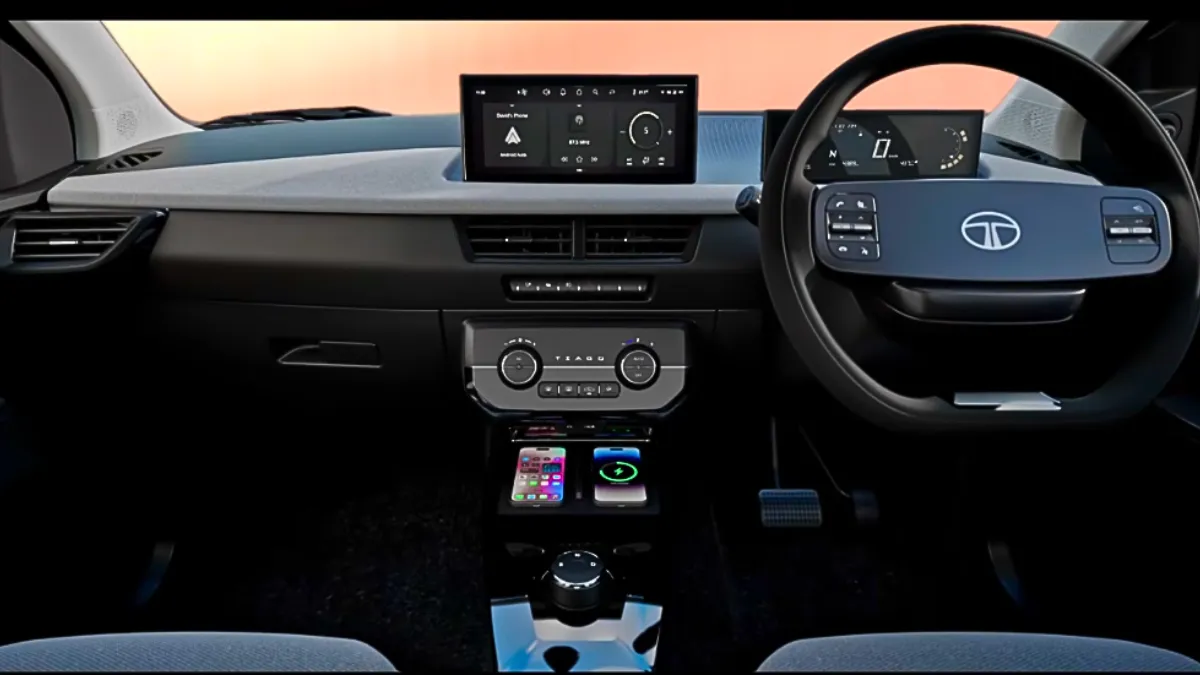
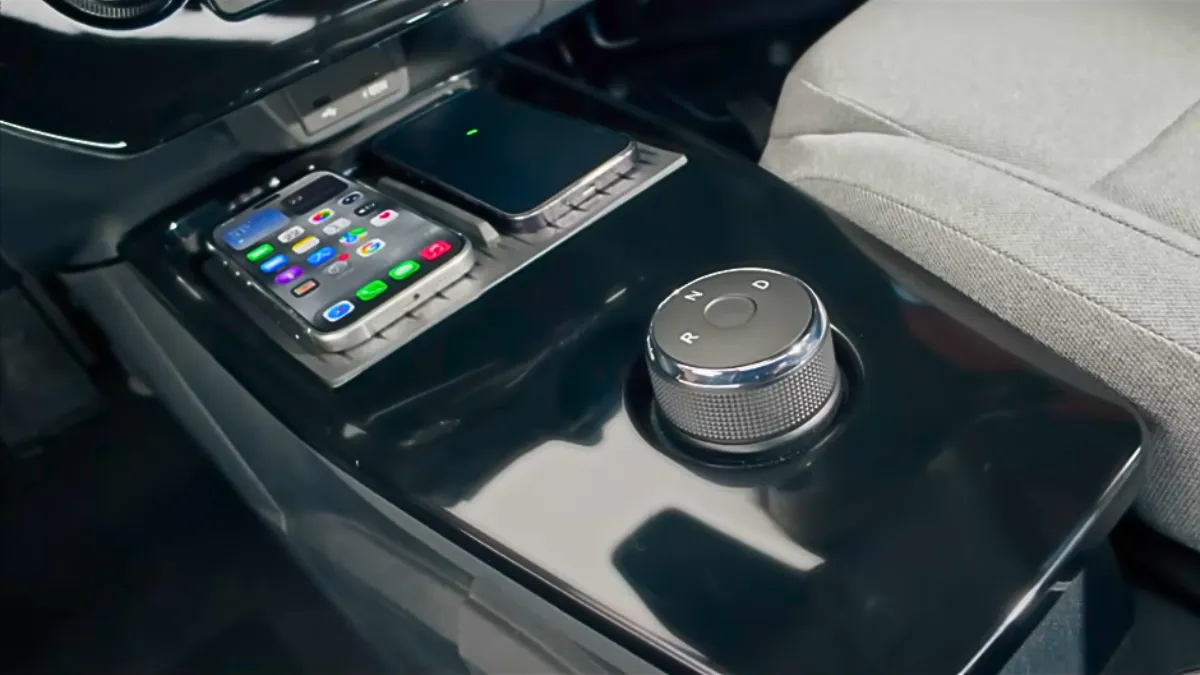
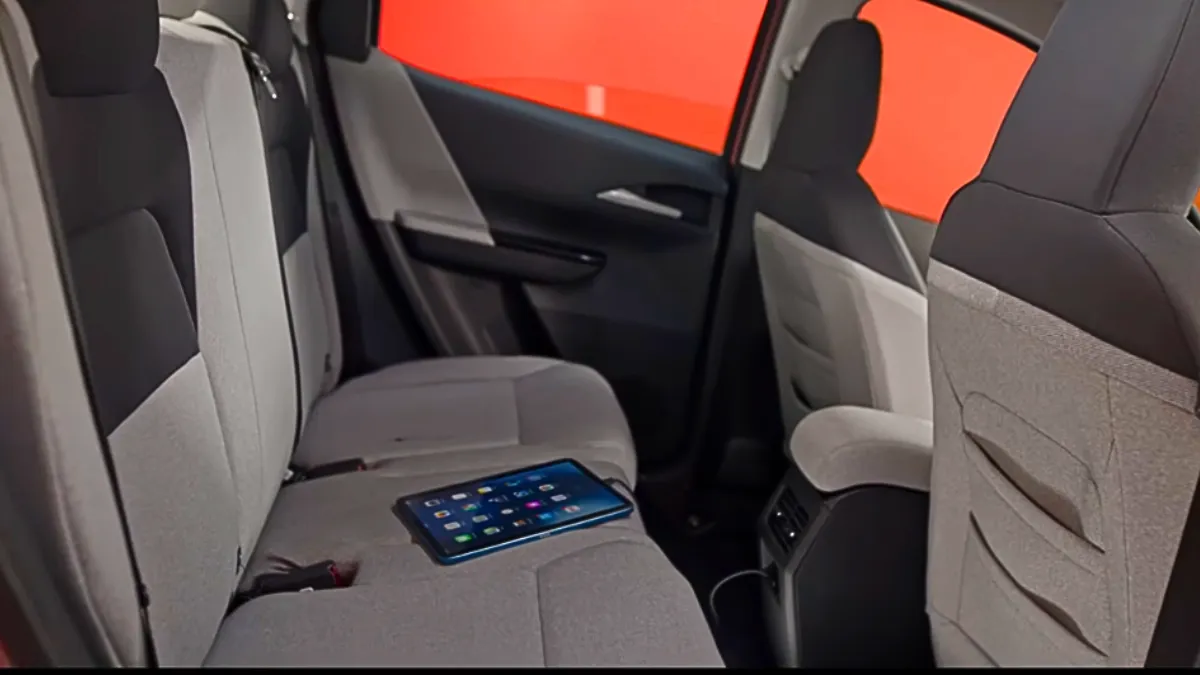
The centre console tells a similar story of thoughtful evolution. A rotary drive selector (likely reserved for AMT variants) sits flanked by two wireless charging pads, yes, two. That’s a segment-first feature that would sound outlandish if you described it to a Tiago buyer from five years ago. Add in rear AC vents, two Type-C ports, and a front centre armrest, and the message becomes clear: second-row passengers are no longer an afterthought. The only notable omission is a rear centre armrest, a reminder that we are still operating within certain cost constraints.
A Design That Finally Belongs
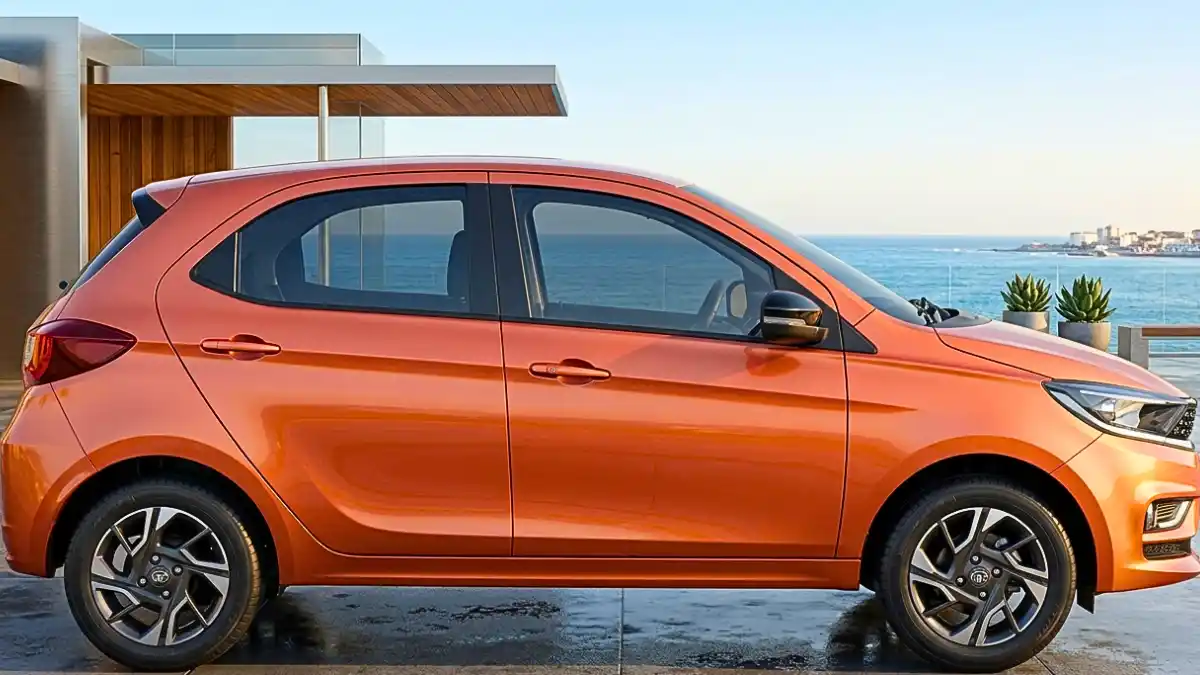
For too long, the Tiago wore Tata’s previous-generation styling language like a hand-me-down jacket. No more. The front end has been comprehensively reimagined with sleeker LED headlights and eyebrow-style DRLs that echo the Altroz, while the gloss-black grille and pixel-inspired fog lamp housings inject a welcome dose of aggression. It’s a face that looks intentional rather than apologetic.
Along the sides, the familiar silhouette remains; compact city-friendly dimensions aren’t something to mess with unnecessarily, but the visual upgrades are smart. New dual-tone alloys, blacked-out ORVMs, a shark-fin antenna, subtle wheel arch cladding, and an optional black roof treatment combine to create a car that feels younger and more athletic without trying too hard. The rear treatment deserves particular mention: redesigned tail lamps with vertical LED detailing, bridged by a thick gloss-black strip that visually widens the stance. It’s not an illuminated light bar, which keeps costs in check, but the effect is convincingly premium.
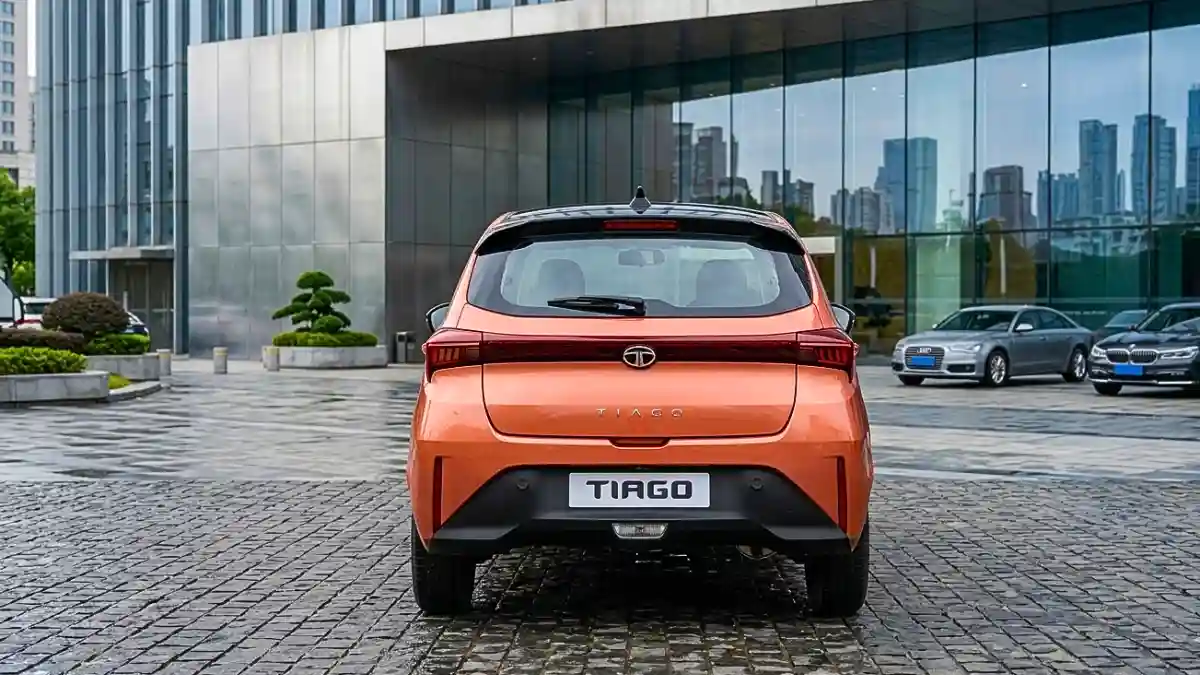
What Tata has achieved is a coherent family look that pulls the Tiago firmly into the orbit of its newer siblings. The car no longer screams “entry-level” from across the showroom, and in a market where emotional appeal drives purchase decisions even in the budget segment, that matters enormously.
Also Read – The Hyundai Elantra Hybrid Recall Holds a Loud Lesson for the Electrified Future
Technology As A Democratising Force
Perhaps the most audacious move hinted at in this update is the potential inclusion of a 360-degree camera system. Camera pods visible under the ORVMs and on the front bumper strongly suggest the feature is coming. If confirmed, the Tiago would become one of the most affordable cars in India to offer surround-view monitoring technology that was, until recently, the preserve of luxury SUVs.
This isn’t just a gimmick. In congested urban environments, a 360-degree camera is a genuine safety and convenience aid, particularly for less experienced drivers. By pushing such features down the price ladder, Tata is subtly reshaping the conversation around what an entry-level car can offer. Alongside the expected wireless Android Auto and Apple CarPlay, automatic headlights and wipers, cruise control, and a tyre pressure monitoring system, the Tiago facelift begins to look less like a budget hatch and more like a compact car that simply refuses to feel cheap.
The Five-Star Elephant In The Room
Safety has become Tata’s strongest brand pillar, and the Tiago’s legacy in this area is formidable. The pre-facelift model famously scored four stars in Global NCAP testing back in 2016, a result that seemed almost miraculous at the time. Since then, the company has made five-star ratings a family tradition, and there’s every expectation that the updated Tiago will achieve top marks under the more stringent Bharat NCAP protocol.
With six airbags likely to be standard across the range, along with electronic stability control, ABS with EBD, and ISOFIX mounts, the Tiago continues to offer a level of passive safety that its primary rivals, the Maruti Suzuki Swift, Hyundai Grand i10 Nios, and Maruti Celerio, have historically struggled to match. In a market where safety awareness is growing rapidly, this isn’t just a feel-good feature; it’s a tangible competitive advantage.
The Powertrain: Evolution, Not Revolution
Mechanically, Tata has opted for continuity. The 1.2-litre naturally aspirated petrol engine, producing 86 PS and 113 Nm, remains the sole petrol option, paired with either a five-speed manual or a five-speed AMT. The CNG variant, delivering 75.5 PS and 96.5 Nm, continues to cater to the running-cost-conscious buyer. These are proven, reliable units that have built a reputation for durability rather than excitement.
Some might have hoped for a turbo-petrol option to spice up the range, but such an addition would have blurred the lines with the Altroz iTurbo and potentially cannibalised sales higher up the chain. The decision to leave the powertrain untouched suggests Tata is betting that the significant visual and feature upgrades will be enough to drive showroom traffic without the added complexity and cost of new engine development. It’s a pragmatic choice, and given the Tiago’s target audience, likely the right one.
The Bigger Picture: What This Means For Tata And The Segment
The Tiago facelift’s arrival alongside its EV sibling on 28 May is no coincidence. Tata is subtly reinforcing its twin-track strategy: combustion engines for the present, electric for the future, and a consistent design language tying them together. The company understands that the sub-compact hatchback segment, while shrinking as a percentage of overall sales, remains a volume battleground that feeds the aspirations of first-time buyers and fleet operators alike.
By injecting genuine premium features into this space, dual wireless chargers, a large floating screen, and a potential 360-degree camera, Tata is not just updating a car. It’s conditioning an entire generation of buyers to expect more for their money, and simultaneously building a bridge to the kind of technology they’ll find in the company’s EV portfolio. The Tiago EV, after all, shares much of this interior architecture.
The competitive landscape isn’t standing still, of course. Maruti’s Swift remains the segment benchmark for refinement and fuel efficiency, while Hyundai’s Grand i10 Nios offers a cabin that feels consistently premium. But neither currently matches the Tiago’s combination of safety credibility, feature depth, and now, cohesive design. If Tata can price the facelift within striking distance of its rivals, a discipline it has demonstrated with recent launches, the Tiago could become the default recommendation in a segment that desperately needs some excitement.
This is more than just a facelift. It’s a quiet revolution dressed in family-friendly sheetmetal, and it suggests that Tata Motors has no intention of letting its entry-level offering fade into irrelevance. Instead, the Tiago looks ready to punch above its weight once again, and this time, it has the looks to match the substance.


Rohit is the visionary behind CarBikeJunction. With over a decade of experience in automotive journalism and a deep love for mechanical engineering, he ensures that every piece of content that goes live meets the highest standards of quality and accuracy. As Editor-in-Chief, he oversees the editorial direction of the website and is often found test-driving the toughest SUVs or analyzing market trends. His leadership is the driving force behind our platform.