


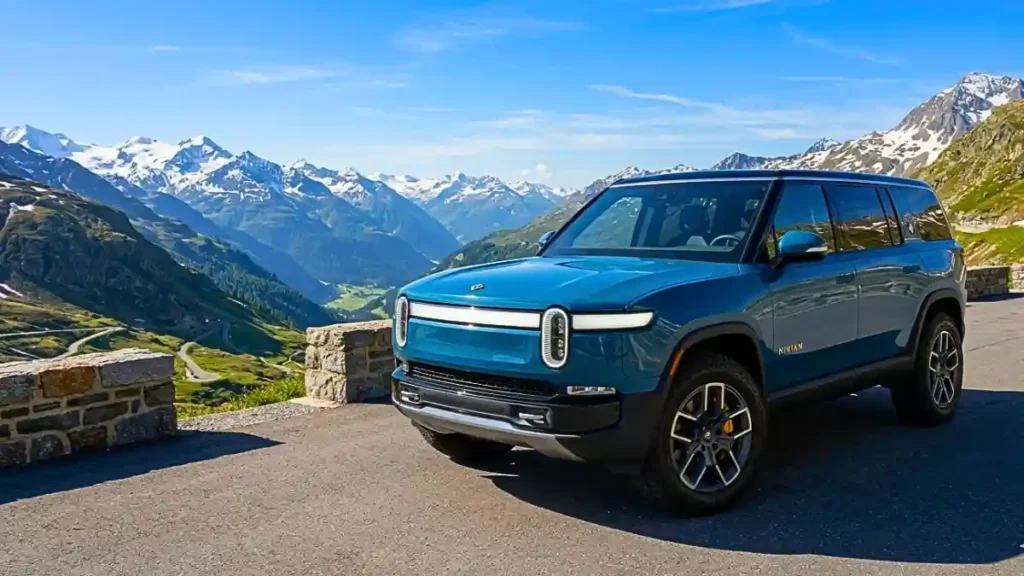

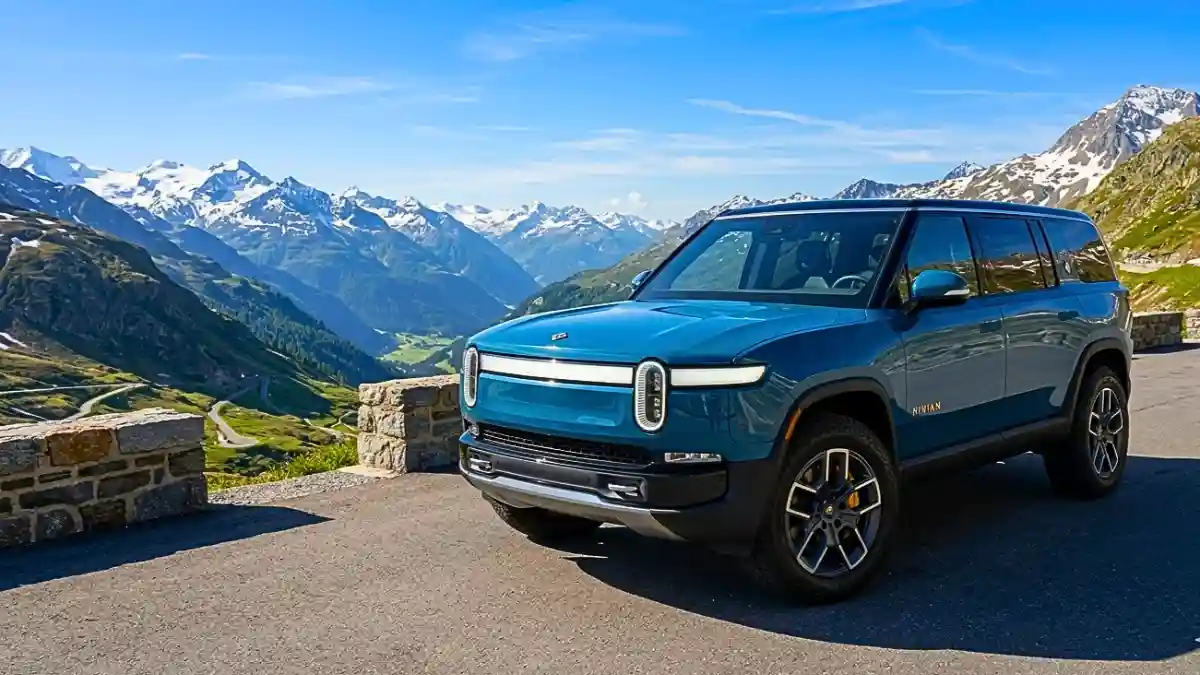
The electric vehicle market has a brutal sorting mechanism, and the Rivian R2 mainstream survival gamble is about to face it head‑on. Early adopters will forgive a lot: buggy software, panel gaps, a charging network that requires three apps and a prayer. But the next wave of buyers, the ones trading in a Toyota RAV4 or a Jeep Grand Cherokee, don’t hand out grace. They want a car that simply works, at a price that makes sense, with an ownership experience that doesn’t feel like a science experiment.
Rivian is about to find out which side of that divide it really belongs on. On Tuesday, the company begins customer deliveries of the R2, a compact electric SUV that CEO RJ Scaringe is betting will transform his automaker from a boutique luxury brand into something Americans actually aspire to own in large numbers. The stakes are existential in the bluntest possible way. When asked if this is a make-or-break moment, Scaringe doesn’t flinch. “Of course, it is,” he told CNBC. “There is no company if things don’t work.”
That raw honesty captures what’s unfolding. Rivian isn’t just launching a vehicle; it’s attempting to cross the chasm that has swallowed dozens of automotive startups before it.
The Gap Between Adoration and Scale
Rivian occupies a strange position in the car world. In Consumer Reports’ latest survey, owners ranked it number one in satisfaction, a staggering achievement for a brand still in its infancy. Yet those same vehicles ranked dead last in predicted reliability, a reflection of early teething problems that owners seemed willing to overlook because they loved the trucks themselves. That paradox, adored but imperfect, is sustainable when you’re selling $80,000 SUVs to enthusiasts in California. It becomes a serious liability when you’re trying to convince a family in Ohio to replace their Honda CR-V.
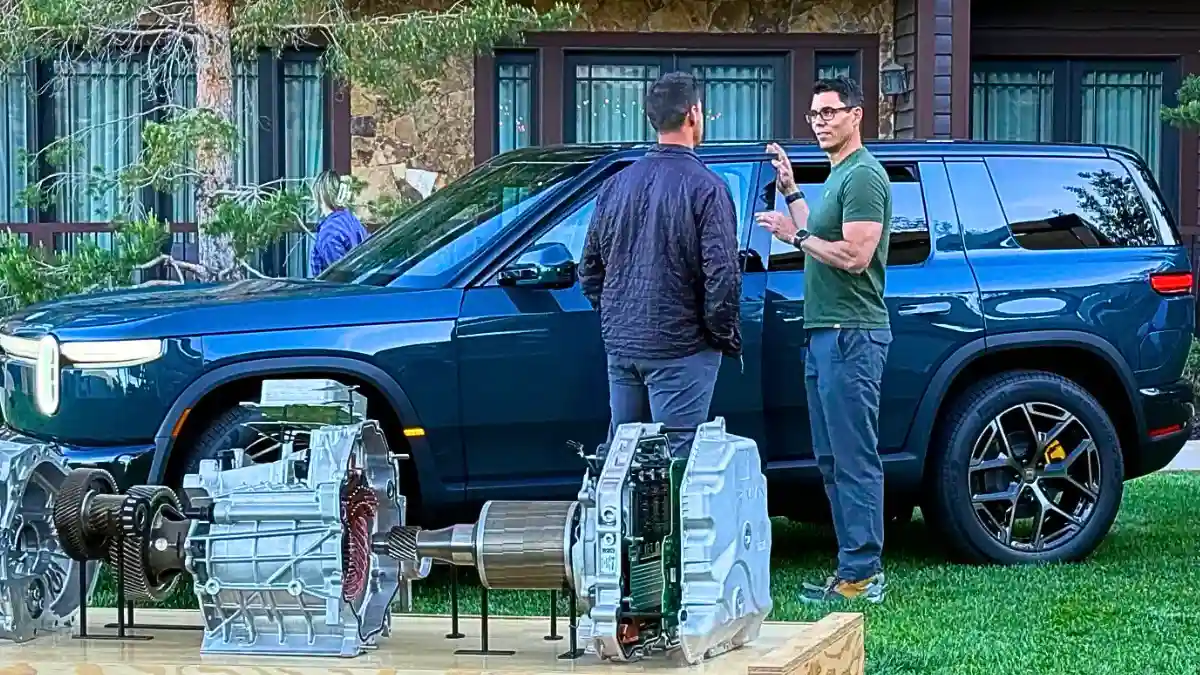
The R2 is designed to close that gap. Sized to slot into the heart of the American market, where compact and mid-size SUVs accounted for 45% of all U.S. sales last year, it’s Rivian’s first vehicle built not for the converted but for the curious. Pricing starts around $45,000, a psychological threshold that signals mainstream ambition. But it’s what Scaringe revealed about the timing that caught the industry off guard: that entry-level model, originally slated for late 2027, has been pulled forward to next summer. The decision, he acknowledged, came after online backlash suggested people perceived the R2 as too expensive and too far away. Moving up the base trim may cost Rivian relatively little in financial terms. Scaringe says few buyers actually choose the cheapest configuration, but it sends a market signal that the company is listening.
Also Read – Ford’s $30000 Electric Pickup Reboot: Not the Sequel You Think It Is
The Math of Survival
Behind the product excitement lies a cold profitability equation. Rivian lost $3.6 billion in 2025 while delivering just over 42,000 vehicles. Every R1 truck or SUV it sold during the first quarter of this year bled about $6,000. That trajectory is unsustainable, and the company has already withdrawn its public target of reaching adjusted profitability by 2027. The new timeline depends on a plant in Georgia that won’t begin production until late 2028, with full capacity still years away.
What Scaringe insists on, however, is that the R2 changes the unit economics immediately. Every single R2 rolling off the line in Normal, Illinois, regardless of trim level, will be cash-flow positive on a per-vehicle basis. “This is a requirement,” he said. But per-vehicle positivity is a life raft, not a destination. Gross margin profitability across the entire business needs to scale far beyond the 160,000-unit capacity of the Illinois plant. Georgia represents that scale, the moment when vehicle sales alone can cover the full cost of running the company.
It’s the same path Tesla walked a decade ago: use a smaller, cheaper vehicle to prove the manufacturing system, then light the afterburners with a dedicated high-volume factory. Tesla’s Model 3 was widely called a make-or-break car, and it nearly broke the company before remaking it into a global force. Rivian is attempting to replicate that transition without the luxury of a charging monopoly or a first-mover vacuum.
The Real Competition in the Rivian R2 Mainstream Survival Gamble
Wall Street naturally frames the R2 as a Tesla Model Y fighter, and with good reason. Tesla sold an estimated 357,500 Model Ys in the U.S. last year, capturing roughly 40% of the EV market. The R2’s expected volume sweet spot in the low $50,000s places it above the overall average new-car transaction price but below the typical EV, a deliberate positioning. Scaringe admits some Tesla customers will defect, but he’s aiming his sights much wider at the sprawling universe of internal combustion owners who have never considered an electric car at all. He name-checks Jeep and Subaru, brands built on utility and loyalty, not propulsion technology.
That’s a far more challenging conquest. The Toyota RAV4, Honda CR-V, Ford Explorer, and Jeep Grand Cherokee dominate these segments with decades of trust, dealer networks, and proven resale values. Rivian will need to convince buyers that its electric alternative isn’t just cleaner but fundamentally better- more capable, smarter, and easier to live with. A lot of that argument rests on software.
Also Read – GM Variable Deployment Airbag Patent: The Airbag That Finally Learns Who You Are
The Brain Behind the Vehicle
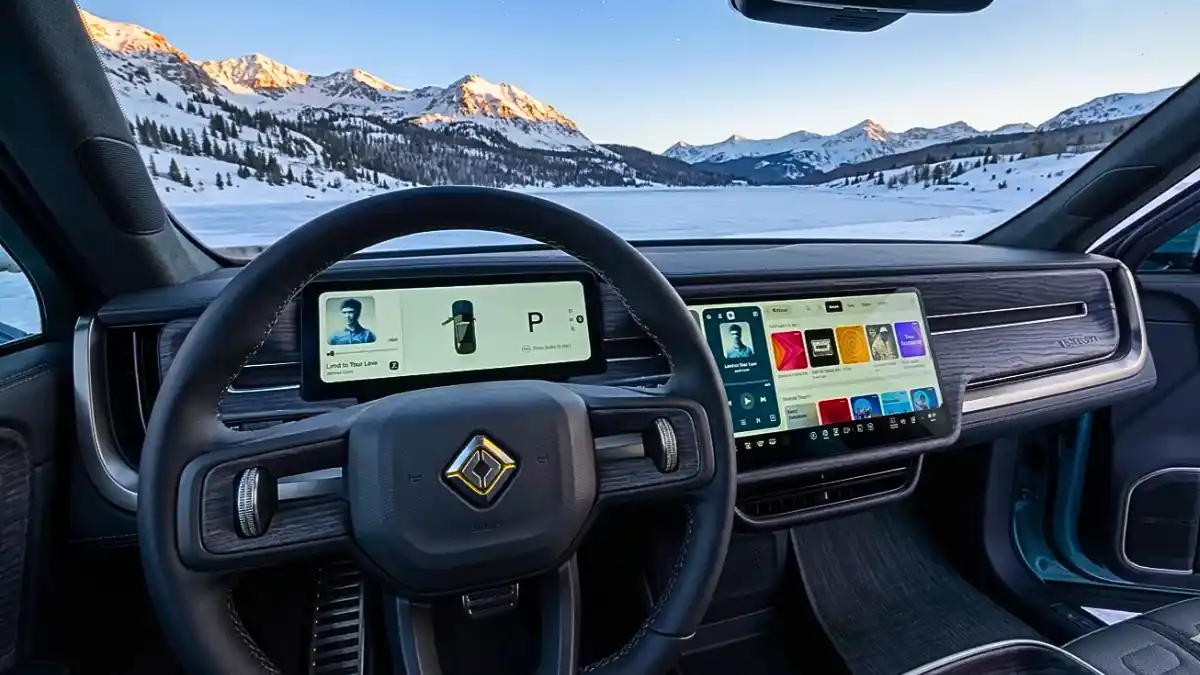
Rivian’s $5.8 billion joint venture with Volkswagen wasn’t just a cash infusion; it was a bet that the company’s electrical architecture and software stack represent a durable competitive edge. The R2 launches with an advanced driver-assistance system that can largely control itself under certain conditions, with an AI voice assistant arriving later this year. Over-the-air updates will refine both continuously. Scaringe views software as inseparable from the vehicle itself, as essential as a human heart or brain. The VW deal validates that conviction, but it also adds pressure: if the R2’s tech experience stumbles, it damages not just Rivian’s consumer reputation but its lucrative supplier relationship with one of the world’s largest automakers.
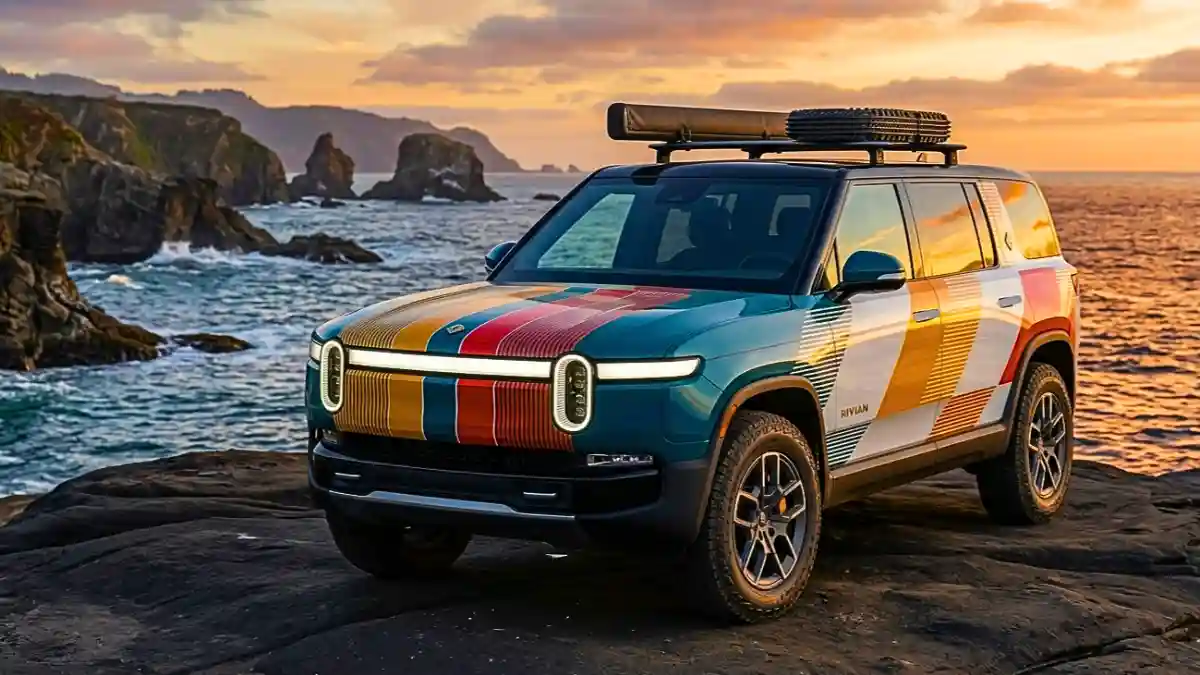
That dual identity, car company and software licensor, is uncharted territory for a small manufacturer. It demands that the R2 be flawless not just in its torque delivery and off-road capability but in its screen responsiveness and voice recognition. Tesla set that bar, and now Rivian must clear it while simultaneously building vehicles for Volkswagen.
What Comes After the Launch
Even if the R2 hits its targets, Rivian’s future remains a tightrope walk. The Georgia plant’s timeline leaves a multiyear gap where volume constraints limit gross margin, and any macroeconomic shock- a tariff spike, an EV adoption slowdown, a parts shortage- could widen the financial wound. The company also needs to prove its early reliability problems are behind it, because mainstream buyers won’t shrug off service visits the way early adopters did. Customer satisfaction scores can sour fast when a vehicle leaves a family stranded on a road trip.
Yet the ambition is real and rare. Rivian isn’t chasing a niche; it’s building a platform that will underpin the R2, the smaller R3 crossover, robotaxis, delivery vans, and more. If Scaringe pulls it off, the R2 will be remembered as the vehicle that turned a cult brand into a household name. If not, it will serve as another cautionary tale about how hard it is to make cars and how much harder it is to make them for everyone.
Also Read – 2027 Dodge Durango V-8 SUV: The Last Roar – Why Dodge Is Selling a 710-HP Family Hauler in a $4-Gallon World


Sapna is the storytelling powerhouse of the team. With a sharp eye for detail and a knack for uncovering the human interest side of automobiles, she covers everything from industry launches to feature stories. She believes that every car has a story and every rider has a journey. Her writing is known for its clarity, depth, and ability to connect with the common man.