


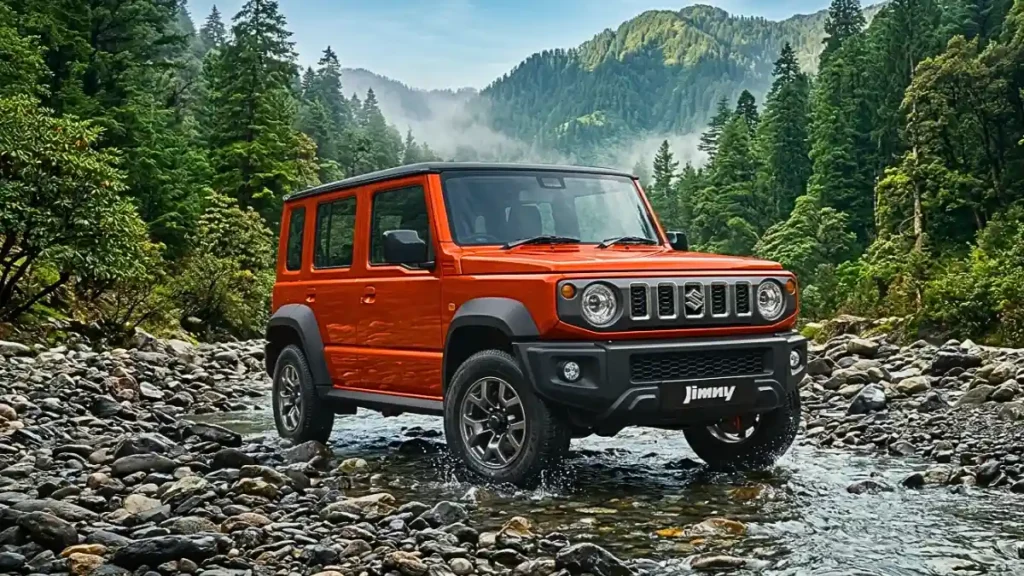

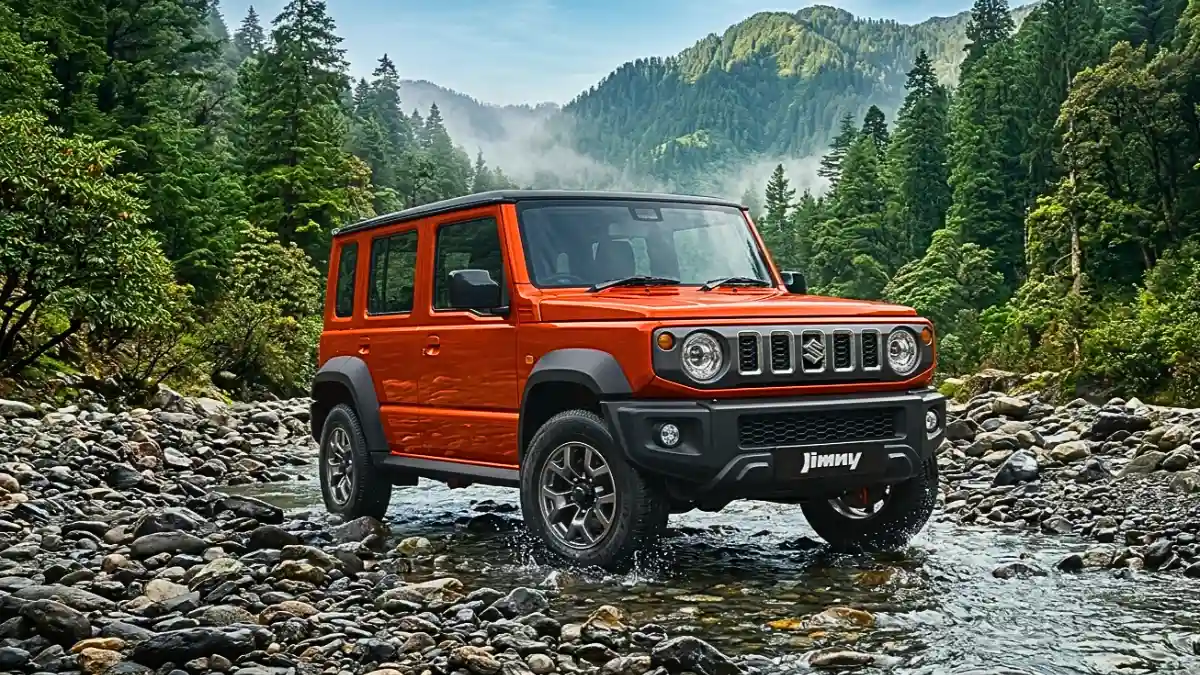
Suzuki’s cult off-roader gets its most comprehensive upgrade yet in Malaysia, and the Suzuki Jimny Malaysia variants strategy behind it tells us more about the brand’s ambitions than the spec sheet does.
The Suzuki Jimny has survived four decades of market shifts, SUV booms, and crossover mania without ever apologising for what it is. Now, two new Malaysian variants ask a harder question: can a vehicle built on honest simplicity add sophistication without losing its soul?
There is a certain breed of car buyer that is immune to features. They don’t care about ambient lighting or massaging seats. They want low-range gearing, a ladder frame, and ground clearance measured in proper inches. For decades, these buyers made the Suzuki Jimny their vehicle of choice, and Suzuki, to its credit, mostly left it alone.
That story is shifting in Malaysia. With the launch of the Jimny Allgrip Plus and the Jimny Rhino Plus, Suzuki has introduced two distinct propositions to one of Southeast Asia’s most competitive compact SUV segments. The move is deliberate, market-savvy, and worth unpacking.
Suzuki Jimny Malaysia variants strategy: Two variants, two entirely different arguments
The Allgrip Plus is, at its core, a safety and convenience upgrade. It stacks modern driver-assistance technology onto the Jimny’s proven mechanical foundation: an mmWave radar and monocular camera enable Dual Sensor Brake Support II, lane departure detection and prevention, weaving alerts, and automatic high beams. Side and curtain airbags join the standard setup, making this the first Jimny variant in Malaysia to offer meaningful passive protection for rear-seat occupants.
Practical touches round out the package: heated, power-folding mirrors for tight urban parking, a 9-inch touchscreen with wireless CarPlay and Android Auto, and automatic LED headlamps with a washer function. These aren’t features that off-road purists asked for. They are features that family buyers, urban adventurers, and fleet procurement managers absolutely do ask for.
“The Rhino Plus doesn’t add safety sensors. It adds a worldview, the idea that owning a Jimny is a statement of identity, not just a transport decision.”

The Rhino Plus, by contrast, is a design exercise with safety dividends. It draws on the visual language of the SJ series, Suzuki’s beloved 1980s off-roader, through a Heritage grille, rhino badge on the spare wheel cover, and bold “Real Offroader” decals in red, grey, and black. Red mud flaps embossed with “Jimny” lettering complete the exterior story. Mechanically, it is unchanged from the base car, but it does add six airbags over the standard two, closing the passive safety gap considerably.
Also Read – Theon Design 964 Restomod: When Less Is the Fastest Thing on the Road
The engine that refuses to leave
Both variants share the K15B 1.5-litre naturally aspirated four-cylinder, producing 101 hp and 130 Nm through a 4-speed automatic and part-time four-wheel drive. This powertrain has been a point of contention among Jimny observers for years. 101 hp barely moves the needle in a segment where turbocharged rivals regularly deliver 140–170 hp. Yet Suzuki holds firm, and there is a logic to it.
- Engine: 1.5L NA K15B four-cylinder petrol
- Power Output: 101 hp, 130 Nm of torque
- Transmission: 4-speed AT (Part-time 4WD system)
- Origin: Japan (Imported, both variants)
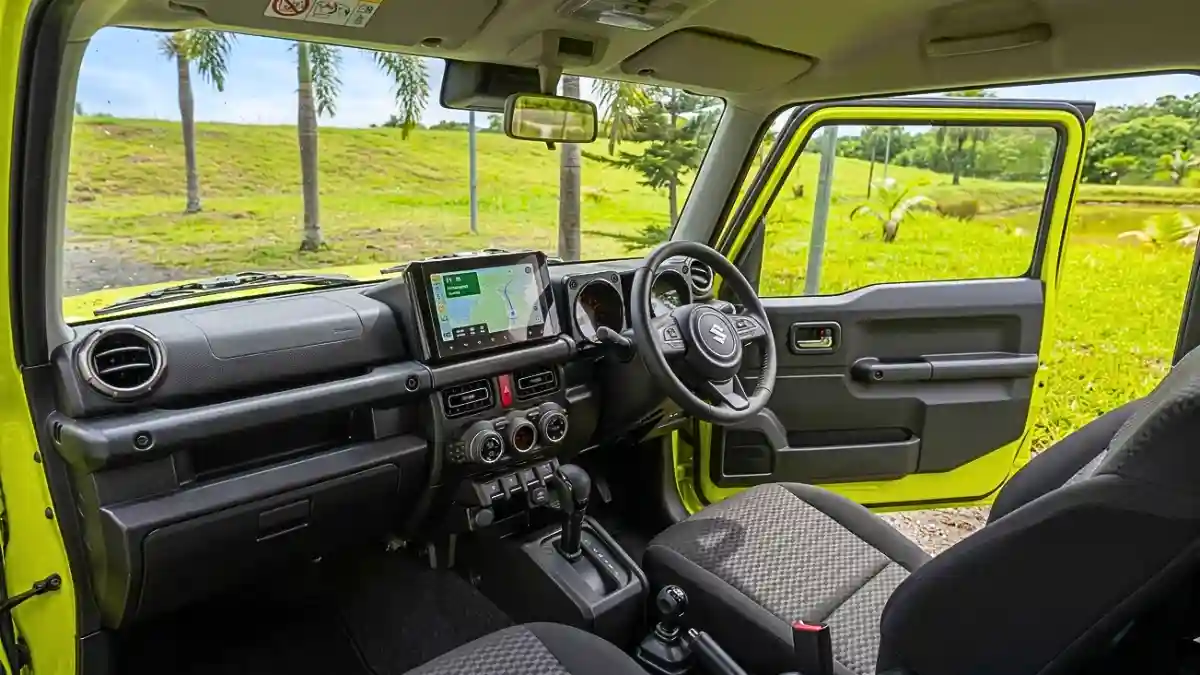
The naturally aspirated engine is simpler, more predictable under stress, and easier to repair in remote locations, exactly the conditions Jimny owners seek out. For buyers who take their vehicles into the kind of terrain where a failed turbocharger is a serious problem, reliability over specification is the rational choice. The 4-speed automatic, however, is harder to defend. With competitors offering 6- and 7-speed units as standard, the transmission contributes to the Jimny’s reputation for highway coarseness- a real trade-off if daily commuting is part of the equation.
Pricing decoded: who is Suzuki really targeting?
Allgrip Plus
- MYR 158,900 ≈ ₹37.28 lakh (excl. insurance)
- DSBS II + lane keep assist
- 9-inch touchscreen + CarPlay
- Heated power-folding mirrors
- Side & curtain airbags (6 total)
- mmWave radar + mono camera
Rhino Plus
- MYR 173,900 ≈ ₹40.80 lakh (excl. insurance)
- SJ Heritage grille + Rhino badge
- “Real Offroader” hood/door decals
- Red mud flaps with Jimny lettering
- 6 airbags (vs. 2 in standard)
- Front & side bumper garnish
The MYR 15,000 premium that separates the Rhino Plus from the Allgrip Plus is a telling figure. Buyers paying for it receive no additional active safety features, no mechanical upgrade, and no new powertrain option. What they receive is identity, a visual story rooted in Suzuki’s SJ heritage that communicates something to onlookers and to the owners themselves. In a segment where differentiation is increasingly visual, that premium has real market logic.
Why this matters beyond Malaysia
Suzuki’s approach in Malaysia should be read as a template. Southeast Asian markets have historically absorbed the Jimny’s limitations in exchange for its character, but they are becoming more demanding. Safety legislation is tightening across ASEAN, and consumer expectations, shaped by Korean and Chinese rivals with generous standard equipment, are rising fast.
The Allgrip Plus directly addresses this: it brings the Jimny into compliance with the safety expectations of buyers who would previously have dismissed it. The Rhino Plus speaks to a different anxiety: the fear that cars are becoming appliances, indistinguishable from one another. It is Suzuki’s answer to the heritage-buyer trend that has revived Land Rover Defenders and Broncos across global markets.

Whether India follows with similar variant logic is an open question. The Jimny’s 5-door version competes in a far more price-sensitive segment there, and neither variant’s pricing would translate without adjustment. But the strategy- safety technology for one audience, identity for another- is one that Maruti Suzuki’s product planners will be watching closely.
The honest verdict
The Jimny Allgrip Plus is the more significant vehicle. It represents Suzuki’s clearest acknowledgement that the Jimny’s original audience- young, adventurous, unbothered by spec sheets, has grown older and is now making different demands. A 9-inch infotainment screen and lane-keep assist don’t compromise the car’s off-road credentials, but they do make it easier to justify to a partner, a parent, or a fleet manager.
The Rhino Plus is charming for exactly the reasons that make it commercially risky: it charges a significant premium for aesthetics in a market where value-consciousness is a default setting. Its success will depend almost entirely on whether Suzuki’s Malaysian customer base has developed the brand loyalty and identity investment that makes a “heritage edition” feel essential rather than extravagant.
Both variants are imported from Japan, which speaks to quality control but limits pricing flexibility. For now, Suzuki is betting that the Jimny’s mythic status; rare, genuine, uncompromising, can sustain a premium that logic alone wouldn’t justify. Based on the car’s track record, that might be the safest bet in the segment.
Also Read – 2027 Dodge Durango V-8 SUV: The Last Roar – Why Dodge Is Selling a 710-HP Family Hauler in a $4-Gallon World


Rohit is the visionary behind CarBikeJunction. With over a decade of experience in automotive journalism and a deep love for mechanical engineering, he ensures that every piece of content that goes live meets the highest standards of quality and accuracy. As Editor-in-Chief, he oversees the editorial direction of the website and is often found test-driving the toughest SUVs or analyzing market trends. His leadership is the driving force behind our platform.