



The Hyundai Elantra Hybrid recall, involving more than 54,000 vehicles, isn’t just another routine safety notice lost in the weekly flood of automotive paperwork. It’s a lucid, real-world demonstration of how the electrified age is redrawing the line between mechanical reliability and digital command, and how a few lines of missing code can bring a car closer to a fire than a faulty fuel line ever did.
The numbers are stark but not exceptional: 54,337 vehicles from model years 2024 through 2026, all wearing the Elantra Hybrid badge. The culprit is the Hybrid Power Control Unit, or HPCU, a component most drivers will never see, bolted somewhere beneath the hood, silently choreographing the high-voltage dance between the gasoline engine, the electric motor, and the battery. In these cars, under particular electrical loads, the unit can overheat. Localized heat damage can follow. Hyundai has logged four incidents so far, including one vehicle fire. No crashes, no injuries. That’s the sparing language of a federal recall notice. Behind it sits a deeper, more instructive story about how modern cars keep their cool, or fail to.
The Brain That Forgot to Breathe: Inside the Hyundai Elantra Hybrid Recall
Think of the HPCU as the hybrid system’s chief operating officer. It decides when to pull power from the battery, when to feed it back in, how much torque the electric motor contributes, and how to blend it all without the driver noticing the seams. All that switching and converting creates heat, a lot of it, concentrated in a small space. To survive, the HPCU needs an active thermal strategy: cooling pumps, fans, and, crucially, a software map that predicts and reacts to temperature spikes before they become dangerous.
Here’s where Hyundai’s problem turns illuminating. This is not a recall about a cracked casting, a leaky seal, or a supplier’s batch of defective capacitors. It’s a software deficit. The existing code, the company says, “does not provide sufficient cooling” when electrical loads run high. In other words, the algorithms that should have ramped up cooling or dialed back power to protect the hardware didn’t intervene aggressively enough. The hardware itself may be fundamentally sound, but it was left to run thermally blind, and at least once, that blindness led to a fire.
That’s a shift worth pausing over. For more than a century, automotive safety defects have usually traced back to physical things: a brittle bolt, a fatigued spring, a chemical instability. Today, a vehicle’s safety can hinge on the sophistication of a thermal model buried inside a control unit’s firmware. The code doesn’t just control the infotainment screen; it guards against catastrophic failure. The Elantra Hybrid recall is a sobering reminder that, as cars become more electrified, the difference between a safe commute and a smouldering roadside stop can be a missing temperature threshold in a lookup table.
Also Read – IIHS Rear Seat Safety Standards 2026: One Flaw, No Prize—How a Single Test Redefined What Makes a Car Safe
Why Software Became a Firewall (Literally)
Hybrid and electric vehicle power electronics live on a thermal knife-edge. Engineers push them hard to minimize size, weight, and cost, which leaves narrow safety margins. A typical HPCU might operate comfortably at 70°C but start degrading internally at 120°C. Semiconductors don’t fail gracefully; they can enter thermal runaway, where heat accelerates leakage current, which creates more heat, until something melts, chars, or ignites.
Cooling systems are the obvious countermeasure, but they’re not autonomous. The software managing them must continuously interpret sensor data, anticipate load patterns, and send commands to variable-speed pumps and fans. If the calibration is too conservative, the system runs cool but leaves performance on the table. If it’s too aggressive, the vehicle feels sprightly but edges closer to dangerous territory. Hyundai’s admission suggests the pendulum swung too far toward responsiveness, and the cooling strategy didn’t catch up in time.
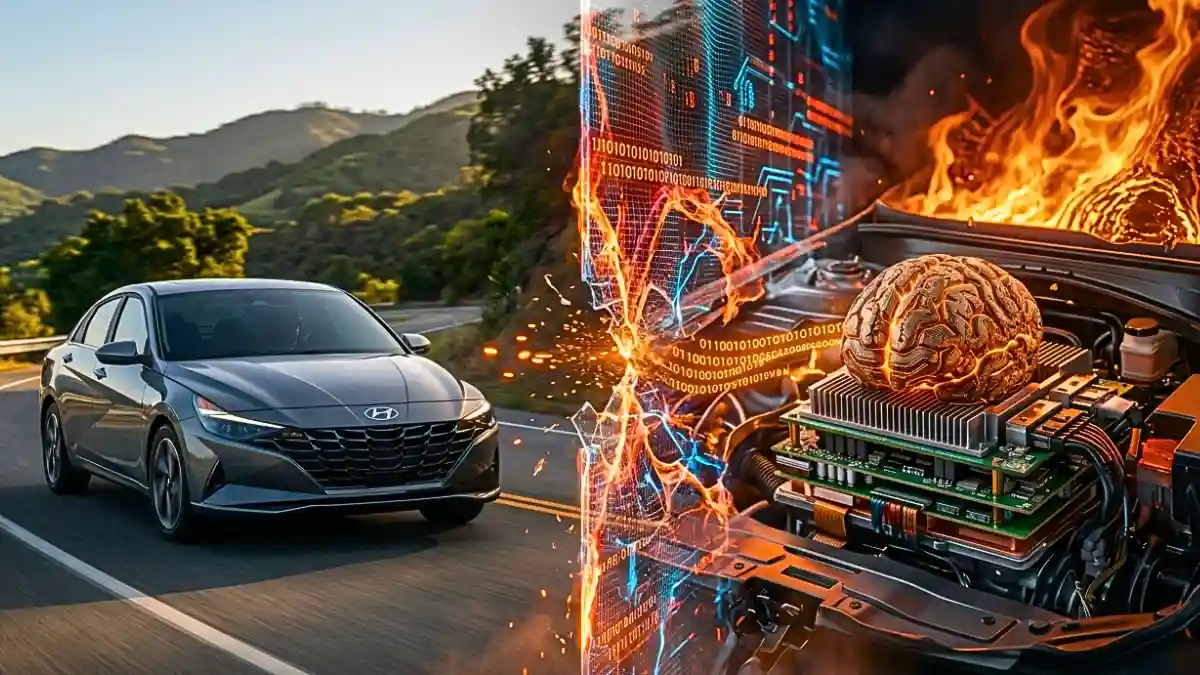
What makes this particularly tricky is that “high electrical loads” aren’t just about mashing the accelerator. They can occur during prolonged highway climbs in hot weather, repeated regenerative braking on a long downhill stretch, or fast charging adjacent systems that indirectly heat the entire high-voltage loop. Replicating those edge cases in a lab, years before a vehicle goes on sale, requires exceptionally rigorous simulation and real-world testing. Hyundai’s rapid identification of the issue, the affected population covers models built across three calendar years, hints that a pattern may have appeared in warranty data or remote diagnostics before it became a widespread safety concern. That’s a sign of maturing data surveillance in the industry, but it’s also a humbling reminder that even robust validation can miss subtle thermal vulnerabilities.
The Fix Is Invisible — and That’s the Point
Owners will receive notification letters by mid-July, and the remedy is a dealer-applied software update. No parts to replace, no hardware swapped out. In the near future, such a fix might arrive over the air, without a service visit at all. Hyundai will also reimburse out-of-pocket expenses related to the recall condition, a customer-friendly gesture that acknowledges real-world inconvenience for those who may have paid to diagnose a no-start or reduced-power complaint before the recall was announced.
The simplicity of the correction underscores the dual nature of software-defined vehicle components. When a problem exists only in code, the solution can be startlingly elegant, no physical teardown, no parts backlog, no metal scrap. But it also means a defect that could lead to a fire was not a material flaw that might have been caught by a supplier’s quality inspector with a pair of callipers; it was an intellectual oversight, invisible to traditional inspection, lurking in hexadecimal until the right driving scenario unearthed it.
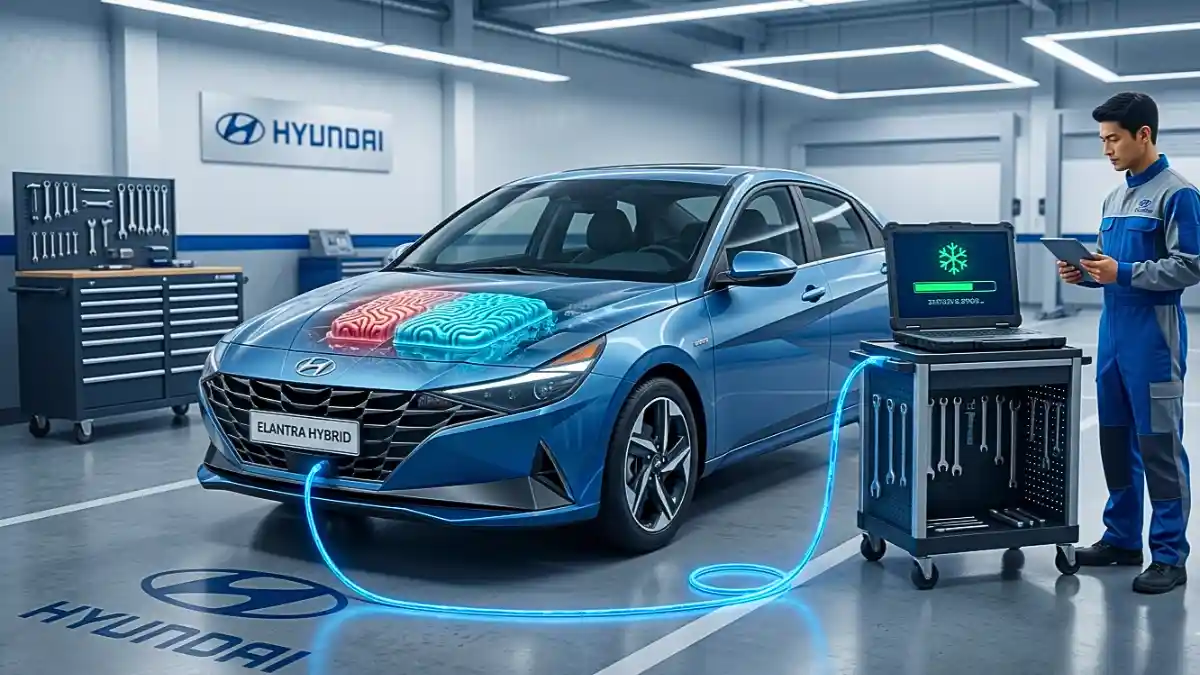
This shifts the burden on manufacturers and regulators. Software-intensive recalls are cheaper to fix but harder to find. They demand new audit processes, more sophisticated simulation, and a vigilance that extends far beyond the factory gate. The NHTSA notice for this recall lands at a moment when the agency is scrutinizing automaker software practices across the board, from driver-assistance systems to battery management, and the Elantra Hybrid case may become a quiet reference point in future policy discussions about how software-driven thermal protections should be validated and verified.
Also Read – The Anti-Tech Revolution: Why Toyota’s Most Reliable 2026 Car Is a Masterclass in Restraint
What Comes Next: The Industry Under the Thermal Spotlight
Hyundai isn’t alone in wrestling with power electronics cooling. Almost every major automaker has issued at least one recall related to high-voltage component temperatures in the last five years, spanning plug-in hybrids, pure electrics, and conventional hybrids. The underlying challenge is intensifying as engineers chase faster charging, higher power density, and more integrated modules. A next-generation HPCU might combine the onboard charger, DC-DC converter, and motor inverter into a single unit, a marvel of packaging that also concentrates heat in ways that demand even more sophisticated thermal management algorithms.
For consumers, the episode serves as a low-decibel alarm bell. The electrified car you drive is dependent on layers of active protection that you cannot see, smell, or feel until something goes wrong. That’s not fundamentally different from a gasoline car, where a fuel line leak or a stuck thermostat can also spell disaster, but the digital nature of the defense line changes the nature of trust. You’re relying on the manufacturer to have written code that will protect you even in scenarios its engineers never physically tested.
Hyundai’s response, a clean software update, no-cost service, and reimbursement, ticks all the boxes of a modern, responsible recall. The risk to the average owner is statistically tiny. Yet the presence of one verified fire out of 54,000 vehicles means the thermal runaway scenario isn’t theoretical. The recall’s real legacy may be how it quietly reinforces a truth the industry sometimes glosses over: electrification is a thermal challenge as much as a chemical one, and the algorithms keeping things cool deserve the same obsessive attention as the hardware they protect.
For owners of these Elantra Hybrids, the immediate step is clear: watch for the letter, book the appointment, and drive assured that a missing line of code is about to be filled in. For everyone else, the takeaway is broader. Next time you hear a recall described as “just a software issue,” remember that software now stands between a harmless commute and a fire nobody saw coming.


Rohit is the visionary behind CarBikeJunction. With over a decade of experience in automotive journalism and a deep love for mechanical engineering, he ensures that every piece of content that goes live meets the highest standards of quality and accuracy. As Editor-in-Chief, he oversees the editorial direction of the website and is often found test-driving the toughest SUVs or analyzing market trends. His leadership is the driving force behind our platform.