


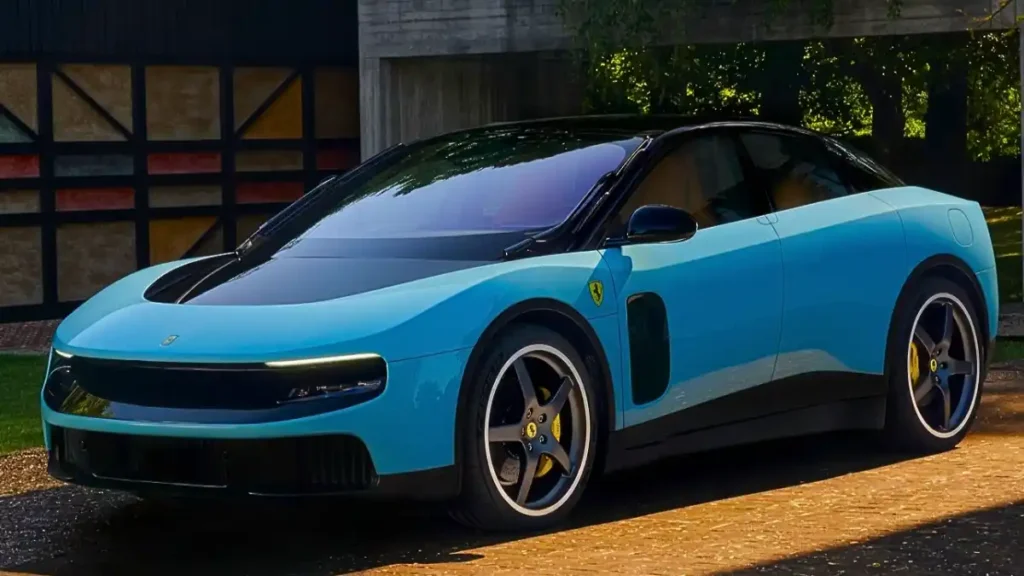

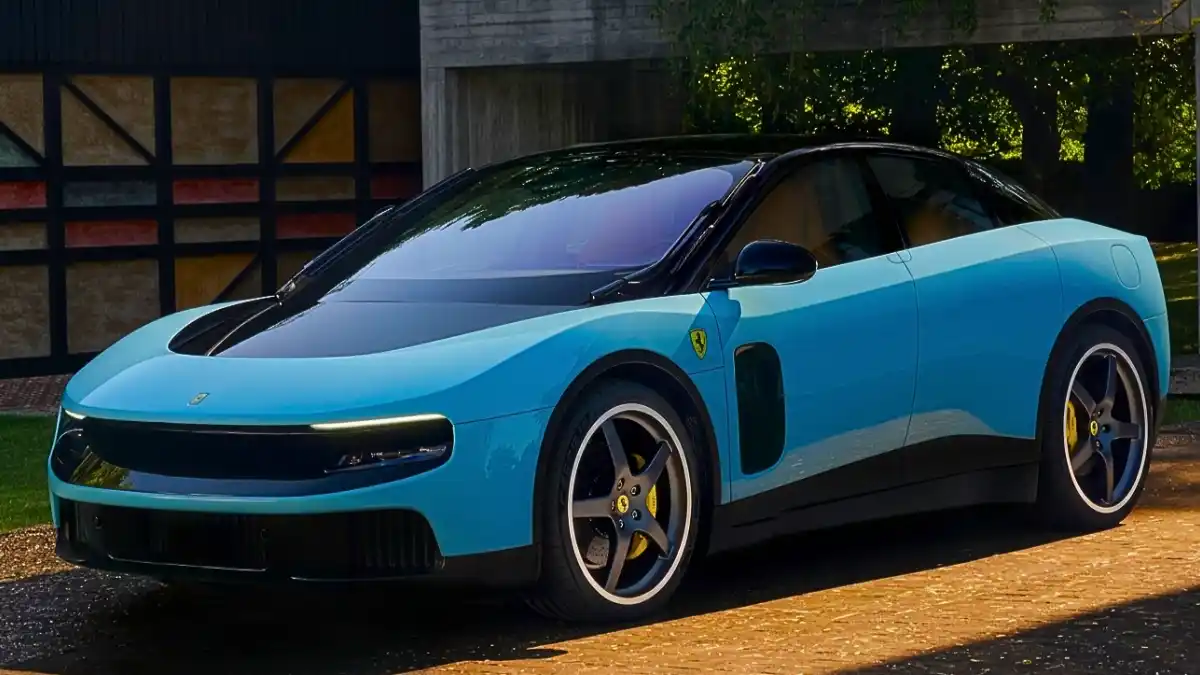
Ferrari has never built a car for everyone. But with the unveiling of its first fully electric model, the $640,000 Ferrari Luce electric car, Maranello isn’t merely testing the battery-powered waters. It’s attempting something far more audacious: proving that an electric powertrain can carry the emotional weight, exclusivity, and long-term desirability that have defined the prancing horse for nearly eight decades. The Luce doesn’t just signal a new chapter for Ferrari; it reveals a carefully calculated philosophy about how ultra-luxury brands can survive and even thrive in an era of cheap, fast, and disposable electric cars.
Ferrari Luce electric car: A Bet on Timelessness in a Throwaway World
Buried beneath the outrage over the Luce’s unconventional silhouette is one of the most strategically significant details Ferrari has ever announced: every major component of the car is made in-house, explicitly so that the company can repair it well into the future, protecting resale value. That might sound like a footnote in a launch story, but it’s a deliberate counterpunch to an uncomfortable truth about modern EVs. Most battery-powered cars depreciate catastrophically, not just because of battery degradation, but because their integrated, black-box electronics are essentially unserviceable outside of a narrow factory window. Ferrari, a brand whose 1960s GTOs now trade for upwards of $70 million, understands that its customers aren’t buying transportation; they’re acquiring assets with a narrative. The promise of multi-decade factory support for bespoke electric motors and power electronics isn’t just good after-sales, it’s a direct statement that the Luce is designed to be collectable, not just quick.
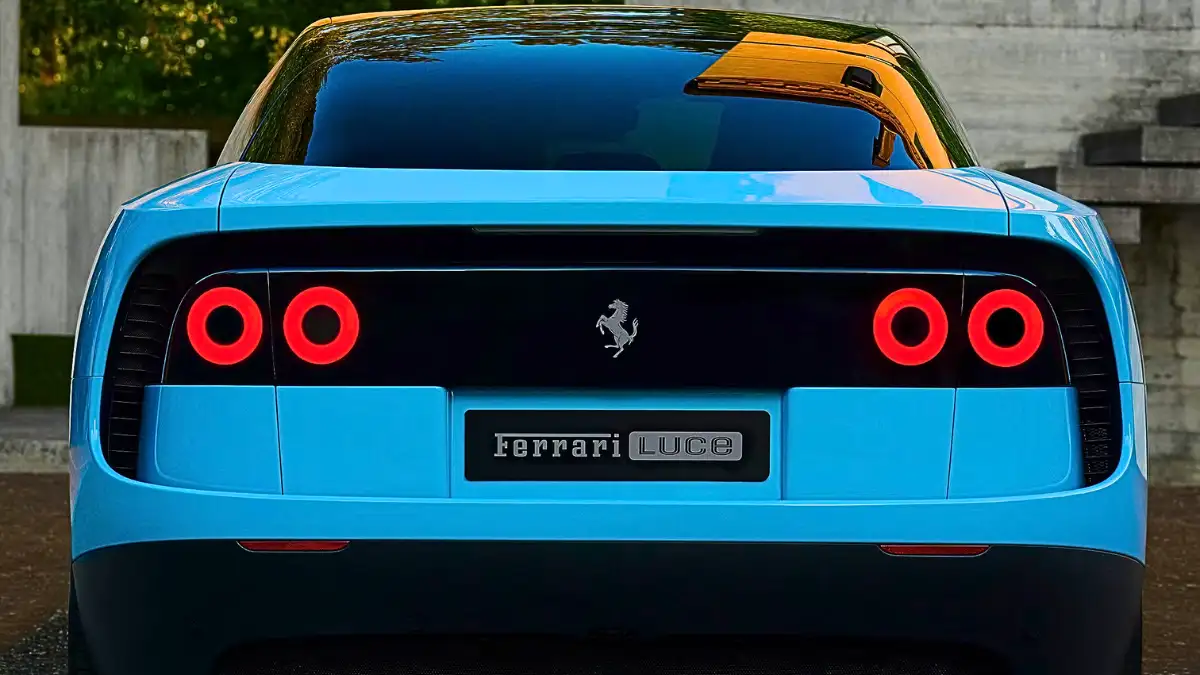
The decision to place a Ferrari-made electric motor at each wheel further underscores this ambition. That quad-motor layout, enabling a 0-60 mph time of around 2.5 seconds, is not a parts-bin solution. It’s engineering independence. While many luxury EV makers source motors, inverters, and battery packs from a shrinking pool of global suppliers, Ferrari is replicating the vertical integration that once defined its V12 engines. This insulation from third-party obsolescence could, over time, become a unique selling point that no spec sheet can capture, especially as rival products from Chinese manufacturers flood the market with vehicles that are relentlessly fast but often impossible to economically repair after a few years.
Also Read – The Unseen Danger in Your Driveway: The Jeep Cherokee PTU Recall and a Flaw That Parks Itself
Ferrari Luce electric car: The Design Gamble – Offending Purists to Seduce the Future
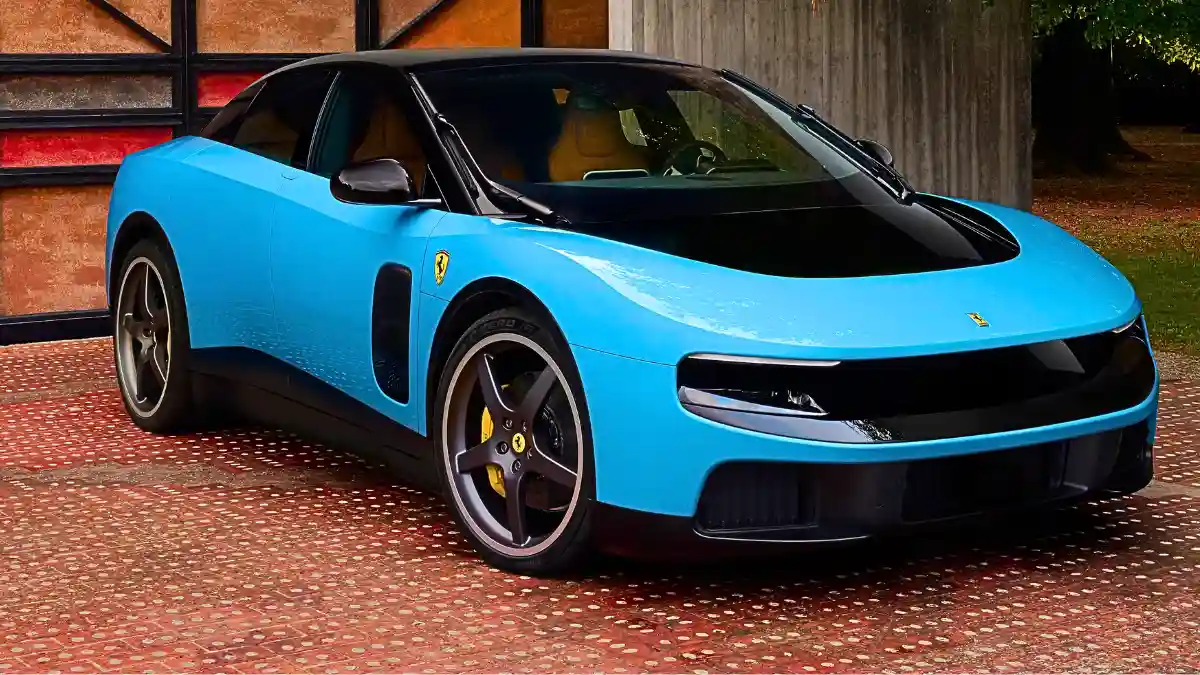
The most visceral reactions to the Luce have, predictably, centred on its appearance. Created in collaboration with LoveFrom, the agency founded by former Apple design chief Sir Jony Ive, the car is a radical departure. It’s not just that it’s a five-seater, a first for a brand synonymous with tightly wrapped two-seat cockpits, but that the entire visual language appears to have been scrubbed of the aggressive, aero-driven aggression that has defined Ferrari styling for decades. Social media verdicts have been as extreme as the design itself, ranging from “absolute masterclass” to “straight to the junkyard trash.”
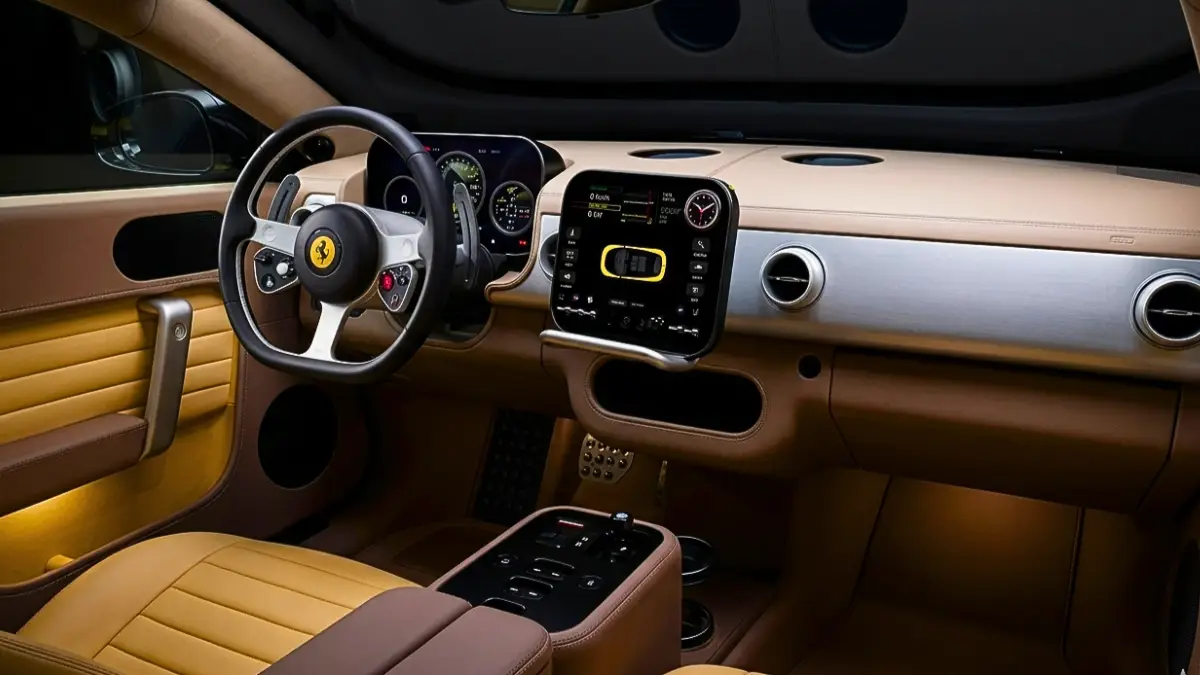
A less confident car company might panic. Ferrari’s chief design officer, Flavio Manzoni, instead acknowledged the polarisation as part of the innovation process, telling interviewer Cleo Abram that he expects appreciation to grow with time. There’s history to support that view. When Ferrari introduced the mid-engine Berlinetta Boxer in the 1970s, purists bemoaned the loss of the classic front-engine, V12 grand tourer. More recently, the hybrid LaFerrari faced initial scepticism that evaporated the moment people understood its performance. The Luce’s design gamble, however, carries a different kind of risk: it doesn’t just evolve the portfolio, it appears to carve out an entirely new typology that could either attract a new tier of hyper-wealthy clientele or alienate the very collectors who sustain the brand’s mythology. The involvement of Ive, a designer who has arguably shaped more daily human interactions with objects than any other living person, hints that Ferrari is no longer designing just for the racetrack refugee; it’s designing for a lifestyle that sees a Ferrari as a piece of considered architectural space, not merely a weapon for a mountain pass.
Ferrari Luce electric car: Rivals Retreat, Ferrari Charges Ahead – The Calculus of Exclusivity
To understand the magnitude of Ferrari’s electric bet, it helps to look at what its competitors are doing or, more accurately, not doing. Lamborghini has publicly abandoned plans for a fully electric car in the near term, pivoting to hybrids while citing insufficient demand for high-end luxury EVs. Porsche, with its Taycan already on the market, has been scaling back electrification ambitions, caught between crumbling sales in China and the threat of US tariffs. Both moves reflect a wider anxiety: affluent buyers, particularly in markets where charging infrastructure remains patchy, and government incentives are being rolled back, simply aren’t migrating to battery power with the urgency that product planners anticipated three years ago. Add the relentless price competition from Chinese automakers who can develop and ship a premium EV in half the time of a legacy European carmaker, and you have a recipe for paralysis.
Ferrari, however, operates under a different economic gravity. As Europe’s most valuable carmaker, it has deliberately kept volumes low and waiting lists long, insulating it from the mass-market dynamics that are squeezing rivals. The Luce is not a response to regulatory coercion, though emission targets certainly play a role, but an attempt to define the top end of the EV market before anyone else can. Where a Porsche Taycan Turbo GT competes in a performance bracket that overlaps with heavily subsidised Chinese sedans, a $640,000 Ferrari, limited in production and dripping with in-house craftsmanship, competes with nothing else. It is a spatial lock on the ultra-luxury EV segment, planted years before Bentley, Rolls-Royce, or Aston Martin can field truly bespoke electric platforms at scale.
The timing is not without its dangers. Ferrari’s share price has dropped more than 25% in the past year, reflecting a broader luxury slowdown as inflation gnaws at the purchasing power of even the wealthiest buyers. Some analysts will see the Luce as an expensive distraction when petrol and hybrid Ferrari models still command multi-year waitlists. But that critique misses the point. Ferrari is not replacing its V12s; it’s adding a new pillar. The company has explicitly stated that combustion and hybrid cars will continue alongside the Luce, meaning the brand isn’t betting the farm on electrification; it’s hedging its legacy with a product that can capture the cultural imagination without cannibalising the core business.
Also Read – The Mitsubishi Lancer Evolution Time Capsule: A 722-Mile Window into Everything We Lost
What the Ferrari Luce electric car Means for the Future of Luxury Electric Cars
The Luce is, above all, a test case for whether an electric vehicle can function as a genuinely aspirational object beyond its novelty. The Jaguar Type 00 concept fiasco showed how badly a heritage brand can stumble when it abandons visual continuity without offering a compelling new narrative. Ferrari seems to have anticipated that pitfall: by having Jony Ive shape a design language that leans more into architecture and product design than automotive tradition, the Luce sidesteps direct comparison with the brand’s back catalogue entirely. It doesn’t need to look like a 250 GTO because it’s not playing the same game. It wants to be judged as an object of desire in its own right, one that happens to bear a Ferrari badge and can outrun most supercars.
For the broader industry, the Luce’s emphasis on long-term serviceability could set a new standard that regulators and consumer advocates have been quietly demanding. If a hypercar maker can promise that its bespoke EV will be repairable and retain value, it becomes harder for mass-market manufacturers to argue that sealed, unserviceable battery packs are an engineering inevitability. In that sense, Ferrari might once again serve as a laboratory for ideas that trickle down, much as carbon-fibre monocoques and ceramic brakes did decades ago.
The coming months will reveal whether the Luce’s polarising design matures into the kind of admiration that Manzoni expects. But regardless of aesthetic judgments, the strategic intent is clear. Ferrari isn’t chasing the electric trend; it’s trying to define what electric luxury should mean, scarce, enduring, and emotionally layered, at the exact moment when most Western carmakers are scrambling to retreat. In an industry awash with me-too electric SUVs and horsepower wars nobody can feel on a public road, the Luce’s greatest trick may be that it makes electricity feel rare again.
Also Read – Hyundai Phantom Braking Recall 2026: When Safety Systems Become the Threat


Rohit is the visionary behind CarBikeJunction. With over a decade of experience in automotive journalism and a deep love for mechanical engineering, he ensures that every piece of content that goes live meets the highest standards of quality and accuracy. As Editor-in-Chief, he oversees the editorial direction of the website and is often found test-driving the toughest SUVs or analyzing market trends. His leadership is the driving force behind our platform.