


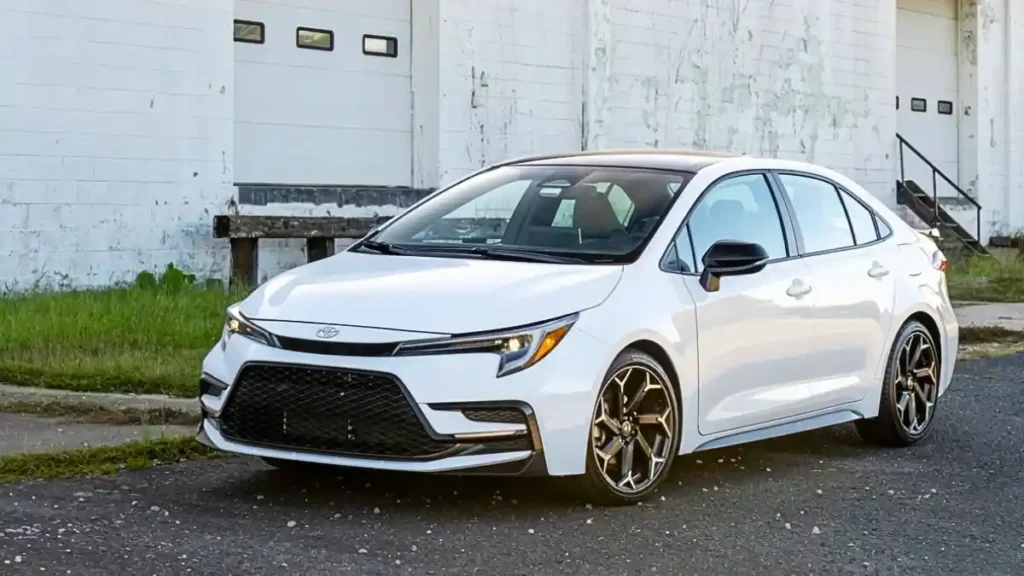

For years, the back seat was assumed to be the safest place in the car. Parents buckled children there without a second thought. Ride-share passengers slid in, trusting the engineering around them. The 2026 Toyota Corolla just reminded us that trust can be misplaced — and the introduction of IIHS rear seat safety standards 2026 has quietly changed the rules of the game. This isn’t just a story about one model missing an award. It’s a signal about where automotive safety is heading, and who gets left behind in a crash.
The Rear-Seat Reckoning: IIHS Rear Seat Safety Standards 2026
Automakers spent the last two decades obsessively engineering the driver’s survival zone. Airbags, crumple zones, seatbelt pretensioners — all optimized for the person behind the wheel. The rear passenger, often a child, an elderly parent, or a friend on a night out, was an afterthought. The assumption? If the front structure held, the back would too.
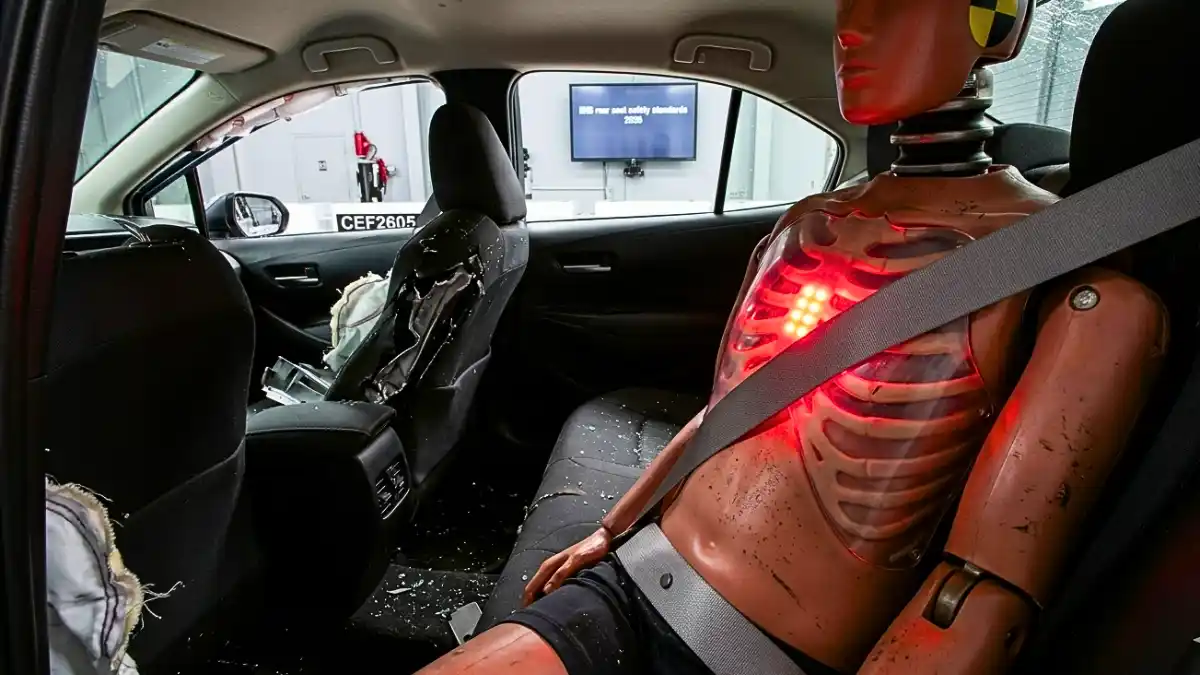
The IIHS didn’t accept that anymore. The updated moderate overlap front test — the same crash scenario that simulates two vehicles hitting partially head-on at 40 mph — now pays ruthless attention to the dummy in the second row. Specifically, it measures chest compression and the effectiveness of rear restraints. If the belt allows too much forward excursion, if the dummy’s ribcage takes too much force, the score plummets. And for the 2026 Corolla, it did.
Also Read – The Mitsubishi Lancer Evolution Time Capsule: A 722-Mile Window into Everything We Lost
A Report Card Full of A’s — and One C
It’s worth being clear: this isn’t a car that failed across the board. The Corolla sailed through the small overlap front test, the updated side test, and all crash avoidance evaluations, earning the top “Good” rating. Toyota’s collision mitigation system performed flawlessly with both vehicles and pedestrians in day and night conditions. Headlights, child restraints, seatbelt reminders — all scored at the highest tier.
Then came the single blemish. In the moderate overlap test, the rear passenger dummy recorded chest measurements that fell into the “Marginal” category, one step above “Poor.” The rear restraints, too, were deemed marginal. Because the IIHS demands consistent excellence for its Top Safety Pick award, that lone weak spot was disqualifying. You can ace six categories, but if the seventh is a concern for a human body in the back, the trophy stays on the shelf.
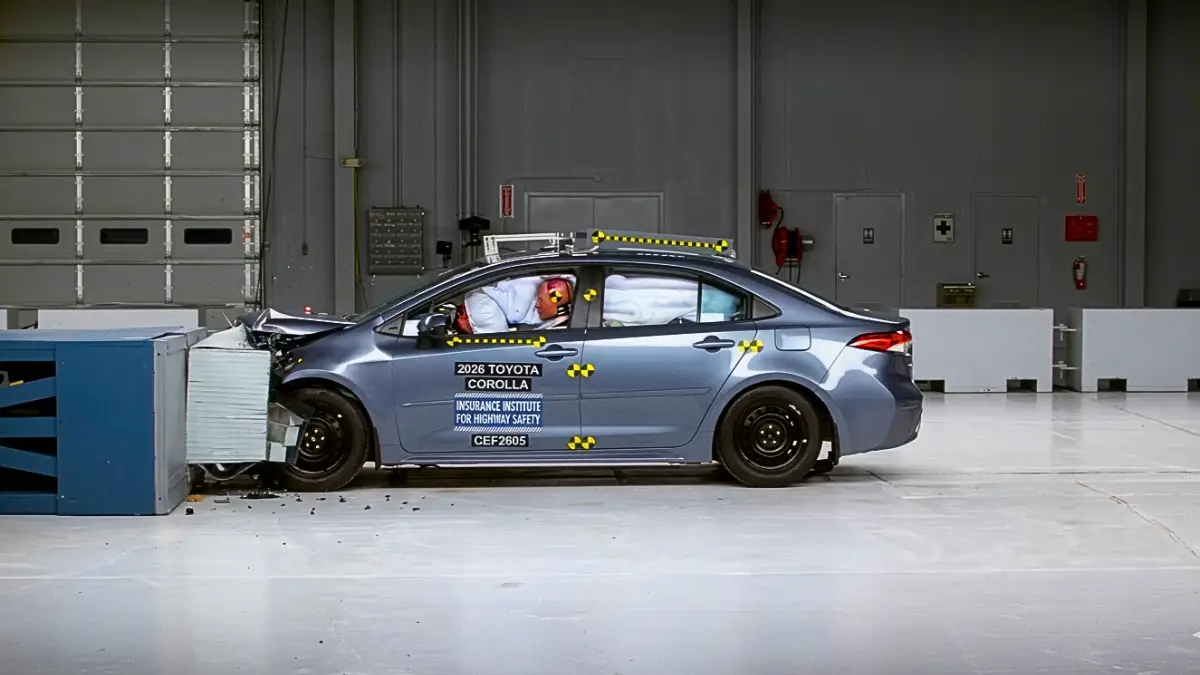
This isn’t about nitpicking. The criteria reflect real-world outcomes. A marginal chest injury reading translates to a measurable risk of rib fractures, internal organ damage, or worse for a back-seat occupant in a common crash type. The Corolla’s side-impact test also showed “Average” torso protection for both driver and passenger, though the overall rating remained Good. The cumulative message: in a car that otherwise gets so much right, a manufacturer’s oversight on rear-passenger kinematics stands out like a crack in a dam.
Why Back-Seat Safety Suddenly Has a Spotlight
For decades, automotive safety ratings focused on drivers because data showed they were at greater risk in frontal collisions. But as vehicle structures improved and belt use rose, the fatality gap narrowed — and a new problem emerged. Research from the IIHS and other agencies began revealing that rear-seat occupants, especially older adults and those not optimally restrained, were sustaining serious chest injuries because rear belts often lack the load limiters and pre-tensioners common in front seats. Children in boosters could submarine under belts in certain impacts. The old assumption that “the back is always safer” no longer held up under modern crash physics.
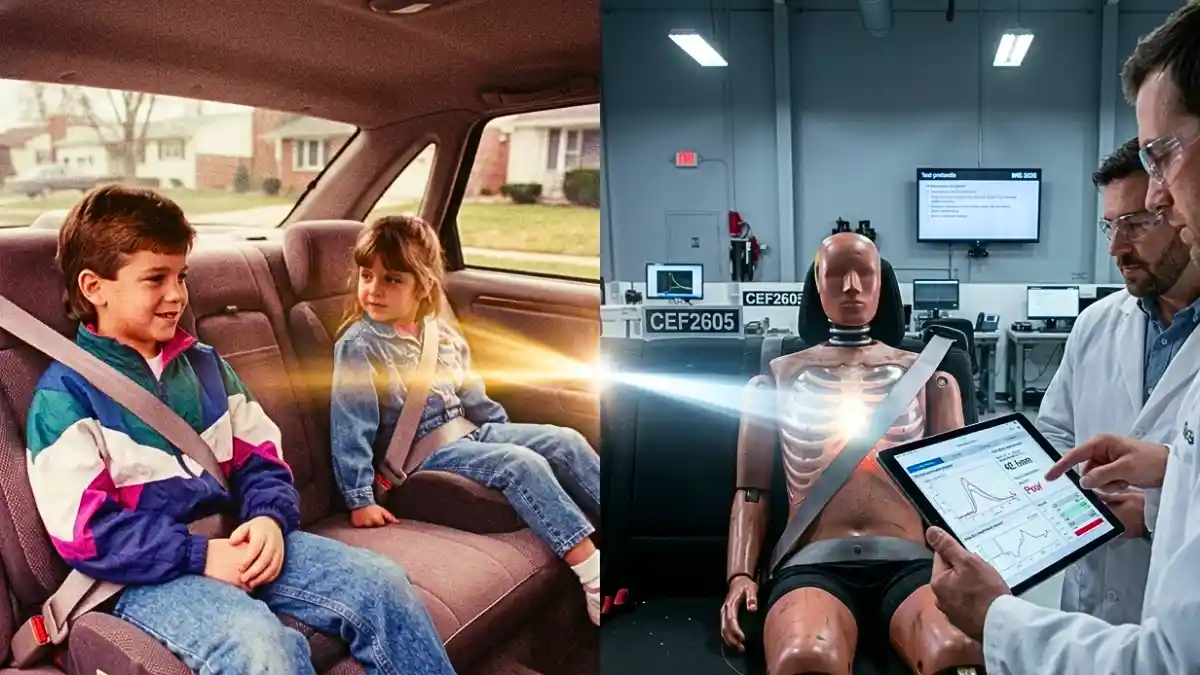
The institute’s decision to weight rear-dummy performance so heavily in its 2026 scoring is a direct response to that data. They’re not inventing new crashes; they’re shining a harsh light on gaps the industry quietly tolerated. The Corolla’s result suggests that Toyota’s restraint tuning — possibly the lack of force limiters on rear belts, or a seat cushion design that allows the pelvis to slide forward — needs attention. It’s an engineering detail, but one with life-altering consequences.
The Quiet Challenge Hitting the Whole Compact Class
The Corolla is not an outlier. It’s the canary in the coal mine for an entire segment of affordable sedans and hatchbacks. Compact cars operate on razor-thin margins, both financially and in terms of weight. Adding sophisticated rear-seat restraint systems means more cost, more complexity, and potentially more weight that hurts fuel economy. For years, manufacturers could deprioritize that investment because no one was measuring it so publicly. Now the scoreboard has changed.
Expect other mainstream models to face similar shock when the IIHS publishes their evaluations. The update isn’t a secret — the institute announced the protocol changes well in advance — but integrating new safety engineering into a vehicle platform that may not see a major refresh for years is difficult. Some brands will have already adapted; others will be caught out. The Corolla’s narrow miss is a preview of a broader industry sorting, one where “good enough for the driver” no longer meets the standard.
Also Read – The Unseen Danger in Your Driveway: The Jeep Cherokee PTU Recall and a Flaw That Parks Itself
What Toyota Can Do Next — and What It Means for the 2026 Model You Can Buy
A marginal score in a single sub-category is fixable, and Toyota engineers have multiple levers to pull. They can recalibrate the rear seatbelt load limiter to reduce chest compression, tweak the seat cushion geometry to prevent submarining, or introduce a small pre-tensioner on the rear outboard seats. In some cases, a software update to belt retraction logic and even minor changes to seatback stiffness can shift dummy readings enough to reach a Good rating.
The question is timing. The 2026 Corolla is already in production. A running change later in the model year is possible, and if Toyota retests and earns the Top Safety Pick retrospectively, it would restore the car’s status for consumers who buy the updated version. For now, though, anyone purchasing a 2026 Corolla before a potential fix should know: the car is exceptionally safe in almost every measurable way, except that specific risk to a rear passenger’s chest in a moderate overlap front crash. That’s a nuance most buyers never had to consider before.
What This Means for You, the Car Buyer
Safety awards have always been marketing tools, but IIHS ratings are genuinely predictive. A marginal rating isn’t a reason to panic; it’s an invitation to ask harder questions. If you frequently carry people in the back — think teenagers, aging parents, carpools — the Corolla’s rear-seat chest protection matters more to you than, say, its pedestrian-detection score. If you drive solo most of the time, the rest of the car’s stellar performance is still in your favor.
The bigger shift is cultural. For the first time, the safety conversation is explicitly about equality between front and rear occupants. The Corolla didn’t “fail” — it revealed where the bar has risen. In a few years, we’ll likely look back at this moment as the point when automakers stopped designing second-row safety as an afterthought and started treating it as an engineering priority. That’s good for everyone, even if it means a few long-standing favorites have to scramble to catch up. The prize was lost over one metric, but the real victory is that the people in the back finally matter as much as the person at the wheel.
Also Read – Volvo Burnt the Combustion Engine Blueprint — No More Engine Factories, No Looking Back


If it runs on electricity or has a microchip, Rahul is on it. As our resident tech geek and electric vehicle (EV) specialist, Rahul decodes complex technologies into simple language for our readers. He stays ahead of the curve on battery technology, autonomous driving, and the latest digital trends in the automotive sector. If you want to know the real range of an EV or the future of mobility, Rahul has the answers.