


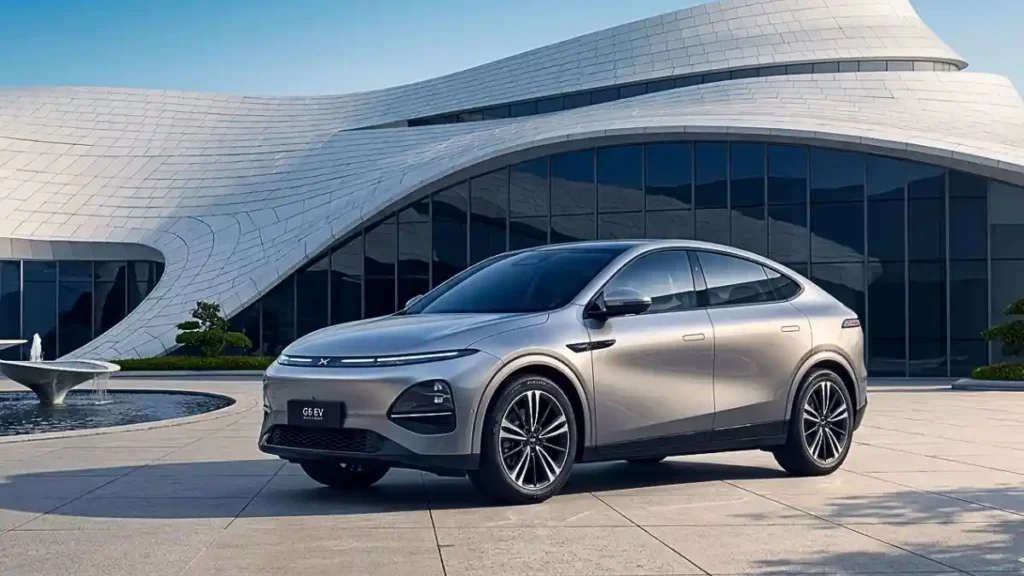

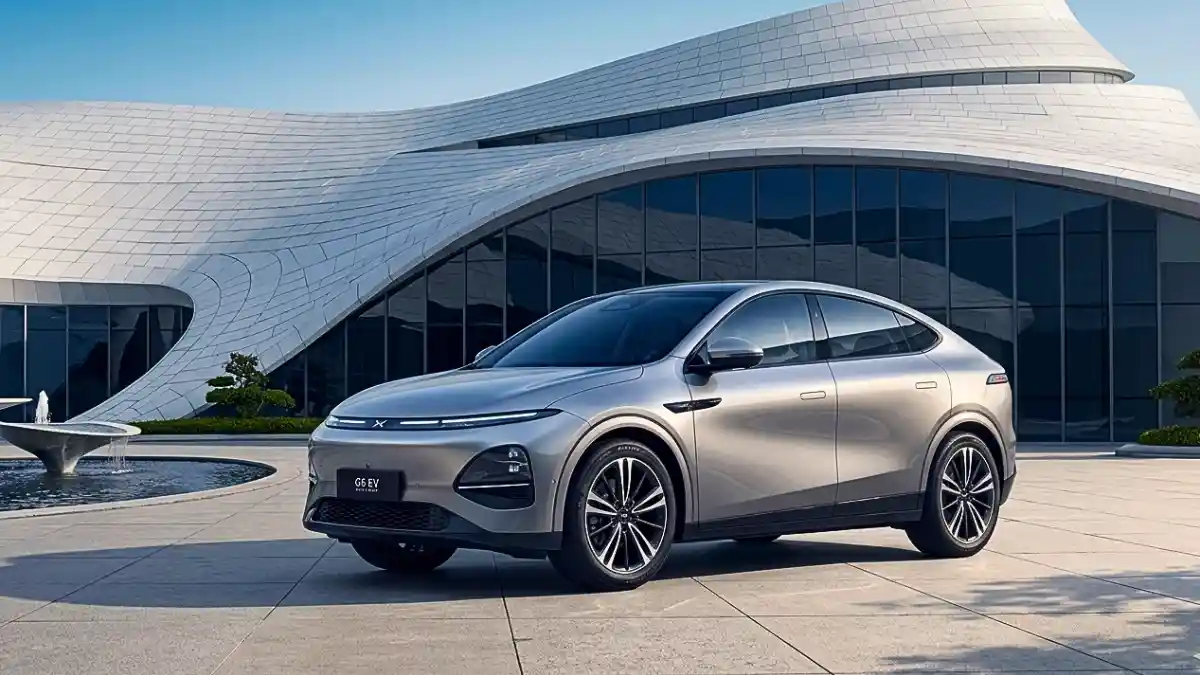
In a gleaming assembly plant somewhere in southern China, a vehicle rolled off the line this week that looked utterly unremarkable, no steering wheel, no driver’s seat, just a passenger cabin wrapped in familiar sheet metal. Yet that machine represents the most aggressive bet yet that the robotaxi revolution will be won not by the company with the most sophisticated sensors, but by the one that figures out how to build autonomy the way we build toasters. What makes it a true industry milestone is that it’s the first XPeng mass-produced robotaxi pure vision system, built at scale, on existing lines, and without the expensive crutches the rest of the industry still clings to.
Why the XPeng mass-produced robotaxi pure vision strategy changes everything
The autonomous vehicle industry has spent fifteen years perfecting prototypes. Waymo’s Pacificas, Cruise’s Origins, and the countless purpose-built pods unveiled at tech conferences all share a common DNA: they were designed as bespoke answers to a question nobody had figured out how to ask cheaply. Each was a handcrafted marvel of engineering, but handcrafting doesn’t scale. Prototypes routinely cost north of 200,000, loaded with LiDAR units that alone can run 10,000 apiece. For years, the implicit promise was that volume would eventually bend the cost curve. It hasn’t, not nearly fast enough.
XPeng is trying something fundamentally different. Instead of dreaming up a sci-fi pod that requires an entirely new supply chain, the company took the platform already underpinning its G9 SUV, a vehicle being stamped, welded, and painted by the thousands, and reimagined the interior for a driverless world. The bones are shared. The crash structures, suspension geometry, battery pack architecture, and thermal systems are all derived from a product that consumers already buy. That’s not a compromise; it’s a strategic masterstroke.
Sharing a platform means sharing tooling, validation procedures, and supplier contracts. It slashes development time and amortizes fixed costs over a much larger production base. If the robotaxi business hits a regulatory pothole next year, XPeng can pivot without a stranded asset. If it takes off, the company can scale faster than anyone bolting sensors onto retrofitted vehicles. This is the playbook Tesla has been promising with its Cybercab, a vehicle that still doesn’t have a production date. XPeng just did it first, and with a factory-proven foundation Tesla’s purpose-built pod lacks.
Also Read – The Unseen Danger in Your Driveway: The Jeep Cherokee PTU Recall and a Flaw That Parks Itself
Ditching the $10,000 Spinning Bucket
The industry’s great sensor war has often been framed as a philosophical duel: the belt-and-suspenders crowd stacking cameras, radar, and LiDAR against the vision-only purists who argue that humans drive with two eyes and a brain, so machines should too. That framing misses the real issue: cost. A LiDAR unit isn’t just an expensive component; it’s a complex electro-mechanical device with moving parts that must survive years of potholes, temperature swings, and vibration. Calibration drifts. Manufacturing tolerances are brutal. When you’re fielding a fleet of thousands — the scale necessary to make ride-hailing economics work, every sensor becomes a maintenance liability.
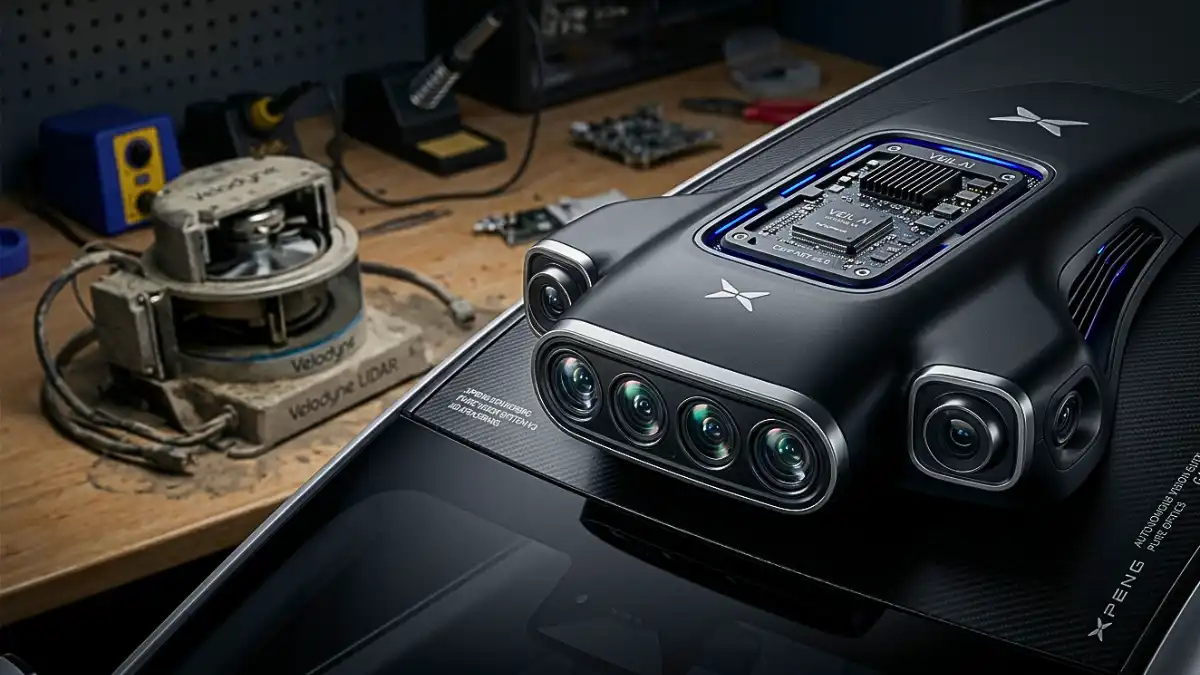
XPeng’s robotaxi relies on what it calls a “pure vision solution,” powered by an end-to-end AI model dubbed VLA 2.0 and four in-house Turing AI chips. The architecture processes raw camera streams directly into driving commands, collapsing what were once separate perception, prediction, and planning modules into a single neural network. The company claims this eliminates translation latency, achieving sub-80-millisecond response times, roughly on par with a human’s fastest reactive twitch. That’s a meaningful engineering claim, but the real story is what’s absent: no sensor fusion headaches, no HD map dependency that breaks the moment a construction cone appears, and a bill of materials that doesn’t make fleet operators weep.
The risk, of course, is that cameras alone might not be enough in edge cases, heavy fog, blinding glare, the infamous “child chasing a ball from behind a parked truck” scenario. XPeng is betting that its training data, collected across China’s maniacally complex urban environments, can teach the network to handle what sensors can’t see. It’s a bet that could look brilliant or catastrophic depending on the first high-profile failure. But it’s a bet the company can afford to make precisely because it isn’t burning cash on LiDAR for every vehicle.
The Real Race: Per-Mile Economics
Autonomous driving technology is dazzling, but robotaxis live or die on unit economics. A ride-hailing trip in a major Chinese city costs a passenger roughly 2-3 yuan per kilometer. The driver takes about half of that. Remove the driver, and the math transforms, but only if the vehicle itself doesn’t eat the savings in depreciation, sensor maintenance, and remote monitoring overhead.
XPeng’s vertically integrated approach targets that equation directly. By designing its own AI chips, the company avoids the margin stacking of third-party silicon vendors. By sharing the vehicle platform, it taps into an existing amortization curve. By rejecting LiDAR, it eliminates the single most expensive sensor. Rough back-of-the-envelope math suggests XPeng’s robotaxi could hit the road at a manufacturing cost significantly below $40,000, perhaps substantially lower, depending on battery pack size and interior spec. That’s not just cheaper than a Waymo-equipped Jaguar I-Pace; it’s cheaper than many consumer EVs on sale today.
If those numbers hold, the implications ripple outward. A robotaxi fleet with low upfront cost can charge less per mile while still generating a return on capital. That puts pressure on human-driven ride-hailing incumbents, Didi in China, Uber and Lyft globally, whose labor-heavy model suddenly looks structurally vulnerable. It also pressures the LiDAR-dependent autonomous players, whose higher hardware costs mean they need either premium pricing or improbable utilization rates to break even. In a commodity market like urban transportation, the low-cost provider usually wins.
Also Read – IIHS Rear Seat Safety Standards 2026: One Flaw, No Prize—How a Single Test Redefined What Makes a Car Safe
The 2027 Deadline and the Regulatory Gauntlet
XPeng’s timeline is characteristically aggressive: pilot operations in the second half of 2026, fully driverless commercial service, no safety drivers on board, by early 2027. That’s roughly eighteen months to validate real-world performance, refine the edge-case handling, convince regulators, and prove the business case. It’s a schedule that leaves almost no room for setback.
China’s regulatory environment for autonomous driving is evolving rapidly, with cities like Beijing, Shanghai, and Shenzhen already issuing permits for driverless testing and even limited commercial operations. The government sees autonomous vehicles as a strategic industry and has shown willingness to move faster than Western counterparts, where liability frameworks and public skepticism create friction. Yet even in China, a fatal accident involving a fully unsupervised vehicle would trigger a regulatory reset. XPeng’s pure vision system will need to demonstrate safety statistics that match or exceed the sensor-rich competition, and it will need to do so in the messy, adversarial chaos of Chinese urban traffic, where jaywalkers, weaving scooters, and sudden lane closures are the norm, not the exception.
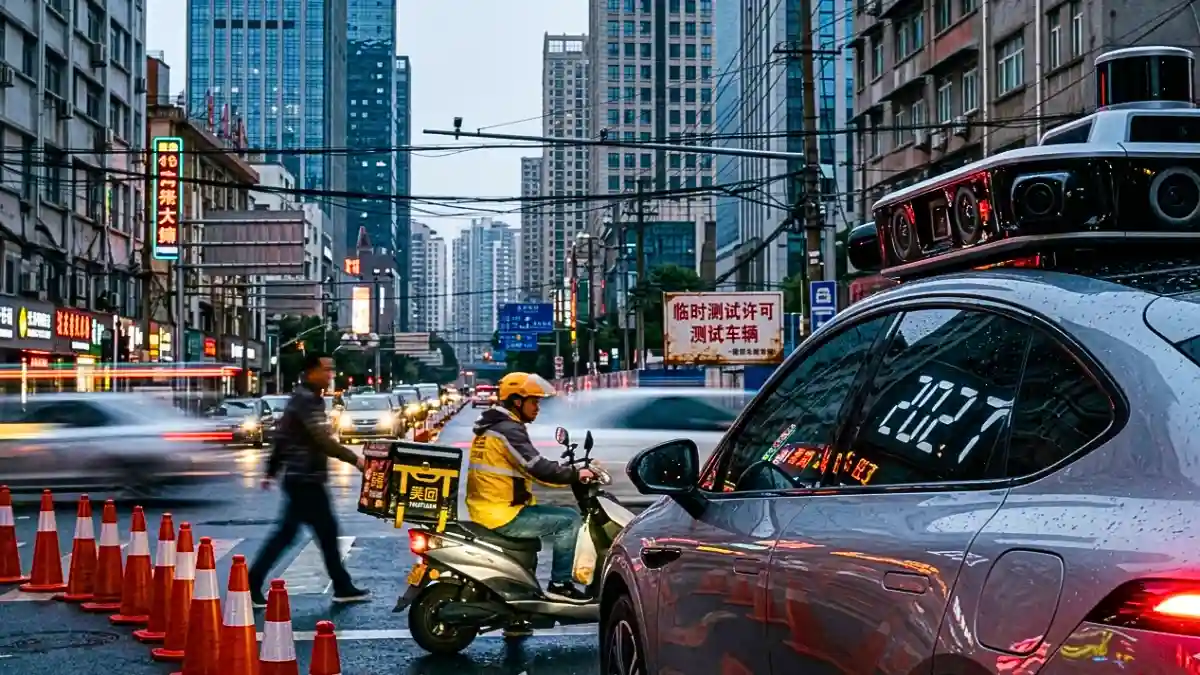
The pilot phase will be crucial. XPeng will need to prove not just that its system works, but that riders trust it, that remote assistance costs don’t balloon, and that the vehicles can handle the operational grind of ride-hailing, cleaning, charging, rebalancing, without a human in the loop. These are problems the industry has been chewing on for a decade, and no amount of vertical integration solves them automatically.
A New Front in the Global Autonomy Battle
XPeng’s mass-produced robotaxi doesn’t just matter for China. It resets the competitive clock globally. Tesla’s Cybercab, revealed with fanfare in 2024, remains an engineering exercise without a factory. Waymo’s operation, though technically impressive, is geographically limited and relies on expensive retrofits. Cruise is regrouping after a series of setbacks. In this landscape, a Chinese automaker with manufacturing muscle and a cost-first philosophy suddenly looks like the one to watch.
The geopolitical dimension is inescapable. The United States has effectively barred Chinese autonomous vehicle companies from testing on American roads over data security concerns. That limits XPeng’s immediate market to China and friendly nations, but China alone is the world’s largest automotive market and a ride-hailing behemoth. Winning there is winning big. Moreover, the technology XPeng develops, end-to-end vision AI, custom inference chips, scalable manufacturing processes, doesn’t have to stay in robotaxis. It flows straight into the consumer vehicles XPeng already sells, improving its driver-assistance systems and creating a virtuous cycle where every car on the road feeds data back to the mothership.
In the end, the robotaxi race was never really about who could build the most impressive prototype. It was about who could industrialize autonomy: make it reliable enough to trust, cheap enough to deploy, and scalable enough to matter. XPeng’s factory-fresh robotaxi is a declaration that the industrialization phase has begun, and that the companies still stuck in the lab may find themselves lapped by those who figured out that the real innovation isn’t just seeing the road, but building the car.
Also Read – The Anti-Tech Revolution: Why Toyota’s Most Reliable 2026 Car Is a Masterclass in Restraint


Raj is the creative mind curating the special content for the website. From exclusive first-drive reviews to buyer’s guides and comparison tests, Raj ensures our features are engaging and helpful. He loves getting behind the wheel of new launches and creating content that helps our readers pick their dream vehicle. His passion for motorcycles and performance cars is evident in his energetic writing style.