


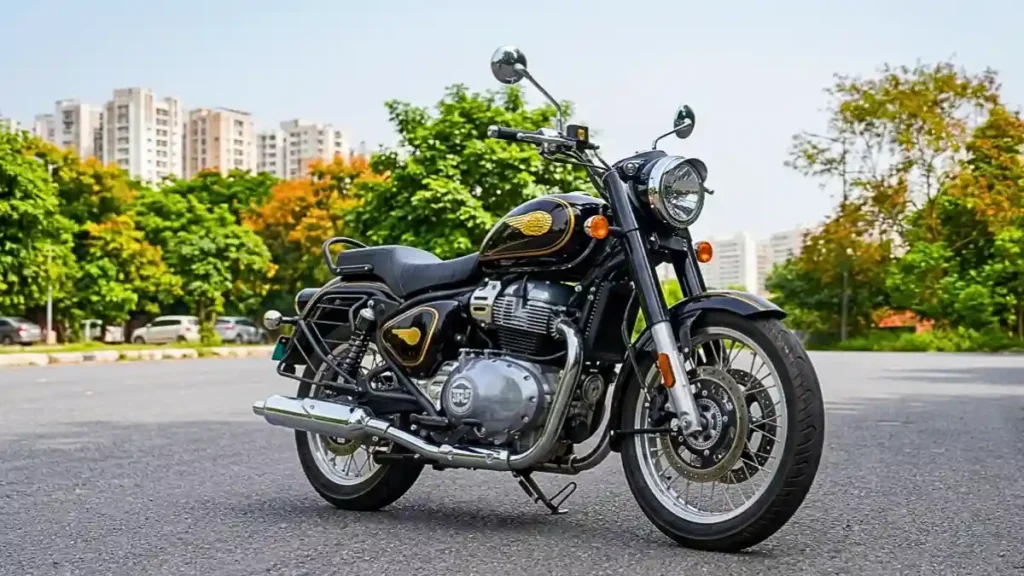

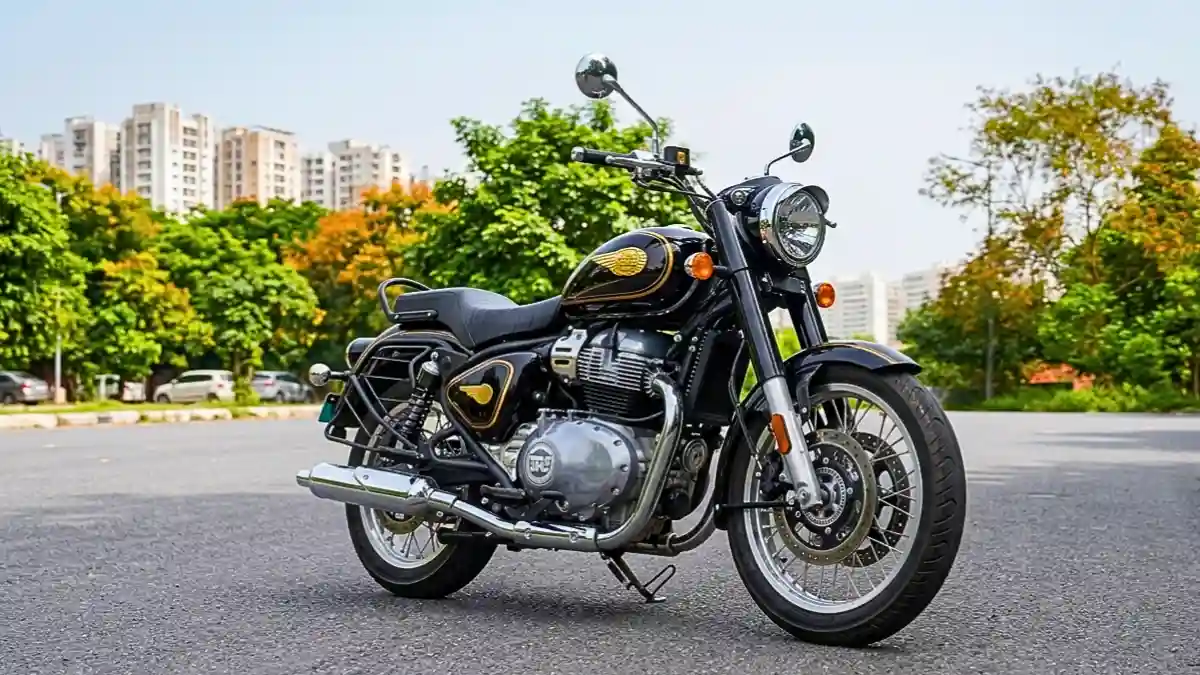
Royal Enfield just fitted its most storied nameplate with a twin-cylinder engine. At ₹3.64 lakh, it is either the smartest move the brand has made in decades or a very expensive identity crisis.
There is a certain weight to old names. The Bullet has been with Royal Enfield since 1932, a near-century of thump, dust and devotion that made it India’s most recognisable motorcycle. Now, for the first time in that ninety-three-year history, the Bullet gets a twin-cylinder engine. And with it, a question every legacy brand eventually has to answer: can you evolve without erasing what you are?
Why this moment matters more than the Royal Enfield Bullet 650 motorcycle
The Royal Enfield Bullet 650 is not simply a new model. It is Royal Enfield’s public answer to a problem that has been building quietly for several years. The brand’s core customer, loyal, unhurried, deeply attached to the Bullet’s single-cylinder thump, is ageing. Meanwhile, a younger generation of riders is looking at larger displacement machines from Triumph, Honda and Kawasaki with a very different set of expectations.
Royal Enfield’s first serious attempt at that second audience was the Interceptor 650 and Continental GT 650, launched in 2018. Both motorcycles were widely praised and sold well globally. But they spoke to a different kind of rider, cafe racers, revivalists, people who wanted a vintage-inspired sport. They were never really for the Bullet faithful.
“The Bullet 650 is built for the rider who wants to move up in displacement without moving sideways in identity.”
The Royal Enfield Bullet 650 threads a much narrower needle. It is designed for someone who has spent years with a 350, feels the tug toward more power, but has no interest in the cafe racer crouch of the Continental GT or the sporty friendliness of the Interceptor. That is a real market and one that no other manufacturer is currently addressing directly.
Same engine, very different context
The 648cc parallel twin is already familiar territory. Royal Enfield has run the same unit through the Interceptor 650, the Continental GT 650, the Shotgun 650 and the Guerrilla 650. It is a well-sorted, reliable engine with a character that sits comfortably between buzzy and lazy, tractable at low revs, smooth on highways, and polite enough not to intimidate new riders stepping up from smaller machines.
Paired with a six-speed gearbox and a slipper clutch, the Royal Enfield Bullet 650 should offer a meaningfully better highway experience than the 350, less vibration, easier cruising at sustained speeds, and more confidence on overtakes. These are not headline numbers, but they are the kind of differences a daily rider notices over fifty kilometres.
- Engine: 648cc Parallel Twin
- Gearbox: 6-Speed + Slipper Clutch
- Front Suspension: 41mm Showa Forks
- Frame: Steel Tubular Spine
- Front Wheel: 19-inch
- Rear Wheel: 18-inch
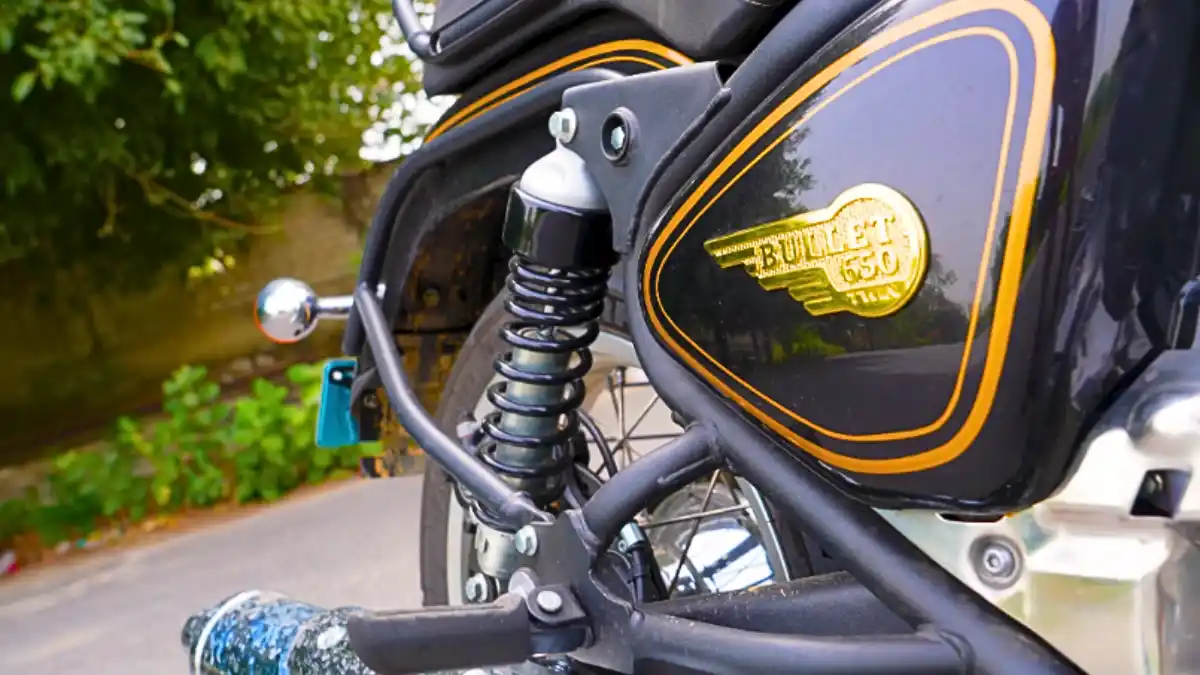
What is notable about the chassis choices is how deliberately traditional they are. Showa suspension components on a motorcycle in this class are a genuine quality upgrade, but the 19-inch front and 18-inch rear wheel combination, the steel spine frame, and the twin rear shock arrangement are all decisions that prioritise feel and familiarity over outright modernity. Royal Enfield is not trying to reinvent the Bullet. It is trying to give it more reach.
The aesthetics argument
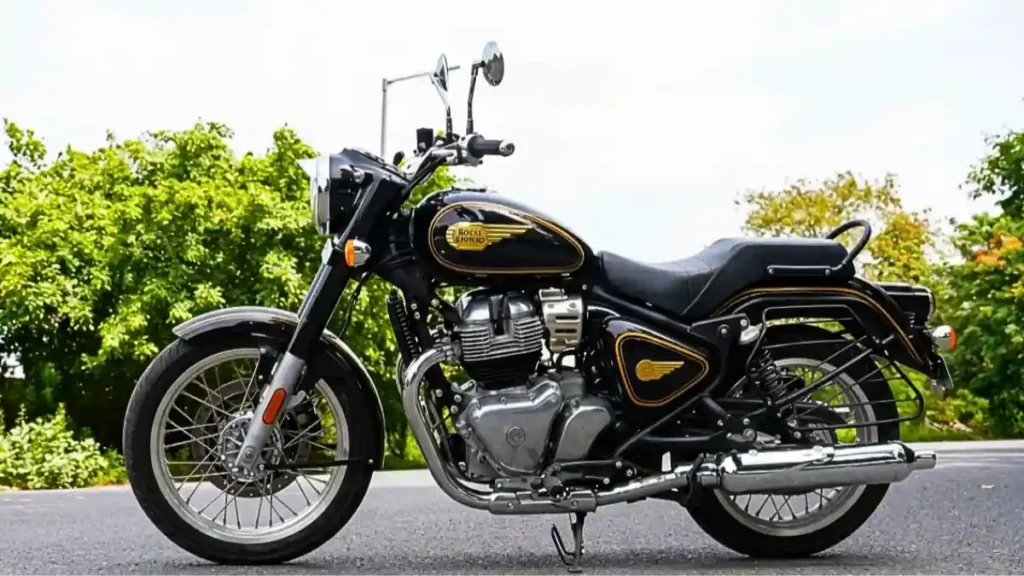
The gold pinstripes. The chrome peashooter exhausts. The casquette headlamp assembly. The tiger eye pilot lamps. The bench seat. Every single one of these details is a deliberate quotation from Bullet history, and that is entirely the point.
Modern retro motorcycles have a bad habit of performing nostalgia rather than actually honouring it. They add a bit of chrome, sketch a round headlamp and call it heritage. The Bullet 650 does something more sincere: it looks like a Bullet because it is still shaped like a Bullet. The proportions of the upright stance, the rounded tank, and the long seat have not been reimagined for trend. They have been preserved with care.
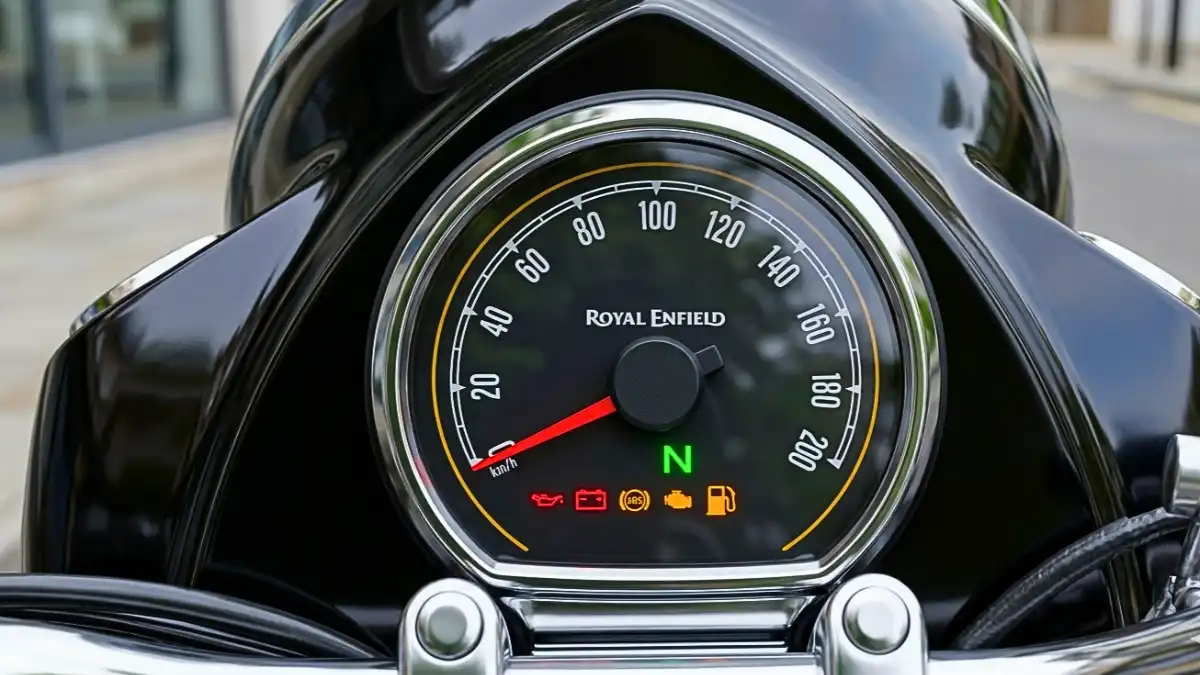
LED lighting integrates discreetly enough not to break the illusion. The analogue instrument cluster with its small digital inset strikes a reasonable balance. Purists get their needles, daily riders get their trip data and gear position indicator without squinting.
Pricing: a delicate calculation
Ex-showroom price: ₹3,64,856 (Both variants identically priced)
At ₹3,64,856 ex-showroom, the Bullet 650 sits comfortably above its 350 sibling but well within the band that Royal Enfield’s twin-cylinder lineup has established. The Interceptor 650 and Continental GT 650 hover in similar territory, which means the 650 badge is becoming its own sub-segment rather than a premium outlier.
The competitive picture is more interesting when you zoom out. A Honda CB350RS, Jawa 42 Bobber or KTM 390 Adventure all live in a different category; they make different promises. The Royal Enfield Bullet 650’s real competition is the Royal Enfield owner who is already considering an upgrade and weighing a Himalayan 450 or a Shotgun 650. The brand is, in other words, largely competing with itself, which is both a strength and a strategic puzzle it will need to solve as the twin-cylinder lineup expands.
Also Read – Ola Electric Trust Recovery: Sales Rebound Hides a Deeper Battle for Credibility
The legacy math
Consider what it means for a ninety-three-year-old motorcycle line to take its biggest mechanical step not at the height of its relevance but after decades of unchallenged familiarity. The Bullet did not need this change to survive; it was selling comfortably. The change was chosen, not forced. That makes it a statement about where Royal Enfield sees its next decade.
- 1932 – Original Bullet introduced
- 1955 – Indian Army adoption; the Bullet’s legend cemented
- 2018 – Interceptor 650 launches the modern twin era
- 2026 – Bullet 650 — the nameplate’s largest mechanical leap
The motorcycle was revealed at EICMA 2025, then shown to Indian audiences at MotoVerse before its commercial launch. That staged rollout was deliberate. Royal Enfield wanted enthusiast buy-in before general availability, understanding that the Bullet faithful would need to see this as an elevation rather than an erasure.
What comes next
The Royal Enfield Bullet 650’s success will not be measured in the first month of sales. It will be measured by whether it pulls a specific kind of buyer, the 350 owner who was drifting toward competitors, back into the Royal Enfield ecosystem at a higher price point. If it does that, it becomes a template for how the brand manages upward migration within its own customer base.
There is also the export dimension. The Interceptor 650 found surprisingly strong footing in the UK and Western Europe precisely because it offered accessible twin-cylinder character at a price point that felt almost unreasonably fair. The Royal Enfield Bullet 650, with its even more recognisable lineage, may carry that same appeal, particularly in markets where the Bullet nameplate has historical resonance, from British army nostalgia to Indian diaspora communities.

Longer term, the question is whether Royal Enfield can sustain a lineup of five or six distinct 650cc twins without cannibalising its own market. The Interceptor, Continental GT, Guerrilla, Shotgun and now the Bullet all share the same engine platform. The differentiation is entirely in character and styling. That is a legitimate product strategy, but it requires customers to understand what each model is actually for, which puts real pressure on how the brand communicates.
For now, the Royal Enfield Bullet 650 stands as the most emotionally significant product Royal Enfield has launched in years, not because of what it offers technically, but because of what it represents culturally. The oldest nameplate in the lineup, wearing the most familiar clothes, carrying the biggest engine it has ever had. Whether that combination resonates will say a great deal about how much the Bullet faithful trust the brand to carry their motorcycle into a new era.
The engine is new. The pinstripes are still hand-painted. That balance, if it holds, might be exactly right.


Sapna is the storytelling powerhouse of the team. With a sharp eye for detail and a knack for uncovering the human interest side of automobiles, she covers everything from industry launches to feature stories. She believes that every car has a story and every rider has a journey. Her writing is known for its clarity, depth, and ability to connect with the common man.