


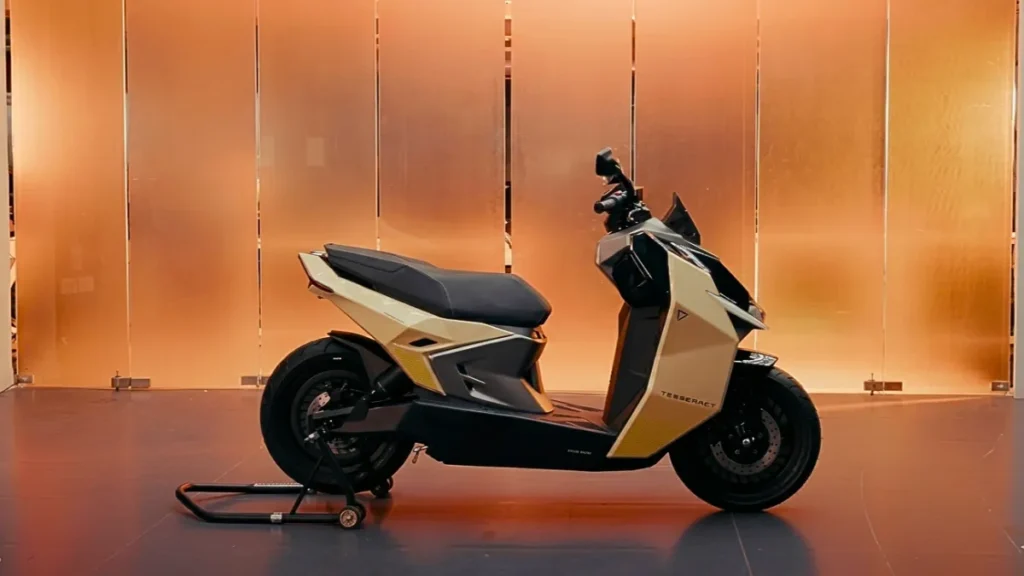

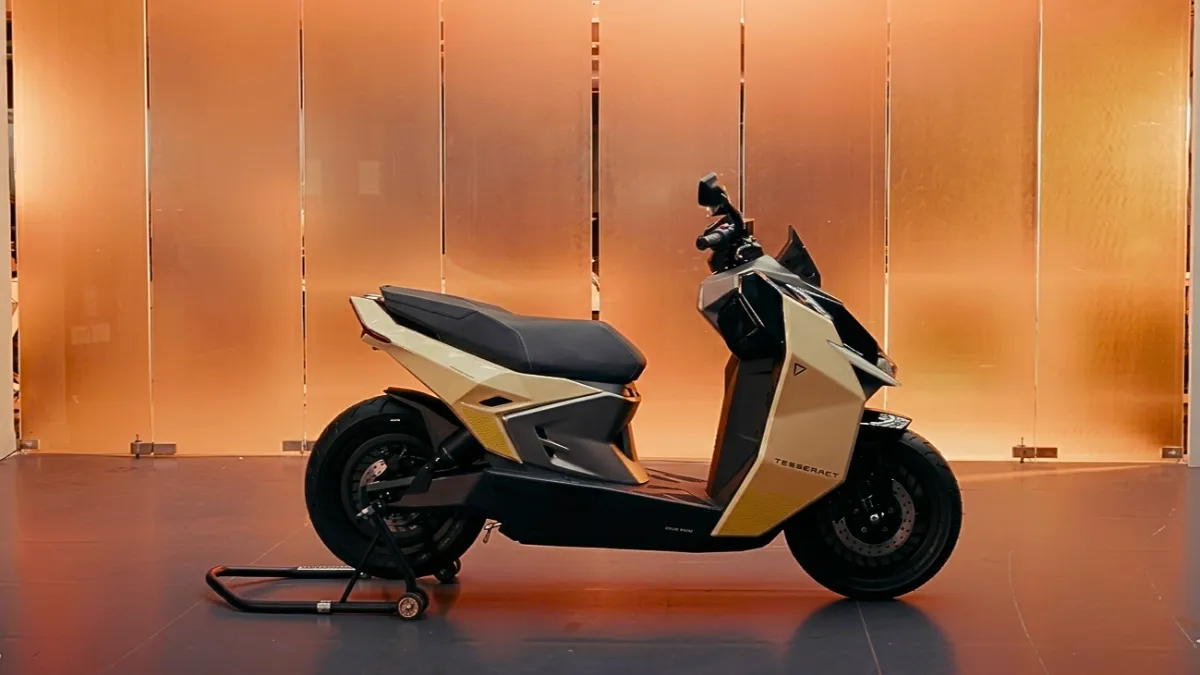
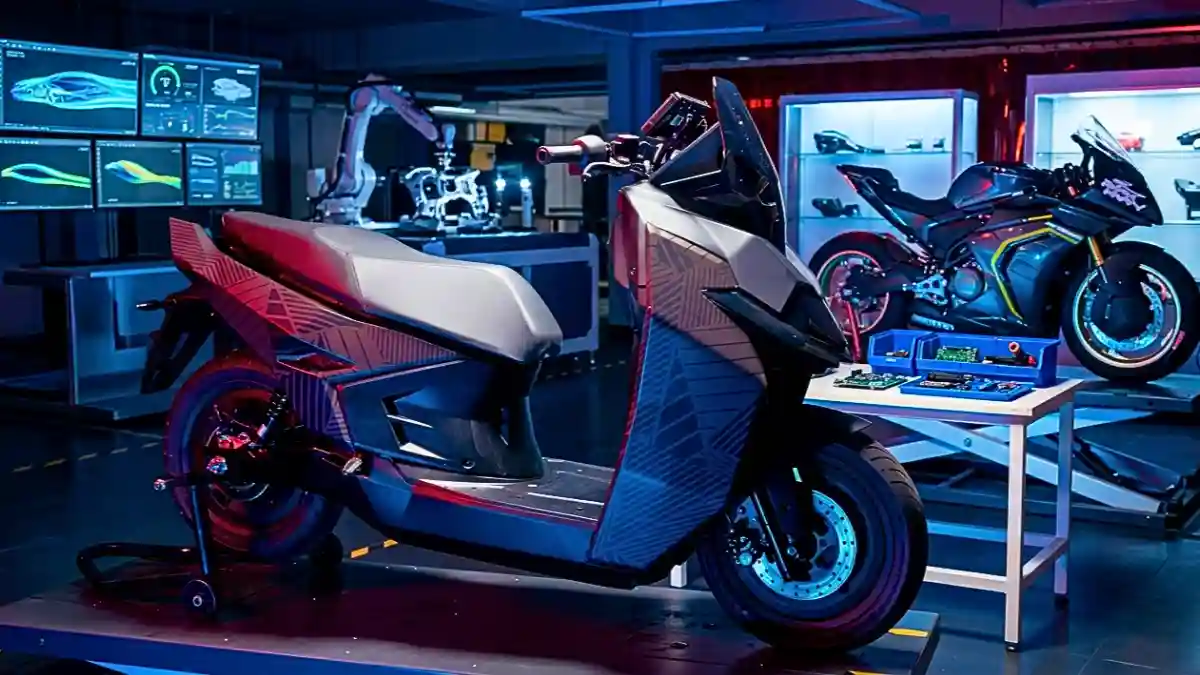
When a company tells 70,000 eager customers to wait another year, it had better have a story worth telling. Ultraviolette, the Bengaluru-based maker of the F77 electric motorcycle, has just handed its Tesseract scooter reservation holders exactly that: not an apology, but an engineering manifesto. The scooter that was promised for early 2026 will now arrive in January 2027, and beneath that timeline shift lies a decision centred on the Ultraviolette Tesseract 100V architecture, a move that reveals more about the trajectory of Indian electric mobility than any launch date could.
The Delay That Speaks of Something Bigger
Most production delays in the automotive world are stories of misjudgment: supply chain stumbles, regulatory hurdles, cost overruns. The Tesseract’s postponement belongs to a rarer category: a deliberate, architecturally significant course correction made after the concept was already public. Ultraviolette’s engineers hit a wall that many legacy manufacturers would have simply worked around. The original plan to carry over the sub-50-volt platform from the F77 and X-47 into a scooter form factor encountered an immovable object: physics.
Scooters impose packaging constraints that faired motorcycles do not. You can’t just shrink-wrap a high-performance powertrain and call it a day. Thermal management, component placement, and the need to preserve everyday utility, specifically, that 30-litre boot, collided with the promise of 15 kW peak power. The company faced what it describes as an either/or: slash the power output to 10 kW, or sacrifice the storage space that makes a scooter a scooter. Both options were, to this team, compromises they were unwilling to make.
So they started over. Not tweaking, not patching, they redesigned the vehicle’s electrical architecture from the ground up, moving to a 100-volt system. That decision, more than any spec sheet figure, is the real headline.
Also Read – Ferrari Luce electric car: Electric Shock Therapy – Why It’s More Than Just a Polarizing EV
Ultraviolette Tesseract 100V Architecture: The 100-Volt Threshold and What It Actually Means
Voltage architecture in electric vehicles isn’t just a technical footnote; it’s the foundation on which every performance and usability characteristic is built. Most electric two-wheelers in India operate well below the 100-volt mark, typically in the 48V to 72V range. This works for commuter-level performance, but it imposes hard limits on sustained power delivery, thermal efficiency, and charging speed.
By jumping to a 100-volt architecture, a first for any Indian electric scooter, Ultraviolette is essentially moving into territory occupied by far more expensive four-wheeled platforms. The immediate benefits cascade through the entire vehicle. Higher voltage means lower current for the same power output, which translates directly into reduced resistive losses and far less heat generation. That, in turn, allows for lighter wiring harnesses, more compact power electronics, and a motor controller that can deliver peak performance repeatedly without derating to protect itself.
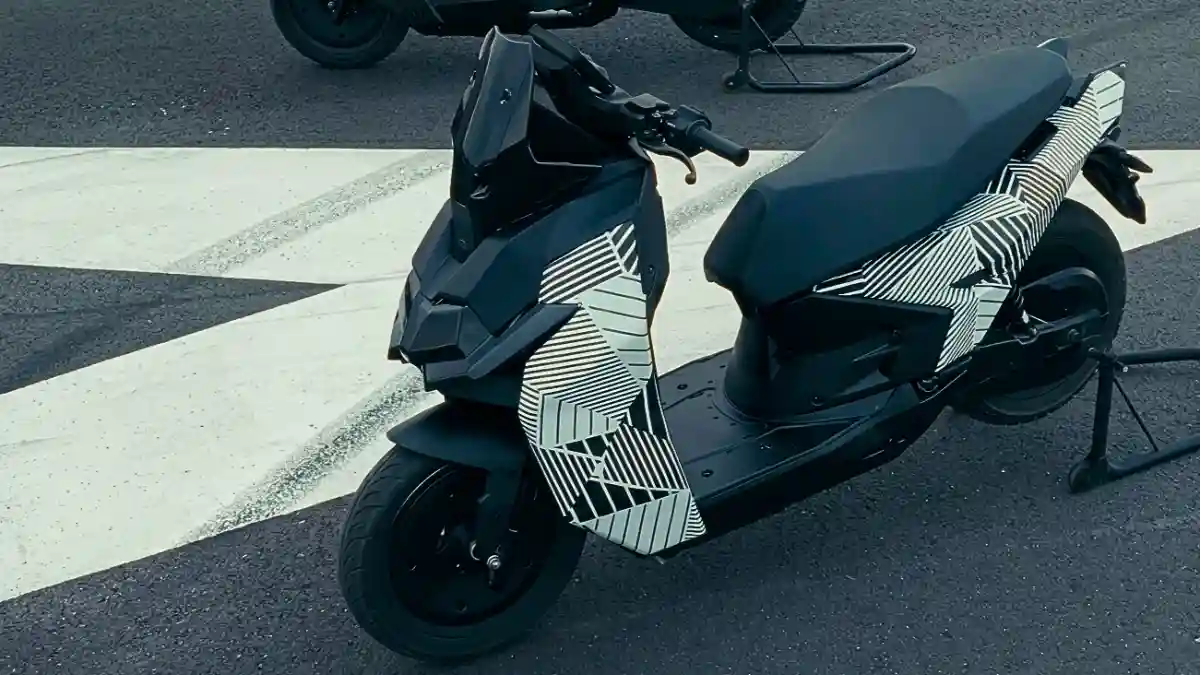
The company claims this unlocks three times more continuous power delivery capability and substantially faster charging. The new battery management system weighs just 2.5 kg, a fraction of what the X-47’s unit tips the scales at. In practical terms, the Tesseract won’t just be quick off the line; it will stay quick, ride after ride, without the performance fade that plagues many thermally constrained EVs.
This matters beyond the spec sheet bragging rights. For an electric scooter to truly compete with and outperform internal combustion alternatives in the 150-200cc bracket, it can’t be a one-trick dragstrip pony. It needs to sustain highway speeds, handle repeated hard acceleration in traffic, and charge quickly enough to slot into a rider’s day without elaborate planning. The 100-volt shift is Ultraviolette, laying the foundation for that reality.
The Unseen Rework: Controller, BMS, and the Validation Grind
What makes this delay credible rather than just convenient storytelling is the scope of the re-engineering. A voltage architecture change isn’t a software update. It meant designing a new motor controller from scratch, rethinking the vehicle control unit, and developing a battery management system tailored to the higher-voltage cell configuration. These are core intellectual property components, the secret sauce that separates a polished product from a conversion kit on wheels.
Ultraviolette has always positioned itself as a technology company that happens to make vehicles, and that identity shows here. They could have shipped a 10 kW scooter on time, leaned on the brand’s performance halo, and let the 30-litre boot do the marketing. Instead, they chose to protect the product’s original promise, even at the cost of short-term customer goodwill. Whether that gamble pays off depends on execution, but it’s consistent with a philosophy that has kept the F77 a niche but respected machine rather than a mass-market also-ran.
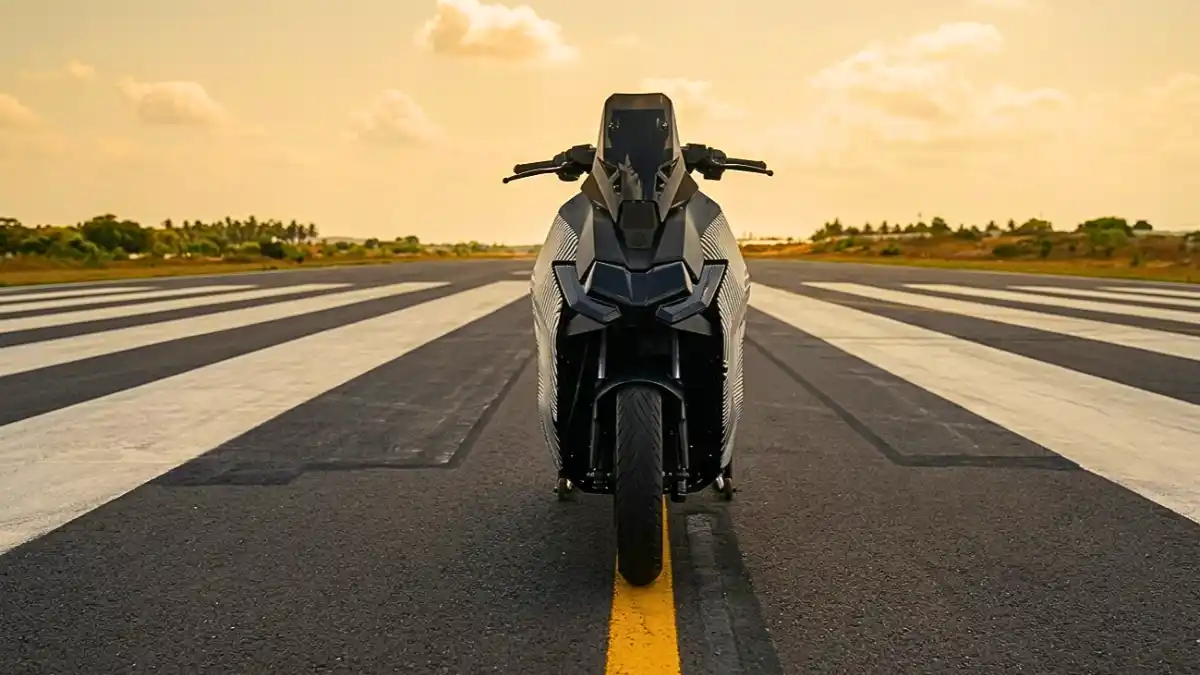
The company is now deep into testing and validation, the unglamorous phase where lab triumphs meet real-world potholes, monsoon humidity, and the varied charging infrastructure of Indian cities. That validation work extends beyond the powertrain. Post-launch consumer clinics in 30 cities surfaced a raft of ergonomic feedback: the floorboard needed to be roomier, the seat wider and better padded for both rider and pillion, the handlebar repositioned to match the revised rider triangle. The windscreen appears to have grown more functional as well. These are small changes individually, but together they address the “science project” criticisms that sometimes dog performance-focused EVs, the sense that the thrill comes at the expense of daily livability.
The Booking Holders’ Calculus: Patience as an Investment
Seventy thousand bookings are not just a vanity metric; they represent real customers who planned purchases, perhaps sold existing vehicles, and now face an extended wait. Ultraviolette’s promise to hold prices unchanged for those early adopters is a necessary gesture, but it doesn’t erase the frustration entirely. The question these riders face is whether the improved product justifies the calendar shift.
If the scooter delivers on its claims, 125 km/h top speed, drag race dominance over petrol and electric rivals even with a pillion aboard, dual-channel ABS, traction control, radar-based blind spot alerts, and three battery options from 3.5 kWh to 6 kWh, then the answer tilts toward yes for the performance-minded buyer. For someone who just needs a reliable commuter, the calculus may be different, but that’s not who the Tesseract is for. Ultraviolette has never aimed for the center of the bell curve.
The Shockwave motorcycle, also delayed, looms as another test of the company’s bandwidth. More details on that are promised in the coming weeks, and how the brand manages dual product launches will be telling. Stretched too thin, even the best engineering can falter.
Also Read – Dodge Copperhead SRT Coupe Returns to Lead a Bold New SRT Army
What This Means for the Indian EV Landscape
The Tesseract’s pivot carries implications that extend beyond one company’s timeline. India’s electric two-wheeler market has been defined largely by cost-conscious commuter products, such as Ola’s S1 series, TVS iQube, and Bajaj Chetak, where the primary engineering challenge has been hitting a price point while offering an acceptable range. Performance EVs have been rare, and high-voltage architectures have been unheard of in the scooter segment.
Ultraviolette is charting a different path. By prioritising voltage class and sustained performance, the Tesseract could force competitors to rethink their own roadmaps. If a 100-volt scooter can be priced starting at ₹1.45 lakh ex-showroom, an amount not wildly distant from top-spec ICE scooters, then the value proposition of lower-voltage premium products suddenly looks fragile. Charging speed, a persistent consumer anxiety, becomes a differentiator that price cuts can’t neutralise.
There’s also a supply chain dimension. High-voltage components, motor controllers, BMS units, the MOSFETs and gate drivers that handle the increased electrical stress require a step up in sourcing and quality control. Ultraviolette’s investment in this capability could create a competitive moat that extends beyond the Tesseract to future platforms, including the Shockwave and whatever comes next.
The risk, of course, is that the market moves while you’re perfecting the product. Competitors aren’t standing still. Battery costs continue to fall, and the charging infrastructure narrative is evolving rapidly. A January 2027 delivery target assumes that nothing further goes wrong, a bold assumption in any hardware startup’s journey.
The Patience Play
Ultraviolette is asking for something rare in today’s consumer market: faith in a process rather than a delivery date. The company’s willingness to burn a year of calendar time to preserve the integrity of a product vision is either admirable stubbornness or strategic clarity, depending on your perspective. For the 70,000-strong waiting list, the revised Tesseract will need to be more than just fast. It will need to feel like the scooter they were promised from the start, only better, a machine that doesn’t just win drag races but fits seamlessly into the messy, demanding reality of Indian roads.
If it succeeds, the Tesseract won’t just be another electric scooter. It will be proof that an Indian startup can set a technical benchmark that forces the industry to recalibrate. That’s a story worth waiting for, even if the calendar didn’t cooperate.


Rohit is the visionary behind CarBikeJunction. With over a decade of experience in automotive journalism and a deep love for mechanical engineering, he ensures that every piece of content that goes live meets the highest standards of quality and accuracy. As Editor-in-Chief, he oversees the editorial direction of the website and is often found test-driving the toughest SUVs or analyzing market trends. His leadership is the driving force behind our platform.