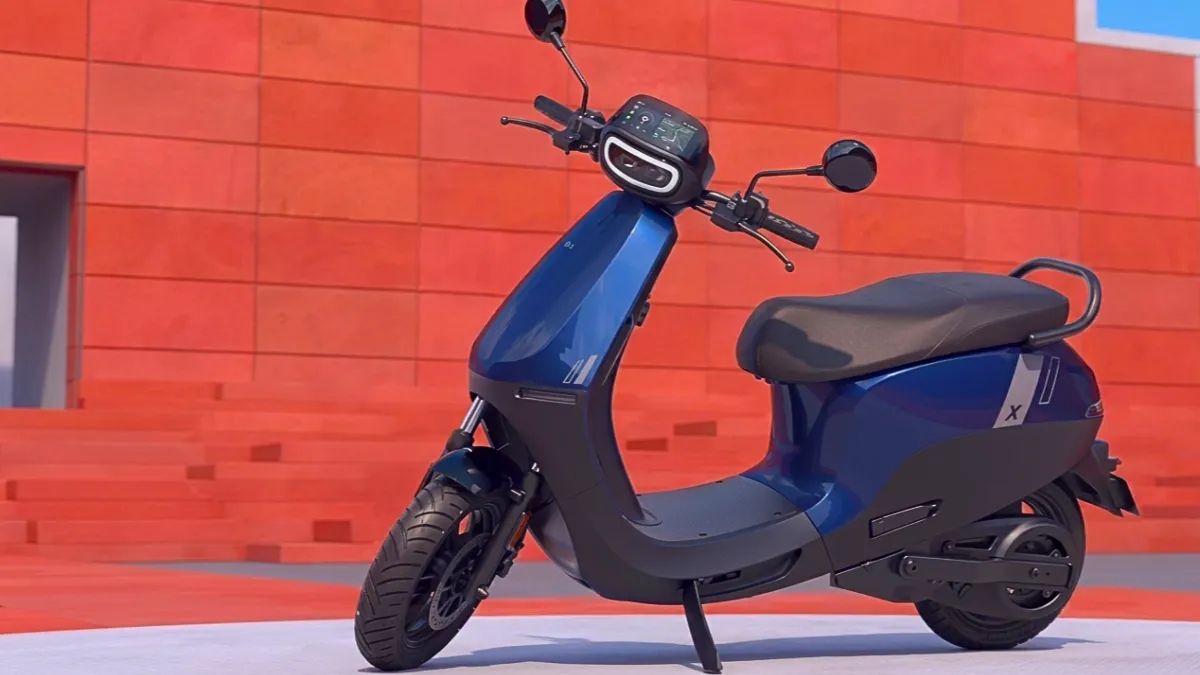
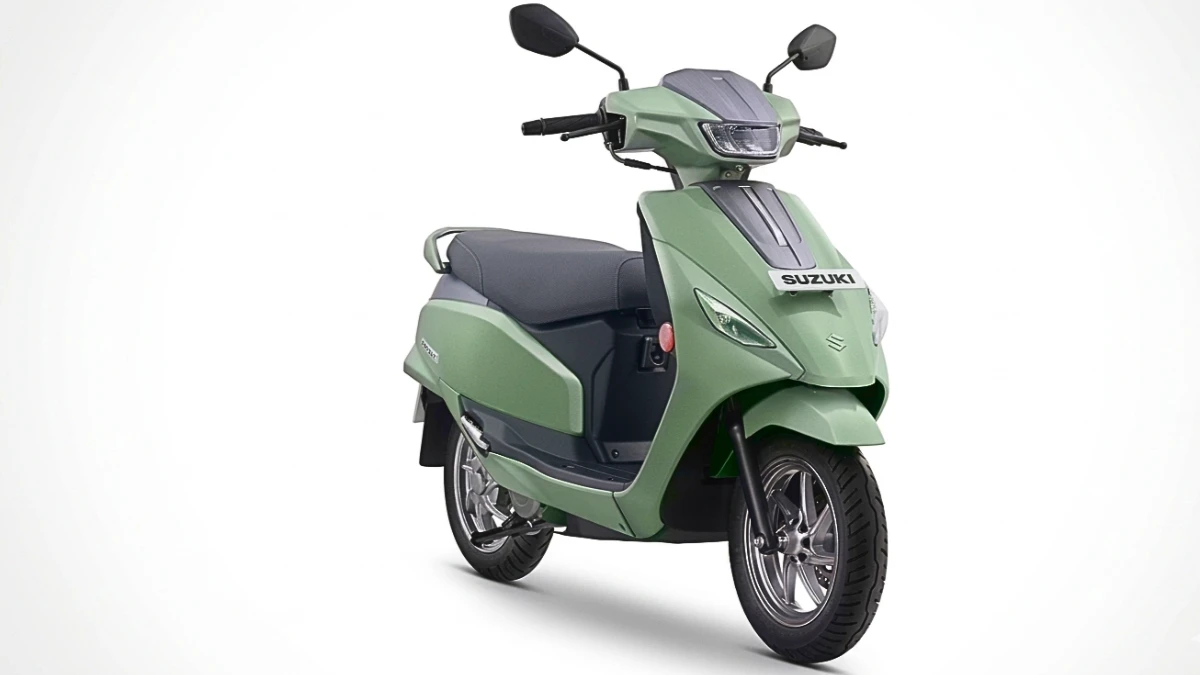
It takes a certain audacity to challenge a legend on its home turf. For two decades, the Honda Activa has been the unshakable monarch of India’s scooter kingdom, a name so synonymous with two-wheeled family transport that it’s become a default verb. Yet in the opening months of 2026, a quiet insurrection has unfolded in the electric lane, led by the Suzuki e-Access electric scooter India 2026. Not from a venture-funded startup, but from inside the Japanese establishment itself, Suzuki has pulled ahead of both Honda and Yamaha in the electric scooter race, and in doing so has rewritten the opening chapter of a battle that will define the next decade of India’s mobility.
Between January and April 2026, the three Japanese heavyweights—all latecomers to India’s electric two-wheeler party—together pushed 3,971 electric scooters into dealership stockyards. Suzuki’s e-Access alone accounted for 2,261 of those wholesale units, seizing a 57 percent share of the Japanese trio’s combined dispatches and half of their retail deliveries. Honda, with the Activa e: and the QC1, managed 1,284 units. Yamaha, which only joined the fray in February with the EC-06, delivered 426 scooters to its network. On paper, the numbers are minuscule compared to the domestic electric giants—Ola, TVS, and Bajaj move tens of thousands of units a month—but as a signalling mechanism inside boardrooms and dealerships, they matter enormously.
The real story isn’t about who’s winning a sprint. It’s about why a brand that took its time to enter the EV arena is suddenly dictating the pace of its peers, and what that tells us about the future of electrification when legacy badges start taking the technology seriously.
The Latecomer’s Advantage: Why the Suzuki e-Access Electric Scooter India 2026 Is Winning
Suzuki’s rise isn’t accidental. The e-Access arrived in showrooms carrying the equity of the Access 125, a scooter that has repeatedly outsold everything except the Activa itself. For millions of Indian buyers, the Access nameplate represents proven durability, low running costs, and a familiar service experience at the neighbourhood Suzuki dealership. By grafting an electric heart into that familiar silhouette, Suzuki essentially told consumers: “This is the scooter you already trust, only cleaner and quieter.” In an EV market where many early adopters have been stung by inconsistent after-sales support from new-age brands, that promise of legacy dependability is a powerful sedative.
What’s more, Suzuki opted for a straightforward fixed-battery architecture—a 3.07 kWh pack that you plug in at home or the office, much like charging a phone. There is no subscription fee, no detachable pack to lug upstairs, no dependence on a nascent swapping network. In a country where range anxiety is still a psychological barrier, the simplicity of a known charging ritual has arguably resonated with risk-averse buyers more than the complexity of Honda’s bifurcated approach or Yamaha’s swapping-only proposition.
Honda’s split personality and Yamaha’s cautious whisper
Honda, for all its might, has hedged its bets in a manner that may be confusing its core audience. The Activa e: leans on Honda’s Mobile Power Pack swapping ecosystem, promising zero downtime but requiring buyers to live within range of a swapping station. The QC1, launched alongside it, is a fixed-battery model targeted at a different price point. While offering choice is rarely a bad thing, the early sales split suggests that dealers are spending more energy explaining the value proposition of two divergent technologies than selling the iconic Activa name itself. When a customer walks into a Honda showroom curious about an electric Activa, the conversation quickly becomes a technical flowchart. Suzuki’s showroom, by contrast, has one clear story to tell.
Yamaha’s entry with the EC-06 is a different beast entirely. The scooter is smart, urban-centric, and tied to a battery-swapping network that currently operates in a handful of cities. Its 140 retail deliveries over three months don’t indicate a failure of product appeal as much as a deliberate, slow-motion rollout. Yamaha is playing the long game, seeding the market in clusters where swapping infrastructure makes economic sense. As it expands city coverage, volumes will rise, but for now the EC-06 is an intriguing cameo rather than a volume contender.
The numbers that matter aren’t on the spec sheet
Strip away the brand jostling, and a larger truth emerges: Japanese manufacturers are finally accepting that India’s electric transition is irreversible, and that standing still is riskier than stumbling forward. The 3,971 units they collectively dispatched may not even match what a single domestic OEM does in a week, but they are concentrated doses of market intelligence. Every e-Access, Activa e:, and EC-06 on the road feeds real-world data back to engineering teams, refines supplier relationships, and trains dealership service bays to handle high-voltage systems. That learning curve is worth far more than the wholesale figure suggests.
Crucially, the Japanese strategy is not about dethroning Ola Electric or TVS iQube in the near term. It is about defending their immense slice of the internal-combustion pie by ensuring that when a loyal customer finally decides to switch to electric, the first showroom they visit bears a familiar logo. Suzuki’s initial sprint gives it a psychological edge in that conversion race, but the marathon has barely started.
Also Read – Ola Electric Battery Supply to Global Automakers: Talks Underway as Gigafactory Expands
What happens next: the ground is shifting
Look ahead, and the dynamics will evolve rapidly. Honda’s swapping infrastructure is the proverbial sleeping giant. Once the network reaches a critical density in major metros, the zero-refuelling-time promise could flip the narrative, especially among delivery fleets and high-mileage commercial users who see vehicle downtime as lost income. Suzuki will need to counter with aggressive pricing, extended battery warranties, and faster charging solutions, possibly through its existing dealership footprint which can double as charging hubs.
Yamaha’s fate hinges on whether it can make the EC-06 aspirational rather than merely a city-bound curiosity. Its brand has always thrived on cool, and if it can bottle that spirit into a scooter people desire enough to forgive a limited range, it could carve a premium niche that volume charts don’t fully capture.
Then there’s the wildcard of policy. State-level EV incentives, changing FAME-like subsidies, and the eventual rollout of battery safety norms will shuffle the deck. A regulatory shift toward standardised swapping, for instance, could instantly erase Suzuki’s simplicity advantage and hand a tailwind to Honda and Yamaha.
For the Indian buyer, the Japanese jostle is unambiguously good news. It forces every player—domestic and international—to raise their game on reliability, service, and product maturity. The era of treating electric scooters as experimental garage projects is drawing to a close. In its place comes a contest where century-old engineering houses fight not just for market share, but for the right to define what an everyday electric two-wheeler should feel like.
Suzuki may have drawn first blood, but the war for India’s e-scooter soul is only just being written. And this time, there are no crown princes—only contenders willing to lose a little paint.
Also Read – Honda’s Fake Clutch Will Make Electric Motorcycles Finally Feel Alive

Rohit is the visionary behind CarBikeJunction. With over a decade of experience in automotive journalism and a deep love for mechanical engineering, he ensures that every piece of content that goes live meets the highest standards of quality and accuracy. As Editor-in-Chief, he oversees the editorial direction of the website and is often found test-driving the toughest SUVs or analyzing market trends. His leadership is the driving force behind our platform.