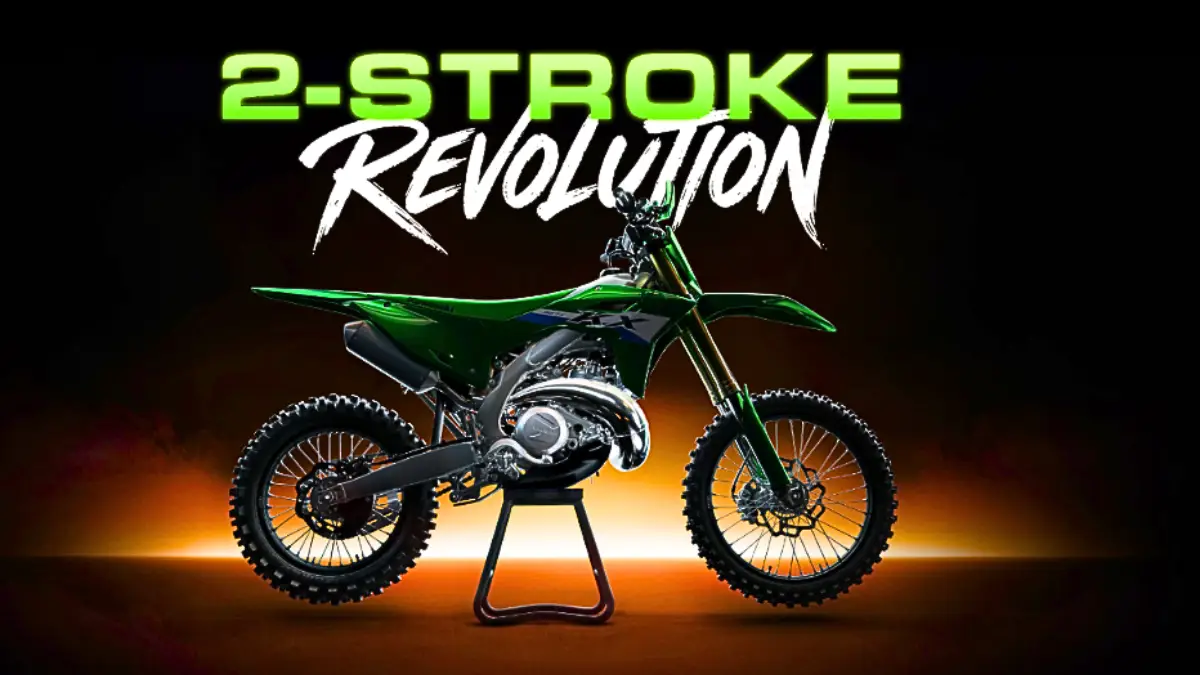
What happens when a manufacturer stays silent on two-stroke development for two decades, then suddenly drops the Kawasaki KX327, a fully modern, fuel-injected 327cc machine that shares its bones with a championship-winning four-stroke? The off-road world stops guessing and starts recalibrating. The KX327 and its off-road sibling, the KX327X, are not just new models; they represent a philosophical shift in a sport that had largely left big-bore two-strokes behind.
This matters because for years, the two-stroke faithful have been told to accept compromise: ride a lightweight, simple engine but live without the refinements taken for granted on modern thumpers. Kawasaki just rejected that trade-off entirely.
A Two-Stroke Renaissance Led by the Kawasaki KX327
A year and a half ago, Kawasaki rolled a camouflaged prototype onto the track at Anaheim 1. It made the right noises, literally, a sharp two-stroke crackle and set off a frenzy of speculation. Displacement guesses ranged from 125cc to 300cc. Some insiders whispered it might just be a rebadged KX250 with a pipe. Nobody expected a 327.
That displacement is significant for reasons well beyond the number on the side panel. A 327cc two-stroke doesn’t slot neatly into any existing professional motocross class. And that’s precisely the point. Kawasaki isn’t chasing AMA rulebooks with this machine. The KX327 series is built for the real-world rider who measures performance in smiles per mile, not gate drops in a single class. It’s a statement that the two-stroke market is now mature enough and large enough to warrant a clean-sheet platform, not just an anniversary edition of a 20-year-old design.
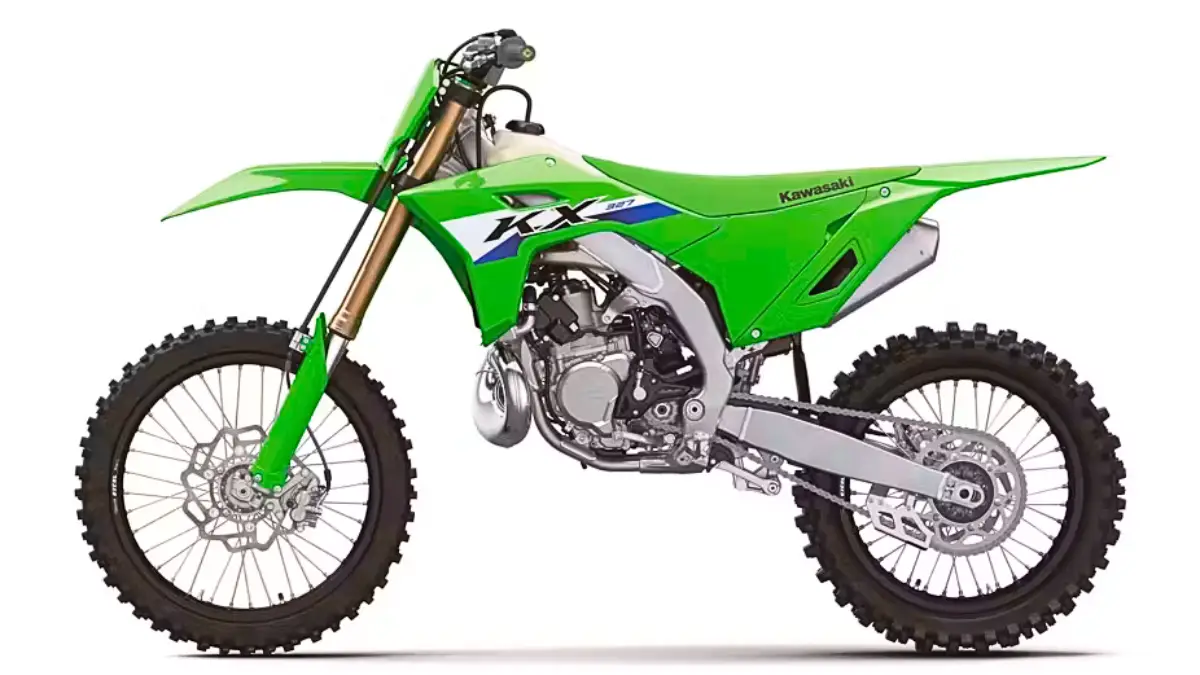
The timing is no accident. KTM, Husqvarna, and GasGas have spent the last half-decade proving that transfer port injection (TPI) and throttle body injection (TBI) two-strokes can deliver clean, tractable power without the jetting headaches of old. They’ve built a loyal following in hard enduro, GNCC racing, and trail riding. Kawasaki watched, learned, and waited until it could leapfrog, not just follow. The result is a fuel-injected two-stroke that wears an aluminium perimeter frame derived from the KX450F, a chassis that’s already collected titles and earned a reputation for stability under fire.
Also Read – Ola Electric Trust Recovery: Sales Rebound Hides a Deeper Battle for Credibility
More Than an Engine: How the Kawasaki KX327’s Frame Tells the Real Story
If the 327cc engine is the headline, the perimeter aluminum chassis is the investigative report underneath. Two-strokes, even modern ones, often rely on steel frames or older-generation aluminum designs that flex in ways engineers work around. By adapting the KX450F platform, Kawasaki gave the KX327 a head start in rigidity, weight distribution, and suspension geometry that no aftermarket conversion could match.
This has real implications for the trail and track. A large-displacement two-stroke engine can be a handful if the chassis isn’t communicating predictably. The 327 delivers its strongest torque in the low-to-mid range- exactly where off-road riders need it and channels that grunt through a platform designed to handle the aggressive braking bumps, whoops, and ruts that a 450F rider faces. You get the lightweight feel of a two-stroke (fuel-injected bikes shed some mass compared to their four-stroke counterparts) without sacrificing the planted sensation riders have come to expect.
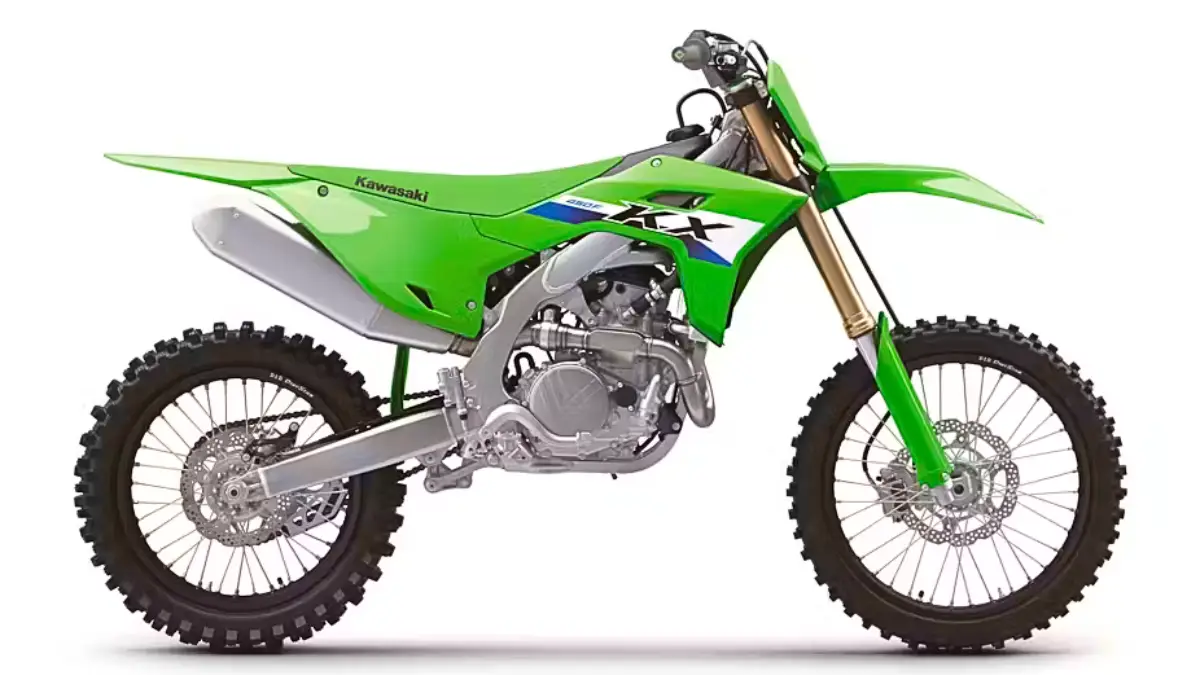
The two variants underline the strategic intent. The KX327 is a pure motocross weapon, stripped down for closed-course chaos. The KX327X adds the protection, kickstand, and 18-inch rear wheel necessary for cross-country racing and technical off-road. It’s not a half-hearted conversion; it’s a factory-built race bike for the woods. That focus signals Kawasaki sees off-road as an equal partner to motocross in the North American market.
Fuel Injection Finally Arrives on the Kawasaki KX327 — and It’s Loaded
Kawasaki’s implementation of electronic fuel injection on a two-stroke isn’t merely about meeting emissions standards (these are closed-course competition bikes, after all). It’s about unlocking controllability that carburettors or even basic mechanical fuel systems could never provide. The 327’s EFI system works with selectable power modes, allowing a rider to soften the hit for slick roots or unleash full fury for a deep sand wash. Smartphone connectivity via RIDEOLOGY THE APP KX2 lets owners adjust engine maps, track maintenance intervals, and log ride data- tools previously reserved for four-stroke flagship models.
The inclusion of an electric start and a hydraulic clutch isn’t just a convenience item. They reduce fatigue over long days and make the bike feel more like a modern machine than a throwback. When you combine that with adjustable ergonomics, ERGO-FIT components let riders tailor bar, peg, and seat positioning, it becomes clear Kawasaki intends the KX327 to be a daily rider for serious enthusiasts, not a novelty for a few weekends a year.
Where the Kawasaki KX327 Leaves the Four-Stroke Lineup
Kawasaki didn’t ignore its four-stroke stallions. The 2027 KX450F receives a redesigned frame with a longer wheelbase, revised intake and exhaust for more aggressive mid-to-high RPM pull, and a complete Brembo braking system. The KX250F gets enhanced power across the rev range, updated suspension settings, and a lighter front-end look. Both bikes gain more sophisticated smartphone integration, including GPS-based ride logging and launch control tweaks.
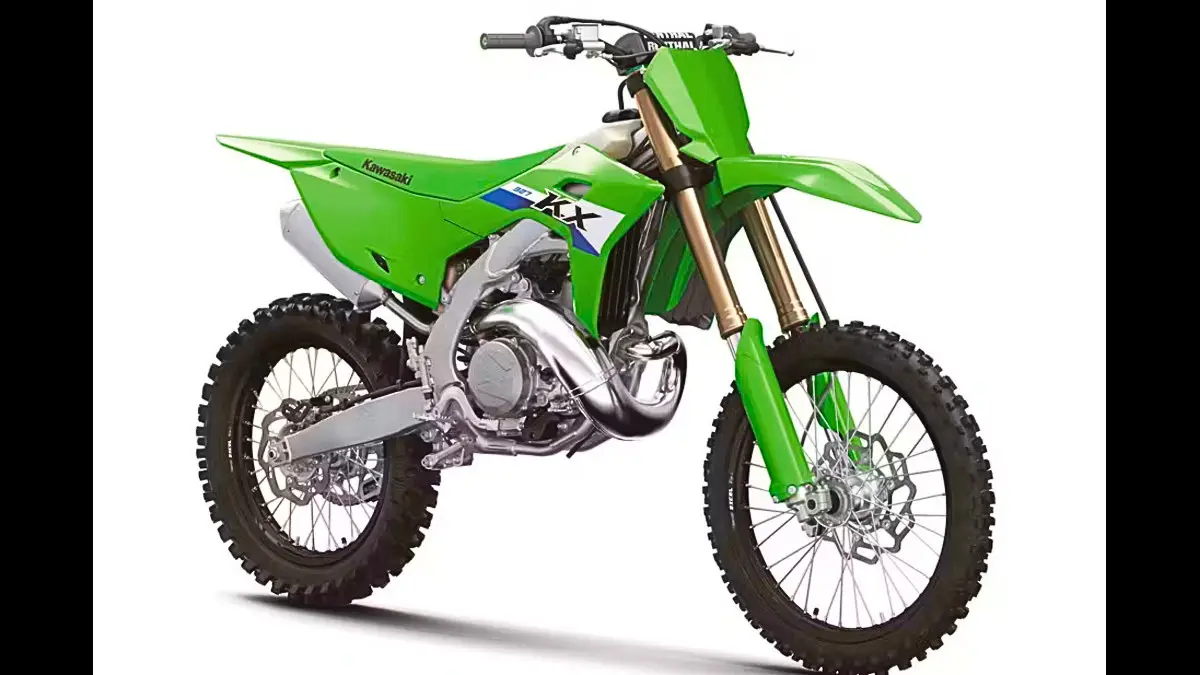
Reading between the lines, Kawasaki is bolstering its four-stroke range precisely because the two-stroke models might poach sales from those who want lightweight performance without going full 450. In the past, a rider torn between a KX250F and something lighter had no factory two-stroke option. Now that option exists, and it comes with 327cc. The four-strokes need to be demonstrably superior to justify their higher complexity and weight. The 2027 updates reflect that pressure.
The Kawasaki KX327’s Ripple Effects Will Be Felt Far Beyond Dealerships
Yamaha has been content to sell the YZ250 two-stroke with minimal changes for years, still carbureted, still a faithful design that works but feels increasingly nostalgic. Honda and Suzuki abandoned two-stroke off-road machines altogether. Kawasaki’s move might force those conversations back onto the table in boardrooms across Japan and Europe.
For the consumer, the arrival of a fuel-injected, 327cc two-stroke from a major OEM means the segment is officially validated. Aftermarket support will follow. Racing organizations might reconsider displacement rules for vet, open, or sportsman classes. Young riders who’ve never experienced a big-bore two-stroke will suddenly see one parked next to their buddy’s 450F at the track, complete with modern conveniences and factory fit and finish.
Kawasaki took a risk by skipping the expected 250 or 300cc mark and building a platform around a displacement that defies easy categorisation. But that’s where breakthroughs happen in the space between what the rulebook demands and what riders actually want. The KX327 and KX327X aren’t a nostalgia act. They’re a challenge to the entire industry to stop treating two-strokes as a niche and start engineering them for the future.
Also Read – The Bullet Grows Up — And Takes Its Biggest Gamble Yet: Royal Enfield Bullet 650

If it runs on electricity or has a microchip, Rahul is on it. As our resident tech geek and electric vehicle (EV) specialist, Rahul decodes complex technologies into simple language for our readers. He stays ahead of the curve on battery technology, autonomous driving, and the latest digital trends in the automotive sector. If you want to know the real range of an EV or the future of mobility, Rahul has the answers.