Stellantis just ripped the dust covers off a performance strategy that nobody saw coming. At an investor day in Michigan, the automaker revealed not one or two but eight future SRT models spread across Dodge, Ram, and Jeep as part of its “Fastlane 2030” revival plan. Most of them were still hidden under sheets, but the shape and the story behind one in particular, the low-slung Dodge Copperhead SRT Coupe, with an unmistakable wing, tells us the company isn’t just padding a product roadmap. It’s trying to rebuild an emotional connection with American buyers who have felt increasingly alienated by an industry racing toward electric appliances.
The buried lead is a name: Copperhead. Dodge’s 1997 concept car is being resurrected as a real production SRT coupe, and it’s far more aggressive than anything the original orange show car ever promised. Alongside it, a new GLH muscle crossover and a wave of Ram and Jeep performance trucks are about to reshape what an SRT badge can mean. This isn’t just a nostalgia play. It’s a calculated bet that combustion-powered excitement still has a big, profitable, and culturally vital role to play, even as Stellantis inches toward electrification.
The Dodge Copperhead SRT Coupe Strikes Back: A Viper-Infused Coupe for a New Era
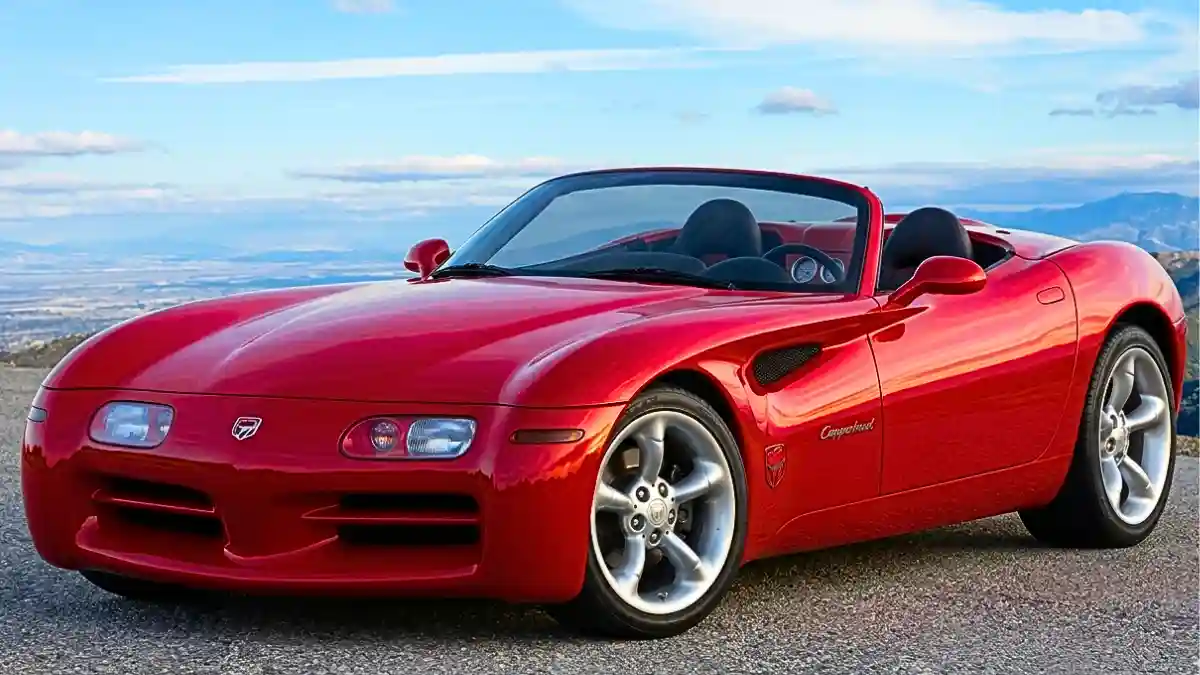
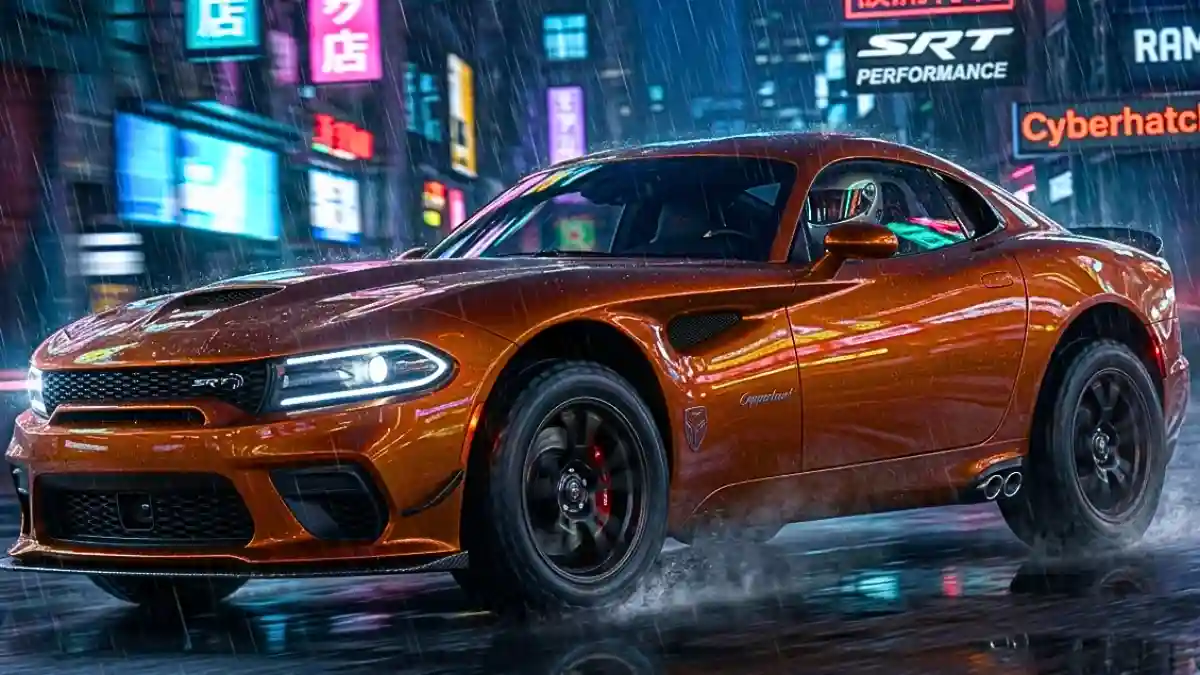
If you remember the 1997 Copperhead concept, put it out of your mind. That car was a curious, copper-colored roadster with a 2.7-liter V6 that never evolved beyond a Detroit auto show turntable. The 2026-bound Copperhead SRT is something else entirely: a fixed-roof coupe that sizes up closer to a Ford Mustang than a Charger, with a massive rear wing and proportions that early witnesses describe as a front-end from the new Charger mating with the rear character of a Viper. A big power dome bulges from the hood. The stance screams track-ready muscle.
Stellantis isn’t letting anyone publish photos yet, and cameras were strictly forbidden during the sneak peek, but the description alone explains why this model matters. For the past decade, Dodge’s performance identity has orbited around the Challenger and Charger, both ageing platforms kept alive by sheer horsepower and clever marketing. The Copperhead gives Dodge a genuine sports coupe again, something that can go after the Mustang Dark Horse and fill the void left by the Chevrolet Camaro’s uncertain future. It’s not a new Viper, but it channels enough Viper DNA that enthusiasts will pay attention.
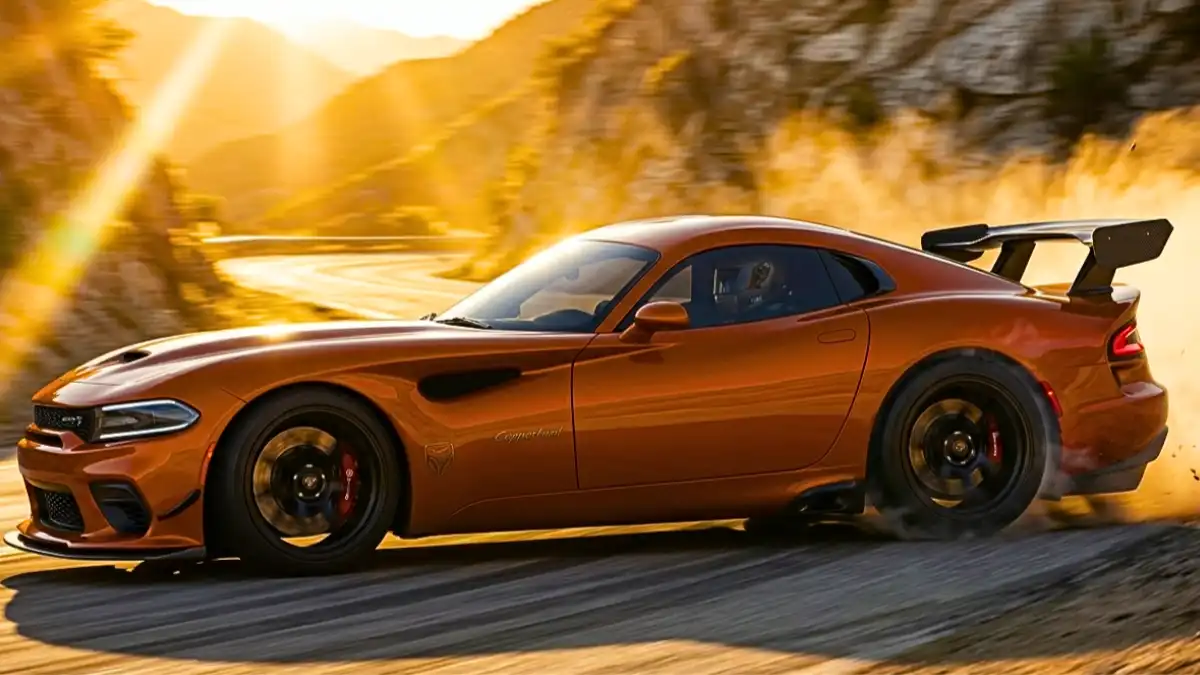
The powertrain question looms large. The SRT badge all but guarantees serious output. If a Hemi V8 fits, expect it. This is still a brand that understands the emotional pull of eight cylinders. But the Hurricane twin-turbo inline-six, already punching above 500 horsepower in some applications, wouldn’t be a consolation prize. The key is that Dodge isn’t putting a small-displacement museum piece under the hood. That 1990s 2.7-litre V6 is where it belongs: in the history books. What’s coming is a statement that the combustion performance car isn’t dead at Dodge; it’s just entering a new, leaner chapter that can potentially coexist alongside the electric Charger Daytona.
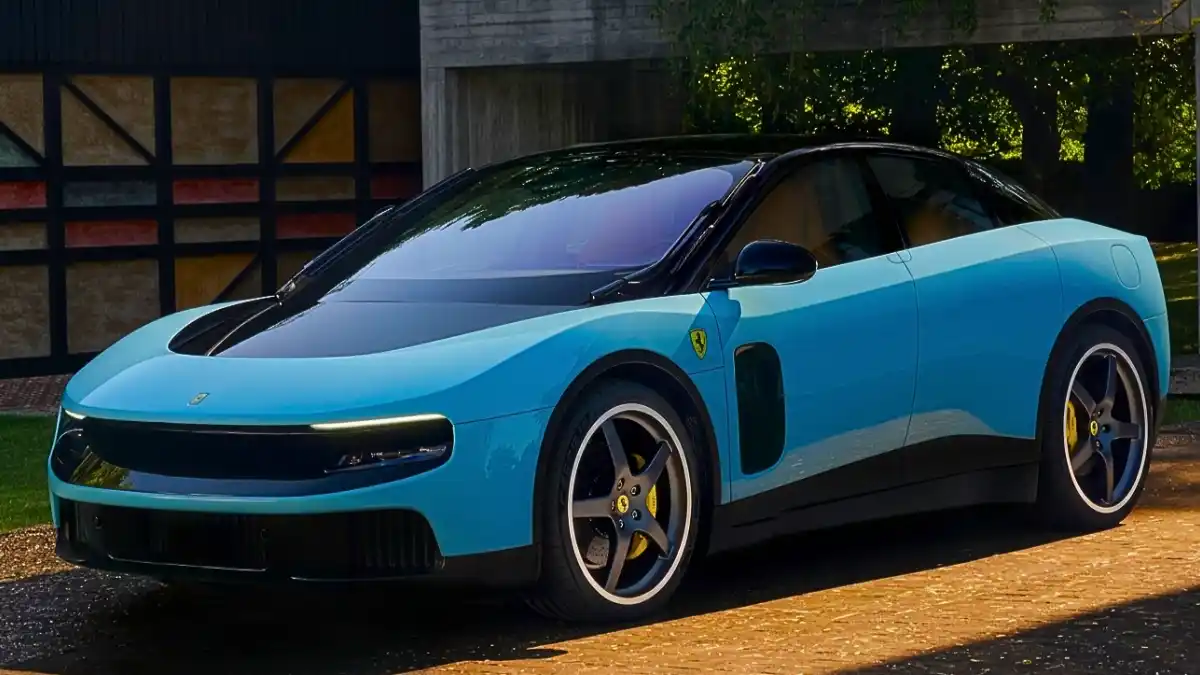
Also Read – Ferrari Luce electric car: Electric Shock Therapy – Why It’s More Than Just a Polarizing EV
GLH Goes Crossover: Righting the Hornet’s Wrongs
The other Dodge surprise is a nameplate revival that will resonate with anyone who grew up reading car magazines in the 1980s: GLH. The original Omni GLH “Goes Like Hell” was a Carroll Shelby-tweaked hatchback that embarrassed far more expensive hardware. The new GLH won’t have Shelby’s direct involvement, but it will have a mission to reclaim credibility that Dodge squandered with the Hornet.
If you recall, the Hornet was a hastily badge-engineered Alfa Romeo Tonale, and former Dodge boss Tim Kuniskis has essentially admitted it wasn’t the car Dodge should have built. The GLH is being described as a compact “muscle crossover,” built on a platform shared with the next Jeep Cherokee, and it’s exactly what the Hornet should have been from the start. This is humility baked into a product plan, and that’s rare.
Under the hood, the base Cherokee’s 210-horsepower 1.6-litre turbo isn’t GLH-worthy, but the 324-horsepower Hurricane 2.0-litre turbo that already powers the Grand Cherokee certainly is. Drop that into a smaller, lighter crossover with SRT-tuned suspension and some retro graphic treatment, and suddenly, Dodge has a legitimate rival to the Hyundai Kona N and Volkswagen T-Roc R, a daily-able performance machine that doesn’t ask an entire family to suffer. More importantly, it gives young buyers a reason to walk into a Dodge showroom who might never consider a Charger.
Ram and Jeep: The Muscle Truck Renaissance Expands
Two new Ram SRT models and three Jeeps, including a Wrangler Scrambler muscle truck, round out the blitz. The Scrambler name itself is a callback to the CJ-8 pickup of the early 1980s, but this version will be a high-horsepower off-road weapon aimed squarely at the Ford Bronco Raptor. Jeep wants to own the performance off-road space in a way that goes beyond trail-rated badges. SRT engineering means we can expect a Wrangler that’s not just mud-capable but genuinely quick in the desert and on pavement.
The Ram models are more mysterious, but the logic is inescapable. The market for performance trucks has only grown hungrier, and Stellantis has the toolbox to answer: a possible Ram SRT-10 spiritual successor for street performance, and a more extreme off-road variant to sit above the Rebel. These models won’t just juice margins; they’ll create the kind of showroom hero vehicles that sell the workaday trims parked next to them.
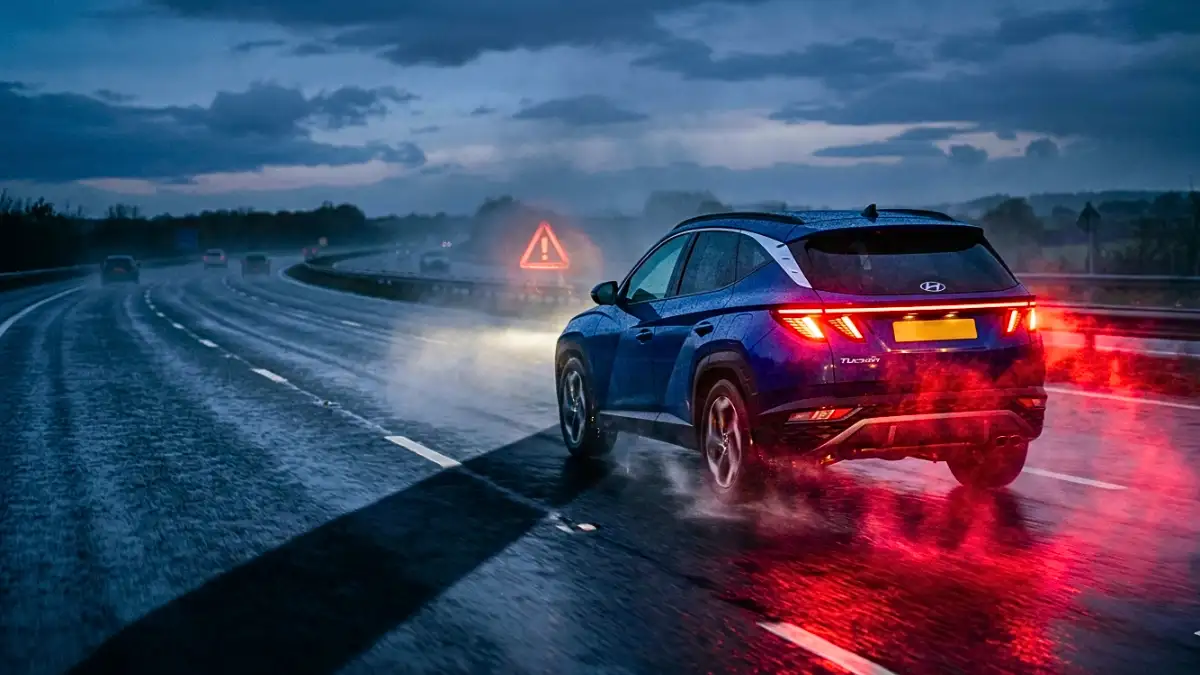
Also Read – Hyundai Phantom Braking Recall 2026: When Safety Systems Become the Threat
Why the SRT Avalanche Matters Right Now
Stellantis’s “Fastlane 2030” plan is, at its core, a turnaround program for a company that has been bleeding momentum in North America. An eight-model SRT offensive is one of the most concentrated performance pushes we’ve seen from any Detroit automaker in the 21st century. It’s a deliberate counter-narrative to the industry’s rush to promise full-electric lineups: Stellantis is telling enthusiasts, “We’re not done with you yet.”
The use of heritage names, Copperhead, GLH, Scrambler, is more than marketing kitsch. It’s emotional engineering designed to reconnect a fragmented buyer base. Gen Xers who remember the original concepts feel seen. Younger buyers who have never experienced those cars get introduced to them through a modern lens. And across the board, the SRT division gets to reassert its identity as something more visceral and rebellious than just a trim level.
There are risks, of course. Tighter CAFE standards and potential emissions regulations will keep the pressure on. Some of these models may need hybridization to survive past the end of the decade. The electric transition isn’t stopping. But what Stellantis seems to understand is that performance and electrification don’t have to be enemies; they can be sequenced. Keeping the flame alive for a few more combustion generations buys time to get the EV muscle formula right while keeping brand heat.
The Copperhead isn’t just a coupe. It’s Dodge acknowledging that the Challenger era is over and that the brand needs a new object of desire. The GLH isn’t just a crossover; it’s an admission of failure and a commitment to do better. Put together, these eight SRT models represent a promise that the noise, the fury, and the soul of American performance won’t fade quietly into the crossover void. They’re going to go like hell trying to make sure of it.
Also Read – The Anti-Tech Revolution: Why Toyota’s Most Reliable 2026 Car Is a Masterclass in Restraint

Sapna is the storytelling powerhouse of the team. With a sharp eye for detail and a knack for uncovering the human interest side of automobiles, she covers everything from industry launches to feature stories. She believes that every car has a story and every rider has a journey. Her writing is known for its clarity, depth, and ability to connect with the common man.