



With over 10,000 electric vehicles sold in a single month, the Tata Motors EV record May 2026 shows Tata isn’t just leading India’s EV market; it’s beginning to define what the market looks like.
- 59,790 Total units sold, May 2026
- +42% Year-on-year growth
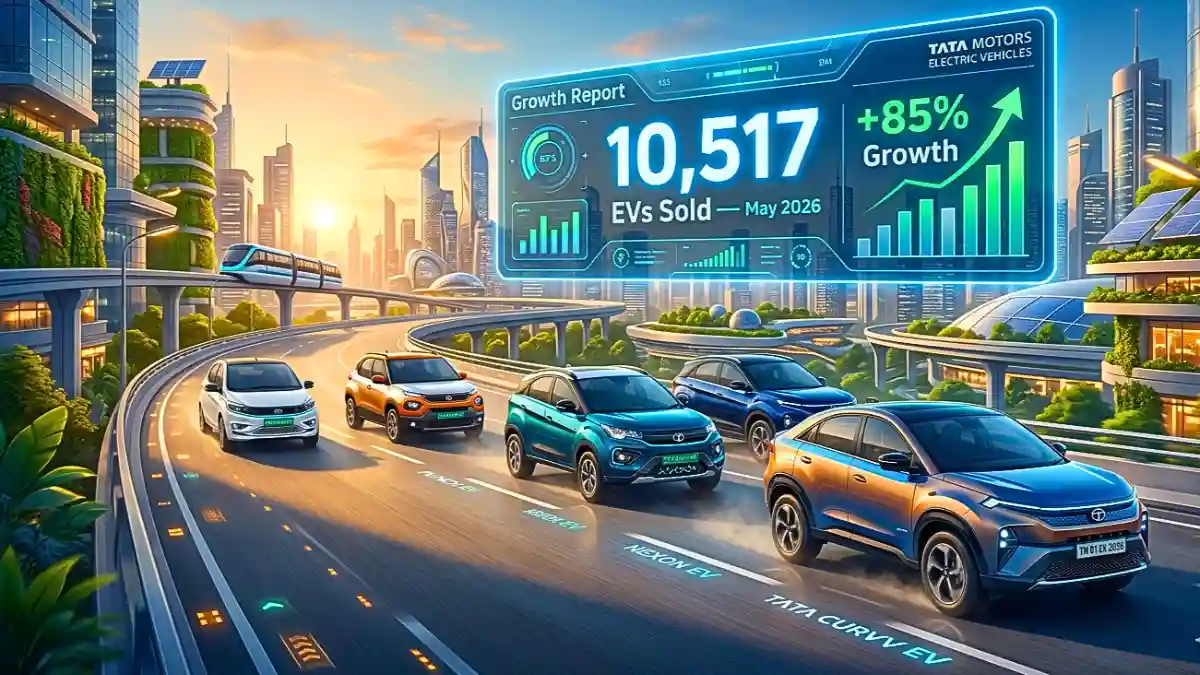
- 10,517 EV units — an all-time monthly high
- +85% EV growth vs. May 2025
Numbers this large carry a temptation: to simply line them up and let them do the talking. But the real story behind Tata Motors’ May 2026 performance – the Tata Motors EV record May 2026, isn’t in the aggregate tally; it’s in what it signals about where Indian car buyers are actually heading, and how fast.
For a company that was, just a few years ago, seen as a struggling also-ran in the passenger vehicle segment, May 2026 reads almost like a different company’s results.
Tata Motors EV record May 2026: The EV Number That Changes Everything
Buried inside the headline figures is a data point that deserves its own conversation: 10,517 electric passenger vehicles sold in a single month. That’s nearly double what Tata moved in May 2025, when it managed 5,685 units.
To put it plainly, Tata Motors just had its biggest EV month ever, and it wasn’t close.
“When monthly EV volumes cross five figures, it stops being a niche story. It becomes a market story.”
This matters because the electric vehicle industry tends to track thresholds. Crossing 10,000 units a month tells a different story than staying below it- about charging infrastructure confidence, about financing access, about how far buyer anxiety around range has genuinely faded in urban and semi-urban India.
The Nexon EV has been the backbone here for years, but May’s figure suggests the portfolio is now pulling weight collectively. The Punch EV, compact and priced accessibly, has expanded the funnel downward. The Tiago EV has kept entry-level electric mobility alive. And the Harrier EV, Tata’s most premium electric offering, is carving space at the top of the market where margins matter most.
Also Read – Ferrari Mazda Luce Trademark Dispute: Before Ferrari Could Say “Luce,” Mazda Already Owned the Light
ICE Still Carries the Volume — and That’s Not a Problem
It would be easy to read Tata’s EV story and overlook the fact that the vast majority of its sales, roughly 49,000 units, came from petrol and diesel models. That’s not a contradiction. It’s a competitive advantage.
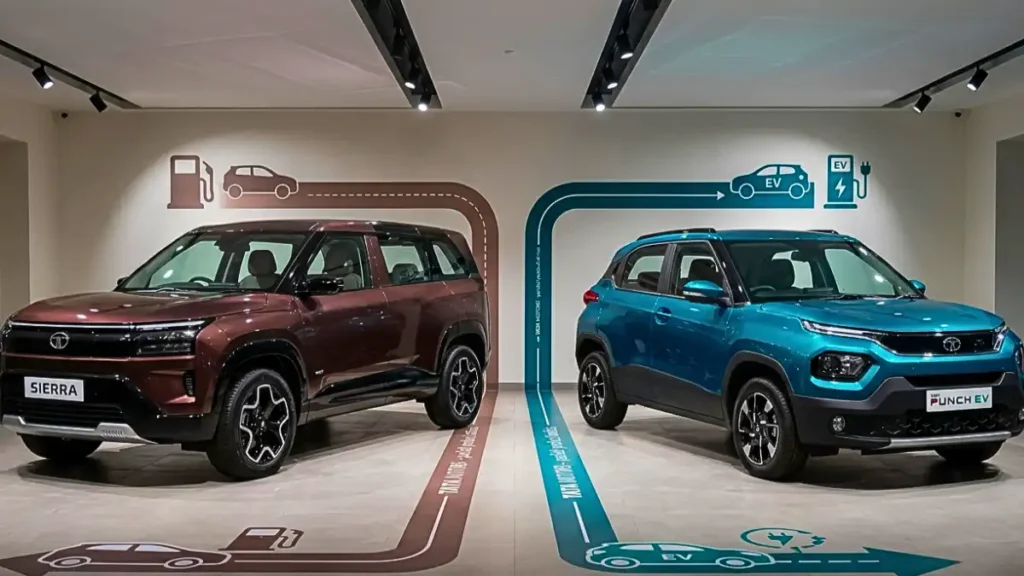
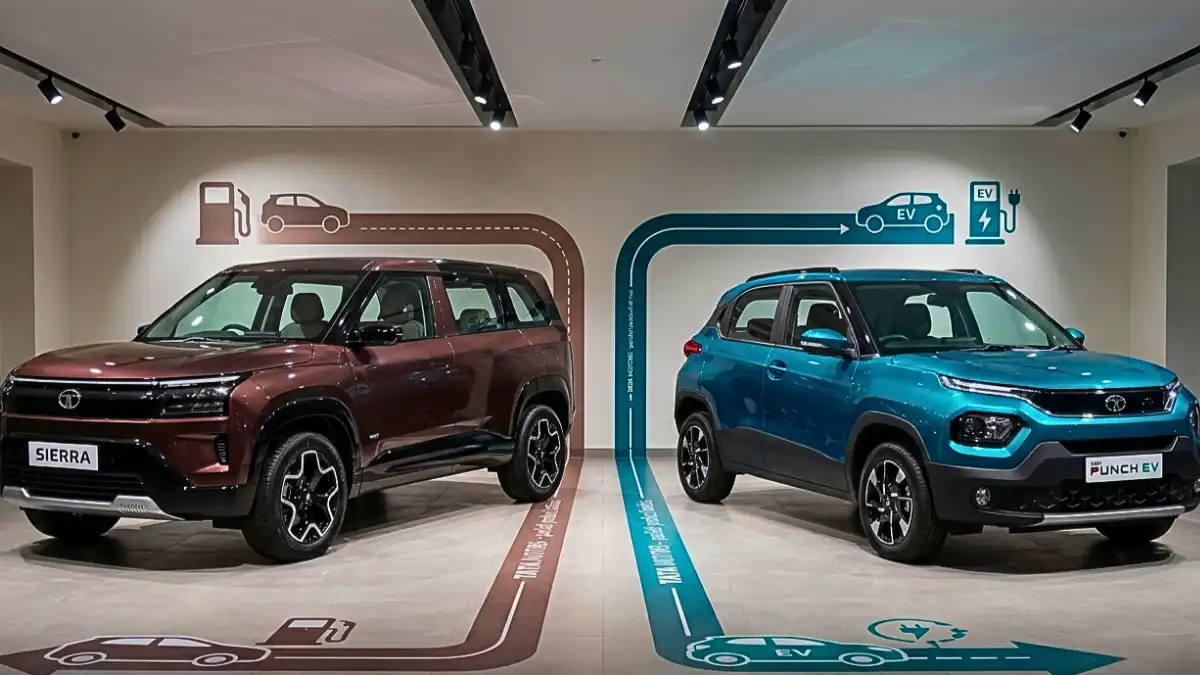
Few manufacturers can claim a product lineup that works simultaneously at both ends of the powertrain spectrum. The refreshed Sierra, which returned to the market after a 25-year absence and landed with considerable noise, has given Tata a credible premium ICE flagship. The updated Tiago range, facelifted alongside its EV twin, ensures the volume end of the market remains well-covered.
Running two parallel product families- one electric, one combustion, with shared platforms and updated aesthetics is resource-intensive. But it gives Tata something rivals in the EV space without legacy ICE lineups simply can’t match: the ability to convert ICE buyers gradually, on their own timeline.
Why Vahan Data Matters More Than Wholesale Figures
Wholesale numbers, what manufacturers dispatch to dealers, can be flattering in ways that don’t always match reality. Vahan registration data, which captures actual customer registrations, is a harder, more honest measure. The fact that Vahan registrations grew over 50% year-on-year in May is significant: it confirms that May’s performance wasn’t a pipeline-filling exercise. Real buyers are driving these cars home.
That 50%-plus Vahan growth, outpacing even the 42% wholesale growth, also suggests dealer inventory health and consumer demand that’s pulling product rather than the company pushing it.
Also Read – JSW Motors Electric Car India Launch: Betting Everything on Electric, Fast
What Comes Next — and Why It’s Worth Watching
The Sierra EV, expected this quarter with two battery configurations, will be Tata’s most significant launch of the year. The original Sierra’s cultural cachet in India is real, and an electric version positioned above the Nexon but below the Harrier could find a surprisingly eager audience among buyers who want something distinctive.
Further out, the Avinya series represents Tata’s most ambitious bet yet: a ground-up electric platform targeting a more global, design-forward buyer. It won’t arrive immediately, but its existence tells you something about how seriously the company is treating the next decade of mobility.
For now, though, the May 2026 numbers do something that corporate communications rarely manage: they make the strategic narrative feel real. Tata Motors has been saying it would dominate India’s EV market for years. One month doesn’t prove a trend, but breaking your own all-time record by 85% is a fairly convincing argument.
Also Read – The Next-Gen Hyundai Creta 2027 Is About to Get Bigger — and Smarter


Raj is the creative mind curating the special content for the website. From exclusive first-drive reviews to buyer’s guides and comparison tests, Raj ensures our features are engaging and helpful. He loves getting behind the wheel of new launches and creating content that helps our readers pick their dream vehicle. His passion for motorcycles and performance cars is evident in his energetic writing style.